Search conditions, treatments, research reviews and articles. Press Enter to see all results, Esc to close.
Search conditions, treatments, research reviews and articles. Press Enter to see all results, Esc to close.
Blog
November 22, 2026
Eye allergies cause itchy, red, watery eyes. Compare antihistamine drops and home relief, and learn how to tell allergy from dry eye or pink eye.
Key points
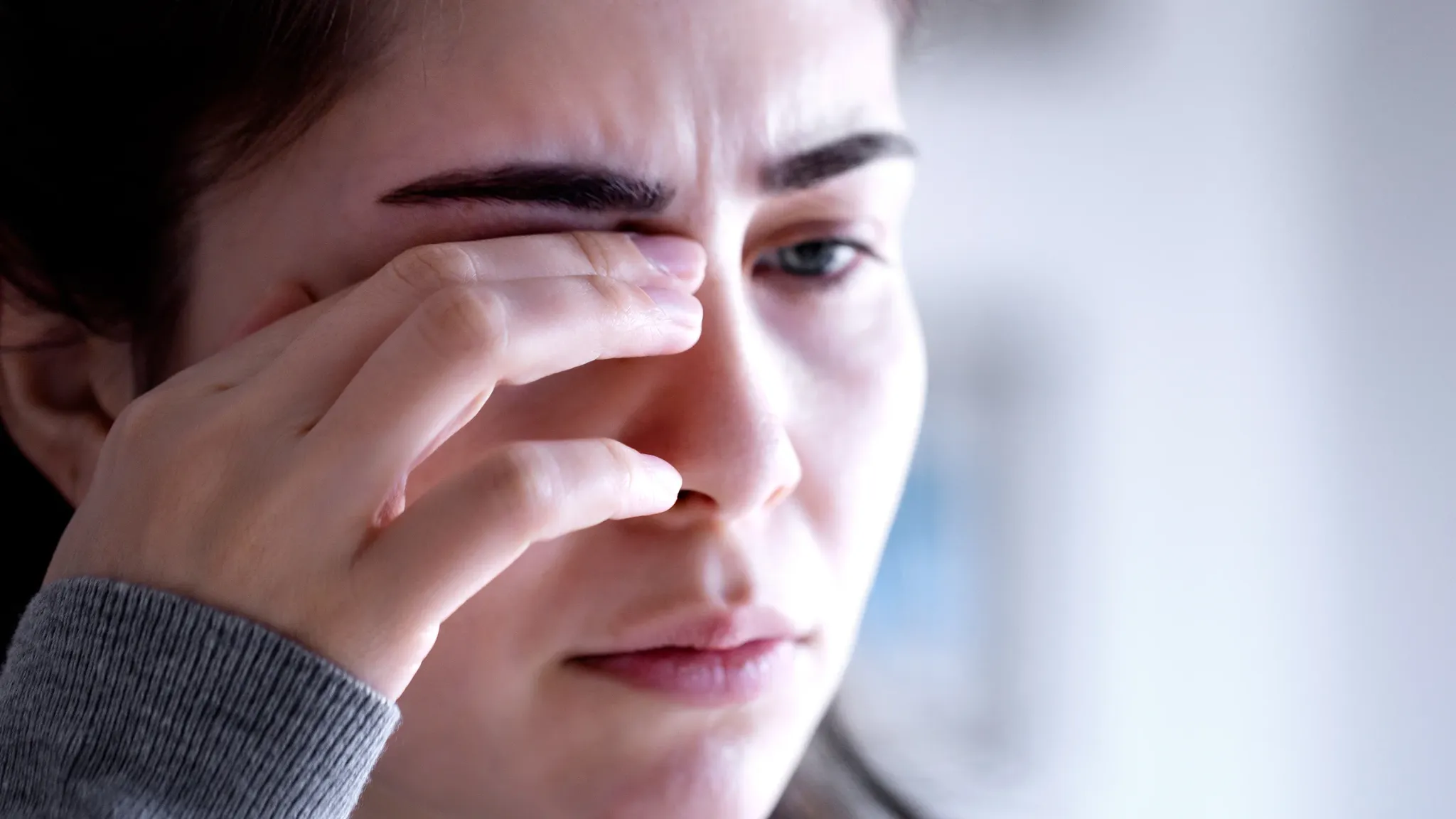
Eye allergies (allergic conjunctivitis) happen when the eyes react to something harmless such as pollen, pet dander, dust mites or mold. The hallmark is itching, usually in both eyes, with redness, watering, puffy lids and often sneezing or a runny nose. They are not contagious and rarely threaten sight. The quickest relief comes from avoiding the trigger, not rubbing, cold compresses, chilled preservative-free artificial tears, and an antihistamine/mast-cell-stabilizer eye drop such as ketotifen or olopatadine. Eye allergies that are severe, persistent, painful, or affect vision need an eye examination, because some forms can damage the cornea.
See an eye doctor promptly if you have eye pain, light sensitivity, blurred vision that does not clear with blinking, thick yellow or green discharge, symptoms in one eye only, a white spot on the cornea, or itching that does not respond to over-the-counter drops within a few days. Swelling of the lips, tongue or throat or difficulty breathing is an emergency.
The conjunctiva is the thin, clear membrane covering the white of the eye and lining the lids. It is exposed to the air all day and is packed with immune cells, including about 50 million mast cells.
In an allergic person, the immune system has made IgE antibodies against a harmless substance (an allergen). These antibodies sit on mast cells. When the allergen lands on the eye and dissolves in the tears:
This two-phase process explains why treatment that both blocks histamine and stabilizes mast cells works better than either alone.
Vision is normal apart from brief blur from tears or mucus.
The most common form. Symptoms appear at the same time each year with outdoor allergens: tree pollen in spring, grass in late spring and summer, weed pollen (such as ragweed) in late summer and autumn. Symptoms track the pollen count and are worse on warm, dry, windy days.
Year-round, usually milder, caused by indoor allergens: dust mites, pet dander, mold and cockroach. Often worse on waking or when cleaning.
A more severe, chronic condition mostly affecting boys and young men in warm, dry climates, often with eczema or asthma. Intense itching, thick ropy mucus, marked light sensitivity, and large “cobblestone” bumps under the upper lid. The cornea can be damaged by a shield ulcer. It usually burns out after puberty. It needs specialist care.
A chronic, year-round condition in adults with atopic dermatitis (eczema), typically starting in the late teens to 40s. The eyelid skin is red, thickened and scaly. Complications include corneal scarring, keratoconus, cataract and infections, including herpes simplex. It needs specialist care. See eye herpes.
A delayed reaction, appearing one to three days after exposure, to eye drops (preservatives, antibiotics, glaucoma medications), cosmetics, eyelash extension glue, nail polish and hair dye. Eyelid skin is red, itchy and flaky.
Not a true allergy but related. Chronic rubbing of the upper lid over a contact lens, an artificial eye or an exposed stitch causes large bumps under the lid, mucus, itching and lens intolerance.
Eye allergy: Itching
Dry eye: Burning, gritty, tired
Viral pink eye: Gritty, watery
Bacterial pink eye: Sticky, sore
Eye allergy: Both
Dry eye: Both
Viral pink eye: One, then the other
Bacterial pink eye: One or both
Eye allergy: Clear, watery; stringy white mucus
Dry eye: Little; sometimes reflex watering
Viral pink eye: Watery
Bacterial pink eye: Thick yellow or green; lids stuck on waking
Eye allergy: Mild to moderate, pink
Dry eye: Mild
Viral pink eye: Moderate to marked
Bacterial pink eye: Moderate
Eye allergy: Often
Dry eye: Rare
Viral pink eye: Often
Bacterial pink eye: Sometimes
Eye allergy: Sneezing, runny nose
Dry eye: Fluctuating blur that clears with blinking
Viral pink eye: Cold, sore throat, tender gland in front of ear
Bacterial pink eye: Usually none
Eye allergy: Seasonal or with exposure
Dry eye: Worse late in day, screens, wind
Viral pink eye: Lasts 1 to 3 weeks
Bacterial pink eye: A few days to a week
Eye allergy: No
Dry eye: No
Viral pink eye: Very
Bacterial pink eye: Yes
Eye allergy: Avoidance, cold compress, antihistamine drops
Dry eye: Lubricants, lid care
Viral pink eye: Cold compress, lubricants, hygiene
Bacterial pink eye: Antibiotic drops if needed
Allergy and dry eye overlap more than people expect. Studies find that a large share of people with itchy eyes also have dry eye signs, and the reverse. A thin tear film lets allergens sit on the surface longer. Allergic inflammation in turn destabilizes the tear film. Antihistamine tablets can reduce tear production. If your “allergies” burn more than they itch, or do not respond to allergy drops, consider dry eye. See eye drops for dry eyes and dry eyes.
Blepharitis (lid margin inflammation), including Demodex mite overgrowth, also causes itching, particularly at the lash line in the morning. See blepharitis treatment and Demodex blepharitis.
Outdoor
Indoor
Contact
Food and insect allergies usually cause swelling of the lids and face, not typical allergic conjunctivitis.
Allergy testing (skin prick or blood tests) through an allergist identifies your specific triggers if they are not obvious.
1. Do not rub. Rubbing breaks open more mast cells, drives allergen into the tissue, and feels good for seconds and worse for hours. Long-term rubbing is the strongest modifiable risk factor for keratoconus. Substitute a cold compress or a chilled drop.
2. Rinse. Preservative-free artificial tears, or sterile saline, wash allergen off the eye and dilute inflammatory chemicals. Keep them in the refrigerator; cold adds relief.
3. Cool. A clean, cold, damp cloth or wrapped gel pack over closed eyes for 5 to 10 minutes shrinks blood vessels and quiets itch nerves.
4. Reduce exposure.
5. Use an allergy eye drop (next section).
6. Take out contact lenses until symptoms settle.
Examples: Preservative-free lubricants
How it works: Dilute and wash away allergen
Speed and duration: Immediate, short
Notes: Safe as often as needed; chill them
Examples: Ketotifen, olopatadine, alcaftadine (OTC in the US); azelastine, epinastine, bepotastine (prescription)
How it works: Block histamine now and stop mast cells releasing more
Speed and duration: Minutes; 8 to 24 hours
Notes: First choice for most people; best used daily in season
Examples: Cromolyn, lodoxamide, nedocromil
How it works: Prevent mast cell release
Speed and duration: Takes days to weeks to work
Notes: Preventive; used in VKC
Examples: Pheniramine/naphazoline
How it works: Blocks histamine and shrinks vessels
Speed and duration: Minutes; a few hours
Notes: Short-term only; rebound redness; avoid in narrow-angle glaucoma
Examples: Naphazoline, tetrahydrozoline
How it works: Shrinks vessels
Speed and duration: Minutes
Notes: Does not treat allergy; rebound; not recommended
Examples: Ketorolac
How it works: Reduces itch-producing prostaglandins
Speed and duration: Hours
Notes: Can sting; limited role
Examples: Loteprednol, fluorometholone, prednisolone
How it works: Broad anti-inflammatory
Speed and duration: Fast, strong
Notes: Prescription; short courses under supervision; risk of raised eye pressure and cataract
Examples: Cyclosporine, tacrolimus
How it works: Calm T-cell driven inflammation
Speed and duration: Weeks
Notes: For vernal and atopic disease; steroid-sparing
Practical tips
Oral antihistamines (cetirizine, loratadine, fexofenadine and others) help itching and nasal symptoms. They are less effective for the eyes than drops applied directly, and they can dry the eyes, particularly older sedating antihistamines. If you have dry eye, favor eye drops and nasal sprays.
Steroid nasal sprays (fluticasone, mometasone and others) treat hay fever and, in controlled studies, also reduce eye symptoms, probably through a nose-eye nerve reflex.
Antihistamine nasal sprays (azelastine) help both.
Allergen immunotherapy. Allergy shots or under-the-tongue tablets retrain the immune system over three to five years and can produce lasting improvement in both nasal and eye symptoms. They are worth discussing with an allergist if symptoms are severe, medication is not enough, or you want to reduce long-term medication use.
Biologic medicines such as omalizumab are used for severe allergic disease. Note that dupilumab, used for eczema and asthma, causes conjunctivitis as a side effect in a notable minority of people with atopic dermatitis.
Lenses collect allergen and protein deposits, and the allergic eye tolerates them poorly.
Eye allergies are common in children and often go with eczema, asthma and hay fever.
See children’s vision: exams, screens and warning signs.
Ordinary seasonal and perennial allergy does not damage the eye. Problems come from:
Conditions that can be mistaken for allergy:
Many people prefer to minimize medication. An honest look:
Well supported
Some evidence
Limited or weak evidence
Not advised
Traditional systems. Ayurveda describes itchy, watery allergic eyes largely as a kapha-pitta disturbance and uses cooling measures, dietary adjustment and, under practitioner supervision, sterile preparations. TCM describes patterns of “wind” and “wind-heat” affecting the eyes and uses herbal formulas and acupuncture to disperse wind and clear heat. These frameworks guide individualized treatment; they have not been tested in large trials for eye allergy. See itchy eyes: home remedies and Ayurveda, Ayurveda ophthalmology and TCM ophthalmology. On eye washes specifically, see our evidence review of triphala for eyes.
Most people with seasonal eye allergy do not need testing. The pattern, the itch and the response to antihistamine drops make the diagnosis.
Testing is worth discussing when:
Types of test
How it is done: Small amounts of allergen placed on the forearm or back; read in 15 to 20 minutes
What it finds: Airborne allergens such as pollen, dust mite, mold, animal dander
How it is done: A blood sample
What it finds: The same allergens; useful if you cannot stop antihistamines or have a skin condition
How it is done: Patches worn on the back for 48 hours
What it finds: Delayed contact allergy to preservatives, cosmetics, eye drop ingredients, metals
Patch testing is the relevant test when the eyelid skin is red, dry and scaly, or when symptoms worsen with a particular drop or cosmetic. Antihistamine tablets are usually stopped several days before skin prick testing; follow your allergist’s instructions.
A positive test shows sensitization. It matters only if it matches when and where your symptoms occur.
Myth: Redness-relief drops treat eye allergy. Fact: Decongestant drops whiten the eye for a few hours and do not block the allergic reaction. Regular use can cause rebound redness. Antihistamine and mast cell stabilizer drops are the appropriate choice.
Myth: Rubbing relieves the itch. Fact: Rubbing releases more histamine and makes the itch return stronger. Long-term, forceful rubbing is linked to keratoconus, a thinning of the cornea.
Myth: Eye allergies are contagious. Fact: They are not. Viral and bacterial conjunctivitis are, which is why telling them apart matters.
Myth: Moving to a different climate cures allergies. Fact: Relief is often temporary. People who are prone to allergy commonly become sensitized to the pollens of the new region within a few years.
Myth: Allergy drops should be used only when symptoms are bad. Fact: Dual-action drops work best when used daily through the season, starting one to two weeks before it begins.
Myth: Local honey desensitizes you to pollen. Fact: Trials have not shown a reliable benefit. The pollens in honey are mostly from flowers, and airborne allergy is mostly from trees, grasses and weeds.
Myth: Steroid eye drops are a safe long-term fix. Fact: They are effective for severe flares under an eye doctor’s supervision. Unsupervised or prolonged use can raise eye pressure and cause cataract.
For typical seasonal eye allergies, the measures above are effective and Netra Restoration Therapy (NRT) is not needed. NRT is not an allergy treatment and does not replace antihistamine drops, an allergist’s care or immunotherapy.
NRT may be relevant for people in whom allergy is one part of a chronically inflamed ocular surface: those with year-round itching and burning despite drops, overlapping dry eye and meibomian gland dysfunction, surface damage from long-term preserved or steroid drops, or keratoconus in which allergy and rubbing are ongoing drivers.
NRT is Netra Eye Institute’s phytoceutical eye-care program: individualized herbal formulas drawn from TCM ophthalmology and Ayurvedic ophthalmology, chosen with a modern understanding of ocular biology, and supported by acupuncture. For chronic surface inflammation, formulas are selected to:
Supportive acupuncture has trial evidence in allergic rhinitis and in dry eye, as noted above.
For keratoconus, where eye rubbing and inflammation are increasingly recognized as central, see keratoconus as an inflammatory disease and beyond cross-linking.
What to keep in mind:
See what is Netra Restoration Therapy or call (732) 503-9999.
Two weeks before your season
During the season
If not controlled after a week
After the season
Itchy, red, watery eyes in both eyes, often with puffy lids and stringy mucus, and usually with sneezing or a runny nose. Itching is the key symptom.
Rinse the eyes with chilled preservative-free artificial tears, apply a cold compress, and use a dual-action antihistamine eye drop such as ketotifen or olopatadine. Avoid rubbing.
Dual-action antihistamine and mast-cell-stabilizer drops are the first choice for most people. They relieve itching within minutes and prevent further reactions.
Allergies cause itching in both eyes with clear watery discharge and are not contagious. Infectious pink eye usually starts in one eye, feels gritty or sticky, and has watery (viral) or thick yellow-green (bacterial) discharge.
Allergies itch. Dry eye burns, feels gritty and causes vision that fluctuates and clears with blinking. Many people have both.
No. They are an immune reaction, not an infection.
As long as you are exposed to the trigger. Seasonal allergies last weeks to months each year; perennial allergies can persist year-round.
Briefly, from tears or mucus. Persistent blur, pain or light sensitivity suggests something else or a severe form of allergy and should be examined.
Usually both eyes are involved. One eye may react alone if allergen was transferred directly to it, but one-sided symptoms should raise suspicion of infection or another cause.
Yes. Rubbing worsens the allergic reaction and over time can weaken and deform the cornea, leading to keratoconus.
Dual-action antihistamine drops are designed for daily use during allergy season. Decongestant redness-relief drops should not be used regularly. Steroid drops are only for short supervised courses.
They help somewhat, but eye drops work better for eye symptoms. Tablets can dry the eyes, which may make irritation worse.
Allergen immunotherapy can produce lasting improvement in some people. Otherwise, allergies are managed by avoiding triggers and using treatment when needed.
This article is general education and does not replace an individual eye examination. Eye pain, vision change or thick discharge needs prompt medical care. Netra Restoration Therapy is adjunctive to conventional care and is not presented as a cure. Individual results vary.