Search conditions, treatments, research reviews and articles. Press Enter to see all results, Esc to close.
Search conditions, treatments, research reviews and articles. Press Enter to see all results, Esc to close.
Blog
October 31, 2026
Steroid-induced glaucoma is optic nerve damage caused by a rise in eye pressure from corticosteroid medicines. Steroid eye drops and injections or implants in the eye carry the highest risk. Pills, inhalers, nasal sprays and skin creams near the eyes can also raise pressure in some people [1,2]. The rise usually causes no symptoms, so the safe approach is planned pressure checks, never stopping a prescribed steroid on your own.
Key takeaways
In this article
This article is general education. It does not replace advice from the doctor who prescribed your steroid or from your eye doctor.
Steroid-related pressure rises are usually painless and found at routine checks. These symptoms are different and need prompt care. Do not stop a steroid to treat them yourself.
Our guides to eye emergencies and angle-closure glaucoma explain these warning signs.
Steroid-induced glaucoma is a type of secondary open-angle glaucoma. Corticosteroids change the eye's drainage tissue, the trabecular meshwork, so fluid drains out more slowly and pressure rises. If the rise is high or lasts long enough, it damages the optic nerve and causes loss of vision [1].
A pressure rise alone is called a steroid response or ocular hypertension. Glaucoma means the optic nerve has been damaged. The difference matters, because finding the rise early can prevent the damage [1]. Like other open-angle glaucoma, it usually causes no pain and slowly takes away side vision first [2,12]. Our guide to high eye pressure (ocular hypertension) explains this step, and types of glaucoma shows where this form fits.
Corticosteroids are anti-inflammatory medicines. Examples include prednisone, prednisolone, dexamethasone, triamcinolone and fluticasone. They treat eye inflammation, asthma, allergies, skin disease, autoimmune illness and many other conditions [9,13]. Some eye drops combine a steroid with an antibiotic. They carry the steroid's pressure risk too, so give your eye doctor the full product name.
A steroid responder is someone whose eye pressure rises on corticosteroids. In classic studies using steroid eye drops, about 5% of people had a high response and about 35% a moderate one. Around 90% of people with open-angle glaucoma responded [2]. You cannot tell whether you are a responder without measuring your pressure.
Risk is higher in people with [1,2,4]:
Past LASIK or PRK matters for another reason. Those surgeries make standard pressure readings come out falsely low, which can hide a steroid response [2]. A past response is useful to know, but a response to drops does not reliably predict the response to an injection around the eye [2].
Risk depends mostly on how the steroid reaches the eye. Drops, ointments and injections or implants in or around the eye carry the highest risk. Pills carry a smaller risk that grows with dose. Inhalers and nasal sprays carry the lowest average risk, with exceptions at high doses or in people already at risk [2,5,6].
| Route | Examples | What the evidence shows |
|---|---|---|
| Eye drops and ointments | Prednisolone acetate, dexamethasone, loteprednol, fluorometholone | The most common cause. Labels advise pressure checks if used 10 days or longer [2,14] |
| Injections and implants in or around the eye | Triamcinolone injection, dexamethasone implant (Ozurdex), fluocinolone implant (Iluvien) | Long-acting. About 4 in 10 people reached high pressure or needed pressure drops [3,4,15] |
| Pills | Prednisone, prednisolone, dexamethasone | About 41% higher odds of high pressure or glaucoma in older adults, rising with dose [5] |
| Inhalers | Fluticasone and other inhaled steroids | No overall rise in a large study; higher risk at high doses for 3 months or more, or with a family history [6,7] |
| Nasal sprays | Fluticasone (for example Flonase) | No pressure difference in a 2-year trial; pressure fell after stopping in some glaucoma patients [16,17] |
| Skin creams on the eyelids | Steroid creams or ointments for eczema | Case reports of glaucoma after long-term eyelid use [2,18] |
| Joint injections | Triamcinolone knee injection | In one small study, 29% had a pressure rise over 7 mmHg a week later [19] |
Pressure rises happen more often with steroids put on the eye than with steroids taken by mouth. Ointments on the eye and creams on the eyelid skin can do it too [2]. Drop labels advise checking eye pressure if the drops are used for 10 days or longer, and checking often [14].
Some drops are less likely to raise pressure. Across studies of 28 days or longer, a pressure rise of 10 mmHg or more occurred in 2% of people on loteprednol and 7% on prednisolone acetate [20]. Fluorometholone also tends to cause smaller rises [8]. But lower risk is not zero risk. In a trial after PRK laser surgery, 16% of eyes on loteprednol reached 22 mmHg or more [21]. Gentler drops may also control inflammation less well [20].
Use a leftover bottle only if your eye doctor tells you to. A red eye can have many causes, and some infections get worse with steroids [14]. Uveitis, a type of eye inflammation, is often treated with steroids, and these can raise pressure [13]. See our page on uveitis treatment.
Steroids can be injected next to the eye, into the gel inside the eye, or placed there as a slow-release implant. They treat conditions such as diabetic macular edema and some types of uveitis. Because the drug stays in or near the eye for a long time, pressure can stay high longer than with drops [2].
In one clinic series, 40% of people reached a pressure of 24 mmHg or higher after a triamcinolone injection into the eye. The rise came on average about 100 days after the injection. Topical pressure drops controlled it in every case [15].
FDA labels give numbers for two implants. In diabetic macular edema trials of the dexamethasone implant (Ozurdex), 28% had a rise of 10 mmHg or more and 42% needed pressure-lowering drops. About 1% needed surgery for pressure [3]. With the fluocinolone implant (Iluvien), 38% needed pressure drops and 5% needed surgery [4].
Both labels say these implants should not be used in people with glaucoma whose optic nerve cup-to-disc ratio is above 0.8. For diabetic macular edema, Iluvien is approved only for people who had an earlier steroid course without a significant pressure rise [3,4]. These details reflect FDA labeling as of October 2026.
Yes, though less often than eye drops. In a study of more than 48,000 older adults, current users of steroid pills had about 41% higher odds of high eye pressure or open-angle glaucoma. The odds rose with dose, to about 88% higher in the highest-dose group, and with longer use [2,5].
If you take long-term steroid pills, tell your prescriber about glaucoma, high eye pressure or a past steroid response. The study authors suggested pressure checks for older adults on long-term, high-dose treatment [5]. Steroids can also cause a type of cataract at the back of the lens, called posterior subcapsular cataract [1].
For most people, the risk is small. A large study found no overall rise in risk with inhaled or nasal steroids. Risk was higher with high inhaled doses taken regularly for 3 months or more, and in people with a family history of glaucoma. People with glaucoma should tell their eye doctor about any steroid spray or inhaler [6,7,17].
In the Blue Mountains Eye Study, inhaled steroid use was linked with glaucoma or high pressure only in people with a family history of glaucoma. Their odds were about 2.6 times higher, and higher still with more than four puffs a day [7]. In a small 6-week trial in people with controlled glaucoma or high eye pressure, inhaled fluticasone did not raise pressure [22]. The Flovent inhaler label says glaucoma has been reported with long-term use and suggests regular eye exams [23].
For nasal sprays, a 2-year trial of fluticasone furoate in 548 people found no difference in pressure events compared with placebo [16]. But in 12 people with glaucoma, pressure fell after they stopped nasal steroids [17]. The Flonase label tells people who have or had glaucoma to ask a doctor before use [24].
Keep using a prescribed inhaler while you raise the question. Your lung doctor and eye doctor can decide together whether you need extra checks or a different plan.
Children often respond to steroid drops faster and more strongly than adults. In a trial of children under 10 given dexamethasone drops after eye surgery, 56% had a high pressure response. Most of those reached their peak pressure within 8 days. Measuring pressure in young children can also be harder [8,14].
In the same trial, fluorometholone drops caused much smaller rises [8]. Large rises have also been reported in infants treated with nasal and inhaled steroids. Babies may show watery eyes, light sensitivity or eyelid squeezing rather than complaints of pain [2].
Steroids are sometimes still the right choice for a child. The plan should include pressure checks, and missed eye visits should be rebooked quickly. Tell every doctor about any past steroid response.
Pressure usually rises within the first few weeks of steroid use, but it can rise within hours or only after years of treatment. After the steroid is stopped, pressure usually returns to normal within 1 to 4 weeks. Optic nerve damage that has already happened does not reverse [1,2].
Long-acting injections and implants follow a different clock. After eye injections of triamcinolone, rises appeared about 100 days later on average [15]. With the Ozurdex implant, pressure peaked around week 8 [3]. Longer steroid use may make the rise less reversible. In rare cases pressure stays high and needs glaucoma treatment or surgery [2].
Steroid drop labels advise pressure checks when the drops are used for 10 days or longer. After an injection or implant in the eye, pressure is checked soon after the procedure and at follow-up visits. People with glaucoma or other risk factors may need checks even for steroids taken by other routes [3,7,14].
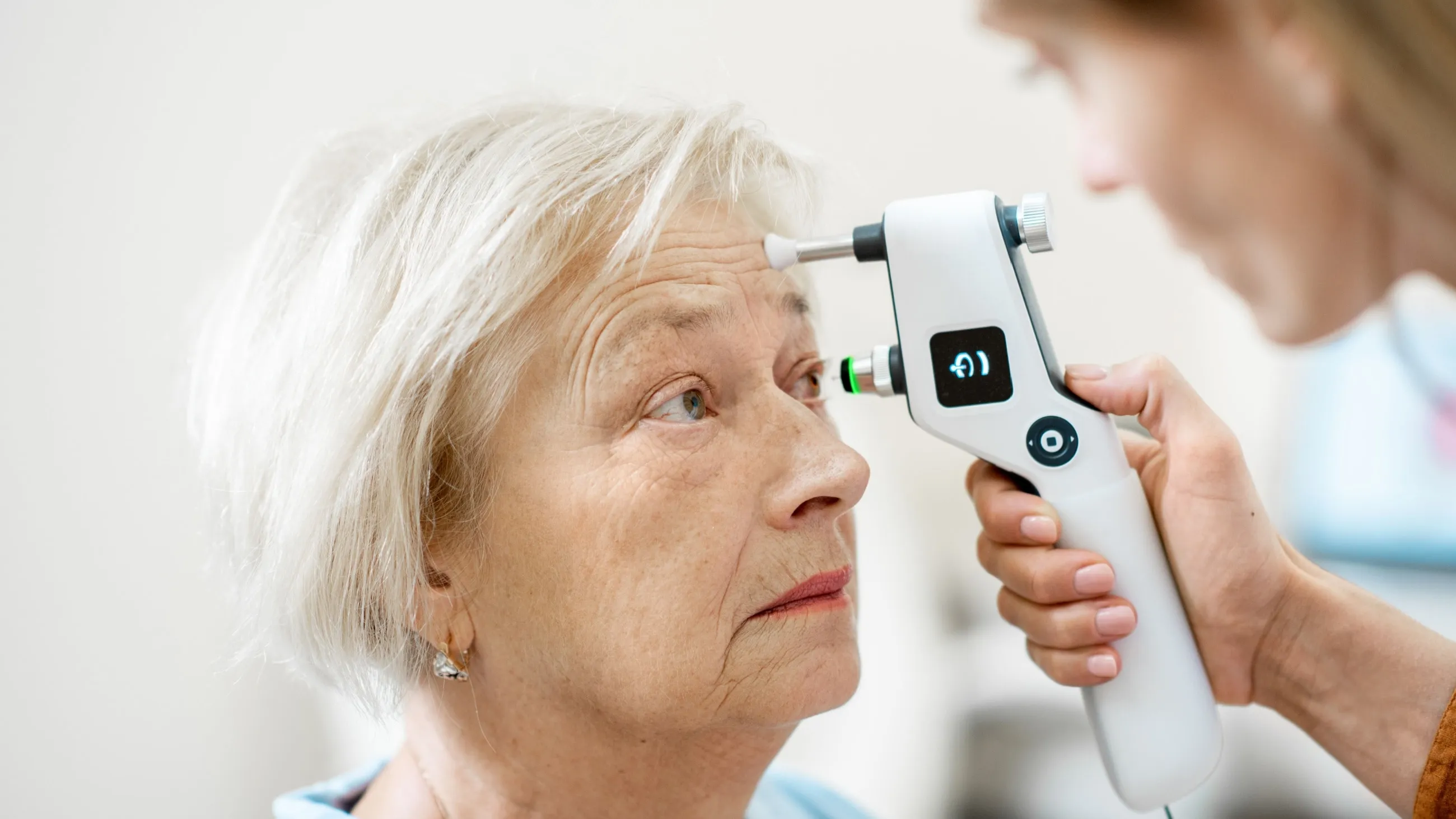
At a check, your eye doctor measures pressure and may look at the optic nerve and test your side vision. Glaucoma usually causes no early symptoms, so feeling fine does not prove pressure is normal [11]. Before each visit, update a list with:
If you are not sure whether a product contains a steroid, ask a pharmacist.
The first step is usually to reduce, stop or switch the steroid, decided by the prescriber. If the steroid is still needed, the eye doctor can add pressure-lowering drops. Laser treatment or surgery is used when drops are not enough, and long-acting steroid deposits can sometimes be removed [2].
Switching to a drop with lower pressure risk, such as loteprednol or fluorometholone, is one option when inflammation allows [2,20]. Selective laser trabeculoplasty has been tried when drops fail [2]. Learn more about glaucoma eye drops and SLT laser.
Steroids often control serious disease, such as eye inflammation, asthma or autoimmune illness. If you stop long-term steroid pills suddenly, your body may not have enough of its own steroid hormone. That can cause extreme tiredness, weakness and other symptoms. Call the prescriber and your eye doctor so they can plan any change together [9].
The same rule applies to drops, inhalers and creams. Ask the prescriber whether to continue, taper or switch. Do not resolve confusing instructions by taking extra doses or stopping everything.
Netra Restoration Therapy (NRT) is an acupuncture and Oriental medicine approach offered alongside care from your eye doctor. It does not lower eye pressure, replace steroid monitoring or treat steroid-induced glaucoma. NRT has not been tested in controlled trials for this condition. It should never delay pressure checks, glaucoma drops, laser or surgery, or lead anyone to stop a prescribed steroid.
Read what NRT involves and how Netra discusses NRT effectiveness.
The high eye pressure often improves within 1 to 4 weeks after a steroid is reduced or stopped. Optic nerve damage that has already happened does not reverse. That is why pressure checks during steroid treatment matter.
Usually there are none at first. Like other open-angle glaucoma, it is painless and slowly affects side vision before central vision. Babies may have watery eyes, light sensitivity or eyelid squeezing instead.
About 5% of people have a high pressure response to steroid eye drops, and about a third have a moderate one. Only some responders go on to develop nerve damage, which is more likely when high pressure goes unnoticed for a long time. The response is much more common in people who already have open-angle glaucoma.
Most studies of steroid nasal sprays show little average effect, including a 2-year trial of fluticasone furoate. But some people with glaucoma saw their pressure fall after stopping nasal steroids. The Flonase label advises asking a doctor before use if you have or had glaucoma.
The risk is low for most people. It rises with high doses taken for months and in people with a family history of glaucoma. The Flovent label suggests regular eye exams for people on long-term inhaled steroids.
It depends on the type of injection and how advanced your glaucoma is. Tell the doctor giving the injection about your glaucoma, and ask your eye doctor whether you need a pressure check afterward. Two long-acting eye implants should not be used in glaucoma with a cup-to-disc ratio above 0.8.
Loteprednol and fluorometholone raise pressure less often on average than prednisolone acetate or dexamethasone. No steroid drop is risk-free, though. In one trial after PRK surgery, 16% of eyes on loteprednol reached 22 mmHg or more.
No. Call the prescriber and your eye doctor first. Stopping long-term steroid pills suddenly can cause serious withdrawal symptoms, and stopping other steroids can let the treated disease flare. A pressure rise can usually be managed with a planned change or added glaucoma drops.
Sources checked October 31, 2026.
This article provides general education and does not replace an individual eye examination, diagnosis or treatment plan. If you have sudden eye pain, redness or vision loss, especially after a steroid injection in the eye, get eye care the same day, and do not stop a prescribed steroid without your prescriber.