
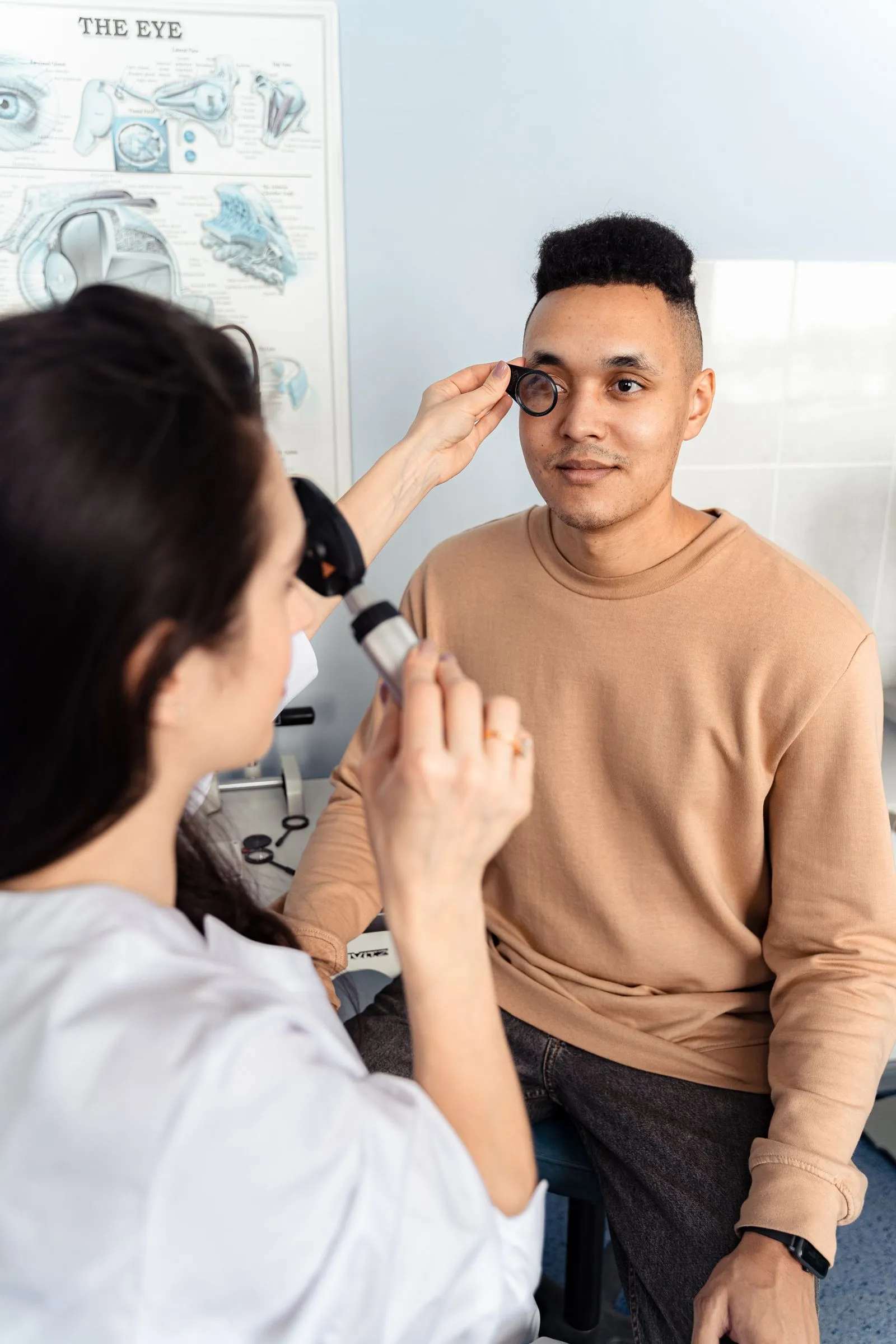
Sjögren disease is a systemic autoimmune disorder in which immune-mediated dysfunction commonly affects the lacrimal and salivary glands, producing dry eye and dry mouth. It may also involve joints, nerves, lungs, kidneys, blood vessels and other organs.
Ocular symptoms of Sjögren disease
- Persistent burning, grittiness or foreign-body sensation
- Redness, fluctuating blur and light sensitivity
- Difficulty reading, driving or using screens for sustained periods
- Stringy mucus, reduced tear production or reflex tearing
- Recurrent surface injury and, in severe cases, corneal epithelial breakdown
Dry mouth, dental decay, salivary-gland swelling, fatigue, joint pain, neuropathic symptoms and other systemic features can provide important diagnostic context.
Condition-specific mechanisms
Autoimmune lacrimal-gland dysfunction
T- and B-cell activity, type-I interferon pathways, cytokines and epithelial immune signaling can disrupt lacrimal secretion. Reduced aqueous tears weaken lubrication, antimicrobial defense and delivery of trophic factors to the ocular surface.
Tear-film instability and surface inflammation
Aqueous deficiency increases tear hyperosmolarity and epithelial stress. Goblet-cell loss, mucin abnormalities and meibomian-gland dysfunction may create a mixed aqueous-deficient and evaporative pattern. The resulting inflammatory cycle can maintain symptoms and surface damage.
Neuroimmune interaction
Corneal nerves regulate sensation, blinking and reflex tearing. Chronic inflammation and surface injury may alter nerve structure or signaling, creating reduced sensitivity in some patients and neuropathic pain features in others.
Diagnosis and differential diagnosis
No single symptom or antibody result establishes every case. Evaluation may include ocular-surface staining, Schirmer testing, tear breakup time, salivary assessment, anti-SSA/Ro and other serology, salivary-gland imaging or biopsy, and systemic clinical criteria. Differential diagnosis includes medication-related dryness, thyroid disease, hepatitis C, IgG4-related disease, sarcoidosis, dehydration, age-related gland dysfunction, meibomian-gland disease and other autoimmune disorders.
Evidence-based standard care
Ocular care is severity-based and may include preservative-free tears, gels or ointments, moisture conservation, environmental modification, prescription anti-inflammatory or immunomodulatory drops, short supervised topical corticosteroid courses, punctal occlusion, autologous serum or platelet-derived tears, bandage or scleral lenses and treatment of meibomian-gland dysfunction. Systemic therapy is determined by rheumatology according to organ involvement; it does not automatically resolve ocular dryness.
Where NRT may fit
NRT may be offered as complementary support for comfort, autonomic regulation, stress physiology and inflammatory balance through individualized acupuncture and traditional medicine approaches. Evidence for acupuncture in general dry-eye populations is mixed and heterogeneous, and evidence specific to Sjögren dry eye is limited. NRT must not be represented as suppressing the autoimmune disease, replacing immunomodulatory therapy or preventing systemic complications.
Frequently asked questions
Is Sjögren dry eye the same as ordinary evaporative dry eye?
Not necessarily. Sjögren commonly produces marked aqueous deficiency through autoimmune lacrimal dysfunction, although evaporative and meibomian-gland components may coexist.
Can a negative SSA test rule out Sjögren disease?
No. Seronegative disease occurs. Diagnosis integrates symptoms, examination, objective gland testing, serology and sometimes biopsy under specialist guidance.
Why might symptoms and staining differ?
Corneal sensitivity and neuropathic mechanisms can alter symptom perception. Both severe surface disease with reduced sensation and disproportionate pain with limited staining require careful evaluation.
Selected references
- Wu KY, et al. Overview of dry eye disease in Sjögren syndrome. 2023. PubMed.
- Foulks GN, et al. Clinical guidelines for management of dry eye associated with Sjögren disease. 2015. PubMed.
- Nguyen CQ, et al. Pathophysiology of Sjögren syndrome. 2009. PubMed.
- Bron AJ, et al. TFOS DEWS II Pathophysiology Report. 2017. PubMed.
- Wu KY, et al. Advances in Sjögren dry-eye diagnostics. 2024. PubMed.
- Wei QB, et al. Acupuncture for dry eye: systematic review and meta-analysis. 2020. PubMed.
Educational information only. NRT is complementary and does not replace ophthalmic, rheumatologic, dental or systemic care.