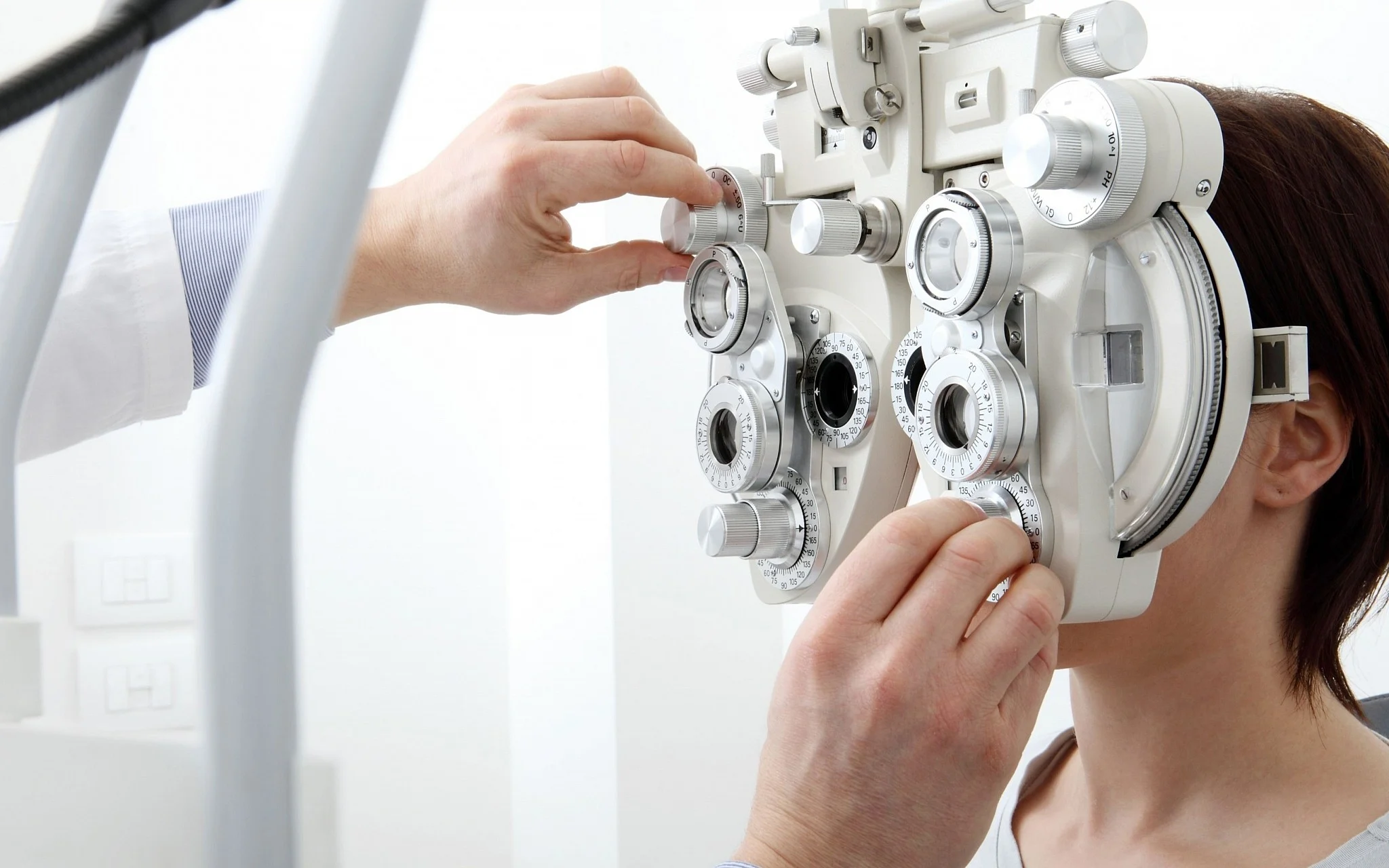
Blepharospasm is a neurological movement disorder in which the muscles that close the eyelids contract involuntarily. It affects both eyes. It starts with frequent blinking and eye irritation and can progress to forceful, sustained squeezing that closes the eyes for seconds or longer, even though the eyes themselves are healthy. It is a form of focal dystonia and is thought to arise from altered signaling in the brain’s movement circuits. It is different from the common, harmless eyelid twitch (myokymia), which affects one lid and passes in days. The main treatment is botulinum toxin injections every three to four months, which help about 9 in 10 people.
See a doctor promptly if eyelid spasms close your eyes completely, involve other parts of your face, come with a drooping eyelid, double vision, facial weakness or numbness, or started after a new medication. Seek emergency care for sudden facial drooping, weakness or speech difficulty.
Key takeaways
- An eyelid twitch that lasts a few days is almost never blepharospasm.
- Blepharospasm is a brain-circuit disorder expressed in the eyelids. The eyes are usually normal apart from surface dryness.
- Sensory input from the eye surface feeds the spasm. Treating dry eye, blepharitis and light sensitivity reduces it.
- Botulinum toxin is the first-line treatment and is effective and safe when repeated long term.
- Many people discover personal “sensory tricks” (touching the temple, humming, chewing) that briefly release the spasm.
In this article
- What blepharospasm is
- Early signs and how it progresses
- Twitch, blepharospasm or hemifacial spasm?
- What causes blepharospasm
- Triggers and things that help
- Conditions that look like blepharospasm
- Secondary blepharospasm: medications and other causes
- How it is diagnosed
- Treatment: botulinum toxin, eye-surface care, tinted lenses, medicines, surgery
- Living with blepharospasm
- Complementary approaches and the evidence
- Driving and work, emotional wellbeing, and questions to ask
- Where Netra Restoration Therapy may fit
- Frequently asked questions
What blepharospasm is
The eyelids are closed by the orbicularis oculi, a flat ring of muscle around each eye, with help from small muscles between the brows (the corrugator and procerus). Normally you blink about 15 times a minute without thinking, and you can squeeze your eyes shut deliberately.
In blepharospasm these muscles fire on their own. The medical term for sustained or repetitive involuntary muscle contraction is dystonia. Blepharospasm is a focal dystonia: a dystonia limited to one region of the body. When it occurs on its own with no other cause, it is called benign essential blepharospasm (BEB). “Benign” means it is not life-threatening; “essential” means no underlying disease is found. Many patients feel “benign” understates its impact.
It typically begins between ages 50 and 70 and is about twice as common in women as in men. Estimates of how common it is vary widely, on the order of a few to several tens of cases per 100,000 people.
Some people also have involuntary movements of the lower face, jaw, tongue or neck. Blepharospasm with jaw and mouth dystonia is called Meige syndrome. A related problem is apraxia of eyelid opening, in which the lids will not open on command even though the closing muscles are not actively contracting; it can occur with blepharospasm and explains why some people respond less well to injections.
Early signs and how it progresses
The onset is usually gradual.
Early
- Blinking more often than usual.
- Eye irritation, dryness, grittiness or a burning feeling.
- Sensitivity to bright light (photophobia), which is very common and often severe.
- Brief episodes of eyelid fluttering or tightening, triggered by sunlight, wind, pollution, stress or tiredness.
- Symptoms that ease on waking, with concentration on a task, or with talking or singing.
Established
- Forceful, squeezing closure of both eyes, with the brows pulling down.
- Spasms that last seconds to minutes.
- Difficulty keeping the eyes open while reading, watching television, driving or walking outdoors.
- Spread to the lower face or neck in some people within the first few years.
Severe
- The eyes may be closed for much of the day, causing functional blindness despite normal eyes and vision.
- Loss of independence, falls, giving up driving and work, anxiety and low mood.
The condition usually worsens over the first one to three years and then stabilizes. Spontaneous remission is uncommon (around 1 in 10) and when it happens tends to occur in the first few years.
Twitch, blepharospasm or hemifacial spasm?
What it is
Eyelid twitch (myokymia): Fine rippling of a few muscle fibers
Blepharospasm: Focal dystonia of the eye-closing muscles
Hemifacial spasm: Irritation of the facial nerve
Side
Eyelid twitch (myokymia): One eye, usually one lid (often lower)
Blepharospasm: Both eyes
Hemifacial spasm: One side of the face
Appearance
Eyelid twitch (myokymia): Barely visible flicker; you feel it more than others see it
Blepharospasm: Increased blinking progressing to forceful squeezing shut
Hemifacial spasm: Twitching around one eye that spreads to cheek and mouth on that side
Eye closes?
Eyelid twitch (myokymia): No
Blepharospasm: Yes
Hemifacial spasm: Often, on one side
During sleep
Eyelid twitch (myokymia): Stops
Blepharospasm: Stops
Hemifacial spasm: May continue
Duration
Eyelid twitch (myokymia): Days to a few weeks, intermittent
Blepharospasm: Chronic
Hemifacial spasm: Chronic
Triggers
Eyelid twitch (myokymia): Fatigue, stress, caffeine, eye strain, dry eye
Blepharospasm: Bright light, wind, stress, fatigue, reading, driving
Hemifacial spasm: Stress, fatigue, facial movement
Cause
Eyelid twitch (myokymia): Benign nerve-muscle irritability
Blepharospasm: Abnormal movement-circuit signaling
Hemifacial spasm: Usually a blood vessel pressing on the facial nerve
Treatment
Eyelid twitch (myokymia): Rest, reduce caffeine, lubricants; resolves by itself
Blepharospasm: Botulinum toxin; eye-surface care; other options
Hemifacial spasm: Botulinum toxin; microvascular decompression surgery
Needs investigation?
Eyelid twitch (myokymia): Only if it lasts more than a few weeks or spreads
Blepharospasm: Clinical diagnosis; tests if atypical
Hemifacial spasm: MRI usually recommended
If what you have is the common twitch, our article why is my eye twitching? Causes, remedies and myths covers it in full.
What causes blepharospasm
The exact cause is not known. The current understanding is that it is a network disorder involving the basal ganglia, thalamus, cerebellum, brainstem and sensorimotor cortex. Three abnormalities are described in research:
- Reduced inhibition. Circuits that normally damp down unwanted movement are less active. The blink reflex, tested electrically, recovers too quickly after a first stimulus.
- Abnormal sensory processing. The brain handles sensory input from the eyes and face differently. This fits with the prominent light sensitivity and the benefit from sensory tricks.
- Excess plasticity. The brain strengthens connections too readily, so repeated blinking in response to irritation may become “learned” as a persistent pattern.
A widely discussed model is the two-hit hypothesis: a person with a predisposition (genetic or acquired) develops blepharospasm after an environmental trigger, most often an irritating eye-surface condition such as dry eye or blepharitis. Animal experiments support this: a mild reduction of dopamine signaling combined with a slight weakening of the lid muscle produced persistent spasms, where neither alone did.
Risk factors
- Age over 50
- Female sex
- A family history of dystonia or tremor, present in roughly 1 in 4 to 1 in 5 patients
- Previous eye conditions: dry eye, blepharitis, light sensitivity
- Prior head or facial injury (possible)
- Anxiety and depression (associated; cause or effect is debated)
Coffee drinking and smoking have been reported as inversely associated in some studies, but these are observations, not advice.
Triggers and things that help
Common triggers
- Bright light: sunlight, fluorescent lights, headlights, screens
- Wind, air conditioning, smoke and pollution
- Stress and emotional tension
- Fatigue and poor sleep
- Reading, watching television, driving
- Walking, particularly outdoors
- Looking up
Things that often ease spasms
- Sleep and relaxation
- Concentrating on a specific task
- Talking, singing, humming, whistling
- Chewing gum, sucking a sweet, yawning
- Looking down
- Sensory tricks (geste antagoniste): lightly touching the temple, brow or cheek; pressing on the upper lid; wearing a tight headband or cap; pulling on an ear. About half of patients have at least one trick that works.
It is worth experimenting to find your own.
Conditions that look like blepharospasm
Several eye problems cause increased blinking or squeezing as a protective reflex. These need to be found and treated first, because they are common and treatable:
Other conditions to distinguish:
- Tics. Brief, suppressible, preceded by an urge; typically begin in childhood.
- Ptosis (drooping lid) from a weak lifting muscle, including myasthenia gravis, where weakness varies with fatigue. See ptosis.
- Functional (psychogenic) eyelid closure.
- Facial nerve recovery after Bell’s palsy with miswiring (synkinesis).
Secondary blepharospasm: medications and other causes
When blepharospasm results from an identifiable cause it is called secondary.
- Medications. Drugs that block dopamine can cause tardive dystonia, sometimes after long use: antipsychotics and some anti-nausea drugs such as metoclopramide. Other reported culprits include some antidepressants, antihistamines, calcium channel blockers and Parkinson’s medications. Never stop a prescribed drug without advice, but do tell your doctor about the timing.
- Parkinson’s disease and related disorders, including progressive supranuclear palsy, in which apraxia of lid opening is common.
- Brain lesions. Stroke, multiple sclerosis or tumors affecting the brainstem, basal ganglia or thalamus.
- Other neurological conditions: Wilson disease in younger people, Huntington disease, and others.
Features that suggest a secondary cause include onset before age 40, sudden onset, one-sided symptoms, other neurological signs, or exposure to a causative drug.
How it is diagnosed
There is no blood test or scan for blepharospasm. The diagnosis is clinical, based on observing:
- Involuntary, bilateral, synchronous spasms of the muscles around the eyes
- Narrowing or closure of the eyelids
- Increased blink rate
- Often, a sensory trick
A typical evaluation includes:
- History: onset, triggers, relieving factors, medications, family history, mood, and how daily life is affected.
- Eye examination: tear film, lid margins, cornea, lashes, and intraocular inflammation, to find and treat ocular triggers.
- Neurological examination: looking for dystonia elsewhere, parkinsonism or facial weakness.
- Severity rating using scales such as the Jankovic Rating Scale, which also helps track treatment response.
- MRI of the brain if features are atypical or one-sided.
- Blood tests in selected cases, for example for Wilson disease in younger patients or myasthenia antibodies if ptosis fluctuates.
Diagnosis is often delayed. Many people are treated for “dry eye” or “anxiety” for a year or more before the correct diagnosis is made. If your eyes close involuntarily, say so in those words.
Treatment
Blepharospasm cannot be cured, but it can usually be controlled.
Botulinum toxin injections
This is the treatment of choice. Blepharospasm was among the first conditions for which botulinum toxin was approved in 1989.
- How it works. The toxin blocks the release of acetylcholine at the nerve-muscle junction, weakening the injected muscle for about three months.
- What happens. Tiny amounts are injected with a fine needle at several points in the upper and lower lids and between the brows. It takes a few minutes in the clinic.
- Onset and duration. Benefit begins in 2 to 5 days, peaks at about 2 weeks, and lasts roughly 10 to 14 weeks. Treatment is repeated every 3 to 4 months.
- Effectiveness. About 90% of patients improve. Controlled trials support several formulations (onabotulinumtoxinA, incobotulinumtoxinA and abobotulinumtoxinA).
- Side effects. Temporary and dose-related: drooping of the upper lid, incomplete lid closure with dry eye, watering, bruising, and occasionally double vision. They wear off as the toxin does.
- Long-term use. Benefit is generally maintained for decades. Resistance from antibodies is rare at the small doses used.
If injections are not working well, the dose, sites or product can be adjusted. A common reason for poor response is unrecognized apraxia of eyelid opening, which is helped by injecting the strip of muscle right at the lid margin.
Treating the eye surface
Because eye irritation drives the blink reflex, surface care is part of treatment for everyone:
- Preservative-free lubricating drops through the day and gel at night
- Warm compresses and lid hygiene for meibomian gland dysfunction
- Punctal plugs or prescription anti-inflammatory drops where appropriate
- Treatment of allergy
- Humidifier; avoiding fans and direct air flow
Botulinum toxin itself can worsen dryness by reducing blink strength, so lubrication matters even more after injections.
Light management
- FL-41 tinted lenses. This rose-colored tint filters blue-green wavelengths. Small studies show reduced blink rate and light sensitivity in blepharospasm.
- Wraparound sunglasses and a brimmed hat outdoors
- Reducing glare and screen brightness indoors
Avoid wearing very dark glasses indoors all the time; it can increase light sensitivity over time.
Oral medications
Tablets help a minority and are limited by side effects. They are used when injections are insufficient or unsuitable. Options include clonazepam, trihexyphenidyl, baclofen and tetrabenazine. Response is unpredictable.
Surgery
For people who do not respond adequately to injections:
- Myectomy. Surgical removal of some or most of the eyelid-closing muscle. It improves function in most patients who undergo it, and many need fewer or lower-dose injections afterward.
- Frontalis suspension for apraxia of eyelid opening, linking the lid to the forehead muscle.
- Deep brain stimulation has been used in severe Meige syndrome.
Other supports
- Eyelid crutches (thin wire attachments on spectacle frames) or lid-lifting tape, for some people with apraxia of lid opening.
- Psychological support. Stress worsens spasms, and the condition itself causes anxiety, embarrassment and isolation. Cognitive behavioral therapy and relaxation training help people cope.
- Occupational therapy and low vision services for practical adaptation.
Living with blepharospasm
- Plan around your injections. Most people have a “good window” from about week 2 to week 10. Schedule demanding tasks then.
- Driving. Do not drive if you cannot reliably keep your eyes open. Discuss this with your doctor, and check your local licensing rules.
- Prepare for triggers. Carry tinted glasses, a hat and lubricating drops.
- Use your tricks. Humming, chewing gum or touching your temple can get you across a road or through a checkout.
- Sleep and stress. Protect both.
- Tell people. A simple explanation (“I have a neurological condition that makes my eyelids close”) prevents misunderstanding.
- Connect. Patient organizations such as the Benign Essential Blepharospasm Research Foundation offer information and support groups.
- Look after mood. Depression and anxiety are common and treatable. Mention them to your doctor.
Complementary approaches and the evidence
People with blepharospasm often try complementary therapies. An honest summary:
- Acupuncture. Several small clinical studies, mostly from China, report reduced spasm severity with acupuncture alone or added to botulinum toxin or medication. The studies are small and of variable quality, and sham-controlled trials are lacking. It is reasonable as an adjunct for people who wish to try it, with realistic expectations.
- Relaxation, biofeedback, mindfulness and yoga. Limited direct evidence, but stress reduction lowers a well-recognized trigger.
- Magnesium and other supplements. No good evidence for blepharospasm. Magnesium is often suggested for benign twitches; evidence there is weak too.
- Reducing caffeine. Helpful for ordinary twitching in some people. Unproven in blepharospasm.
- Herbal medicine. Traditional East Asian formulas are used for eyelid spasm; evidence consists mainly of case series.
None of these replaces botulinum toxin for moderate or severe disease.
Driving, work and practical matters
Driving. Involuntary eye closure while driving is dangerous. If your eyes close for more than a moment, or you cannot predict when they will, stop driving until treatment has brought the spasms under control, and ask your doctor for specific advice. Many people drive safely once injections are working well, and some find the weeks just before the next injection are the difficult period. Rules on reporting medical conditions to licensing authorities vary by state.
Work. Screen glare, fluorescent lighting, air conditioning and prolonged reading are common aggravating factors. Adjustments that people find useful include:
- A matte screen filter and lower screen brightness
- A desk away from overhead lights or air vents
- Tinted lenses, including FL-41, worn indoors
- Short, regular breaks from visually demanding tasks
- Flexible scheduling around injection cycles
Blepharospasm can qualify as a disability when it limits major life activities, and a letter from your treating doctor supports a request for reasonable accommodation.
Planning around the injection cycle. Benefit usually begins within a few days, peaks at two to four weeks and fades toward the end of the cycle. A symptom diary helps your doctor adjust the dose, the injection sites and the interval. Schedule demanding events, long drives and travel for the middle of the cycle where you can.
Emotional wellbeing
Blepharospasm is visible, unpredictable and often misunderstood. People report being told they look tired, drunk or uninterested. Many withdraw from social situations, and rates of anxiety and depression are higher than in the general population.
Stress does not cause blepharospasm, but it reliably makes spasms worse, which can create a cycle.
What helps:
- A clear diagnosis. Many people go years before the condition is named. Knowing it is a recognized neurological disorder, and not a habit or a psychological weakness, is a relief in itself.
- Explaining it briefly. A sentence such as “I have a neurological condition that makes my eyelids close” answers most questions.
- Support groups. Patient organizations for blepharospasm and dystonia run local and online groups and publish practical guidance.
- Treating low mood and anxiety. Talk to your doctor. Note that a few psychiatric medications can affect movement disorders, so prescribers should know your diagnosis.
- Stress management. Regular sleep, exercise, relaxation practice and paced breathing do not cure the condition, but many people find their spasms are less intense.
Questions to ask your specialist
- Is this benign essential blepharospasm, or could a medication or another condition be contributing?
- Do I also have apraxia of eyelid opening, which may need a different approach?
- Which botulinum toxin product do you use, at what dose and at which sites?
- How long should each treatment last, and what do we do if it wears off early?
- What side effects should I expect, and how long do they last?
- Would treating dry eye or light sensitivity improve my results?
- Am I a candidate for oral medication, and what are the drawbacks?
- At what point would you consider surgery?
- Is it safe for me to drive at present?
- Are there clinical trials I could join?
Where research is heading
- Longer-acting toxin formulations are being studied with the aim of extending the interval between injections.
- Brain imaging and physiology studies point to altered activity in networks that link the basal ganglia, thalamus, cerebellum and cortex, and to reduced inhibition in the blink reflex circuit.
- Genetics. A minority of patients have an affected relative. Several genes linked to other dystonias are under study, though no single gene explains most cases.
- Non-invasive brain stimulation, such as repetitive transcranial magnetic stimulation, has produced short-term improvement in small studies and remains experimental.
- Deep brain stimulation is used for some people with Meige syndrome or widespread dystonia. Its role in isolated blepharospasm is limited.
- Light-filtering lenses. The role of light sensitivity pathways is an active area, building on the FL-41 studies.
Where Netra Restoration Therapy may fit
Blepharospasm is a neurological diagnosis made and managed by neurologists, neuro-ophthalmologists and oculoplastic specialists. Botulinum toxin is the established first-line treatment, and Netra Restoration Therapy (NRT) is not an alternative to it.
Where integrative care may contribute is the sensory side of the condition. The two-hit model says that an irritable eye surface feeds an over-reactive blink circuit. Many people with blepharospasm have chronic dry eye, meibomian gland dysfunction, corneal nerve sensitization and marked light sensitivity, and these often persist or worsen after injections. These are conditions NRT is designed to support.
NRT is a phytoceutical eye-care program: individualized herbal formulas drawn from TCM ophthalmology and Ayurvedic ophthalmology, selected with a modern understanding of ocular biology, with acupuncture in a supportive role. For the ocular surface and its nerves, the formulas are chosen to:
- reduce low-grade inflammation, through botanicals that inhibit NF-κB and MAPK signaling
- reduce oxidative stress on surface and nerve cells
- support microcirculation to the lids, glands and ocular surface
- support neurotrophic signaling relevant to corneal nerve health
- steady autonomic and stress signaling with adaptogenic botanicals
Acupuncture has its own evidence in dry eye (several randomized trials show improved symptoms and tear measures compared with artificial tears alone) and preliminary evidence in blepharospasm itself, as noted above.
What to keep in mind:
- NRT does not treat the dystonia. It is an adjunct aimed at ocular surface comfort, light sensitivity and overall eye health alongside your neurological care.
- Continue botulinum toxin and all prescribed treatment. Tell both teams what you are using.
- Acupuncture near the eyes is performed by trained practitioners using sterile single-use needles; we coordinate timing around your injection schedule.
- The complete NRT program has not been tested in a controlled trial and has not been studied specifically in blepharospasm.
- It is not presented as a cure. Outcomes vary.
To discuss whether it is appropriate for you, see what is Netra Restoration Therapy, dry eye beyond MGD: a TCM and NRT view and acupuncture ophthalmology, or call (732) 503-9999.
Frequently asked questions
What is blepharospasm?
Blepharospasm is a neurological condition that causes involuntary blinking and forceful closure of both eyelids. It is a focal dystonia and is not caused by a problem in the eyes themselves.
What is the first sign of blepharospasm?
Usually increased blinking with eye irritation and light sensitivity in both eyes, often triggered by bright light, wind, stress or fatigue.
What causes blepharospasm?
The exact cause is unknown. It involves abnormal signaling in the brain’s movement circuits. Genetic predisposition, eye-surface irritation such as dry eye, and certain medications are contributing factors.
Is blepharospasm the same as an eye twitch?
No. A common eye twitch is a fine flicker in one eyelid that passes within days or weeks. Blepharospasm affects both eyes, causes forceful closure and is persistent.
Is blepharospasm serious?
It does not damage the eyes or shorten life, but it can be disabling. Severe spasms can keep the eyes shut and cause functional blindness. Treatment is effective for most people.
Can blepharospasm go away on its own?
Rarely. About 1 in 10 people have a remission, usually within the first few years. Most need ongoing treatment.
What is the best treatment for blepharospasm?
Botulinum toxin injections into the muscles around the eyes every three to four months. About 90% of patients improve. Eye-surface care and tinted lenses are useful additions.
Can stress cause blepharospasm?
Stress does not cause it but reliably makes spasms worse. Stress management is part of living with the condition.
Can dry eyes cause blepharospasm?
Dry eye causes reflex blinking and is thought to be a trigger in predisposed people. Many patients have both, and treating dry eye reduces spasm severity.
Does blepharospasm lead to Parkinson’s disease?
No. Blepharospasm is a separate condition. Eyelid spasms can occur in Parkinson’s disease and related disorders, which is one reason a neurological examination is part of the evaluation.
Can blepharospasm spread?
In some people dystonia spreads to the lower face, jaw or neck, usually within the first five years. Most people’s symptoms remain around the eyes.
What vitamin deficiency causes eye twitching?
No vitamin deficiency has been shown to cause blepharospasm. Low magnesium is often blamed for ordinary twitches, but evidence is weak.
Can I drive with blepharospasm?
Only if your eyes stay reliably open. Many people can drive during the period when injections are working well. Discuss it with your doctor and follow local licensing rules.
Related reading
References
- Defazio G, Hallett M, Jinnah HA, Conte A, Berardelli A. Blepharospasm 40 years later. Mov Disord. 2017;32(4):498–509.
- Hallett M, Evinger C, Jankovic J, Stacy M; BEBRF International Workshop. Update on blepharospasm: report from the BEBRF International Workshop. Neurology. 2008;71(16):1275–1282.
- Simpson DM, Hallett M, Ashman EJ, et al. Practice guideline update summary: botulinum neurotoxin for the treatment of blepharospasm, cervical dystonia, adult spasticity, and headache. Neurology. 2016;86(19):1818–1826.
- Duarte GS, Rodrigues FB, Marques RE, et al. Botulinum toxin type A therapy for blepharospasm. Cochrane Database Syst Rev. 2020;11:CD004900.
- Schicatano EJ, Basso MA, Evinger C. Animal model explains the origins of the cranial dystonia benign essential blepharospasm. J Neurophysiol. 1997;77(5):2842–2846.
- Blackburn MK, Lamb RD, Digre KB, et al. FL-41 tint improves blink frequency, light sensitivity, and functional limitations in patients with benign essential blepharospasm. Ophthalmology. 2009;116(5):997–1001.
- National Eye Institute. Blepharospasm. Patient information.
- Albanese A, Bhatia K, Bressman SB, et al. Phenomenology and classification of dystonia: a consensus update. Mov Disord. 2013;28(7):863–873.
- Anderson RL, Patel BC, Holds JB, Jordan DR. Blepharospasm: past, present, and future. Ophthalmic Plast Reconstr Surg. 1998;14(5):305–317.
- Benign Essential Blepharospasm Research Foundation. Patient resources.
This article is general education and does not replace an individual medical or eye examination. Sudden facial weakness, drooping or speech difficulty needs emergency care. Netra Restoration Therapy is adjunctive to conventional care and is not presented as a cure. Individual results vary.