Search conditions, treatments, research reviews and articles. Press Enter to see all results, Esc to close.
Search conditions, treatments, research reviews and articles. Press Enter to see all results, Esc to close.
Blog
October 29, 2026
Demodex blepharitis is inflammation of the eyelid margins associated with an overgrowth of Demodex mites, microscopic organisms that live in eyelash follicles and the oil glands of the eyelids. Itching is the most common symptom, and sleeve-like deposits at the base of the eyelashes, called collarettes, are its characteristic sign. The condition tends to be chronic and recurrent, and in July 2023 the U.S. Food and Drug Administration approved the first prescription eye drop specifically for it. [1,2,3]
The practical challenge is that Demodex blepharitis overlaps with dry eye, meibomian gland dysfunction, allergy and ocular rosacea, and many people carry the mites without any symptoms. Estimates of how common it is also vary widely. A study of more than 1,000 patients at United States eye clinics found collarettes in 57.7 percent, while the National Eye Institute describes mite-related blepharitis as rare. Finding mites is therefore the start of a diagnosis, not the end of one. [4,5,6]
This guide explains what the mites are, how the condition is recognized and diagnosed, what each treatment is intended to do and how strong the evidence is, and how to manage recurrences. At Netra Eye Institute, supportive care is discussed alongside the treatment plan from your eye-care clinician, not as a substitute for it.
In this article
Two species of Demodex live on human skin. Demodex folliculorum, about 0.3 to 0.4 millimeters long, clusters around eyelash follicles. Demodex brevis, slightly smaller at 0.2 to 0.3 millimeters, lives in the skin's oil-producing units, including the meibomian glands that line the eyelid margins. Both are far too small to see without magnification. [7]
These mites are normal inhabitants of adult skin. In a study that looked for their DNA, Demodex was found in the facial oil of all 19 adults tested, whereas looking for mites by eye in the same study found them in only 14 percent of 253 adults. Infestation also rises with age: one summary reports mites in about 13 percent of children aged 3 to 15, 69 percent of adults aged 31 to 50, 84 percent by age 60 and essentially everyone over 70. [7,8]
Most of the time the mites and their host coexist without problems. For reasons that are not fully understood, the population sometimes increases, and the lid margins become inflamed. The mites pass easily between people through skin-to-skin contact, but experts have not established whether Demodex blepharitis itself spreads from one person to another. [1,7]
The answer depends on how the condition is defined and who is examined. In the Titan study, investigators reviewed the charts of 1,032 consecutive patients at six United States eye clinics who had a slit-lamp examination for any reason. Collarettes were recorded in 57.7 percent, including 58.9 percent of patients with dry eye, and 44 percent of those with collarettes had never been diagnosed with blepharitis. Age was not a significant predictor in that sample, although three-quarters of the patients were over 50. [4]
That study, the estimate that about 25 million Americans are affected, and an expert panel's consensus statements were all funded by or linked to the manufacturer of the approved drug. The figures are still informative, but they should be read alongside other sources. [2,4,9]
By contrast, the National Eye Institute names bacteria as the main cause of blepharitis and calls mite-related blepharitis rare, and the American Optometric Association describes eyelash mites as a less common cause. The American Academy of Ophthalmology's practice guideline notes that Demodex folliculorum is found in about 30 percent of people with chronic blepharitis but at nearly the same rate in people without it. [5,10,11]
The reasonable conclusion is that collarettes are common in eye clinics when clinicians look for them, especially in older adults, but mites alone do not prove that they are causing a particular person's symptoms. In the approval trials, 62 percent of participants were 65 or older, and expert clinicians report seeing the condition most often after age 60. [2,3]
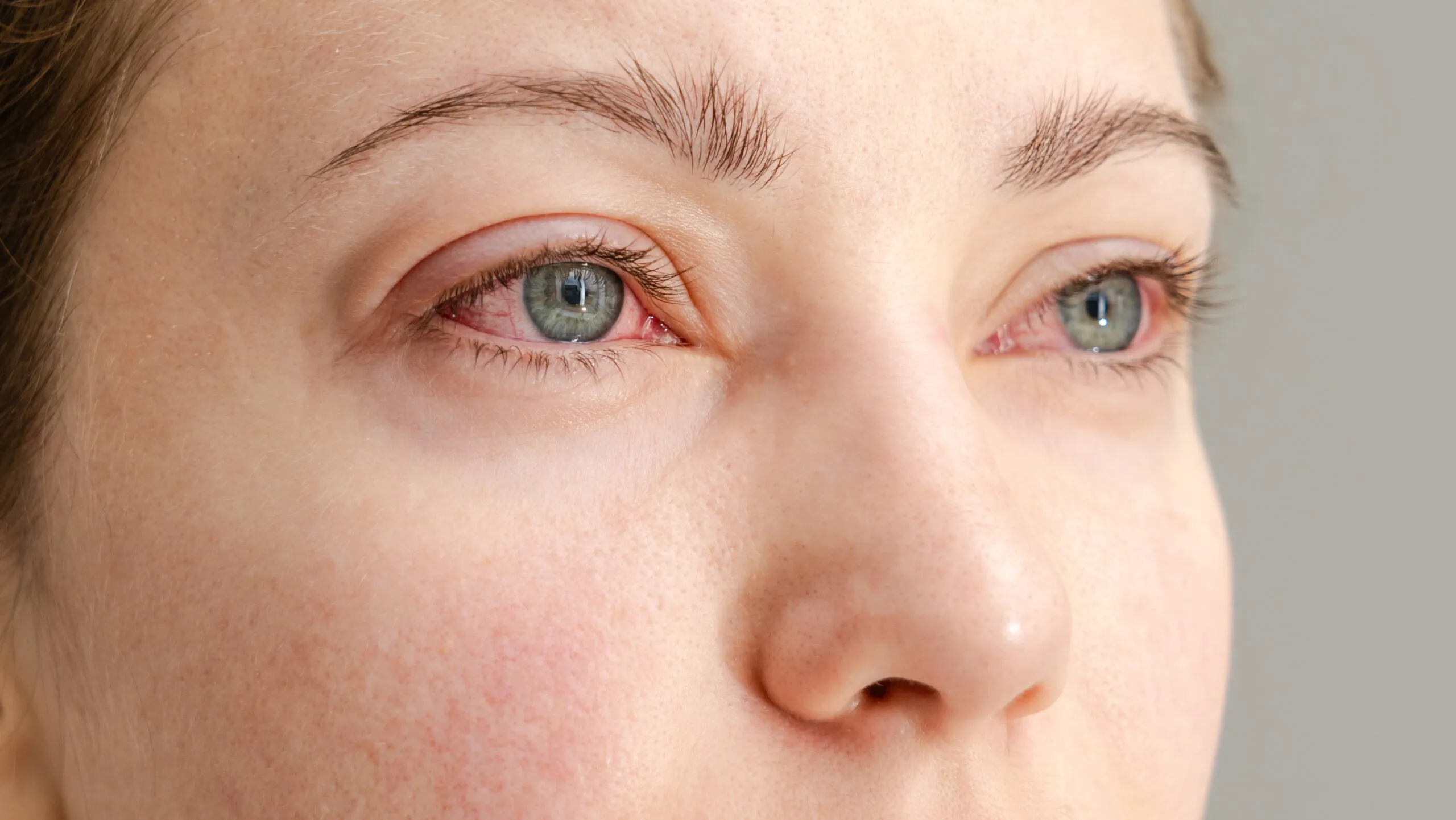
Itching is the symptom most consistently associated with Demodex blepharitis, and it is often worse late in the evening or early in the morning. Other common features include red or puffy eyelids, crusty flakes on the lashes, lids stuck together on waking, a gritty or foreign-body sensation, dryness, and lashes that grow in odd directions or fall out. [1,2,9]
The sign clinicians look for is the collarette, a cuff of waxy debris wrapped around the base of an eyelash, sometimes called cylindrical dandruff. In a 2005 study, Demodex was found in all 32 patients with cylindrical dandruff compared with 22 percent of 23 patients without it. Several reviews and an expert panel describe collarettes as pathognomonic, meaning that they point specifically to Demodex. [2,7,12]
Lash problems deserve attention. Misdirected lashes are common, and lash loss tends to occur in more advanced cases; one study found that people complaining of lash loss had about four times the odds of having Demodex. [9]
The condition can affect daily life more than its reputation suggests. Patients have described problems with night driving, daily hygiene, contact lens comfort, and wearing makeup or artificial lashes. In a survey of 311 people with confirmed Demodex blepharitis, 58 percent had not previously received a correct diagnosis and 51 percent had had symptoms for at least four years. [9]
Demodex has been linked with chalazia, the firm lumps that form when an eyelid oil gland becomes blocked and inflamed. In one study, mites were found in 69.2 percent of people with chalazia compared with 20.3 percent of matched controls, and after surgical removal, chalazia recurred in 33.3 percent of those with mites compared with 10.3 percent of those without. [13]
In advanced cases the cornea can become involved, with surface erosions, inflammatory infiltrates or keratitis. In one case series of six patients with Demodex-related corneal disease, three had reduced vision; corneal inflammation settled after treatment, but existing scars remained. That is a strong reason not to delay care when the eye itself, rather than only the lid, becomes painful or red. [9,14]
Most Demodex symptoms are irritating rather than dangerous, and mild itching, burning or crusting can be assessed at a routine appointment. The American Academy of Ophthalmology's triage guidance treats some eye symptoms differently, however. Sudden vision loss, eye pain that comes on suddenly or keeps getting worse, or redness or discharge in a contact lens wearer needs immediate assessment: contact the eye clinic or go to an emergency department right away. Light sensitivity with redness or reduced vision, or a newly red eye, should be seen within about 24 hours. [15]
Eyelid changes that affect one side persistently, especially with lash loss in one area, a lump, localized crusting or an ulcer that does not respond to treatment, should be re-examined, because an eyelid tumor can occasionally mimic blepharitis. [11]
Diagnosis begins at the slit lamp. The clinician examines the bases of the upper lashes while you look down, because collarettes are easiest to see in that position. If confirmation is needed, a few lashes can be gently removed and examined under a microscope for mites; in the approval trials, at least four lashes per eye were sampled at each assessment. [7,9,16]
No single test is accepted as the gold standard. A systematic review of 87 studies found that the clinical literature compares several approaches, including slit-lamp examination for collarettes, lash manipulation, microscopy of removed lashes and confocal microscopy, without agreement on one best method. [17]
Expert clinicians agree that the diagnosis can be made from collarettes, mites and/or symptoms, and that people whose blepharitis or dry eye does not respond to usual treatment should be checked for Demodex. Please do not pull out your own lashes or scrape the lid margin to look for mites; that can injure the follicles and the eye. [2,11]
Several conditions can coexist with Demodex blepharitis or produce similar symptoms. Meibomian gland dysfunction is closely linked with Demodex brevis, and manufacturer-supported reviews based on collarettes report signs of Demodex blepharitis in roughly 60 to 70 percent of people with dry eye. Bacterial blepharitis, allergic eye disease and contact lens problems can cause itching and redness without mites. [5,7,9]
Ocular rosacea is particularly relevant. Across 23 case-control studies of more than 1,500 people with facial rosacea, those with rosacea were about nine times more likely to have Demodex infestation and had higher mite density, although these studies cannot prove cause and effect. [11,18]
Because the conditions overlap, a treatment that reduces mites may not resolve every symptom. The examination should identify whether gland dysfunction, dry eye or rosacea also needs treatment.
Treatment aims to reduce the mite population, clear collarettes, settle lid inflammation, and manage any associated gland or dry-eye disease. Clinicians generally agree that Demodex blepharitis is chronic and recurrent, so it is worth discussing both the initial course and what maintenance will look like. [2,19]
| Treatment | Main purpose | Important limitation |
|---|---|---|
| Lotilaner 0.25% eye drops (XDEMVY) | Prescription anti-parasitic treatment aimed at the mites | Six-week course; collarettes return in many people within a year |
| Lid hygiene and warm compresses | Remove debris and support oil-gland function | Lower mite counts but do not eradicate mites |
| Tea tree oil and terpinen-4-ol products | Traditional anti-mite approach | Uncertain benefit and a risk of irritation |
| Ivermectin or metronidazole (off-label) | Alternative anti-mite medicines | Limited trial evidence; prescription and monitoring needed |
| In-office lid cleaning or intense pulsed light | Remove debris; treat associated gland disease | Variable effect on mites; cost; IPL is unsuitable for some skin tones |
The U.S. Food and Drug Administration approved lotilaner ophthalmic solution 0.25% on July 24, 2023. It is an anti-parasitic drop, and Demodex blepharitis is its only approved use. The labeled regimen is one drop in each eye twice daily, about 12 hours apart, for six weeks. If a dose is missed, continue with the next scheduled dose, and separate other eye drops by at least five minutes. [3,20]
Approval was based on two randomized trials, Saturn-1 and Saturn-2, that together enrolled 833 patients. In Saturn-1, collarette cure, defined as 2 or fewer collarettes on the upper eyelid, after 43 days occurred in 44.0 percent of patients using lotilaner compared with 7.4 percent using a vehicle drop, and mites were eradicated in 67.9 percent compared with 17.6 percent. In Saturn-2, collarette cure was 56.0 percent compared with 12.5 percent, and mite eradication was 51.8 percent compared with 14.6 percent. The FDA's summary of the same trials reports slightly different figures, for example collarette cure of 43.9 compared with 7.2 percent and 54.7 compared with 12.2 percent. [3,16,21]
Lid redness improved more slowly. Clearance of lid redness at day 43 occurred in 19.1 percent and 31.1 percent of lotilaner users in the two trials, compared with 6.9 percent and 9.0 percent of vehicle users. Many people therefore see fewer collarettes before their lids look completely normal. [16,21]
The most common side effect is stinging or burning when the drop goes in, reported by 10 percent of patients. A chalazion or stye and small areas of corneal surface irritation were each reported in fewer than 2 percent. In the trials, about nine in ten patients rated the drop neutral to very comfortable. Safety and effectiveness have not been established for people under 18, and there are no data on use in pregnancy. [16,20,21]
How long the benefit lasts matters as much as the initial result. In an extension study of Saturn-1 patients followed without further treatment, 39.8 percent of the 128 returning lotilaner patients had 2 or fewer collarettes at six months and 23.5 percent at one year, compared with 44.0 percent of all lotilaner patients at day 43. Still, 62.6 percent had 10 or fewer collarettes at one year, compared with 21.9 percent of the vehicle group. The approval trials were sponsored by the manufacturer, and the extension study had industry-affiliated authors. [21,22]
Cost and insurance coverage vary, and the cash price of a prescription drop can be substantial. Ask the prescriber's office and your pharmacy about coverage before starting, so that a gap in supply does not interrupt a six-week course.
Tea tree oil, and its main active ingredient terpinen-4-ol, were the mainstay of anti-mite treatment for years and remain in many lid wipes and cleansers. The evidence is weaker than their popularity suggests. A 2020 Cochrane review of six randomized trials with 562 participants concluded that it is uncertain whether tea tree oil is effective for short-term treatment, found no evidence of a difference in symptoms compared with other treatments, and noted that lower concentrations may be preferable to avoid eye irritation. [6]
Other studies add caution. In the laboratory, terpinen-4-ol was toxic to human meibomian gland cells at concentrations 10 to 100 times lower than those needed to kill mites, although laboratory cells are not the same as patients. In a randomized trial, adding terpinen-4-ol lid scrubs to in-office lid cleaning was no better than sham scrubs. Tea tree oil and terpinen-4-ol can also cause contact dermatitis and allergic reactions. [9,23,24]
Clinical guidance has not abandoned these products entirely: the American Academy of Ophthalmology lists tea tree oil, alongside lotilaner, as an option for Demodex in its dry-eye guidance, while a recent expert panel did not reach consensus on its use. If your clinician recommends a commercial terpinen-4-ol product, use it exactly as directed and stop if it causes stinging, swelling or redness. Never apply household tea tree oil or other essential oils near the eyes. [19,25]
Ivermectin and metronidazole, used on the skin or by mouth, can reduce mite density and improve signs, but they are used off-label for this purpose. Oral treatment carries a greater risk of side effects and drug interactions. In a randomized trial of 60 patients, a compounded ivermectin and metronidazole gel applied three times over a month cleared mites in 96.6 percent of treated patients, but this was a single small study of a product that is not FDA-approved for the eyelids. [9,26]
The American Academy of Ophthalmology lists off-label ivermectin 1 percent cream among second-step options, and its guideline notes that oral ivermectin has helped some resistant cases. An expert panel did not prefer ivermectin over lotilaner. These options require a prescriber who can weigh benefits, risks and other medicines. [11,19,25]
Warm compresses and eyelid cleansing are the foundation of care for most forms of blepharitis and may be needed long term, because symptoms often return when they stop. Compresses should be warm, not hot enough to burn the skin, and a wrung-out washcloth cools quickly, so ask your clinician how long and how often to use one. [1,11,19]
Lid hygiene alone, however, lowers mite counts without eradicating the mites. Hypochlorous acid lid cleansers have a useful antibacterial effect, but in a laboratory test a 0.01 percent hypochlorous acid product killed mites no faster than mineral oil, so it should not be relied on as an anti-mite treatment. [11,12,27]
In-office microblepharoexfoliation, in which a clinician mechanically cleans the lid margin, can remove debris, and combined with home hygiene it has performed better than home hygiene alone, but without eliminating mites to a clinically meaningful degree. Intense pulsed light can treat associated meibomian gland dysfunction and has reduced mite counts in some studies, with variable results; it is also costly and unsuitable for the darkest skin tones. An expert panel considered both procedures reasonable supplements to lotilaner rather than replacements. [9,25,28]
Blepharitis in general rarely goes away completely, and a lid-care routine may be needed for life. For Demodex specifically, experts describe the condition as chronic and recurrent. A realistic plan therefore separates the treatment course, which aims to bring mites and collarettes under control, from maintenance, which aims to keep flares infrequent. [2,5,10]
Eye makeup is listed among the factors that can aggravate blepharitis. During treatment, it is sensible to limit eye makeup and remove it thoroughly before bed. There is no good evidence either way about eyelash extensions; in the Titan study the 19 users did not differ significantly from nonusers in collarette rate. [1,4,10,19]
Contact lenses deserve particular care. Professional guidance suggests pausing lens wear while blepharitis is treated, and if you use lotilaner, remove lenses before each dose and wait 15 minutes before reinserting them, because a preservative in the drop can discolor soft lenses. One small study found Demodex in 26 of 28 lens wearers with new lens discomfort compared with 2 of 34 comfortable wearers, but the larger Titan chart review found no significant difference in collarettes between wearers and nonwearers. [4,10,20,29]
Whether bedding and towels play a role has not been studied. Cleveland Clinic advises washing sheets, pillowcases and washcloths in hot water, which is a reasonable, low-cost precaution during treatment. If you also have facial rosacea, coordinate eye and skin care, because the two conditions are linked. [1,18]
Keep a simple record of itching, crusting and redness. If symptoms return after a successful course, book a review rather than restarting old products; the clinician can check for collarettes and decide whether another course, a procedure or a different explanation is appropriate.
Netra Restoration Therapy is Netra Eye Institute's individualized integrative program, drawing on acupuncture, Traditional Chinese Medicine, Ayurveda and attention to systemic contributors. For Demodex blepharitis, its relevant role is adjunctive support for a person with an established diagnosis and an active eye-care plan. [30]
Demodex blepharitis usually involves several layers: the mite population, inflammation of the lid margin, associated gland disease or dry eye, and the symptoms that remain once those are treated. An adjunctive plan should name which layer it is meant to address. A reasonable goal might be more comfortable eyes during reading or screen work, better sleep, or easier adherence to the prescribed lid routine. It should not be an assumed reduction in mites that has never been measured.
The team should review current prescriptions, lid products, supplements and skin treatments before adding anything, and changes should be introduced one at a time so that benefit or irritation can be interpreted.
We found no published clinical trials of acupuncture, moxibustion or Traditional Chinese Medicine for Demodex blepharitis. A meta-analysis of 12 trials of Chinese herbal treatments for blepharitis in general reported improvements in overall response and tear stability, but it reported no mite or collarette outcomes, and the trials' methods were weak. An evidence map of 319 trials of acupuncture and moxibustion for dry eye found that their methods were generally of low quality. [31,32]
Netra Restoration Therapy, acupuncture and herbal approaches therefore have not been shown to eliminate Demodex mites and are not a substitute for mite-directed treatment. Acupuncture can be discussed as a monitored adjunct for associated dry-eye discomfort, but trials have not shown a consistent improvement in dry-eye symptoms, so agree on realistic goals and a point at which to stop if it is not helping. [32,33]
Do not apply homemade herbal liquids, oils, ghee or other nonsterile preparations to the eyelid margin or the eye. The experience with tea tree oil, which is a plant extract but can irritate the lids and damage gland cells in the laboratory, shows that natural products are not automatically gentle. Any proposed traditional eye procedure requires an assessment of the ocular surface first, and Netra's co-management guidance identifies active infection and unhealed corneal defects as important exclusions. [23,34]
Agree on a few measures before starting: an itching score at the same time each day, how often crusting or lid sticking occurs, contact lens wearing time, and the collarette and lid findings at your eye-care follow-up. If symptoms improve while collarettes or lid inflammation persist on examination, the mite-directed plan may still need attention.
Bring all lid wipes, cleansers, eye drops, skin treatments and supplements you use, or photographs of their labels, including products you have stopped. Note which ones sting, which seemed to help, and how consistently you have been able to use them. If cost or a busy schedule makes a routine difficult, say so; the plan can often be simplified safely.
Useful questions include: Do I have collarettes, and how many? Is there gland dysfunction, dry eye or rosacea as well? Which treatment is aimed at the mites, and which at the other problems? When should we recheck, and what result would mean the treatment is working? What should I do if the itching comes back after the course ends? Which symptoms need an earlier visit?
If supportive care is appropriate after that assessment, you can request a Netra consultation and bring your recent examination findings and treatment plan with you.
Most adults do. Genetic testing has found Demodex DNA on the facial skin of all adults tested, and infestation becomes more common with age. The problem in Demodex blepharitis is an overgrowth associated with inflammation, not the simple presence of mites. [1,7,8]
The mites can pass between people through skin-to-skin contact, but experts have not determined whether the eyelid condition spreads from person to person. Washing pillowcases and washcloths in hot water during treatment is a sensible precaution. [1,7]
No. Allergy, dry eye, bacterial blepharitis, contact lens problems and other conditions also cause itching. A slit-lamp examination for collarettes, and sometimes microscopy of a few lashes, is needed to identify Demodex. [2,5]
Collarettes are cuffs of waxy debris that wrap around the base of eyelashes. They are best seen with magnification while looking down, and they are the sign most strongly associated with Demodex blepharitis. [9,12]
The labeled course is one drop in each eye twice daily for six weeks. The condition can recur. In a one-year follow-up of trial patients who had used lotilaner, about a quarter still had 2 or fewer collarettes on the upper eyelid, and about 63 percent still had 10 or fewer. [20,22]
The evidence for tea tree oil is uncertain, and it can irritate the eyelids. If your clinician recommends a commercial terpinen-4-ol product, use it as directed. Do not put household tea tree oil or other essential oils near your eyes. [6,23]
Professional guidance suggests pausing contact lenses and limiting eye makeup while blepharitis is treated. If you use lotilaner, remove lenses before each dose and wait 15 minutes before putting them back in. [10,20]
No. Warm compresses and lid cleansing help with debris and gland function and are often needed long term, but they lower mite counts without eradicating the mites. [11,12]
We found no published clinical trials of acupuncture or Traditional Chinese Medicine for Demodex blepharitis, and they have not been shown to eliminate the mites. Supportive care may be discussed for associated discomfort alongside mite-directed treatment. [32]
Seek care immediately, at your eye doctor's office or an emergency department, for sudden vision loss, eye pain that comes on suddenly or keeps getting worse, or any redness or discharge if you wear contact lenses. Take the lenses out and leave them out until you are examined. Light sensitivity with redness or reduced vision, or a new red eye, should be seen within about 24 hours. [15]
Sources checked October 29, 2026. Netra pages describe the provider’s approach; they do not independently establish treatment efficacy.
This article provides general education and does not replace an individual eye examination, diagnosis or treatment plan. Seek prompt clinical advice for new pain, a red eye with reduced vision or a significant visual change.