

Triphala is a three-fruit Ayurvedic formula with a long record of use in eye care and a thin record of trial evidence. Taken by mouth it is reasonably well tolerated. Applied by a trained clinician as a medicated ghee during netra tarpana, it has a small amount of supportive data in dry eye and computer vision syndrome. Brewed at home and poured into the eye as a wash, it is a real infection risk with nothing behind it. Those three uses get discussed as though they were one thing. They are not, and this page keeps them apart.
Complementary-care boundary: Triphala does not treat cataract, glaucoma, diabetic retinopathy, macular degeneration, retinal detachment, or corneal infection. It does not substitute for pressure-lowering drops, laser trabeculoplasty, intravitreal anti-VEGF injections, corneal cross-linking, or cataract surgery. If an ophthalmologist has diagnosed any of those, the Ayurvedic part of your care belongs alongside the ophthalmic part and never in place of it. Delaying treatment for glaucoma or proliferative diabetic retinopathy in favor of an herbal regimen causes vision loss that cannot be recovered.
What Triphala Actually Is, and Why No Two Preparations Are Alike
Triphala means three fruits. It is a combination of amalaki (Emblica officinalis, Indian gooseberry), bibhitaki (Terminalia bellirica), and haritaki (Terminalia chebula), traditionally in roughly equal parts, though the ratio shifts between texts, regions, and manufacturers. The dried fruits are powdered together to make churna, or boiled into a decoction called kashaya, or infused into clarified butter to produce Triphala Ghrita. The name on the label tells you the botanical ingredients. It tells you almost nothing about what is actually in the bottle.
That variability is the single most underappreciated fact about this formula. Fruit harvested at different times, from different regions, dried and stored in different ways, will differ substantially in tannin and polyphenol content. A decoction extracts water-soluble compounds; a ghee extracts fat-soluble ones. These are chemically different products sharing a name. A review of the formula's phytochemistry and pharmacology makes clear how wide the compositional range is across commercial samples.
This matters clinically because it means a trial of one Triphala preparation is weak evidence for another. A study of Triphala Ghrita applied to the eye surface does not support swallowing Triphala powder, and a study of oral Triphala says nothing about what happens when a decoction is rinsed across a cornea. Treating the results as interchangeable is the commonest error in how this formula gets discussed online.
Classical Claims in Eye Care Versus What Is Sold Today
Where the eye indication comes from
Classical Ayurvedic texts describe Triphala within a broad category of substances considered beneficial to the eyes, and prescribe it in specific vehicles for specific presentations. The eye indication is real within that tradition. What the texts describe is a system of diagnosis and preparation used by trained practitioners, not a general-purpose supplement bought in a pouch and used however one likes.
Chakshushya is a category, not a cure claim
The Sanskrit term often translated as good for the eyes marks a class of substances thought to support ocular tissue. It is not a claim to restore sight, dissolve a cataract, or lower intraocular pressure. Modern marketing routinely translates a broad traditional category into a specific disease claim, which the source material does not make and no trial has tested.
How classical practice actually used it on the eye
In the classical setting, Triphala reached the eye mainly as a medicated ghee or a freshly prepared decoction used under supervision, as part of a wider regimen that included diet, sleep, and internal medicine. The preparation was made for the occasion. It was not bottled, stored for weeks, or self-administered from a kitchen shelf.
What the modern marketplace claims instead
Search for this formula and you will find claims that it reverses cataract, cures glaucoma, removes the need for glasses, and regenerates the optic nerve. None of that has been tested, let alone shown. These claims appear on product listings and in videos rather than in clinical literature, which is itself informative about where they came from.
Eye drops classical practice never described
A significant share of what is sold as Triphala eye drops is a modern commercial product, manufactured to varying standards, in a dosage form the classical texts did not use. Some are made under pharmaceutical conditions. Others are not. The traditional pedigree that sells the product does not extend to the format the product takes.
Why the gap matters to you
When a modern claim outruns both the tradition and the evidence, you are being asked to accept risk on the strength of a name. That is worth resisting for anything you put on the surface of your eye. The cornea is unforgiving, has no blood supply of its own, and heals slowly when it is injured.
Three Routes of Use, Three Different Risk Profiles
Oral Triphala: powder, tablets, decoction
Swallowed, Triphala passes through a digestive tract built to handle plant material, acid, and microbes. The liver processes what is absorbed. Ordinary hygiene is sufficient. The realistic risks here are gastrointestinal upset, drug interactions, and contamination of the product itself. This is the lowest-risk route by a wide margin, and also the route with the least direct evidence for any eye outcome.
Netra tarpana with Triphala Ghrita
In tarpana, a dough ring is built around the eye and warm medicated ghee is held against the closed and then opened eye for a set period. The ghee is made and heated under controlled conditions, the practitioner checks temperature, and the procedure is not performed on an eye with active infection or a corneal defect. Performed properly, the main risks are transient blurring, irritation, and oily discomfort.
Triphala decoction as an eye wash
Here a water decoction is cooled and poured over the eye, often from a reused eye cup. This is the route with no supporting trial evidence and the highest potential for harm. It places a non-sterile liquid in direct and prolonged contact with the cornea and conjunctiva. The rest of this page treats it separately because the risk is different in kind, not just degree.
Why the eye is not the gut
The ocular surface has thin defenses. Tear film, blinking, and a small amount of antimicrobial protein do a lot, but the cornea has no vasculature to deliver immune cells quickly. A bacterial load that the stomach handles without notice can seed a corneal infection that threatens sight within a day or two. Route of administration is not a detail.
Who prepares it, and under what conditions
A licensed practitioner working from a pharmacopoeial preparation in a clinical setting, a small manufacturer with inconsistent quality control, and a patient boiling powder in a saucepan are three different levels of control. Most online instruction for eye use assumes the third and describes the risks of none of them.
The risk ranking, stated plainly
Oral use is reasonably safe with attention to interactions and product sourcing. Clinician-administered tarpana is reasonably safe with proper screening and technique. Home-made eye washes are not safe, and we do not recommend them under any circumstances. If you take one thing from this page, take that ranking.

What the Trial Evidence Actually Shows
The Ayu computer vision syndrome trial
The most frequently cited study is a clinical trial published in Ayu in 2010 that used Triphala eye drops together with an oral iron preparation in people with computer vision syndrome. Participants reported less burning, watering, and heaviness. It is the closest thing to direct trial support for this formula in an eye complaint, and it is a small, single-center, unblinded study of a combination regimen.
A second Ayurvedic pilot in the same condition
A 2012 pilot study in the same journal tested a broader Ayurvedic management package for computer vision syndrome and again reported symptom improvement. It shares the same design limitations: few participants, no masking, no placebo arm, and subjective primary outcomes in a condition where symptoms fluctuate with workload, screen time, and sleep.
Triphala Ghrita tarpana in dry eye
A 2020 Ayu study compared Triphala Ghrita tarpana with plain ghee tarpana in dry eye described in classical terms. Both arms improved. That result is worth reading carefully, because it raises the question of how much benefit comes from the specific herbal content and how much from warm lipid held against the ocular surface for twenty minutes.
A more recent comparator trial
A 2026 trial in Frontiers in Medicine compared Shatavari Ghrita eye drops and Shatavari milk decoction against Triphala Ghrita eye drops. Triphala Ghrita was the active comparator, not the intervention under test. That is a fair reflection of its standing in Ayurvedic ophthalmology research: an accepted reference preparation with modest supporting data.
What these studies share
All of them are small. None is blinded in a way that would control expectation. Several test multi-component regimens, so no single ingredient can be credited. Most enroll from a single Ayurvedic teaching hospital in one country, which limits how far the results travel. None has been replicated by an independent group using standardized outcome measures.
What improvement meant in these trials
The outcomes were largely symptom scores, with some tear film measures. Symptom scores in dry eye and eye strain respond substantially to attention, to any warm or lubricating intervention, and to the act of being enrolled in a study. Reported improvement in an unblinded trial is a weak signal of specific drug effect, even when the improvement is real to the patient.
What none of these trials tested
No trial has shown that Triphala lowers intraocular pressure, slows cataract, alters diabetic retinopathy, changes refractive error, or affects any retinal disease. The eye conditions studied are surface conditions and symptom syndromes. Claims that reach beyond that boundary have no trial behind them at all.
Laboratory Pharmacology and Why It Predicts So Little
What is actually in the three fruits
The fruits are rich in hydrolysable tannins, gallic and ellagic acid derivatives, chebulagic and chebulinic acids, flavonoids, and vitamin C. Reviews of the formula's chemistry and pharmacology catalogue a long list of activities demonstrated in cells and animals, including antioxidant, anti-inflammatory, antimicrobial, and metabolic effects.
Antioxidant activity in a test tube
Nearly every promotional page for this formula leans on antioxidant capacity. Assays that measure how well an extract quenches a synthetic radical in a cuvette are cheap, reproducible, and almost entirely uninformative about what happens in a human eye. Many common foods score well on the same assays without having any therapeutic effect on ocular disease.
The bioavailability problem
Polyphenols of this class are poorly absorbed, heavily metabolized by gut bacteria and the liver, and circulate at low concentrations as conjugates rather than as the parent compounds tested in the laboratory. Work on how this formula interacts with the gut microbiome in metabolic conditions makes the point well: what reaches tissue bears little resemblance to what was added to the dish.
Getting anything into the eye is harder still
Even if a compound circulates, the blood-retinal barrier limits what reaches the back of the eye, and the tear film clears most of what is placed on the front of it within minutes. A laboratory finding in retinal cells does not become a treatment simply because someone swallowed the extract.
Antimicrobial activity in culture
Extracts do inhibit bacterial growth on a plate. This is sometimes offered as a reason a home-made wash is self-sterilizing. It is not. Inhibition at a laboratory concentration against selected organisms in a controlled medium says nothing about whether a cooled saucepan decoction is free of Pseudomonas, fungi, or amoebae, and the organisms that cause the worst corneal infections are not the ones these assays usually test.
Why we do not quote in vitro data as a reason to treat
Laboratory pharmacology tells you a plant is worth studying. It does not tell you a patient will benefit. The history of ophthalmology is full of compounds with beautiful cell data and no clinical effect. We cite in vitro work here for context and never as a reason to recommend something to a patient.
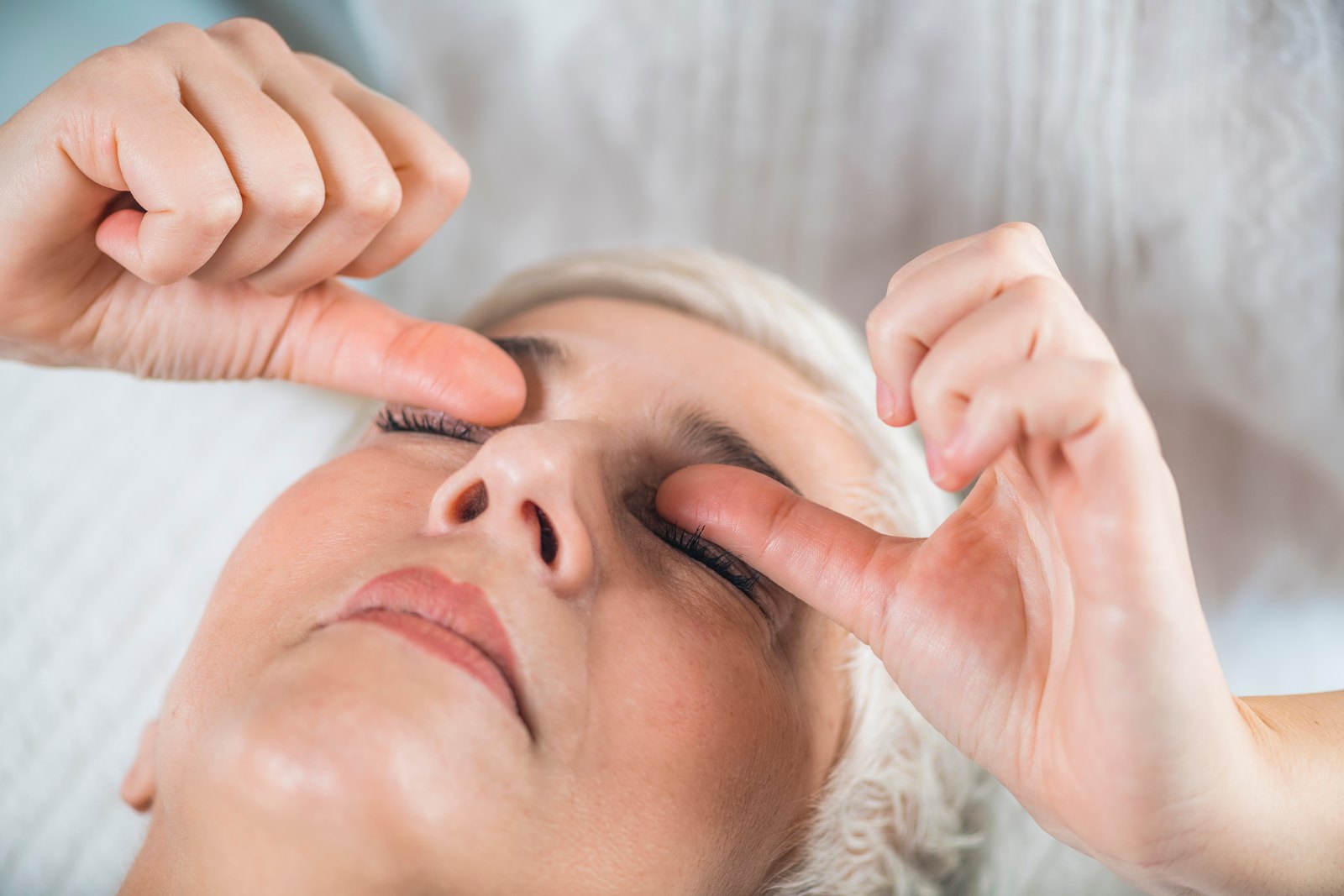
What Triphala Can and Cannot Offer in Eye Care
Read honestly, the literature supports a narrow claim: in people with surface irritation, tired eyes from screen work, or mild evaporative dry eye, Ayurvedic regimens that include Triphala have been associated with symptom relief in small unblinded studies. That is a modest claim about comfort in a benign condition. It is not nothing, and for a patient whose main problem is daily discomfort, comfort is a legitimate goal.
Where Triphala is most defensible is as an oral adjunct in someone whose ocular surface complaints sit alongside digestive sluggishness, poor sleep, and a working pattern that keeps them on screens. In that setting it forms part of a regimen rather than being the regimen. The surrounding advice on blink habits, humidity, screen breaks, and lid hygiene is doing at least as much work as the herb.
- Symptom relief in mild evaporative dry eye, as part of a wider ocular surface plan
- Reduction in reported burning, grittiness, and heaviness during sustained screen work
- A structured routine that improves adherence to lid hygiene and screen-break habits
- Support for regular bowel function, which some patients value in its own right
- A culturally familiar framework that makes conventional advice easier to accept
- A defined role for clinician-administered tarpana where dryness is the main problem
- A reason to review diet, hydration, sleep, and workstation setup properly
- Nutritional support in a person whose overall diet is genuinely inadequate
What it cannot do should be equally plain. Triphala does not lower intraocular pressure, does not reverse or slow cataract, does not alter diabetic retinopathy or macular degeneration, does not change refractive error, and does not regenerate optic nerve or retinal tissue. No preparation of it treats an infection, and none of it removes the need for the ophthalmic care your diagnosis calls for. Any source telling you otherwise is selling something.
Where Triphala Fits Alongside Conventional Eye Care
Diagnosis comes first, always
Before any Ayurvedic preparation enters the picture, we want to know what is actually wrong. Dry eye, blepharitis, uncorrected refractive error, accommodative problems, and early glaucoma can all produce tired, uncomfortable eyes. Treating the wrong one wastes time, and in the case of glaucoma, wasted time costs visual field that does not come back.
We work from your ophthalmologist's records
Our clinicians are licensed in acupuncture and Oriental medicine and practice Ayurvedic therapy within that scope. We do not diagnose or treat as ophthalmologists, and we do not interpret your imaging or manage your glaucoma. We ask for your pressures, fields, imaging, and medication list, and we work inside what your ophthalmologist has established.
Oral use is reviewed against your medication list
If you take warfarin, a direct oral anticoagulant, an antiplatelet agent, insulin, or an oral glucose-lowering drug, that changes the conversation about any botanical supplement. We check the list before recommending anything, and sometimes the answer is that oral Triphala is not a good fit for you.
Tarpana is offered with screening criteria
Tarpana is not performed on an eye with active infection, a corneal epithelial defect, recent surgery, or an undiagnosed red eye. If the ocular surface is compromised, the procedure waits until an ophthalmologist has cleared it. Those criteria exist because warm lipid against a damaged cornea is a bad idea.
Sourcing is not left to chance
Where an oral preparation is recommended, we specify the product and the supplier rather than leaving you to buy whatever an online marketplace surfaces. Testing of Ayurvedic products has repeatedly found species substitution and metal contamination, and the only practical defense is buying from manufacturers who publish third-party testing.
We tell you when the answer is no
A fair number of people arrive hoping Ayurvedic treatment will let them stop a glaucoma drop, postpone cataract surgery, or avoid an injection. The answer to all three is no, and we say so at the first visit rather than letting the hope run. Being clear early is more useful than being agreeable.
What We Will Not Do
We will not supply, apply, or endorse kajal, surma, or any traditional eye cosmetic, which have been documented as sources of significant lead exposure. We will not recommend home-made eye washes, decoctions, or rinses of any kind. We will not use unregulated bhasma or metallic-mineral preparations, which have caused severe liver injury. We will not advise anyone to reduce or stop a prescribed ophthalmic medication, and we will not tell you a herbal regimen can replace surgery, laser, or injections.
The Home-Made Eye Wash Problem, in Depth
What people are actually being told to do
The standard online instruction is to boil Triphala powder in water, strain it through a cloth, let it cool, and either rinse the eye from a cup or splash it from cupped hands. Some versions say to soak the powder overnight. Some say to store the liquid in the refrigerator and use it over several days. Every one of those steps introduces a specific and predictable microbiological problem.
A kitchen decoction cannot be made sterile
Boiling reduces the microbial load. It does not sterilize, it does not remove bacterial endotoxin, and it does nothing about what lands in the liquid afterward. As soon as the pan cools and the cloth strainer touches it, recontamination begins. Nutrient-rich plant liquid held at room temperature is close to an ideal growth medium. Sterility is a property of a validated process and a sealed container, not of an ingredient list.
What grows in it
The organisms that matter here are Pseudomonas aeruginosa, which thrives in standing water and destroys corneal tissue quickly, along with Serratia, Staphylococcus species, environmental fungi such as Fusarium and Aspergillus, and Acanthamoeba from tap water. Fungal and amoebic keratitis are the two diagnoses you least want, because both are slow to identify, hard to treat, and frequently end in transplant or worse.
How a rinse becomes an ulcer
An intact corneal epithelium resists most organisms. A small break in it, from a contact lens, a rubbed eye, a stray eyelash, or dryness itself, is an open door. Flooding that surface with contaminated liquid delivers a large inoculum directly onto exposed stroma. Microbial keratitis then progresses over hours to days, with pain, light sensitivity, and a white infiltrate, and it can scar the visual axis permanently even when treatment succeeds.
The documented harm from traditional eye preparations
This is not a theoretical concern. Peripheral corneal ulceration linked to the use of African traditional eye medicines was described in the British Journal of Ophthalmology in 1995, and cohort data on microbial keratitis in Uganda found traditional eye medicine use to be a recurring feature in the patient population. Different plants, different continent, identical mechanism: a non-sterile liquid applied directly to the cornea.
Even manufactured, sterile-labeled drops have caused outbreaks
In 2023 an outbreak of extensively drug-resistant Pseudomonas aeruginosa in the United States was traced to a commercially manufactured artificial tear product, and it caused vision loss, enucleation, and deaths. If a regulated factory product with preservatives and a sealed bottle can do that, the argument that a strained saucepan decoction is safe collapses entirely. Laboratory work has since shown how readily this organism moves between hands, soap, and eye drop bottles.
The eye cup and the bottle are part of the problem
A reused eye cup rinsed under the tap and left on a bathroom shelf is a reservoir. So is a dropper tip that has touched a lash line. Contamination of the container often matters more than contamination of the original liquid, which is why single-use preservative-free vials exist and why no home method reproduces that control.
Why natural has nothing to do with sterile
Sterility describes the absence of viable organisms. It is unrelated to whether a substance is plant-derived, traditional, organic, or chemical-free. The two concepts are simply about different things. We have had this conversation with many patients who were surprised by it, and it is the single most useful idea on this page: if you would not inject it, do not rinse your cornea with it.
Oral Triphala: Effects, Interactions, and Product Quality
How it is typically taken
Oral use is usually a teaspoon of churna in warm water at night, or a standardized tablet. Traditional practice often begins low and adjusts by bowel response. There is no established dose for any eye indication, because no trial has set one. Anyone quoting a precise eye dose is quoting a preference, not a study.
Gastrointestinal effects are the common ones
Loose stools, cramping, and bloating are the usual complaints, and they are dose related. The formula has been studied as part of a laxative preparation in an open-label Indian study, which is consistent with what patients report. For some people this is the reason they take it. For others it is the reason they stop.
Anticoagulants and antiplatelet drugs
A systematic review of warfarin interactions with food and herbal supplements documents how frequently botanical products disturb anticoagulation control, and how poorly most of these interactions are characterized. If you take warfarin, apixaban, rivaroxaban, clopidogrel, or regular aspirin, do not add this or any other botanical without telling both your prescriber and your Ayurvedic practitioner. Unexplained INR drift is a real and avoidable event.
Glucose-lowering medication
Constituents of the formula have shown glucose-lowering and metabolic effects in laboratory and animal work, and reviews of its interaction with metabolic pathways and the gut microbiome describe plausible mechanisms. In a person already taking insulin or a sulfonylurea, an additive effect risks hypoglycemia. This matters particularly for people with diabetic retinopathy, who are usually on several such drugs.
Pregnancy, breastfeeding, and children
There is no adequate safety data for oral use in pregnancy or breastfeeding, and the laxative effect is itself a reason for caution. We do not recommend it in those settings, and we do not recommend it for children on the basis of an eye complaint. The absence of evidence here is genuine, not a technicality.
Liver injury from Ayurvedic products
Herb-induced liver injury from Ayurvedic preparations is documented, including severe liver injury associated with metallic-mineral bhasma products. Triphala itself is not a common culprit, but multi-ingredient Ayurvedic formulations frequently contain more than the label suggests. New fatigue, nausea, dark urine, or yellowing of the eyes while taking any botanical means stop and get liver function tested.
Adulteration and species substitution
DNA metabarcoding of Ayurvedic herbal products sold on the European market found unlabeled plant species and raised substantive quality concerns, and similar work in India has documented adulteration in traded raw drugs. You may not be taking what the label says. This is not a fringe finding; it is what happens in a market with limited enforcement.
Heavy metals in commercial products
A JAMA analysis of Ayurvedic medicines sold over the Internet found detectable lead, mercury, or arsenic in a substantial fraction of both US- and Indian-manufactured products, and a later systematic scoping review reached similar conclusions across Indian traditional medicine systems. Buy only from manufacturers who publish independent heavy metal testing on the specific lot, and treat rasa shastra preparations, which contain metals by design, as off the table.
Red Flags That Need Urgent Care, Not a Herbal Remedy
Uncomfortable eyes are usually benign. Some presentations are not, and a few of them mimic ordinary irritation closely enough that people reach for a home remedy instead of a phone. If any of the following applies, stop whatever you are using and get examined the same day. Corneal infection in particular is measured in hours.
- Eye pain that is worsening rather than settling, especially with marked light sensitivity
- A white or gray spot visible on the clear part of the eye
- Redness concentrated in a ring around the colored part of the eye
- Blurred vision that does not clear with blinking
- Discharge that is thick, colored, or gluing the lids shut
- Any of the above in a contact lens wearer, which should be treated as an infection until proven otherwise
- A sudden shower of new floaters, flashing lights, or a curtain across part of your vision
- Sudden painless loss of vision in one eye
- Severe eye pain with nausea, vomiting, halos around lights, and a hard red eye
- Any eye symptom following chemical splash, trauma, or a foreign body
The last three describe retinal detachment, vascular occlusion, and acute angle closure, all of which are emergencies. If you have been rinsing your eye with a home-made preparation and any of these appears, say so to whoever examines you. It changes which organisms they look for and which treatment they start.
Frequently Asked Questions on Triphala for Eyes
No. Refractive error is determined by the length of the eye and the curvature of the cornea and lens. Nothing taken by mouth or applied to the surface changes those. If your vision is blurred, the useful step is a refraction, not a supplement.
We do not recommend it, and we will not advise anyone to do it. A home decoction is not sterile and cannot be made sterile in a kitchen. The documented risk is microbial keratitis, which can scar the cornea permanently. Even factory-made artificial tears have caused a serious Pseudomonas outbreak, which tells you how unforgiving this route is.
No to both, and there is no trial evidence for either claim. Cataract is treated by surgery. Glaucoma is treated by lowering intraocular pressure with drops, laser, or surgery. Substituting a herbal preparation for glaucoma treatment causes irreversible loss of visual field.
Tell your prescriber first. The interactions that matter most are with warfarin and other anticoagulants, antiplatelet drugs, and glucose-lowering medication including insulin. The laxative effect can also alter absorption of drugs taken at the same time, so spacing usually matters.
Largely, you do not, unless the manufacturer publishes third-party testing for identity and heavy metals on the lot you have. Independent analyses have found both unlabeled plant species and detectable lead, mercury, and arsenic in Ayurvedic products. Ask for the certificate of analysis, and avoid anything containing bhasma or other metallic-mineral ingredients.
Selected References for Scientific Support
- Dhiman KS, Ahuja D. A clinical study on Computer vision syndrome and its management with Triphala eye drops and Saptamrita Lauha. Ayu. 2010. PubMed
- Dhiman KS, et al. Clinical efficacy of Ayurvedic management in computer vision syndrome: A pilot study. Ayu. 2012. PubMed
- Efficacy of Triphala Ghrita and Goghrita Manda Tarpana in the management of Shushkakshipaka with special reference to dry eye syndrome. Ayu. 2020. PubMed
- Comparative efficacy of Shatavari Ghrita eye drops with Shatavari Ksheerapaka versus Triphala Ghrita eye drops. Frontiers in Medicine (Lausanne). 2026. PubMed
- The Multifaceted Benefits of Triphala: Uncovering Phytochemical and Pharmacological Properties From Antiquity. Chemistry & Biodiversity. 2026. PubMed
- The interplay of triphala and its constituents with respect to metabolic disorders and gut-microbiome. Fitoterapia. 2025. PubMed
- An open-label, prospective clinical study to evaluate the efficacy and safety of a polyherbal formulation in the management of constipation. Journal of Ayurveda and Integrative Medicine. 2011. PubMed
- Peripheral corneal ulcers associated with use of African traditional eye medicines. British Journal of Ophthalmology. 1995. PubMed
- Epidemiology of Microbial Keratitis in Uganda: A Cohort Study. Ophthalmic Epidemiology. 2020. PubMed
- Extensively Drug-Resistant Pseudomonas aeruginosa Outbreak Associated With Artificial Tears. Clinical Infectious Diseases. 2024. PubMed
- Eye infection risks from Pseudomonas aeruginosa via hand soap and eye drops. Applied and Environmental Microbiology. 2024. PubMed
- Craig JP, et al. TFOS DEWS II Definition and Classification Report. The Ocular Surface. 2017. PubMed
- TFOS Lifestyle: Impact of the digital environment on the ocular surface. The Ocular Surface. 2023. PubMed
- Warfarin and food, herbal or dietary supplement interactions: A systematic review. British Journal of Clinical Pharmacology. 2021. PubMed
- Saper RB, et al. Lead, mercury, and arsenic in US- and Indian-manufactured Ayurvedic medicines sold via the Internet. JAMA. 2008. PubMed
- Heavy Metals in Indian Traditional Systems of Medicine: A Systematic Scoping Review and Recommendations. Journal of Alternative and Complementary Medicine. 2021. PubMed
- DNA Metabarcoding Authentication of Ayurvedic Herbal Products on the European Market Raises Concerns of Quality and Fidelity. Frontiers in Plant Science. 2019. PubMed
- Ayurveda metallic-mineral Bhasma-associated severe liver injury. BMJ Case Reports. 2018. PubMed
- Traditional Eye Cosmetics and Cultural Powders as a Source of Lead Exposure. Pediatrics. 2024. PubMed