Search conditions, treatments, research reviews and articles. Press Enter to see all results, Esc to close.
Search conditions, treatments, research reviews and articles. Press Enter to see all results, Esc to close.
Blog
October 26, 2026
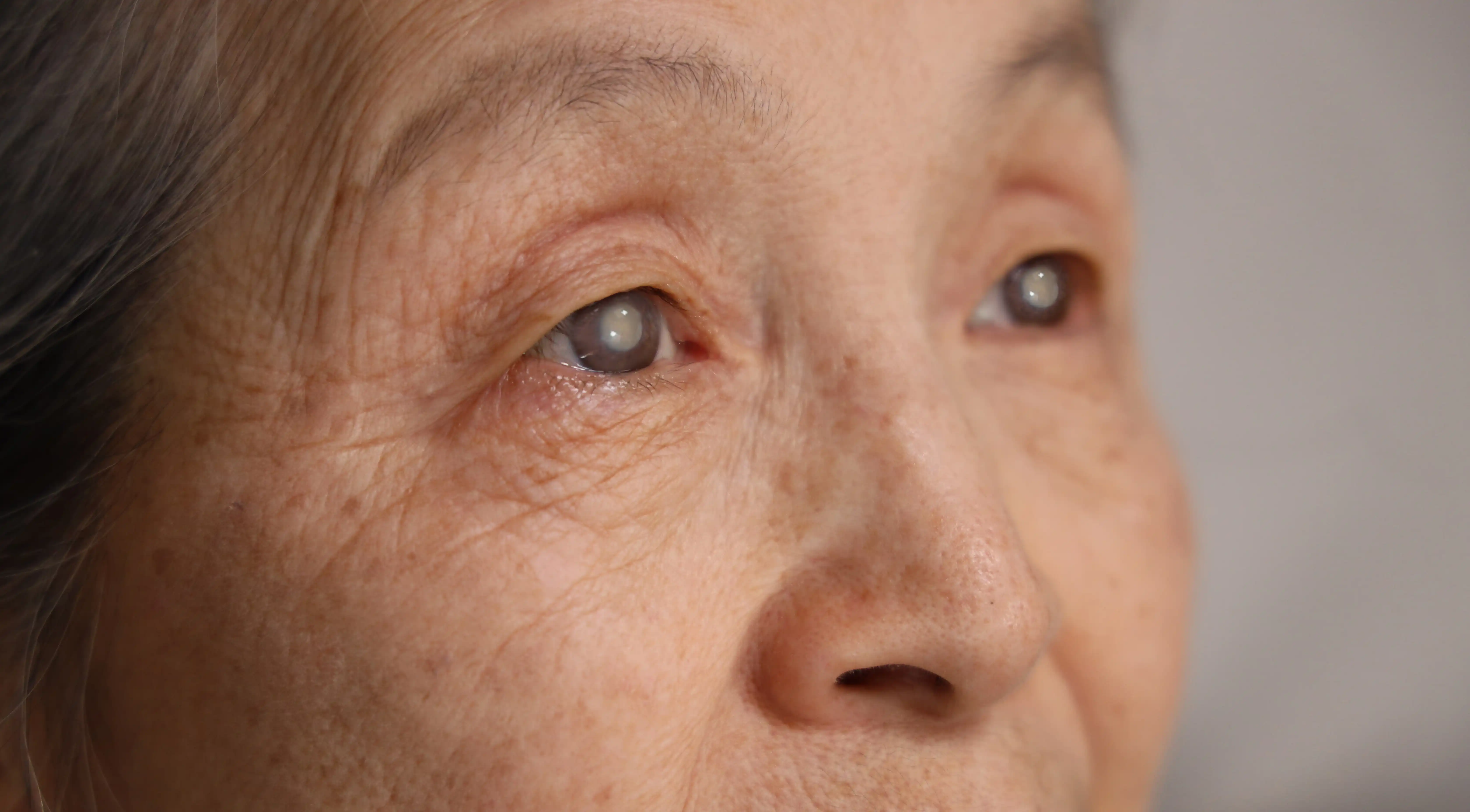
Pseudoexfoliation syndrome, also called exfoliation syndrome, is an age-related condition in which flaky, dandruff-like material builds up inside the front of the eye. The material collects on the lens and in the eye’s drainage tissue, where it can slow the outflow of fluid and raise eye pressure. When that pressure damages the optic nerve, the result is pseudoexfoliation (exfoliation) glaucoma, the most common type of glaucoma with an identifiable cause. It causes no symptoms of its own and is found at a dilated eye exam. Compared with ordinary open-angle glaucoma, it tends to bring higher, more changeable pressure and can get worse faster, so it needs regular checks and often more than one treatment. It also makes cataract surgery more complex, because the lens supports can be weak.
For glaucoma as a whole, read our glaucoma guide. Our guide to the types of glaucoma compares pseudoexfoliation with the other forms.
| Question | Short answer |
|---|---|
| What is it? | A buildup of flaky, fibrous material on the lens, iris and drainage tissue in the front of the eye |
| Is it glaucoma? | Not by itself. It becomes exfoliation glaucoma only when the optic nerve is damaged |
| Who gets it? | Mostly people over 60. More common in Nordic and Mediterranean countries, and in women in US studies |
| Symptoms | None of its own. Glaucoma damage is usually silent until it is advanced |
| How it is found | A slit-lamp exam, best with the pupils dilated |
| Glaucoma risk | About twice that of people with the same eye pressure without it |
| Treatment | Drops, SLT laser, MIGS or surgery to lower pressure. Nothing removes the material |
| Cataract surgery | Usually successful, but needs extra planning for a small pupil and weak lens supports |
The material is made of tiny protein fibers. It settles on the parts of the front of the eye that are bathed in the eye’s internal fluid: the front surface of the lens, the edge of the pupil, the fine fibers (zonules) that hold the lens in place, and the drainage tissue called the trabecular meshwork. On the lens it often forms a central disc and an outer ring, and the outer ring can usually be seen only when the pupil is dilated.
Pressure rises mainly because the material builds up in the drainage tissue and blocks it. Some of it is made by the drainage tissue itself, and some is carried there by the eye’s fluid after the iris rubs it off the lens. Pigment rubbed off the back of the iris also collects in the drain. In one study of drainage tissue, eyes with more of the material were more likely to have glaucoma, but the amount of pigment made no difference.
The same kind of material has been found in blood vessels, skin and other organs, which is why researchers describe it as a body-wide condition that shows up mainly in the eyes. That does not mean it causes disease elsewhere; the links are discussed below.
The names can be confusing. Exfoliation syndrome, pseudoexfoliation syndrome, PXF and XFS all mean the same condition. The National Eye Institute uses “exfoliation glaucoma (sometimes called pseudoexfoliation)”. “True exfoliation” is a different, rare condition in which the lens capsule splits into layers, linked in the past to intense heat exposure in glassblowers; most cases today are in older people with no such exposure.
Pseudoexfoliation syndrome means the material is present. Pseudoexfoliation glaucoma means the eye pressure has damaged the optic nerve, seen as changes in the nerve and loss in the visual field. Some people have the syndrome with raised pressure but no damage yet, which is a form of ocular hypertension. Many people with the syndrome keep normal pressure for years. Our guide to high eye pressure explains the difference between raised pressure and glaucoma.
Age is the strongest factor. In the Reykjavik Eye Study in Iceland, it was found in 10.7% of people aged 50 or over, rising from 2.5% at 50 to 59 to 40.6% at 80 or older. In Greece, 11.9% of people aged 60 or over had it. In the US Framingham study, it was found in 0.6% of people aged 52 to 64 and 5.0% of those aged 75 to 85. In rural South India, 3.8% of people aged 40 or over had it. Some of the difference between countries comes from how carefully people were examined, including whether pupils were dilated.
In two large US studies of health professionals, women were about three times as likely as men to develop exfoliation glaucoma or suspected exfoliation glaucoma, and people who had lived in the northern United States had a higher risk than those from the south.
Genes matter a great deal. In Nordic studies, common variants of the LOXL1 gene were carried by nearly everyone with the condition, but they are also very common in people who never develop it, and the risk version of one variant is reversed in Japanese people. A gene test therefore cannot diagnose it or predict who will get it. The Glaucoma Research Foundation says genetic testing “may not be necessary or helpful”. Having a relative with exfoliation glaucoma does raise your risk, so tell your eye doctor. Our guide to whether glaucoma is hereditary covers family screening.
Some studies have linked the condition to more sunlight exposure, living farther from the equator, drinking three or more cups of coffee a day and, more weakly, a lower intake of folate from supplements. These come from observational studies, mostly of white US health professionals, and none has been tested in trials. There is no proven way to prevent it.
The risk is real but builds over years, and studies measure it in different ways:
Higher pressure at diagnosis and having the condition in both eyes were the strongest warning signs. It often starts in one eye: in Olmsted County, 25% had both eyes affected at diagnosis and another 29% developed it in the second eye within 15 years. In Philadelphia, about 1 in 6 unaffected fellow eyes developed it within 10 years, and in Finland 38% of people became affected in both eyes over the same time. Even when only one eye looks affected, small amounts of material have been found in the other eye.
Pressure tends to run higher and swing more. In a study of 40 pairs of newly diagnosed, untreated patients measured over 24 hours, the average peak was about 38 mmHg in exfoliation glaucoma against about 27 mmHg in primary open-angle glaucoma, and the daily swing was 13.5 against 8.5 mmHg. In 45% of the people with exfoliation glaucoma, against 22.5% of those with primary open-angle glaucoma, the highest reading came outside normal clinic hours, so a single office reading can miss it.
It can also get worse faster. In the Early Manifest Glaucoma Trial, people with exfoliation were about twice as likely to have their glaucoma progress as those without it, and in the small group of untreated patients with exfoliation glaucoma, field loss progressed faster than in other types. The National Eye Institute says this type “can progress faster than primary open-angle glaucoma, and often causes higher eye pressure.” Treatment still works: in the same trial, lowering pressure halved the risk of progression overall.
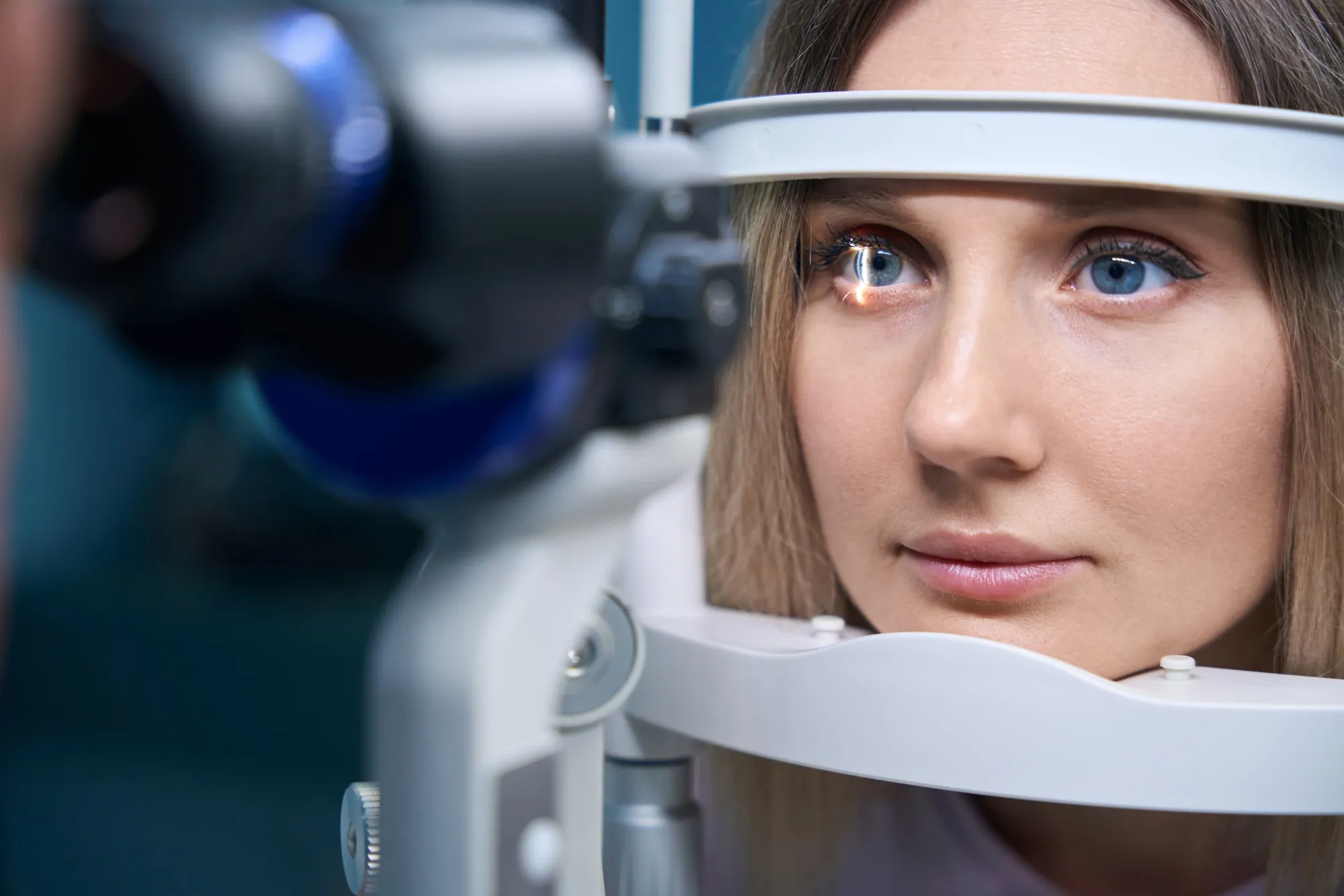
Pseudoexfoliation has no symptoms of its own, and the glaucoma it causes is usually silent until it is advanced. It is found at a slit-lamp exam, often during a routine visit or when planning cataract surgery. Signs include white flakes on the lens or the edge of the pupil, a pupil that does not dilate well, heavy pigment in the drainage angle and, sometimes, a slightly wobbly lens. Early changes can be subtle and easy to miss, especially without dilation, which is one reason it may not be noticed at an earlier exam. Less often, it can narrow the drainage angle and cause a sudden rise in pressure, and very high pressure can cause blurred vision or halos. Sudden eye pain with redness, blurred vision, halos around lights, headache or nausea needs urgent care.
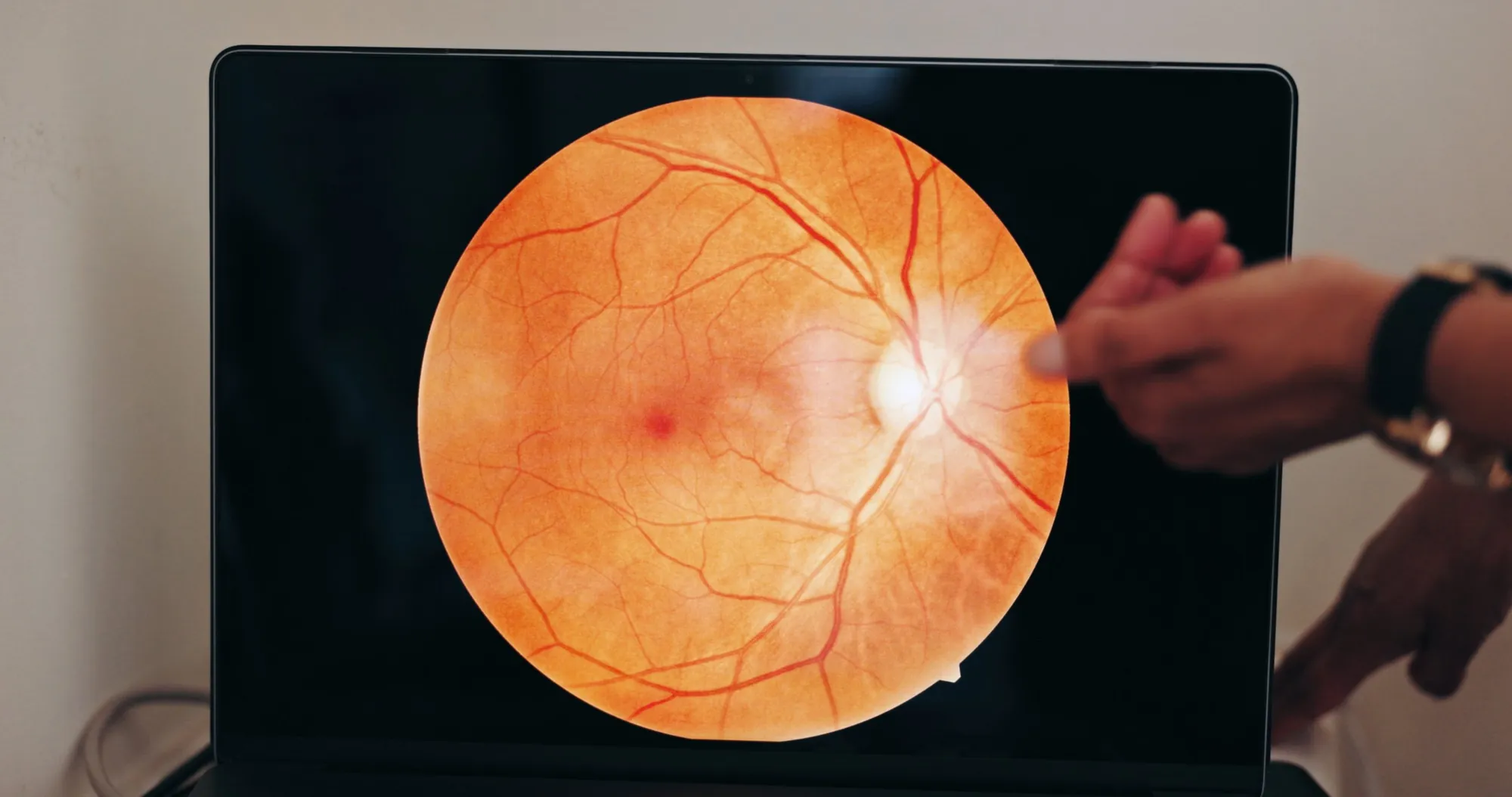
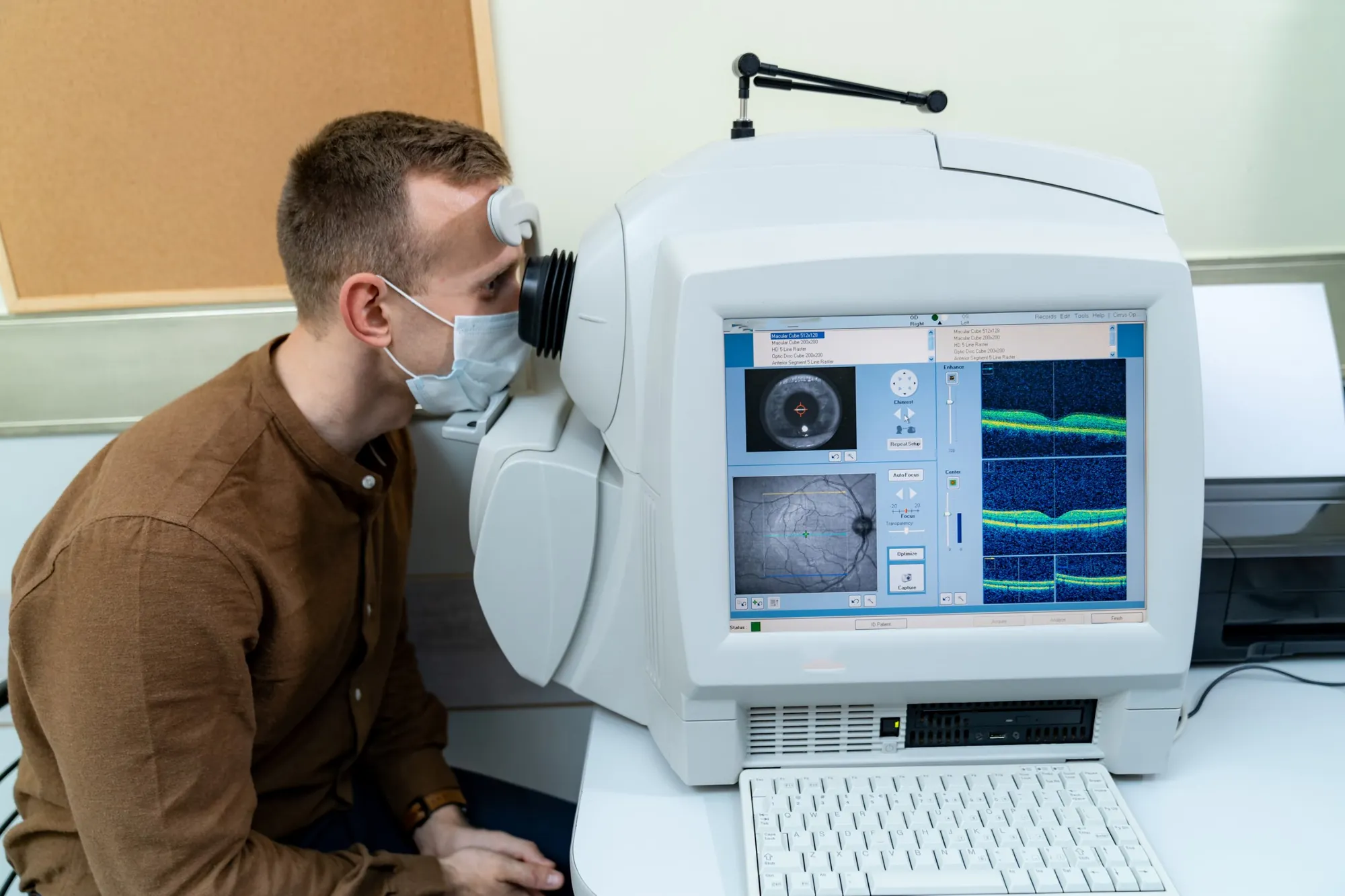
Once it is found, your eye doctor will check eye pressure, the drainage angle (gonioscopy), the optic nerve and the visual field, and repeat these over time. Our guide to the glaucoma test explains each step. If you have pseudoexfoliation, your eye doctor will tell you how often you need checks; keep to that schedule. For people who have not been diagnosed, the Glaucoma Research Foundation advises those over 40 who have a relative with exfoliative glaucoma, or who are of Northern European descent, to have regular eye exams.
No treatment removes the material. Treatment lowers eye pressure to protect the optic nerve, as in other open-angle glaucoma, but it often takes more steps. The Glaucoma Research Foundation notes that exfoliation glaucoma is harder to control with drops and more often needs laser or surgery.
| Treatment | What to know |
|---|---|
| Eye drops | Usually the first step. In a 3-month trial in exfoliation glaucoma, latanoprost lowered daytime pressure from about 25 to 17 mmHg and timolol from about 25 to 18 mmHg |
| SLT laser | Selective laser trabeculoplasty. Often works well at first. A 2026 review of 14 studies found success in 40% to 78% of eyes, a pressure spike after treatment in 12% to 28%, and very variable durability |
| MIGS | Minimally invasive glaucoma surgery. Angle procedures, often with cataract surgery, lowered pressure a little and reduced the number of drops in small, short studies. Bleeding inside the eye, usually short-lived, was common. Results with stents are less clear |
| Trabeculectomy or tube | For pressure that drops and laser cannot control. Early results of trabeculectomy are similar to other open-angle glaucoma, but one study found success fell off more over 3 to 5 years, especially at low pressure targets, and some people still need drops afterward |
| Cataract surgery | In people with pseudoexfoliation, with or without glaucoma, it lowered pressure by about 3 mmHg (millimeters of mercury) on average, but the evidence is of very low certainty and it does not replace glaucoma treatment |
Because pressure can spike after SLT in these eyes, your eye doctor will recheck it after the laser and again at follow-up visits. Rarely, in people with exfoliation glaucoma, pressure has risen sharply one to five weeks after SLT and needed surgery to control it, so keep every follow-up visit and get urgent care for eye pain or blurred vision after laser. Our guides to glaucoma eye drops, SLT laser and glaucoma surgery and laser cover the options in detail.
Cataracts are common in people with pseudoexfoliation, and surgery usually goes well, but it needs extra planning. The pupil may not open wide, the cornea can be more fragile, and the zonules that hold the lens can be weak. Across 22 studies, the risk of a torn lens capsule or broken zonules during surgery was about twice as high as in other eyes. Surgeons may use pupil-stretching devices and capsule support rings, and adjust the technique.
Two other points matter after surgery. Pressure can rise in the first hours: in one small study, 27% of eyes with exfoliation syndrome went above 25 mmHg within a day when no pressure-lowering drop was given. And the artificial lens can slip years later. In a Swedish study of 800 people who had cataract surgery in 1997 and 1998, the estimated 20-year risk of needing surgery for a slipped lens was 6% in those with exfoliation and 2% in those without. Tell any surgeon who operates on your eye that you have pseudoexfoliation, and report any sudden blur or double vision. Our guide to cataract surgery with glaucoma explains lens choices and recovery.
Studies have found associations, not proof that it causes any of these. Two reviews of many studies found people with pseudoexfoliation were about 1.6 to 1.7 times as likely to have heart disease, stroke or other blood vessel disease, and a review of 16 studies linked it to a higher chance of moderate or worse hearing loss. The results varied between studies, and links with aortic aneurysm (a bulge in the body’s main artery) have been found in some studies but not in larger ones. Reassuringly, two long Nordic studies that followed people for about 30 years found no difference in life span or death rates. It is reasonable to tell your primary care doctor, who can make sure the usual heart and blood pressure checks are up to date.
Netra Eye Institute is an acupuncture and Oriental medicine practice. Nothing we offer lowers eye pressure, removes exfoliation material or replaces drops, laser or surgery. A Cochrane review of acupuncture for glaucoma found only three small trials, all at high risk of bias, and concluded that no reliable conclusions could be drawn; none looked specifically at pseudoexfoliation. Our guide to acupuncture and Chinese medicine for glaucoma sets out what is and is not known.
Netra Restoration Therapy (NRT) does not treat glaucoma, lower eye pressure or restore any vision lost to glaucoma. Once glaucoma is medically controlled, some people still struggle with scanning, reading or getting around because of field loss that is already there. Low-vision optometrists and occupational therapists help with those tasks. If you choose NRT, it is offered only alongside that care and your glaucoma treatment, never in place of them. Learn about Netra Restoration Therapy and low-vision rehabilitation.
Pseudoexfoliation syndrome means flaky material has built up in the front of the eye. Pseudoexfoliation glaucoma means eye pressure has gone on to damage the optic nerve. Many people with the syndrome never develop glaucoma, but they need regular pressure and nerve checks because the risk rises over time.
It can be. By itself it usually does not harm vision, but it is one of the strongest risk factors for glaucoma, and the glaucoma it causes tends to have higher pressure and can get worse faster. It also makes cataract surgery more complex. Regular checks and treatment when needed give you the best chance of keeping your sight.
Yes, if exfoliation glaucoma is not found and treated, it can cause permanent vision loss and, in some people, blindness, and it can progress faster than ordinary open-angle glaucoma. Lowering eye pressure slows it. In the Early Manifest Glaucoma Trial, treatment halved the risk of progression overall, and the benefit was also seen in people with exfoliation. Keeping your check-ups and using treatment as prescribed are what protect your sight.
It often starts in one eye and may later appear in the other. Depending on the study, between about 1 in 6 and 4 in 10 one-sided cases became two-sided within 10 years, and in Iceland 71% did within 12 years. Your eye doctor checks both eyes at every visit.
Partly. Variants of the LOXL1 gene are strongly linked to it, but they are also common in people who never get it, so a gene test cannot predict who will. If a parent, brother or sister has pseudoexfoliation or exfoliation glaucoma, tell your eye doctor and keep up regular dilated eye exams.
No. There is no treatment that removes the material or stops it forming. Treatment lowers eye pressure to protect the optic nerve, and cataract surgery deals with the cloudy lens. Glaucoma checks continue for life.
It can lower pressure a little, by about 3 mmHg on average in studies of people with pseudoexfoliation, but the evidence is of very low certainty and it does not cure the glaucoma. Surgery is more complex in these eyes, so choose a surgeon experienced with pseudoexfoliation and keep your glaucoma follow-up afterward.
Often, at least at first. In a review of 14 studies, SLT lowered pressure by about 3 to 8 mmHg, with success in 40% to 78% of eyes, but the effect lasted very different lengths of time, and short-lived pressure spikes after treatment happened in 12% to 28% of patients. Your eye doctor will check your pressure after the laser and at follow-up visits in the weeks after.
Studies have found people with it are somewhat more likely to have heart and blood vessel disease, but this is an association, not proof of cause, and long-term Nordic studies found no effect on life span. Mention it to your primary care doctor at your next visit.
Pseudoexfoliation is common with age, silent and found only at an eye exam. It is not glaucoma by itself, but it is one of the strongest risk factors for it: among people with high eye pressure, it about doubled the chance of developing glaucoma. The glaucoma it causes can also be more aggressive. Regular dilated exams, careful pressure control and good planning for cataract surgery protect vision. Nothing removes the material, so follow-up is lifelong.
Medical Disclaimer: This article provides general education and is not medical advice, diagnosis or treatment. Pseudoexfoliation and glaucoma need assessment and follow-up by a licensed eye-care professional. Do not start, stop or change eye drops or other treatment without your eye doctor. Sudden eye pain with redness, blurred vision, halos around lights, headache or nausea, or a sudden change in vision after eye surgery, needs urgent care. Integrative care at Netra Eye Institute does not lower eye pressure and must never delay or replace glaucoma treatment.