Search conditions, treatments, research reviews and articles. Press Enter to see all results, Esc to close.
Search conditions, treatments, research reviews and articles. Press Enter to see all results, Esc to close.
Blog
October 23, 2026
High eye pressure means the fluid pressure inside your eye is above the usual range. When the pressure is high but the optic nerve and side vision are healthy, doctors call it ocular hypertension. It is not glaucoma. It is, however, the main risk factor for glaucoma that treatment can change. This guide explains what raises eye pressure, how likely it is to lead to glaucoma, and how eye doctors decide between watching and treating.
For the condition as a whole, read our glaucoma guide.
Eye pressure, or intraocular pressure (IOP), is measured in millimetres of mercury (mmHg). Most people measure between about 10 and 21 mmHg, and the 21 mmHg line comes from population statistics rather than from a level where damage begins. Some optic nerves are damaged at pressures inside the normal range (normal-tension glaucoma), and many people live with readings in the mid-20s without any damage.
One high reading is not a diagnosis. Pressure changes through the day and with body position, and it can read high if you squeeze your eyelids, hold your breath, wear a tight collar or have just drunk a large amount of fluid. Eye doctors confirm a raised pressure on more than one visit, often at different times of day, before calling it ocular hypertension. Our guide to the normal eye pressure range explains why readings vary.
There is no single cut-off that applies to everyone. A reading of 22 or 23 is only slightly raised and common. In the Ocular Hypertension Treatment Study, participants had pressures between 24 and 32 mmHg, and most of those who were only observed had not developed glaucoma after five years. The higher the pressure, the higher the risk, so readings around 30 and above are more likely to lead to a recommendation to treat. What your number means depends on your cornea, your optic nerve and your other risk factors, which is why the same reading can mean watching in one person and treating in another.
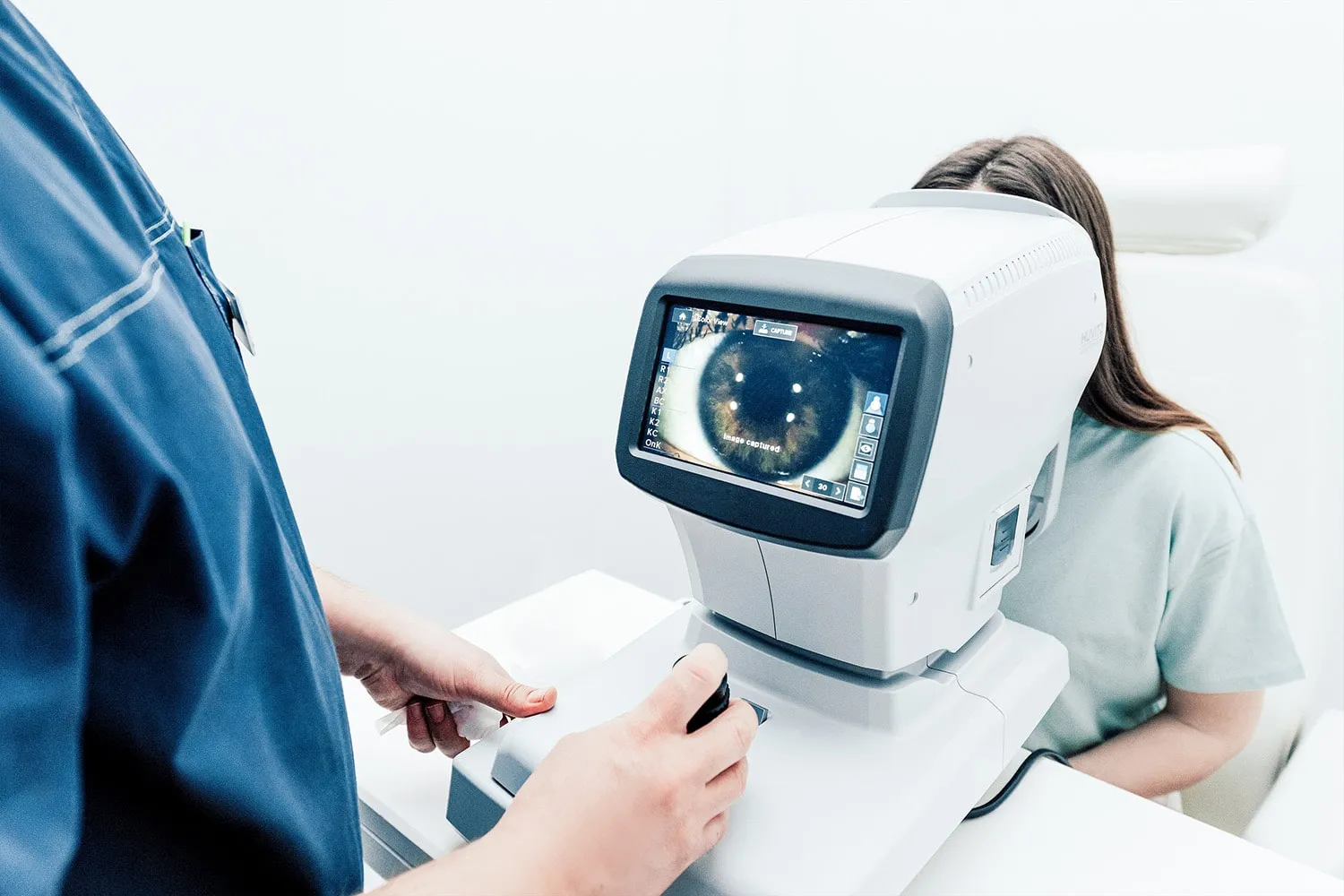
The standard pressure test presses lightly on the cornea, the clear front window of the eye. A thick cornea resists more, so the reading can come out higher than the true pressure. A thin cornea can make the reading look lower. That is why eye doctors measure corneal thickness (pachymetry) once a raised pressure is found. A thin cornea is also a risk factor in its own right: it was one of the strongest predictors of who went on to develop glaucoma in the Ocular Hypertension Treatment Study.
Laser vision correction (LASIK, PRK or SMILE) thins the cornea, so pressure readings afterwards can come out falsely low and glaucoma can be missed. If you have had it, tell every eye doctor who checks your pressure, and keep a copy of your readings from before surgery if you can.
Ocular hypertension usually has no symptoms. You cannot feel moderately raised pressure, and it does not cause headaches, eye strain or a sense of pressure behind the eyes. It is found at routine eye exams, which is one reason those exams matter after age 40 and earlier if glaucoma runs in your family.
A sudden, very large rise is different. In acute angle-closure glaucoma the drainage angle closes and pressure climbs within hours, causing severe eye pain, a red eye, blurred vision, halos around lights, headache and often nausea. That is an emergency; see our guide to closed-angle glaucoma symptoms. If a feeling of pressure is what brought you here, our guide to pressure behind the eyes covers the usual causes.
The eye constantly makes a clear fluid called aqueous humor, which flows through the front of the eye and drains out through a spongy tissue in the drainage angle, the trabecular meshwork. Pressure rises when fluid drains more slowly than it is made. In most people with ocular hypertension there is no single cause: the drainage tissue simply offers more resistance than usual, which becomes more common with age.
Other causes of raised pressure your eye doctor will look for are listed below. When one is found, the raised pressure is managed as part of that condition rather than as ocular hypertension.
The Ocular Hypertension Treatment Study followed more than 1,600 people with high eye pressure. Five factors at the start predicted who developed glaucoma:
Family history, Black African ancestry and high nearsightedness also raise the risk. Over 20 years, glaucoma developed in an estimated 55% of Black participants and 43% of other participants. If a parent, brother or sister has glaucoma, read is glaucoma hereditary?
Eye doctors can combine these factors in a validated risk calculator to estimate a person’s chance of developing glaucoma over five years. That estimate, together with life expectancy and your own preferences, guides the decision to treat.
Sometimes, but often not, and treatment cuts the risk roughly in half. In the Ocular Hypertension Treatment Study, eye drops that lowered pressure by about 22% reduced the share of people developing glaucoma within five years from 9.5% to 4.4%. Over 20 years of follow-up, during which everyone was eventually offered treatment, the estimated chance of developing glaucoma in at least one eye was about 46%, and about 25% had some visual field loss. Put another way, about three quarters had no visual field loss after two decades.
Two lessons follow. Ocular hypertension is a reason for regular monitoring, not alarm. And because early treatment mainly benefits people with high-risk features, the decision is individual: many people at low risk are safely watched, and people at higher risk usually start treatment.
A full assessment for ocular hypertension usually includes:
These tests set a baseline. Follow-up visits repeat them to look for change, at intervals your eye doctor sets based on your risk, often every 6 to 12 months once things are stable. Our guide to glaucoma tests explains each one, and our guide to what “glaucoma suspect” means covers borderline results.
For people at low risk, careful monitoring is a reasonable choice and is active care, not doing nothing. Treatment can start at any point if the pressure climbs, risk changes or the first signs of nerve change appear.
Prostaglandin drops, used once a day in the evening, are the most common first choice. Other types include beta-blockers, alpha agonists, carbonic anhydrase inhibitors and rho-kinase inhibitors. The usual aim in ocular hypertension is a reduction of about 20% or more from your untreated level. Common side effects depend on the drop and include red or irritated eyes, darkening of the iris or eyelid skin, and longer lashes with prostaglandins. Some drops, such as beta-blockers, can affect breathing or heart rate, so tell your eye doctor about asthma, lung disease or heart problems. Because raised pressure causes no symptoms, feeling fine is not a reason to skip or stop drops.
SLT is a short, in-office laser treatment to the drainage tissue that helps fluid leave the eye. In the LiGHT trial of 718 people with newly diagnosed glaucoma or ocular hypertension, 74% of those who had laser first needed no drops three years later, and at six years fewer had worsened than in the group that started with drops. SLT can wear off over time and can be repeated in some eyes. It is now offered as a first treatment as well as an add-on. Pressure is rechecked afterwards because a brief rise in pressure or mild inflammation can occur.
Surgery is rarely needed for ocular hypertension alone. It is used when glaucoma develops and pressure cannot be controlled with drops or laser. Our guide to glaucoma treatment with drops, laser, MIGS and surgery covers the options in detail.
Some habits change eye pressure a little. Regular aerobic exercise lowers it for a while afterwards. Head-down yoga positions, heavy lifting while holding your breath and drinking large volumes of fluid quickly can raise it temporarily. A diet rich in leafy green vegetables was linked to lower glaucoma risk in large observational studies. None of these lowers pressure enough, or reliably enough, to replace drops or laser when treatment is recommended. Read how to lower eye pressure naturally for what the evidence supports.
Netra Eye Institute is an acupuncture and Oriental medicine practice. Nothing we offer lowers eye pressure enough to replace drops, laser or surgery, and the care of ocular hypertension stays with your ophthalmologist or optometrist. We do not set target pressures or adjust glaucoma treatment.
For people who already have glaucoma with stable, controlled pressure, our glaucoma guide sets out what the evidence does and does not show for acupuncture, exercise, diet and supplements, and how we work alongside your eye doctor.
No. Glaucoma means the optic nerve has been damaged. Ocular hypertension means the pressure is raised but the nerve and visual field are healthy. It is a risk state that needs monitoring, and many people with it never develop glaucoma.
Sometimes. Pressure raised by a steroid usually comes down after the steroid is stopped or changed, and some people’s readings settle on repeat testing. For most people, though, the tendency to higher pressure is long-term, which is why it is monitored for years.
Not necessarily. Some people with ocular hypertension are monitored without drops. Those who start treatment usually continue it long-term, but laser can reduce or remove the need for drops in many people, and the plan is reviewed as your risk changes.
Moderately raised pressure on its own does not harm vision, but it can if it leads to glaucoma that is not controlled. Very high pressure, as in acute angle closure, can damage sight quickly, and raised pressure also increases the risk of a blocked retinal vein. Regular checks and treatment when needed are what protect sight.
The two are only loosely linked. People with high blood pressure tend to have slightly higher eye pressure on average, but they are different measurements and one does not reliably predict the other. Keep both checked.
Stress may raise eye pressure slightly and briefly, and one small, short trial in people with glaucoma found that daily meditation lowered it. That is not a substitute for treatment, but managing stress is good for your health in general.
High eye pressure is common, silent and not the same as glaucoma. It is worth taking seriously because it raises the risk of glaucoma, and worth keeping in perspective because most people with it keep their sight. Confirm the reading, measure your cornea, check the optic nerve and visual field, and decide with your eye doctor whether to watch or treat. Drops and laser both lower pressure effectively when treatment is needed.
Medical Disclaimer: This article is for general education and is not medical advice, diagnosis or treatment. Decisions about monitoring or treating raised eye pressure need an individual assessment by an ophthalmologist or optometrist. Do not start, stop or change eye drops, steroid medicines or blood-pressure treatment without your doctor. Severe eye pain, a red eye, blurred vision, halos or nausea need same-day emergency care. Integrative care at Netra Eye Institute does not lower eye pressure and must never delay or replace pressure-lowering care.