Search conditions, treatments, research reviews and articles. Press Enter to see all results, Esc to close.
Search conditions, treatments, research reviews and articles. Press Enter to see all results, Esc to close.
Blog
October 26, 2026
There is no sure way to prevent most glaucoma, but you can prevent most of the vision loss it causes. The National Eye Institute says plainly that there is no way to prevent glaucoma, which is why eye exams matter: they find it before you notice any change, and early treatment can often stop it from getting worse. A few steps do lower the chance of glaucoma or of an attack: treating high eye pressure, laser treatment for narrow drainage angles, care with steroid medicines and protecting your eyes from injury. If you already have glaucoma, using your treatment as prescribed and keeping your check-ups give you the best chance of stopping it getting worse.
Not in most cases. The most common type, primary open-angle glaucoma, develops slowly and without symptoms, and many of its risk factors, such as age, family history and ancestry, cannot be changed. The main one that can be treated is high eye pressure. The Glaucoma Research Foundation puts it this way: there are no known ways of preventing glaucoma, but blindness or significant vision loss can be prevented if the disease is found early.
That makes glaucoma prevention mostly about two things: finding it early, and lowering the few risks you can change. The table sums up what helps.
| Risk | Can you change it? | What helps |
|---|---|---|
| Older age | No | Eye exams more often as you get older |
| Family history | No | Tell your eye doctor, and have a dilated eye exam every 1 to 2 years |
| African American, Hispanic or Latino ancestry | No | Dilated eye exams every 1 to 2 years from 40 (African American) or 60 (Hispanic or Latino) |
| High eye pressure | Yes, with treatment | Drops or laser if your eye doctor advises them |
| Narrow drainage angles | Partly | Laser iridotomy in selected eyes, and care with medicines that can trigger an attack |
| Steroid medicines | Often | Pressure checks while you use them, especially steroid eye drops, injections in or around the eye, or long courses of any steroid |
| Eye injury | Yes | Protective eyewear for sports and DIY work |
| Diabetes | Partly | Keep diabetes well controlled and have regular dilated eye exams; it is not known whether good control lowers glaucoma risk |
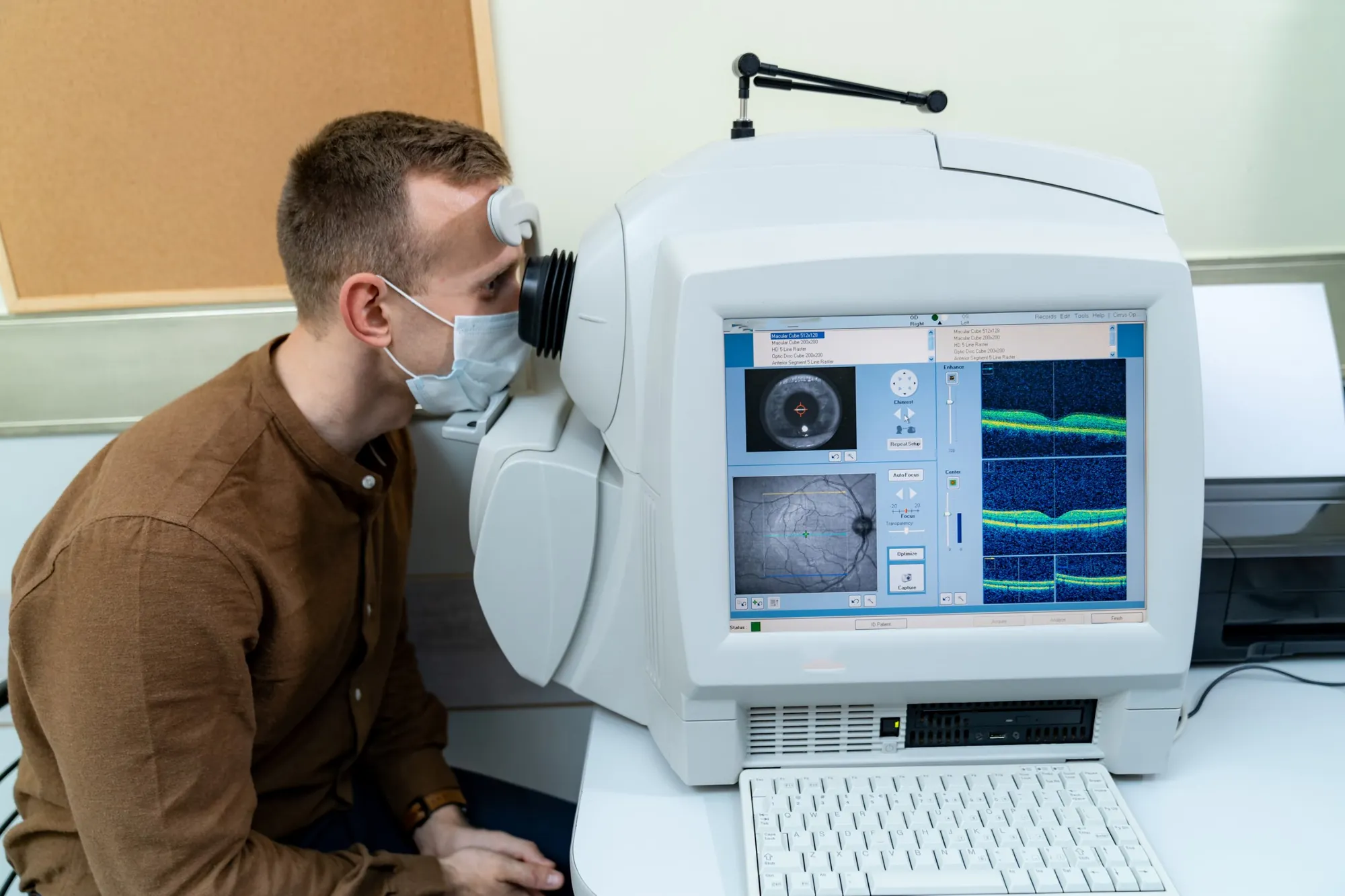
The Glaucoma Research Foundation calls regular eye exams the best protection, and the National Eye Institute says exams matter because they can find glaucoma before it affects your vision. Early glaucoma has no symptoms, so an exam is usually the only way to catch it. A quick pressure check on its own is not enough: a comprehensive exam looks at the optic nerve through dilated pupils and may include a visual field test and an OCT scan. Our guide to the glaucoma test explains what each part involves.
The National Eye Institute advises a comprehensive dilated eye exam every 1 to 2 years if you are at higher risk: if you are African American and over 40, over 60 (especially if you are Hispanic or Latino), or have a family history of glaucoma. The Glaucoma Research Foundation suggests this general schedule:
Medicare Part B covers a glaucoma test once every 12 months for people at high risk: people with diabetes, people with a family history of glaucoma, African Americans aged 50 and over, and Hispanic people aged 65 and over. You pay 20% of the Medicare-approved amount after the Part B deductible, plus a copayment in a hospital outpatient setting. Medicare’s age limits differ from the National Eye Institute’s exam advice, so ask your eye doctor how often you should be checked.
Glaucoma runs in families. In the Baltimore Eye Survey, people with a brother or sister who had glaucoma had about 3 to 4 times the odds of having it themselves. Ask your relatives whether anyone has glaucoma, and tell your eye doctor. If a parent, brother or sister has it, regular exams matter even more. Our guide to whether glaucoma is hereditary covers family risk and genetic testing.
High eye pressure without nerve damage, called ocular hypertension, is not glaucoma, but it raises the risk. The Ocular Hypertension Treatment Study gave 1,636 people with high eye pressure either drops or no treatment. The drops lowered pressure by about 22.5%, and over five years 4.4% of the treated group developed glaucoma, against 9.5% of the untreated group.
Even without treatment, most people in the study did not develop glaucoma within five years, so not everyone with high pressure needs drops. Your eye doctor weighs your pressure, the thickness of your cornea, the look of your optic nerve and your age. Read more about high eye pressure and when it is treated.
In some eyes the space where fluid drains out, the drainage angle, is narrow. These eyes are at risk of angle-closure glaucoma, including a sudden attack that is an emergency. Your eye doctor can check the angle with a special lens (gonioscopy). If it is narrow, a laser can make a tiny opening in the iris (laser iridotomy) to help keep the angle open.
The laser helps, but for many people the benefit is small. In a trial of 889 people aged 50 to 70 in China whose angles were narrow, one eye was treated and the other was not. Over six years, angle-closure disease developed in 19 treated eyes and 36 untreated eyes, and the overall risk was low. The researchers concluded that laser for everyone with narrow angles is not needed, so the decision depends on your own eyes and risks.
If your angles are narrow, some medicines can trigger an attack. A 2019 review lists several groups, including some decongestants and asthma inhalers, medicines with anticholinergic effects (such as some bladder, travel-sickness and allergy medicines), some antidepressants, some sulfa-based medicines and some supplements. Tell every doctor and pharmacist that you have narrow angles, and ask before starting a new medicine. Laser iridotomy lowers this risk but does not always remove it, so ask your eye doctor whether these warnings still apply to you. A few medicines, most often topiramate (used for migraine and seizures), can rarely cause a different kind of attack even in eyes whose angles are not narrow. It usually affects both eyes within the first month, and laser iridotomy does not prevent it. Get emergency care for sudden eye pain, a red eye, blurred vision, halos around lights, headache or nausea. Our guide to angle-closure glaucoma describes the warning signs.
Steroids (corticosteroids) can raise eye pressure and cause glaucoma in some people. The risk depends on how strong the steroid is, the dose, how long it is used and how it is given. Steroid eye drops and injections in or around the eye carry a higher risk, and people who already have glaucoma or have a family history of it are more likely to react. Pressure often comes down after the steroid is stopped or reduced, but a long, unnoticed rise can damage the optic nerve for good.
Do not stop a prescribed steroid on your own. Tell the prescriber about glaucoma in you or your family, and ask your eye doctor whether you need pressure checks while you use it.
A blow to the eye can damage the drainage system and lead to glaucoma, either soon after the injury or years later, according to the Glaucoma Research Foundation. The Foundation advises protective eyewear for sports and home improvement projects. If you have had a serious eye injury in the past, mention it at your eye exams.
Habits that are good for your body may help your eyes a little, but none has been shown to prevent glaucoma. The CDC lists keeping a healthy weight, controlling blood pressure, being active and not smoking among the steps that support eye health.
Our guide on how to lower eye pressure naturally goes through diet, exercise, sleep and supplements in more detail.
If you already have glaucoma, treatment can often stop it from getting worse, though it cannot bring back vision that is already lost. Lowering eye pressure works. In the United Kingdom Glaucoma Treatment Study, 15.2% of people using pressure-lowering drops lost visual field over two years, against 25.6% of people using a dummy drop. In the Early Manifest Glaucoma Trial, treatment cut the share whose glaucoma got worse over about six years from 62% to 45%.
The National Eye Institute’s advice is simple: take your medicine every day, tell your doctor about side effects, and keep your check-ups. Missed doses add up. In the Collaborative Initial Glaucoma Treatment Study, people who never missed a dose lost about as much visual field over eight years as normal aging would explain (0.62 dB). People who reported missed doses at a third of their visits lost 1.42 dB, and those who missed doses at two-thirds of visits lost 2.23 dB.
Netra Restoration Therapy (NRT) at Netra Eye Institute does not prevent glaucoma or lower eye pressure, and it cannot replace eye exams, drops, laser or surgery. Once glaucoma is medically controlled, some people still have trouble with scanning, reading or getting around because of field loss that has already happened. A functional assessment can look at those tasks and coordinate with low-vision care.
Learn about Netra Restoration Therapy, Netra Eye Institute’s approach and low-vision rehabilitation.
No natural remedy has been shown to prevent glaucoma. Exercise can lower eye pressure for a while, and in some studies people who ate plenty of leafy green vegetables had a slightly lower risk. Not smoking is good for your health, although a large 2026 review found no link between smoking and open-angle glaucoma. None of these replaces eye exams. Finding glaucoma early is still the most effective step.
For people with high eye pressure, yes, they can lower the chance. In the Ocular Hypertension Treatment Study, pressure-lowering drops cut the share of people who developed glaucoma over five years from 9.5% to 4.4%. Your eye doctor will advise whether your pressure and other risks make drops worthwhile.
Use your treatment every day, keep your check-ups and tell your eye doctor about side effects rather than stopping a drop. If drops are hard to use, ask about SLT laser. Treatment cannot restore lost vision, but in trials it clearly slowed glaucoma: in the Early Manifest Glaucoma Trial, it cut the share of people whose glaucoma got worse over about six years from 62% to 45%.
No food has been proven to prevent glaucoma. In large US studies, people who ate the most green leafy vegetables (about one and a half servings a day or more) had an 18% lower risk of open-angle glaucoma than those who ate the least. A balanced diet with plenty of vegetables is a sensible choice, but it does not replace eye exams.
No vitamin or supplement has been shown to prevent glaucoma. Nicotinamide, one form of vitamin B3, is being studied in people who already have glaucoma to see whether it helps protect the optic nerve, but it is not proven. The trials use very high doses, often 1 to 3 grams a day, far more than a normal vitamin pill, and nausea and liver problems can happen at doses like these. Nicotinamide is not the same as niacin (nicotinic acid), which at high doses can cause flushing, liver damage and swelling at the back of the eye. Talk to your eye doctor before taking either.
It depends on the type. With open-angle glaucoma, steroids are the main concern, especially steroid eye drops and injections, so tell every prescriber you have glaucoma. If your drainage angles are narrow, some decongestants and asthma inhalers, medicines with anticholinergic effects, some antidepressants, some sulfa-based medicines and some supplements can trigger an angle-closure attack. Topiramate and a few other sulfa-based medicines can rarely do this even if your angles are not narrow. Ask your eye doctor or pharmacist before starting a new medicine, and never stop a prescribed one on your own.
If you are at higher risk, the National Eye Institute advises a comprehensive dilated eye exam every 1 to 2 years. The Glaucoma Research Foundation suggests every 2 to 4 years before 40, every 1 to 3 years from 40 to 54, every 1 to 2 years from 55 to 64, and every 6 to 12 months from 65. Once you have glaucoma or high eye pressure, your eye doctor will set the schedule.
It has not been shown to. In a 2014 analysis of 60 studies, people with high blood pressure had slightly higher eye pressure and about a 16% higher chance of open-angle glaucoma, but studies like these cannot show that high blood pressure causes it. Blood pressure that drops too low may also matter for some people: in a small study of 85 people with normal-tension glaucoma, the longer their blood pressure fell well below its daytime level during sleep, the more likely their visual field was to get worse over the next year. The CDC lists controlling blood pressure among the habits that help protect your eyes. If you take blood pressure medicine, keep taking it as prescribed, and tell your eye doctor what you take and when.
Medical Disclaimer: This article provides general education. It is not medical advice, a diagnosis or a personal treatment plan, and it does not establish a doctor-patient relationship. Do not start, stop or change any prescribed medicine or treatment without the clinicians responsible for your care. Sudden eye pain with a red eye, blurred vision or halos, or a sudden loss of vision, needs emergency care.