Search conditions, treatments, research reviews and articles. Press Enter to see all results, Esc to close.
Search conditions, treatments, research reviews and articles. Press Enter to see all results, Esc to close.

Blog
October 26, 2026
Selective laser trabeculoplasty (SLT) is a laser treatment that lowers eye pressure in open-angle glaucoma and ocular hypertension. It is done in the clinic after numbing drops, the laser itself takes about 5 to 10 minutes, and nothing is cut. [63, 64] Used as a first treatment, SLT lowers eye pressure by about 30%. [63] In the LiGHT trial, about 3 in 4 people who had SLT first needed no glaucoma drops three years later. [1] The effect can fade over months or years, but SLT can often be repeated, and many people use it alongside drops. [63, 51]
| Question | Short answer |
|---|---|
| What it treats | Primary open-angle glaucoma, many secondary open-angle glaucomas (such as pseudoexfoliation and pigmentary glaucoma) and ocular hypertension [63, 1] |
| How long it takes | The laser takes about 5 to 10 minutes. Allow extra time for checks, often including a pressure check afterward [63, 65] |
| Does it hurt? | Numbing drops are used first. Most people feel little or no discomfort, though you may see flashes of light [64, 65] |
| How much pressure falls | About 30% when SLT is the first treatment, often less in eyes already using drops [63] |
| When it starts working | Results can take 1 to 3 months to show [63] |
| How long it lasts | Generally 1 to 5 years, and sometimes longer [63] |
| Can it be repeated? | Often, especially if the first treatment helped [63, 51] |
| Recovery | Most people return to normal activities the same day or the next. Arrange a ride home [64, 63, 65] |
| Common side effects | Mild inflammation, and a short rise in pressure in about 5% of eyes that usually settles within 24 hours [63] |
| Cost | Usually covered by Medicare and medical insurance; your share depends on your plan. Ask the clinic for an estimate [63] |
SLT and prescription eye drops can both lower eye pressure in open-angle glaucoma. SLT can reduce daily medication burden and is an evidence-supported first treatment for suitable patients. Drops remain an effective and flexible option, and many people eventually use both. The decision depends on the eye’s drainage angle, disease severity, target pressure, other medical conditions and the practical demands of follow-up. Neither approach repairs established optic nerve damage or removes the need for monitoring. [1, 2, 3]
This article explains SLT and compares it with starting on drops. It is intended to help you discuss the options with your treating eye clinician. It does not determine which procedure you should have, and it does not imply that every clinic providing glaucoma education offers laser treatment.
Fluid inside the eye, called aqueous humor, normally leaves through drainage pathways that include the trabecular meshwork. In many open-angle glaucomas, resistance to this outflow contributes to pressure that is too high for the optic nerve. SLT applies short laser pulses to the trabecular meshwork, prompting biological changes that can improve outflow. It does not remove the natural lens or create the same drainage route as a filtering operation. [4, 5, 6, 7, 8, 9, 10]
The word “selective” refers to the laser’s interaction with targeted tissue, not a guarantee that the treatment is free of side effects. Research on cellular and tissue responses helps explain how the procedure works, but the clinically important question is whether it lowers pressure enough and for long enough in the individual eye.
SLT should not be confused with laser peripheral iridotomy. An iridotomy creates a small opening in the iris for particular angle-closure situations. SLT treats the drainage meshwork in an angle that can be appropriately accessed. The diagnosis and angle examination determine which laser, if any, is relevant. Hearing that another person had “glaucoma laser” does not establish that you need the same treatment. [11]
Glaucoma medicines lower pressure through several mechanisms, including reducing fluid production or increasing drainage. They require repeated administration according to the prescription. The clinician chooses an active ingredient and formulation by considering the pressure target, prior response, eye surface and other health conditions.
Drops offer flexibility. A medicine can be added, changed or combined with another when the response is insufficient or adverse effects are troublesome. That flexibility also creates a practical burden: refills, bottle handling, correct timing and a schedule that may become complicated. A treatment that works well in a trial still needs to work in the person’s daily routine. [12]
Some adverse effects are local, such as stinging, redness or allergy; others can involve the body because a portion of the medicine is absorbed systemically. The relevant risks differ by drug. Bring a complete medical and medication history to the prescribing visit rather than assuming that all glaucoma drops have the same precautions.
The goal is not simply to achieve a number below a generic “normal” cutoff. An eye with advanced or demonstrably progressing glaucoma may need a lower pressure than an eye with a different risk profile. The treating clinician sets a target using the current damage, previous measurements, rate of change and other findings, then reassesses it over time. [1, 13]
This distinction affects the laser-versus-drops discussion. A modest reduction could meet one person’s target yet leave another eye inadequately protected. Studies of SLT have repeatedly found that baseline pressure helps explain the size of the response. A percentage reduction reported in a study should therefore not be applied to your eye without considering its starting point. [14, 15, 16, 17, 18, 19]
Ask what counts as success in your case. It may mean reaching target without drops, reducing the number of medicines, improving control while continuing medication or delaying a more invasive procedure. These are different outcomes. An honest consultation names the intended outcome before the treatment is chosen.
The LiGHT trial randomized 718 treatment-naive patients with open-angle glaucoma or ocular hypertension to an SLT-first or drops-first pathway at six UK hospitals. Treatment was adjusted to individualized pressure targets. At three years, 74.2 percent of patients assigned to the SLT pathway needed no drops to maintain target pressure. The trial did not show a significant difference in its primary general health-related quality-of-life measure. [1]
Most of that control came from a single treatment. Counting eyes rather than people, 74.6% of eyes treated with SLT were at target pressure without drops, and without the glaucoma getting worse, at three years after one or two treatments, and 58.2% after just one. [3]
These results support discussing SLT early rather than reserving it only for people who have failed several medications. They describe a monitored treatment pathway, however, not a promise that one laser session keeps every person off medication for three years. Eligibility criteria, additional treatment and scheduled monitoring were part of the trial. [1]
The six-year results followed 633 people into an extension of the trial, and 524 completed six years. In the SLT group, 69.8% of eyes were still at or below their target pressure without drops or surgery, some after a repeat SLT. Fewer eyes in the SLT group got worse (19.6% against 26.8% in the drops group), fewer needed glaucoma surgery such as trabeculectomy (16 eyes against 33) and fewer had cataract surgery (57 eyes against 95). No serious laser-related adverse events occurred. A third SLT was allowed in the SLT group after the first three years, and people in the drops group could switch to SLT. [2]
The surgery figures include a 2025 correction to the six-year report. [20]
An SLT-versus-timolol randomized trial in Tanzania provides evidence from a different care setting. Among eyes analyzed at one year, the target-pressure success outcome was reached more often with SLT than with twice-daily timolol. Some successful laser-treated eyes required repeat SLT. This was a comparison with a specific medicine and protocol, not proof that laser outperforms every possible drug regimen in every population. [21]
Studies of SLT in Afro-Caribbean populations and clinical registries broaden the evidence beyond a single trial. They also show why practical outcomes can differ between research protocols and routine services. Patient selection, starting pressure, disease severity and the definition of treatment failure influence the reported results. [22, 23, 24, 25, 26, 27]
Results in routine care are often lower than in LiGHT. Many treated eyes start with lower pressure, often because they are already using drops, and these studies used strict or longer-term definitions of success. [63] In 831 eyes treated at five UK teaching centers, SLT met a strict definition of success in 70% at 6 months, 45% at 12 months and 27% at 24 months. [26] In a US registry of 263,480 eyes treated with laser trabeculoplasty (mostly SLT, though the records could not separate it from the older argon laser), 36.9% had their pressure fall by at least 20% a few months later, rising to 68.8% when the starting pressure was above 24 mmHg. [23] Higher starting pressure predicted a better response in both studies. [23, 26]
Longer observational follow-up helps describe durability, but it cannot remove all differences between the people selected for different treatments. A ten-year report is informative about long-term care; it is not the same as a ten-year randomized comparison of otherwise identical patients. Read duration claims together with the study design and whether repeat procedures or medication were allowed. [28, 29]
An appropriate candidate has an angle that the clinician can assess and treat, a diagnosis for which SLT is relevant and a realistic pressure goal. SLT may be considered at the start of treatment, as an additional pressure-lowering measure or as a way to reduce medication burden in a stable eye. These uses should not be conflated. [30, 31, 32, 33, 3]
The examination includes more than a pressure measurement. The clinician considers the angle, optic nerve, field loss, prior procedures, inflammatory history and other eye conditions. Certain secondary glaucomas require particular caution or a different management approach. Research in selected pseudoexfoliative, steroid-related or other glaucomas does not mean that all such eyes should receive the same protocol. [34, 35, 36, 37, 38, 39]
SLT needs an open drainage angle that the doctor can see and reach with the laser. [63] It is not suitable when the drainage meshwork is closed or cannot be seen, and it does not replace laser iridotomy for angle closure. The LiGHT trial did not enroll people with past inflammation inside the eye (uveitis), people who could not sit at the laser, or eyes where the meshwork could not be seen clearly. [1] In a US registry, eyes with uveitis, damage to the angle from an old injury (angle recession) or no lens in the eye (aphakia) were less likely to respond. [23]
Very advanced disease or a very low pressure target can make the consequences of an inadequate response more serious. SLT may still be discussed in some circumstances [40], but it should not delay a more appropriate intervention when the treating specialist judges that prompt, greater pressure reduction is necessary. The existence of a less invasive option does not automatically make it the best next step.
Avoiding or reducing daily drops can be valuable for someone with surface irritation, difficulty squeezing bottles or a schedule that makes consistent dosing hard. SLT’s pressure-lowering effect, when adequate, does not depend on remembering each daily instillation. That can address a practical limitation of medicine-based treatment without blaming the patient for it.
Some people prefer a brief procedure to an indefinite medication routine. Others dislike the idea of a laser and would rather begin with drops. Either preference deserves discussion alongside the clinical findings. A meaningful choice includes what happens if the initial option does not achieve the target and how additional treatment would be introduced.
Cost can also matter, but published cost-effectiveness findings do not determine a person’s bill. Insurance rules, facility fees, copayments, medication coverage and travel vary. Ask for an estimate of the procedure and follow-up costs and compare it with the medicines you are actually likely to need. Avoid assuming that a UK health-service analysis guarantees lower out-of-pocket costs elsewhere. [1]
Some eyes need medication promptly while the diagnosis, angle or longer-term strategy is clarified. Drops may also be chosen because the patient prefers them, SLT is unsuitable, access is limited or the expected laser response is insufficient for the target. A well-tolerated medicine with reliable use can be a reasonable part of ongoing care.
People already using drops should not assume that the opportunity for SLT has passed. A 2025 exploratory analysis from the LiGHT extension found that secondary SLT was associated with a reduced medication burden in selected stable eyes and additional pressure control in some uncontrolled eyes. It did not eliminate the need for trabeculectomy in the latter group. Selection for switching or escalation limits the interpretation. [41]
Conversely, receiving SLT does not mean that later medication represents failure. Glaucoma management often changes over time. A medicine may be needed because the laser response was incomplete, its effect diminished or the target became lower after evidence of progression. The clinically useful outcome is adequate protection with an acceptable burden, not adherence to a permanent laser-only identity.
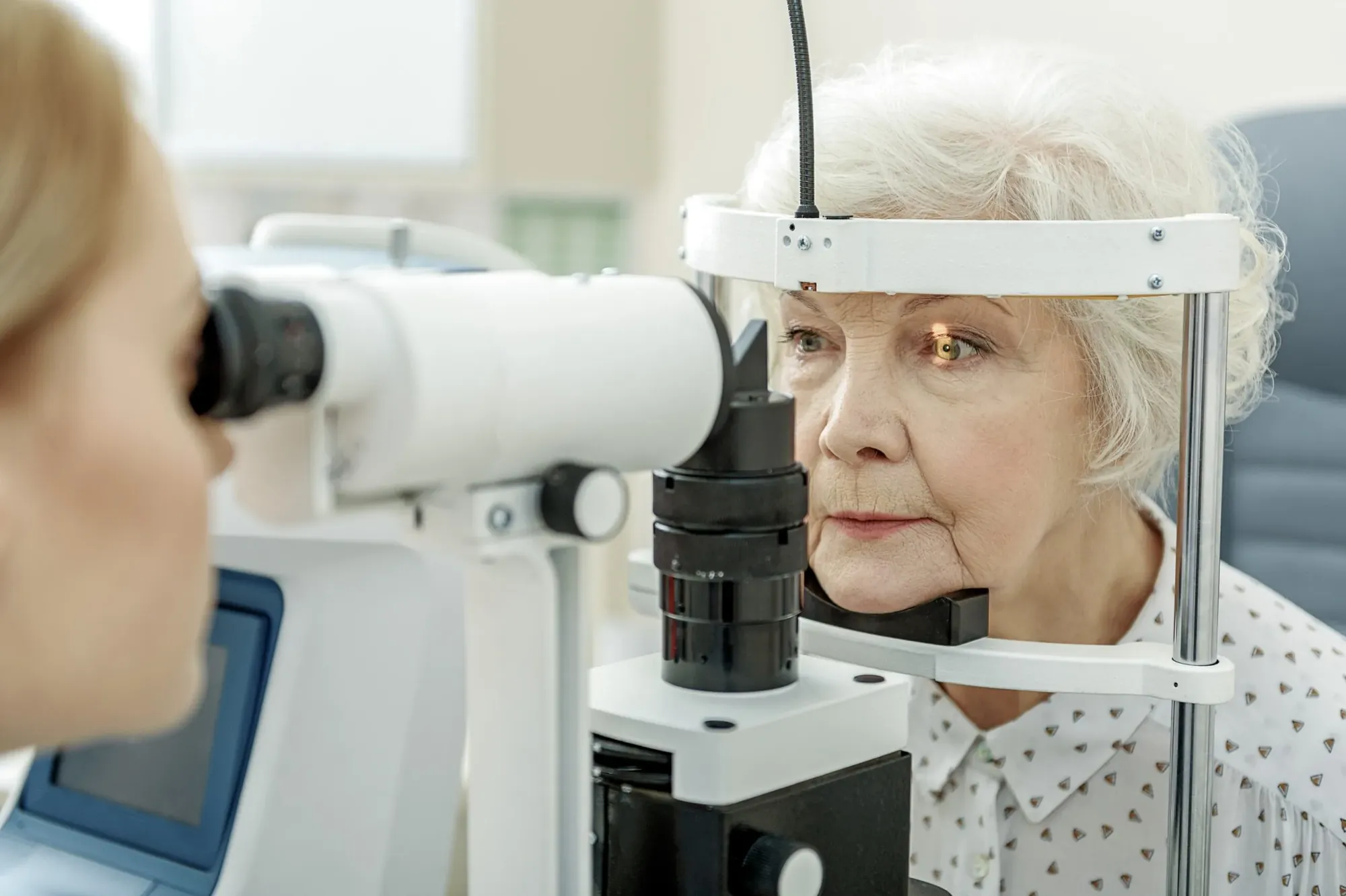
The exact sequence varies by service. Typically, the eye is examined, numbing drops are used and a treatment lens helps direct the laser to the drainage meshwork. The treatment is performed at a laser instrument while the patient sits in position. Ask the clinician what sensations to expect and how to signal if you need a pause.
A newer version, direct SLT, aims the laser at the drainage area from outside the eye without a contact lens, using automated targeting. It is still new, and its long-term results are not yet known. [64]
The team may use medication around the procedure to manage pressure or inflammation. The choice depends on the eye and protocol. Do not borrow another patient’s pre-laser or post-laser instructions. Studies have examined different anti-inflammatory approaches, and those findings do not create a universal medication schedule for every person undergoing SLT. [42, 43]
Arrange transport and activities according to the treating service’s advice. Temporary blur or light sensitivity can make driving inappropriate immediately afterward. Ask before the visit whether both eyes will be treated, how long you should expect to stay and whether a same-day pressure check is planned. Understanding the logistics can reduce anxiety and missed follow-up.
Short-lived discomfort, inflammation, redness or blur can occur after SLT. Pressure may rise temporarily rather than fall immediately, which is one reason the service provides a monitoring plan. The significance of a pressure rise depends on its magnitude, duration and the condition of the optic nerve. [1, 3, 63]
Serious problems are uncommon. The Glaucoma Research Foundation puts the chance of a pressure rise after SLT at about 5%, usually gone within 24 hours. [63] In LiGHT, pressure rose by more than 5 mmHg on the day of treatment in 6 of 611 treated eyes, and only one needed treatment for it. [3] Over six years, no serious laser-related adverse events occurred in the trial. [2] Inflammation is common but usually mild, and some clinics give anti-inflammatory drops for a few days. [63]
Less common complications have been described, including swelling at the center of the retina (cystoid macular edema) in case reports. A case report establishes that an event has occurred; it does not provide a reliable probability for the average patient. Ask which risks are especially relevant to your eye and what symptoms should trigger urgent contact. [45, 46]
Severe pain, a marked reduction in vision or symptoms that are worsening rather than settling require prompt assessment. Follow the emergency instructions from the treating service. Do not wait for a routine review because you assume that discomfort is an expected part of laser recovery.
Medication also has risks, but comparison should be specific. A transient procedural reaction and years of drug exposure are different kinds of burden. The useful discussion compares your likely laser risks with the actual proposed medicine’s risks and your ability to use it, rather than describing one category as universally safer.
SLT’s response is assessed over follow-up rather than judged solely from how the eye feels afterward. Patients generally cannot sense a modest pressure reduction. Feeling comfortable does not establish success, and mild post-procedure irritation does not establish failure. Pressure measurements are needed to determine the response.
An early check addresses immediate safety, while later visits evaluate the treatment effect and whether the target is being met. Timing depends on the eye and service protocol. Ask for the actual dates, which medicines to continue and whom to contact if an appointment cannot be kept. Do not stop existing glaucoma drops unless the treating clinician specifically directs you to do so.
Long-term care also includes optic nerve and visual field monitoring. A satisfactory pressure today does not prove that the disease will remain stable indefinitely. If the clinician identifies convincing progression, the target or treatment may need to change even when the measured pressure falls within a commonly quoted population range.
There is no fixed duration for every eye. Some responses remain useful for years; others are inadequate initially or diminish sooner. Studies use different definitions of success, including a percentage pressure reduction, reaching a target or avoiding additional treatment. A duration quoted without its definition can give a misleading impression. [47, 28, 24, 48, 29, 26]
One clinic followed 108 eyes with early primary open-angle glaucoma that had SLT as their first treatment, with repeat SLT when needed. The study’s success measure was met in 89% of eyes at 5 years and 72% at 10 years, although only 18 eyes were followed for the full 10 years. The median time before a repeat treatment was 81 months, and 60% of eyes had been retreated by 10 years. [29]
Repeat SLT can be an option when the clinical situation is suitable. Research includes repeat-treatment cohorts and analyses from the LiGHT trial. These support the possibility of another useful response, but they do not justify a universal promise about how many times laser can be repeated or how long each treatment will last. [49, 50, 51]
In the LiGHT trial, 115 eyes had a second SLT within the first 18 months, and repeat SLT kept 67% of them at target without drops 18 months later. [51]
Before retreatment, ask whether the initial response was adequate, whether the angle remains appropriate and whether the current target can realistically be achieved. The alternatives may include changing medicine, combining approaches or considering surgery. A previous good response is useful information, not a guarantee that repeating the same intervention is always the best choice.
SLT and medicines are often complementary. Someone may continue one or more drops after laser, or add a medicine later. Conversely, an eye controlled with several bottles may be assessed for whether laser could safely reduce that burden. Decisions to remove a medicine should be linked to measured control and a follow-up plan. [31, 32, 33, 41]
Make sure the written medication list is updated after each change. Confusion can occur when an old bottle remains on a pharmacy list or when different clinicians give instructions at separate visits. Ask which instructions are current and who coordinates the glaucoma plan. The task is especially important when both eyes have different regimens.
If a bottle is uncomfortable after SLT, do not assume that laser makes it optional. Contact the treating team to review the pressure and alternatives. Our guide to glaucoma eye drops covers each type of drop, its side effects and how to use it.
For daily effort, drops require a repeated routine and refills; SLT requires a procedure and continued appointments, with the possibility of additional treatment. For adjustability, prescriptions can be changed, while the laser response must be measured and may need supplementation. For suitability, both depend on clinical findings, but angle access is particularly important for SLT.
For expected benefit, ask about the pressure reduction needed in your eye, not an average advertised success rate. For adverse effects, discuss the specific medicine and your ocular and systemic history. For cost, obtain local figures. For follow-up, ask for a schedule and an escalation plan. These comparisons make the decision concrete without pretending that the same option is best for everyone.
Consider a hypothetical patient whose pressure is controlled with one bottle but whose hand arthritis makes administration unreliable. SLT may be attractive if the angle and target are suitable. Now consider another hypothetical patient with rapidly worsening advanced disease despite several treatments. The urgency and required pressure reduction may lead to a different recommendation. These examples illustrate decision factors, not individual treatment advice or actual Netra outcomes.
Ask what type of glaucoma you have, whether the drainage angle is suitable for SLT and what pressure target the clinician is trying to reach. Ask whether the proposed goal is to replace drops, reduce their number or add pressure control. Request an explanation of the evidence most applicable to your starting situation.
Then ask about practicalities: which medicines to use before and after treatment, whether transport is needed, when the pressure will be checked and which symptoms require urgent contact. If you choose drops first, ask when their effect and tolerability will be reviewed. If you choose SLT, ask what the next step would be after an insufficient response.
Finally, discuss access. A plan is only workable if you can obtain the medication, attend the procedure and return for monitoring. Tell the service about transport, cost, caregiving or communication difficulties early. These issues influence treatment reliability and deserve to be part of the clinical conversation.
Bring the names and concentrations of every eye medicine, the intended eye for each one and a description of any previous reaction. If you are changing practices, request prior pressure measurements, visual fields, OCT reports and details of earlier laser or surgery. These records help the clinician distinguish a new diagnosis from a previously documented pattern and understand what has already been tried.
After the consultation, write down the agreed target and the purpose of the selected treatment in plain language. For example, the goal might be to reduce one daily bottle while maintaining the current pressure range. Record the review appointment and the contingency plan if the first approach is insufficient. This makes future decisions easier to understand and reduces confusion when different members of the care team are involved.
Keep the plan realistic about symptoms. You may not notice a visual improvement after successful pressure treatment because the goal is to protect remaining function. Lack of a dramatic change in how you see does not establish that SLT or drops have failed. Measurements and follow-up provide the evidence needed to judge the response.
Netra Restoration Therapy (NRT) at Netra Eye Institute does not lower eye pressure and cannot replace SLT, glaucoma drops or surgery. Once glaucoma is medically controlled, some people still have trouble with scanning, reading or getting around because of field loss that has already happened. A functional assessment can look at those tasks and coordinate with low-vision care.
Learn about Netra Restoration Therapy, Netra Eye Institute’s approach and low-vision rehabilitation.
No. It is a pressure-lowering treatment. It does not restore established nerve damage, and its effect may diminish. Continued monitoring is necessary even when drops are no longer needed.
Only if your treating clinician specifically instructs you to do so. Many patients continue medication while the response is assessed. Ask for eye-specific written instructions rather than assuming that a laser appointment automatically replaces the prescription.
Not necessarily. It may contribute useful pressure reduction while medication provides the remaining effect. The relevant question is whether the combined plan meets the target safely and with an acceptable burden.
No single rule fits every eye. The evidence supports offering it as an early option to appropriate patients, while severity, anatomy, other conditions, access and preferences still shape the decision. Ask why the recommended pathway fits your particular findings.
Most people feel little or no discomfort. [64] Numbing drops go in first, and a special contact lens rests on the eye to guide the laser. [63] You may see flashes of light and hear clicking, and some people feel slight discomfort. [65] Tell the clinic if pain gets worse afterward rather than better.
Most people go back to their normal activities the same day or the next. [64, 63] Vision can be blurry for a few hours, so arrange for someone to drive you home. [65] Some clinics prescribe anti-inflammatory drops for a few days, and a check-up usually follows within a few weeks. [63] Keep using your glaucoma drops unless your eye doctor tells you to stop.
Most side effects are mild and short-lived. In the LiGHT trial, about 1 in 3 people treated with SLT had brief discomfort, blurred vision, light sensitivity or redness. [1] Mild inflammation is common, and vision can be blurry for a few hours. [63, 65] Eye pressure rises for a short time in about 5% of eyes, usually settling within 24 hours. [63] Rarely, the pressure stays high and needs further treatment, and swelling at the center of the retina (macular edema) has been reported in individual cases. [65, 45, 46] Severe pain or a large drop in vision after SLT needs urgent care.
SLT is meant for open-angle glaucoma and ocular hypertension. [63] It is not suitable when the drainage angle is closed or cannot be seen, and it does not replace laser iridotomy for angle closure. The LiGHT trial did not include people with past uveitis or people unable to sit at the laser. [1] In a US registry, eyes with uveitis, angle damage from an old injury or no lens were less likely to respond. [23] When glaucoma is advanced and the pressure must come down a lot, your eye doctor may advise surgery instead.
It is a laser procedure, not an incisional operation. Nothing is cut, there are no stitches, and it is done while you sit at a laser in the clinic. [64, 63] Consent forms and insurance paperwork may still call it laser surgery.
It depends on whose eyes are treated and how success is measured. As a first treatment in the LiGHT trial, 74.6% of eyes were at their target pressure without drops, and without the glaucoma getting worse, at three years, after one or two treatments. [3] Results are often lower in eyes that start with lower pressure, such as eyes already using drops: in a large US registry of laser trabeculoplasty (263,480 eyes), 36.9% had a fall of at least 20% a few months after treatment. [23] Higher starting pressure predicts a better response. [23, 26]
The Glaucoma Research Foundation says the effect generally lasts 1 to 5 years, and sometimes longer. [63] In one small study of early glaucoma treated first with SLT, the median time before a repeat treatment was 81 months, almost 7 years. [29] In routine care the effect often lasts less, especially in eyes already using drops. [24, 26] Some eyes respond poorly from the start and others lose the effect sooner, so pressure checks continue.
Often, yes, especially if the first treatment helped. [63] In the LiGHT trial, repeat SLT kept 67% of 115 eyes at target without drops 18 months later. [51] A US study found that a repeat treatment brought pressure down to about the same level as the first one. [50]
Results can take 1 to 3 months to show, so your eye doctor rechecks the pressure over the following weeks and months. [63] Feeling fine after the laser does not tell you whether it worked; only a pressure check can.
The Glaucoma Research Foundation says SLT is covered by Medicare and medical insurance. [63] What you pay depends on your plan, your deductible and where the treatment is done, so ask the clinic for an estimate before booking.
Both treat the drainage meshwork. SLT largely replaced the older argon laser because it causes fewer side effects, is easier to use and is easier to repeat. [1] In a small trial comparing the two, they lowered pressure by similar amounts over six months. [52]
Numbered citations identify sources connected to the text. The remaining entries provide relevant supporting research. Clinical trials, observational studies, laboratory research and professional guidance answer different questions; the size of this bibliography does not imply that every source provides equally strong evidence.
Medical Disclaimer: This article provides general education. It is not medical advice, a diagnosis or a personal treatment plan, and it does not establish a doctor-patient relationship. Do not start, stop or change any prescribed medicine or treatment without the clinicians responsible for your care. Sudden vision loss, a new shower of floaters, flashes, a curtain or shadow in your vision, or a painful red eye needs urgent eye care.