Search conditions, treatments, research reviews and articles. Press Enter to see all results, Esc to close.
Search conditions, treatments, research reviews and articles. Press Enter to see all results, Esc to close.
Blog
October 26, 2026
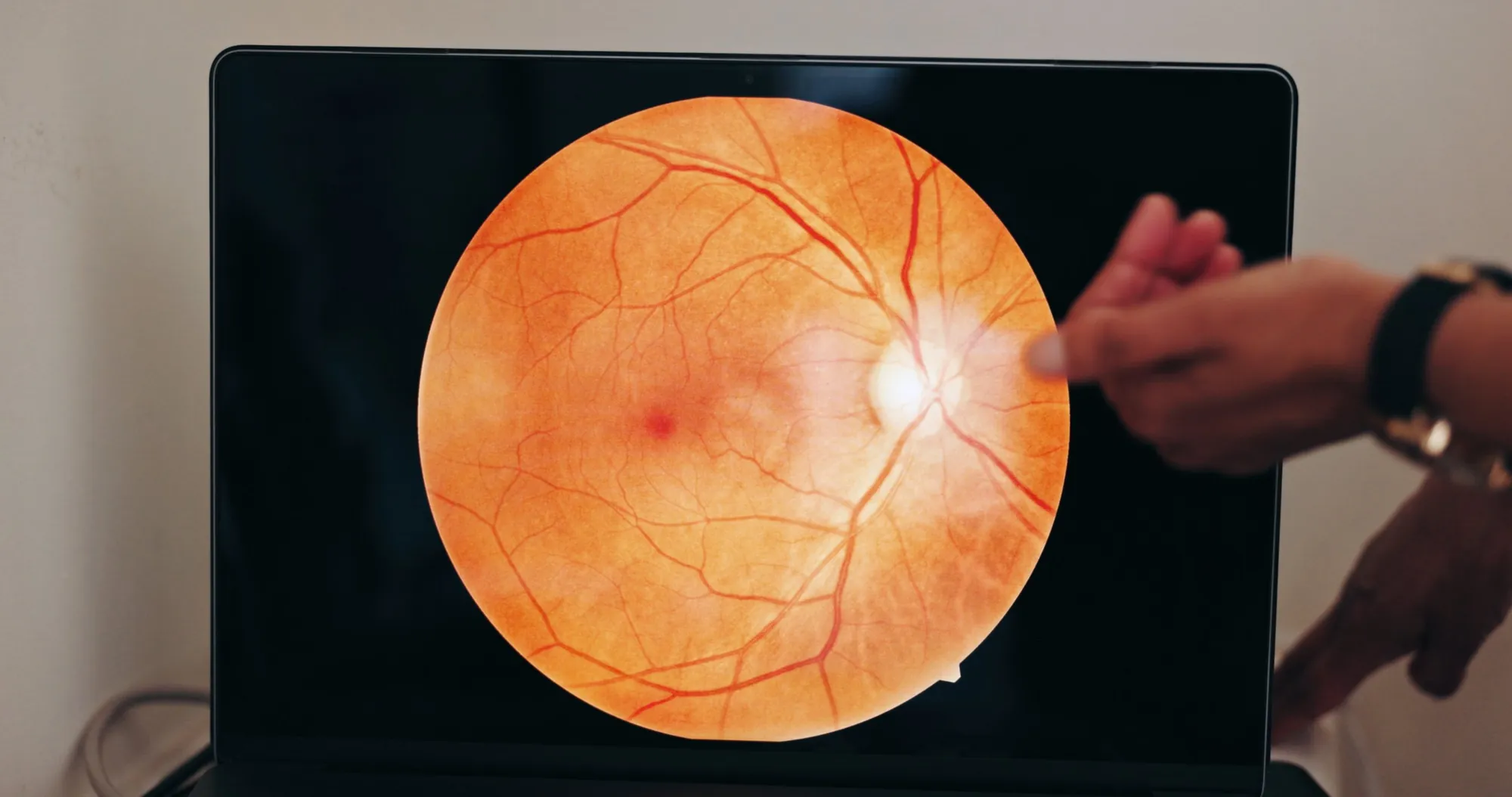
A glaucoma suspect is someone who has one or more findings or risk factors that raise the risk of glaucoma, but who has no proven glaucoma damage. It is not a diagnosis of glaucoma. The most common reasons are eye pressure above the normal range, an optic nerve that looks borderline, a borderline visual field test or a strong family history. Most glaucoma suspects do not develop glaucoma in the next five years, and many never do. But the risk varies a lot from person to person: in a large study of people with high eye pressure, close to half had developed glaucoma after 20 years. So the plan is a baseline set of tests and regular checks to look for change over time. Some people with a high risk are offered treatment before any damage appears.
| Term | What it means | Usual plan |
|---|---|---|
| Glaucoma suspect | One or more risk signs, but no proven damage to the optic nerve | Baseline tests, then regular checks; treatment in some higher-risk eyes |
| Ocular hypertension | A type of glaucoma suspect: eye pressure above the normal range, with open drainage angles, a healthy optic nerve and a normal visual field | Regular checks; drops or laser if the risk is high |
| Angle-closure suspect | A drainage angle so narrow that the iris touches the drain over much of its circle, but with normal pressure, no scarring in the angle and no nerve damage | Checks, and laser iridotomy in selected eyes; most never develop angle closure |
| Glaucoma | Damage to the optic nerve with matching changes on scans or visual field tests | Treatment to lower eye pressure, with lifelong monitoring |
Eye doctors use the label when something on your exam or history puts you at higher than average risk, but the tests do not show glaucoma damage. Common reasons include:
The reason for your label matters, because it decides which tests you need and how often. Ask your eye doctor which finding led to it.
Many glaucoma suspects never develop glaucoma, but the risk varies a lot between people. The best data come from people with high eye pressure:
Your own risk depends on your pressure, the thickness of your cornea, how your optic nerve looks, your visual field results, your age and your family history. Eye doctors sometimes use a risk calculator built from these factors to help with the decision, though it does not replace their judgment.
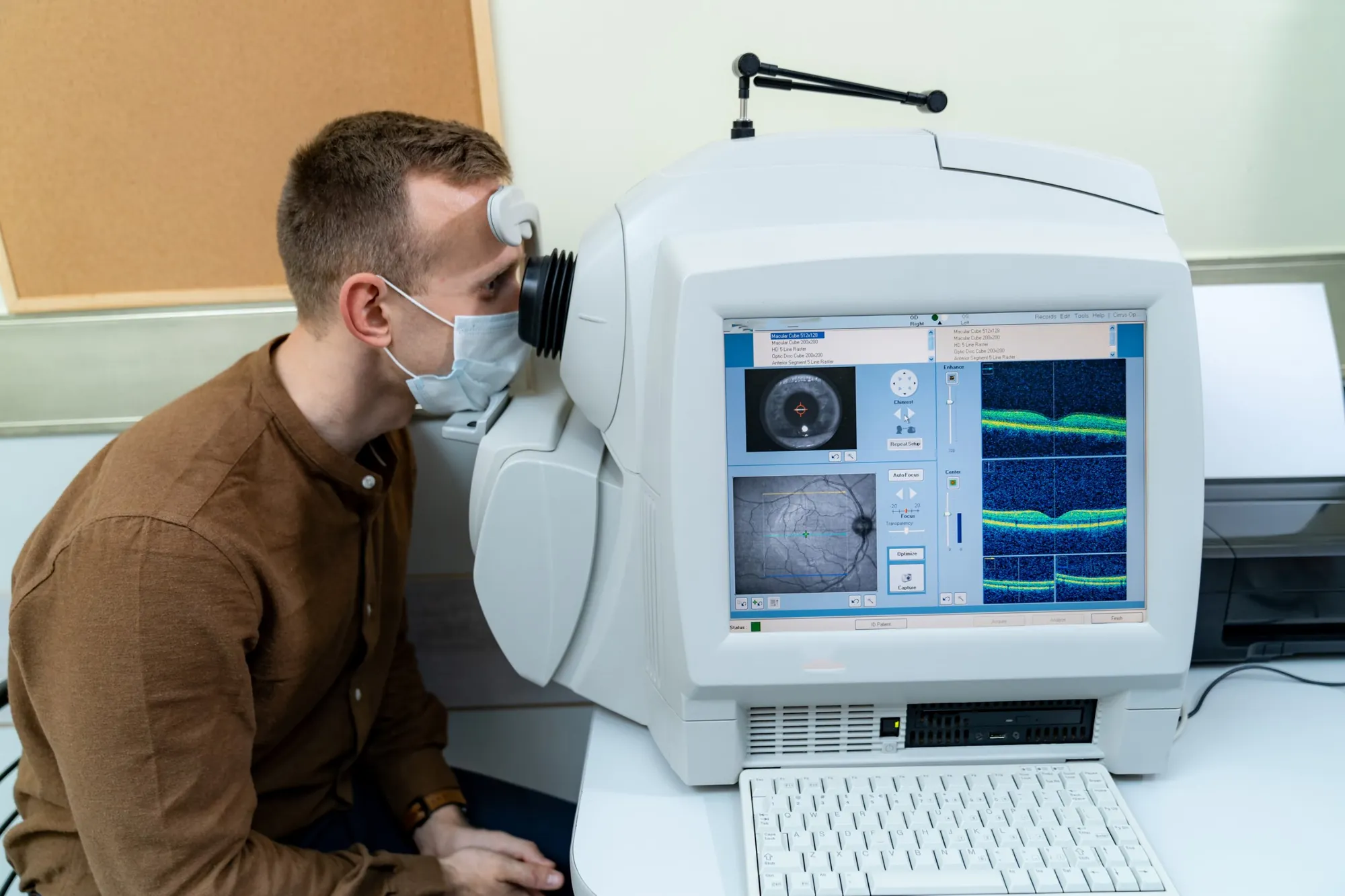
The first visits build a baseline, so later tests can show whether anything changes. A full evaluation usually includes:
Bring any earlier results, especially pressure readings, scans and visual fields from other clinics. Our guide to the glaucoma test explains each one.
There is no single schedule. The BrightFocus Foundation says a low-risk glaucoma suspect may need visits every 6 to 12 months, with optic nerve and visual field tests repeated about yearly or as the eye doctor decides. The Glaucoma Research Foundation advises detailed optic nerve and visual field monitoring every year, whether or not you are treated. One glaucoma specialist at the University of Utah describes seeing low-risk suspects once a year, with a visual field every two to three years, and high-risk suspects every four months.
Keep these appointments even if your vision seems fine. Early glaucoma usually has no symptoms, and the change that matters shows up only on tests over time.
Not always. Many glaucoma suspects are watched without treatment. The decision is shared between you and your eye doctor and weighs your pressure, your other risk factors, your age and how you feel about the risk. Treatment makes more sense for younger people with a higher risk, because they have more years in which damage could develop. Some people prefer to watch and wait, and others prefer to start treatment for peace of mind.
If tests start to show damage, such as nerve fiber thinning on OCT that gets worse over time, the diagnosis usually changes to glaucoma and treatment is started. Treatment may also be suggested if your pressure keeps rising. The options are the same as for early glaucoma: pressure-lowering eye drops or SLT laser. For narrow angles, laser iridotomy may be offered instead. Our guide to high eye pressure covers treatment decisions for ocular hypertension in more detail.
Netra Restoration Therapy (NRT) at Netra Eye Institute does not diagnose or treat glaucoma, lower eye pressure or replace monitoring by your eye doctor. If you are a glaucoma suspect, the priority is regular testing with an ophthalmologist or optometrist. Learn about Netra Restoration Therapy and Netra Eye Institute’s approach.
It is a reason for regular checks, not a reason to panic. Many glaucoma suspects never develop glaucoma. If it does develop, finding it early and starting treatment keeps the risk of serious vision loss small. The danger is skipping follow-up, because early glaucoma usually has no symptoms.
Glaucoma means the optic nerve is damaged, with matching changes on scans or visual field tests. A glaucoma suspect has risk signs, such as higher eye pressure or a borderline optic nerve, but no proven damage. Some suspects are treated to lower their risk, but they do not have glaucoma.
No. Being a glaucoma suspect causes no symptoms, and early open-angle glaucoma usually doesn’t either. That is why the label is usually given after a routine eye exam, and why follow-up tests matter. Sudden eye pain, redness, blurred vision and halos are different: they can mean an angle-closure attack and need emergency care.
Not always. Many are monitored without treatment. Your eye doctor may suggest drops or SLT laser if your pressure is high, other risk factors add up or tests start to show change. In the Ocular Hypertension Treatment Study, drops cut the share of people with high pressure who developed glaucoma over five years from 9.5% to 4.4%.
Usually every 6 to 12 months if the risk is low, with optic nerve tests about once a year; some doctors repeat visual fields less often when the risk is low. People at higher risk may be seen every few months. Your eye doctor sets the schedule based on why you were labeled a suspect.
Yes. Some people are born with large optic nerve cups and never develop glaucoma. That is why eye doctors measure the nerve fiber layer with OCT and test the visual field before deciding. A normal nerve fiber thickness is reassuring, and repeated tests show whether the cup is changing.
Yes. The label can apply to one eye or both, for example when pressure is high in one eye or the two optic nerves look different. Each eye is tested and followed separately.
Medical Disclaimer: This article provides general education. It is not medical advice, a diagnosis or a personal treatment plan, and it does not establish a doctor-patient relationship. Do not start, stop or change any prescribed medicine or treatment without the clinicians responsible for your care. Sudden eye pain with a red eye, blurred vision or halos, or a sudden loss of vision, needs emergency care.