Search conditions, treatments, research reviews and articles. Press Enter to see all results, Esc to close.
Search conditions, treatments, research reviews and articles. Press Enter to see all results, Esc to close.
Blog
October 29, 2026
Photophobia means that ordinary light causes discomfort or pain in the eyes or head. It is a symptom rather than a diagnosis, and despite its name it is not a psychological fear of light. Light sensitivity can accompany a dry ocular surface, an inflamed or injured eye, migraine, a head injury and, less often, a medical emergency. [1,2]
The practical challenge is that the same complaint can have very different meanings. A person who squints at a laptop after a long day and a person with a stiff neck, fever and a severe headache may both say that light hurts. What separates them is the pattern: the speed of onset, whether one or both eyes are affected, whether there is pain or redness, and whether vision or general health has changed. In a review of 147 patients seen at one university eye center mainly for photophobia, migraine and dry eye were the most frequent causes, while about a quarter of patients left without a documented cause. [3]
This guide explains how light sensitivity happens, which warning signs need urgent care, the eye and neurological conditions behind it, how clinicians work out the cause, and which practical measures have evidence. At Netra Eye Institute, any discussion of Netra Restoration Therapy comes after that diagnosis, not instead of it.
In this article
Clinicians describe photophobia as a state in which light causes discomfort in the eye or head, or prompts a person to avoid light even without obvious pain. Some people describe a stabbing or aching eye, others describe a headache that worsens in bright rooms, and others simply find themselves narrowing their eyes, wearing a cap indoors or dimming every screen. [1]
The word comes from the Greek for "fear of light," which is misleading. Photophobia can occur alongside anxiety or depression, but researchers who have studied it closely conclude that it is unlikely to be a purely psychiatric symptom, because the nerve pathways that produce it are well described. Being told that light sensitivity is "just stress" without an examination is therefore not a satisfactory answer. [1]
Photophobia itself does not cause blindness. Some of the conditions that produce it can threaten vision, however, which is why the cause matters more than the symptom. It also helps to separate photophobia from glare. A cataract can make lamps, sunlight and headlights seem too bright and create halos around lights; that is a problem of scattered light inside the eye, although people often describe it in similar words. [2,4]
Light sensitivity can also be persistent and disabling. In the university series mentioned above, about a quarter of adults said the symptom greatly affected their quality of life. That burden is a reason to look carefully for a cause and to plan practical support, rather than simply advising the person to avoid light. [1]
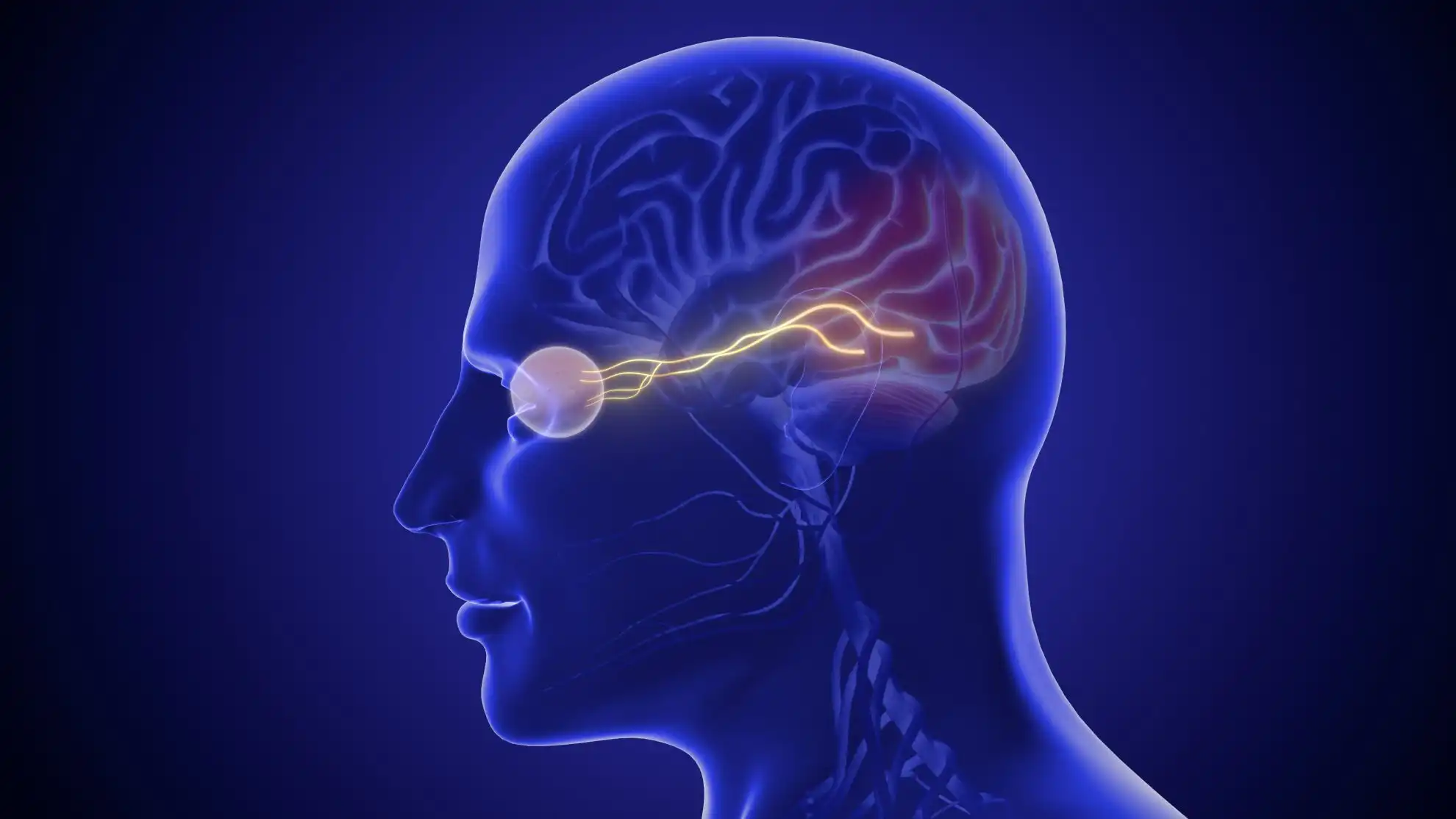
The front of the eye, including the cornea, conjunctiva, iris and the tissues around it, is densely supplied by branches of the trigeminal nerve, the main pain nerve of the face. This is why a scratched cornea or inflammation inside the eye almost always makes light uncomfortable. The retina itself does not sense pain, but it can still feed signals into pain pathways. [1]
A small group of retinal cells, called intrinsically photosensitive retinal ganglion cells, contain a pigment named melanopsin and respond most strongly to blue light at around 480 nanometers. Animal research shows that these cells connect to areas of the thalamus that also receive pain signals from the coverings of the brain. This helps explain how light can be experienced as pain during a migraine, and why some people who are blind can still have photophobia. [1,5,6]
The nervous system can also become sensitized. In a study of 236 United States veterans with dry-eye symptoms, 75 percent reported painful light sensitivity, and the same research group has found that dry-eye patients with photophobia tend to have more chronic, more severe symptoms that are less fully relieved by artificial tears. Light sensitivity can therefore be out of proportion to how dry the eye looks under the microscope. [1,6]
These mechanisms have practical consequences. Treating only the eye surface may not be enough when nerve sensitization or migraine is involved, and tinted lenses that filter the wavelengths around 480 nanometers, such as FL-41, act on this pathway rather than simply dimming everything. [5]
Call 911 or go to an emergency department if light sensitivity comes with a sudden, extremely severe headache, a stiff neck, fever, confusion, a seizure or a reduced level of consciousness. These can be signs of meningitis or bleeding around the brain, both of which are medical emergencies. After a head injury, a headache that keeps worsening, repeated vomiting, slurred speech, weakness, a seizure or one pupil larger than the other also needs emergency assessment. [7,8,9]
Get emergency care, by calling 911 or going to an emergency department, for severe eye pain, especially with headache, fever or unusual light sensitivity, nausea or vomiting, or an inability to keep the eye open. A sudden change in vision, new halos around lights, or any chemical splash or object in the eye also needs emergency care. After a chemical splash, rinse the eye with clean running water for at least 15 minutes before and on the way to care, and do not try to remove an object that is stuck in the eye. [10,11]
Sudden severe pain in one eye with blurred vision, halos, redness and nausea can signal acute angle-closure glaucoma, which needs treatment right away to save vision. [12]
If you wear contact lenses and develop a red, painful, light-sensitive eye or sudden blur, remove the lenses and call an eye doctor immediately; these are symptoms of a possible corneal infection. New light sensitivity with eye pain, redness, floaters or blurred vision may be uveitis, and that also needs an eye examination right away. [13,14]
For less dramatic symptoms, contact a clinician if light sensitivity is severe or painful enough that you need sunglasses indoors, if it comes with headache, red eye or blurred vision, or if it lasts more than a day or two without an obvious reason such as recent dilating drops. [15]
| What you notice | Possible causes | Suggested action |
|---|---|---|
| Sudden severe headache, stiff neck, fever or confusion | Meningitis or bleeding around the brain | Call 911 or go to an emergency department |
| Severe pain in one eye with halos, blurred vision and nausea | Acute angle-closure glaucoma | Emergency eye care |
| Chemical splash or object in the eye | Chemical or corneal injury | Rinse with clean water for at least 15 minutes; do not remove a stuck object; emergency department |
| Red, painful eye in a contact lens wearer | Corneal infection or injury | Remove lenses and call an eye doctor immediately |
| Painful red eye with floaters or blur | Uveitis | Prompt eye examination |
| Gritty, burning eyes that worsen with screens or wind | Dry eye and surface disease | Routine eye examination |
| Familiar headaches with nausea or sound sensitivity | Migraine | Primary care or neurology; urgent care if the pattern changes |
| Infant with tearing, light sensitivity and a cloudy or enlarged eye | Congenital glaucoma | Urgent pediatric eye assessment |
In a baby, light sensitivity with tearing and a cloudy or enlarged eye can be a sign of congenital glaucoma, usually noticed in the first months of life. That combination needs urgent assessment. A blocked tear duct can cause watering, but it does not usually cause marked light sensitivity. [12,16]
Migraine can cause light sensitivity in children too, and young children may show it through behavior, such as seeking a dark room, rather than describing it. In the university series, a cause was not documented for most children seen for photophobia. That makes a careful examination and follow-up more important, not less. [3,17]
Dry eye is one of the most common causes of light sensitivity, and the National Eye Institute lists sensitivity to light among its symptoms. Nearly 16.4 million Americans have dry eye, and women and people aged 50 or older are at higher risk. Other symptoms include stinging, burning, a feeling that something is in the eye and blurred vision. [1,18]
As described above, dry-eye light sensitivity can persist even when visible dryness is modest, because the corneal nerves themselves may be sensitized. Treating the tear film and eyelids remains essential, but persistent pain despite a good surface response deserves its own assessment. Netra's dry eye guide covers the causes and treatment options in more detail. [6]
A corneal abrasion, a corneal ulcer, a chemical injury (see the emergency steps above), or overwearing poorly fitting contact lenses can all cause light sensitivity, often with pain, watering and a feeling that something is in the eye. A corneal injury that is not improving after two or three days of treatment needs review. [11,15]
Contact lens wearers need particular caution. Pain that worsens even after the lens is removed, light sensitivity, sudden blur and unusual discharge can indicate microbial keratitis, a corneal infection that needs prompt treatment. Netra's guides to keratitis and corneal ulcer healing explain what follows. [13]
Uveitis, including inflammation at the front of the eye often called iritis, usually starts suddenly. Symptoms include light sensitivity, eye pain, redness, floaters and blurred vision. Untreated uveitis can cause vision loss, so it needs prompt assessment and usually prescription treatment. [1,14]
Pink eye can also make light uncomfortable. Light sensitivity, eye pain, blurred vision that does not clear when discharge is wiped away, or intense redness are reasons to see a clinician rather than waiting for conjunctivitis to settle. [19]
Drops used to dilate the pupils for an eye examination, such as tropicamide, phenylephrine or cyclopentolate, commonly cause temporary light sensitivity. So can recovery from eye surgery, including cataract surgery and LASIK. Increasing pain, worsening vision or a red eye after surgery needs to be reported to the surgeon's office right away, using the after-hours number if necessary. [2,10,15,20]
Several medicines are associated with photophobia, including some that enlarge the pupils and others such as benzodiazepines, barbiturates, chloroquine, haloperidol, lithium and methylphenidate. Do not stop a prescribed medicine on your own; bring a full list to your appointment so the prescriber can consider whether it is contributing. [1,2,15]
Cataracts can make lamps, sunlight and headlights seem too bright and cause halos around lights. More than half of Americans aged 80 or older have cataracts or have had cataract surgery. If glare is making night driving difficult, mention it at your eye examination. [4]
Some inherited retinal conditions cause persistent light sensitivity. In cone dystrophy it may be one of the earliest signs, appearing before obvious vision loss. Achromatopsia, retinitis pigmentosa, albinism and aniridia, in which part or all of the iris is missing, can also cause sensitivity to bright light. These conditions need assessment by an eye specialist, often with specialized retinal testing. [1,2,21]
Light sensitivity is part of the formal diagnostic criteria for migraine. Reviews estimate that roughly 80 to 90 percent of people with migraine have photophobia during attacks, and that light or glare triggers a substantial share of attacks. People with migraine also tend to be more sensitive to light than others even between attacks. [1,5,17]
Migraine is common: in United States government survey data, 15.9 percent of adults reported migraine or severe headache, including 21 percent of women and 10.7 percent of men. Typical attack symptoms include sensitivity to light, sound and smell, and nausea. A change in the usual pattern or new neurological symptoms still need medical assessment. [22,23]
Being bothered by light is a recognized symptom of concussion. In one study, half of people with a traumatic brain injury reported light sensitivity compared with 10 percent of healthy controls. About half improve over the following years, but many continue to have symptoms, which can make screens, offices and driving difficult. [5,9]
Benign essential blepharospasm, a condition in which the eyelids close involuntarily, is strongly linked with light sensitivity: in one survey of 316 patients, 94 percent reported it. Light sensitivity is also common in progressive supranuclear palsy, a rare movement disorder. Meningitis, bleeding around the brain and sudden bleeding into the pituitary gland cause photophobia by irritating the brain's coverings, which is why they appear among the emergency warning signs. [1,5]
Light sensitivity has been associated with anxiety, panic disorder and depression, and with severe alcohol withdrawal and benzodiazepine withdrawal. An association does not mean the symptom is imaginary, and it does not remove the need to examine the eyes. It does mean that a complete plan may include sleep, mood and medication review alongside eye care. Severe alcohol withdrawal with confusion, shaking or hallucinations is a medical emergency. [1,2,24,25]
The history usually narrows the possibilities quickly. Expect questions about when the problem began, whether one or both eyes are affected, the severity of pain, whether you need dark glasses or a dark room, recent dilating drops, medicines and eye drops, contact lens use, chemical exposure and injuries, and other symptoms such as headache, nausea, neck stiffness, numbness or hearing changes. [15]
The eye examination typically includes the pupil reactions and a slit-lamp examination of the eyelids, tear film, cornea and front chamber of the eye. Depending on the findings, the clinician may dilate the pupils to examine the retina, perform dry-eye tests such as tear break-up time, surface staining or a Schirmer test, and occasionally use an anesthetic drop to see whether pain arises from the corneal surface. [1,15]
A neurological or neuro-ophthalmic examination, including visual fields, may be needed when the eye examination does not explain the symptom or when there are other neurological features. Brain imaging is reserved for situations with focal neurological findings or other specific concerns. When the eye and neurological examinations are normal, the most common associated conditions are migraine, blepharospasm and traumatic brain injury. [1,26]
Because the cause is not always found at the first visit, ask what the next step will be if symptoms persist. A plan might include a trial of dry-eye treatment, a headache assessment, or referral to a neuro-ophthalmologist. [3]
There are no large randomized trials of photophobia as a treatment target in its own right, and little evidence that medicines relieve light sensitivity directly. Most benefit comes from treating the underlying condition. That might mean a dry-eye plan, prescribed anti-inflammatory drops and dilating drops that relax the eye's focusing muscle for uveitis, acute and preventive migraine treatment, or botulinum toxin injections for blepharospasm. [1,5,23]
Treatments for one cause are not interchangeable. Borrowed steroid drops, leftover prescription medicines or a supplement selected from a symptom list can delay a diagnosis, and steroid drops in particular can be harmful when an infection is present. Use only the treatment prescribed for the diagnosis you have.
Sunglasses, preferably polarized, and a brimmed hat are reasonable outdoors in bright sun. Indoors, however, eye and headache specialists generally discourage routinely wearing dark glasses. Their concern is that the eyes adapt to darkness and become more sensitive, making ordinary rooms feel even brighter. This advice is based on physiology and clinical experience rather than controlled trials. [1,2,5,27]
Short-term comfort measures, such as closing the eyes or dimming a room during a migraine attack, are a different matter from making darkness a permanent habit. If you find you need sunglasses indoors most of the day, tell your clinician; that pattern is itself a reason for review. [15]
FL-41 is a rose-colored tint first developed for fluorescent-light sensitivity and migraine. It filters blue-green light, including the wavelengths around 480 nanometers to which the light-sensitive pathway described earlier responds most strongly. It is mainly used indoors, with polarized lenses usually preferred outdoors. [5,27]
The evidence is encouraging but limited. In a crossover trial of 30 people with blepharospasm, FL-41 lenses performed better than gray lenses for reading, sensitivity to fluorescent light, overall light sensitivity and the frequency and severity of spasms. In a study of 20 children with migraine, those wearing a rose tint had their average headache frequency fall from 6.2 to 1.6 per month over four months, while those wearing a blue tint did not sustain an improvement. In a laboratory test, however, FL-41 did not outperform gray lenses. [1,28,29]
A tint is therefore worth discussing for persistent indoor light sensitivity, particularly with migraine or blepharospasm, but it is not a universal treatment and does not replace care for the cause.
Practical adjustments can make daily life easier: use dimmers, reduce the brightness of phones and computer monitors, avoid harsh fluorescent lighting where possible, and take regular breaks. The 20-20-20 rule, looking at something about 20 feet away for 20 seconds every 20 minutes, is a simple habit for screen work. [2,30]
Blue-light-filtering glasses are widely marketed, but a 2023 Cochrane review of 17 randomized trials found that they may not reduce eye strain from computer use, based on low-certainty evidence, and found no trial data on glare discomfort. The American Academy of Ophthalmology does not recommend blue-light-blocking glasses for computer use. Screen discomfort is more often a sign of digital eye strain or dry eye. [30,31]
Netra Restoration Therapy is Netra Eye Institute's individualized integrative program, drawing on acupuncture, Traditional Chinese Medicine, Ayurveda and attention to systemic contributors. For light sensitivity, its relevant role is adjunctive support for a person whose cause has been identified and whose eye-care or medical plan is in place. [32]
New photophobia with any of the warning signs above needs emergency or eye care first. An integrative consultation is not the place to assess a red painful eye, a severe new headache or a recent head injury.
Light sensitivity linked to dry eye, migraine and blepharospasm involves different mechanisms, so an adjunctive plan should start by naming the problem it is meant to address. A reasonable goal might be fewer headache days, longer comfortable screen time, or less burning by the end of the workday. It should not be a vague promise to "cure" light sensitivity.
The team should review current medicines, eye drops, supplements and recent examination findings before adding anything. Introducing several changes at once makes it hard to tell which one helped or which one caused a problem.
The strongest acupuncture evidence relevant to light sensitivity concerns migraine prevention. A 2016 Cochrane review of 22 trials with 4,985 participants found that headache frequency at least halved in 50 percent of people receiving acupuncture compared with 41 percent receiving sham acupuncture. The authors described the effect over sham as small, and concluded that acupuncture may be at least as effective as preventive drugs, based on moderate-quality evidence. [33]
For dry eye, a 2024 meta-analysis of 16 trials found that acupuncture combined with artificial tears improved tear-film tests compared with tears alone, but not the patient symptom questionnaire, and most trials were small and at risk of bias. We found no trial that used light sensitivity as its main outcome, and in one small 2026 trial of acupuncture during migraine attacks, light and sound sensitivity did not improve significantly compared with sham acupuncture. Acupuncture can therefore be discussed as a monitored adjunct, particularly for migraine prevention, but it is not an established treatment for photophobia. [34,35]
Do not apply homemade herbal liquids, oils or other nonsterile preparations to the eye, and tell every clinician about supplements and herbal products, which can interact with migraine and other medicines. Any proposed traditional eye procedure requires an assessment of the ocular surface first; Netra's co-management guidance identifies active infection and unhealed corneal defects as important exclusions. [36]
Agree on a few measures before starting: a 0 to 10 light-sensitivity score at the same times each day, headache days per month, how long you can comfortably work at a screen, and whether you still need sunglasses indoors. If symptoms improve while an eye examination shows worsening inflammation or surface damage, the plan needs to change, not continue.
A short diary is often more useful than a general description. For one to two weeks, note when light bothers you, which kinds of light are worst, whether one or both eyes are affected, any pain or headache, and anything that helps. Record new medicines, contact lens wear, screen time and sleep.
Bring a list or photographs of all eye drops, medicines and supplements, along with details of recent eye procedures, injuries and prescriptions for glasses or contact lenses. If redness comes and goes, a dated phone photograph can help.
Useful questions include: Which findings point toward the cause? Is the cornea or the inside of the eye inflamed? Do I need a neurological assessment? Which symptoms should prompt an earlier visit? Would a tinted lens be reasonable for indoor use? If integrative support is appropriate after that assessment, you can request a Netra consultation and bring your recent findings with you.
No. It is a symptom with many possible causes, from dry eye and corneal injury to migraine and, less often, serious conditions such as meningitis. The accompanying symptoms and an examination identify the condition behind it. [2]
Sometimes. Light sensitivity with a sudden severe headache, stiff neck, fever or confusion needs emergency care, as does a head injury with danger signs such as a worsening headache, repeated vomiting or unequal pupils. Sudden blurred vision or vision loss also needs emergency care, and a red painful eye needs same-day eye care, or immediate care if you wear contact lenses. Most light sensitivity has a less urgent cause, but these warning signs should never be ignored. [7,9,10,13]
Light sensitivity can arise from the nervous system rather than visible damage. Migraine, blepharospasm and traumatic brain injury are common explanations when eye and neurological examinations are normal, and sensitized corneal nerves can make dry-eye symptoms out of proportion to the visible findings. [6,26]
Temporary light sensitivity after dilation or eye surgery is common. Increasing pain, worsening vision or a red eye after surgery is not something to wait out; contact your surgeon's office right away, using the after-hours number if necessary. [10,15,20]
Specialists generally advise against routine indoor sunglasses, because adapting to darkness may make ordinary light feel brighter. Sunglasses are reasonable outdoors. If you feel you need them indoors, ask your clinician whether a lighter tint and an evaluation of the cause would be more helpful. [1,27]
Small studies in blepharospasm and childhood migraine have reported benefits, but laboratory testing has not shown FL-41 to be consistently better than gray lenses. They can be worth trying for persistent indoor light sensitivity alongside treatment of the cause. [1,28,29]
The best available evidence suggests blue-light-filtering glasses may not reduce eye strain from screen use, and the American Academy of Ophthalmology does not recommend them for this purpose. Screen breaks, brightness adjustments and treatment of dry eye are more reliable starting points. [30,31]
Acupuncture has moderate-quality evidence for a small benefit in migraine prevention. In one small trial of acupuncture during migraine attacks, light and sound sensitivity did not improve significantly compared with sham acupuncture, so it should not be relied on to treat photophobia or replace evaluation and prescribed treatment. [33,35]
A baby with tearing, light sensitivity and a cloudy or enlarged eye needs urgent assessment for congenital glaucoma. In older children, persistent light sensitivity, headaches that disrupt school, or any change in vision deserve an eye examination. [12,16]
No. Light sensitivity with a painful red eye warrants same-day eye care, and a sudden change in vision needs emergency care. If you wear contact lenses, remove them, call an eye doctor immediately and do not put them back in until you have been examined. [10,13]
Sources checked October 29, 2026. Netra pages describe the provider’s approach; they do not independently establish treatment efficacy.
This article provides general education and does not replace an individual eye examination, diagnosis or treatment plan. Seek prompt clinical advice for new pain, a red eye with reduced vision or a significant visual change.