Search conditions, treatments, research reviews and articles. Press Enter to see all results, Esc to close.
Search conditions, treatments, research reviews and articles. Press Enter to see all results, Esc to close.

Blog
October 31, 2026
A corneal abrasion is a scratch on the cornea, the clear dome over the colored part of the eye. It feels gritty and painful, with tearing and light sensitivity, but most small abrasions heal in 1 to 3 days [1,2]. A chemical splash, a high-speed injury, or a painful red eye in a contact lens wearer needs urgent care instead.
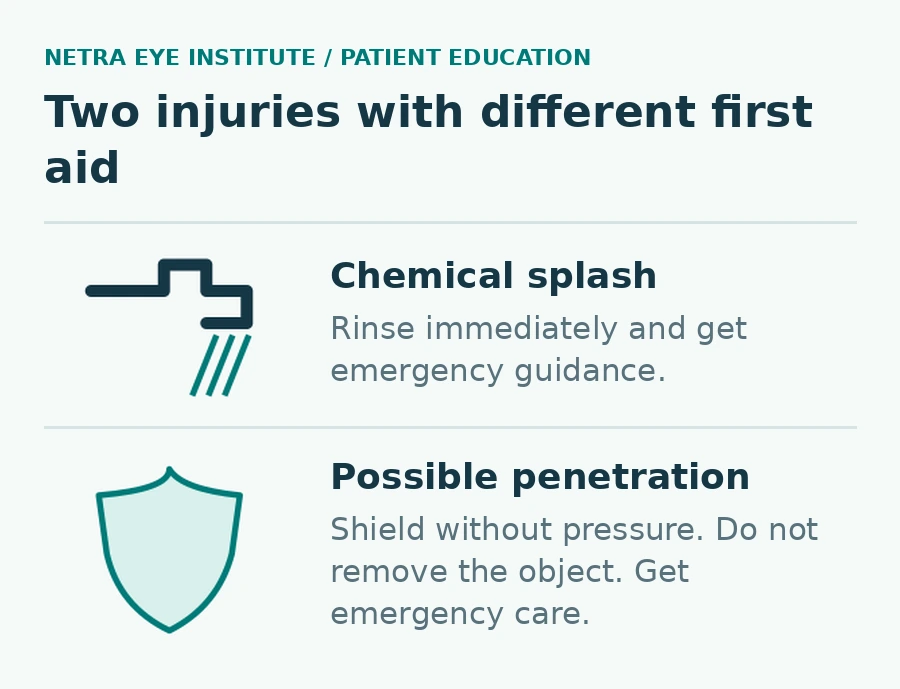
This article is general education, not a diagnosis. For a chemical splash, rinse the eye with clean water for at least 15 minutes and call 911 or Poison Control (1-800-222-1222). If something may have pierced the eye, do not press on it or remove it; shield it and go to the emergency room.
Key takeaways
In this article
Go to the emergency room or call 911 if:
See an eye doctor the same day if:
For other warning signs, see our guide to urgent vision changes and eye emergency symptoms.
Start rinsing right away, wherever you are; don't stop to look for a special eyewash. Hold the eyelids open and let a gentle stream of cool, clean tap water run over the eye for at least 15 minutes [3]. If contact lenses do not wash out, try to remove them after flushing [3]. Then call 911 or Poison Control (1-800-222-1222) and get to an emergency room [6,7].
Leave the object in place. Do not touch it, press on the eye, or try to remove it. Tape a clean paper cup or similar shield over the eye so nothing presses on it, and go to the emergency room [3]. Tell the team what you were doing, because fragments from high-speed tools can enter the eye through a wound that looks minor. Doctors usually use a CT scan to look for metal inside the eye [2].
A corneal abrasion is a scratch or scrape that removes cells from the epithelium, the thin outer layer of the cornea. It is one of the most common eye injuries. Typical causes include fingernails, dust or grit, plant matter such as a branch, and contact lenses that are worn too long, torn or removed roughly [1,2,6].
The corneal surface is rich in sensory nerves, so even a tiny scratch can hurt a lot [1]. Each blink drags the eyelid over the sore spot. That is why the eye waters, the lids clamp shut, and it feels as if something is still in the eye. Sometimes a particle is still there, and only an exam can tell [2].
Small abrasions usually heal on their own, but deeper scratches can leave a scar and affect vision [8]. Ultraviolet light, for example from arc welding without eye protection, can also injure the corneal surface [6].
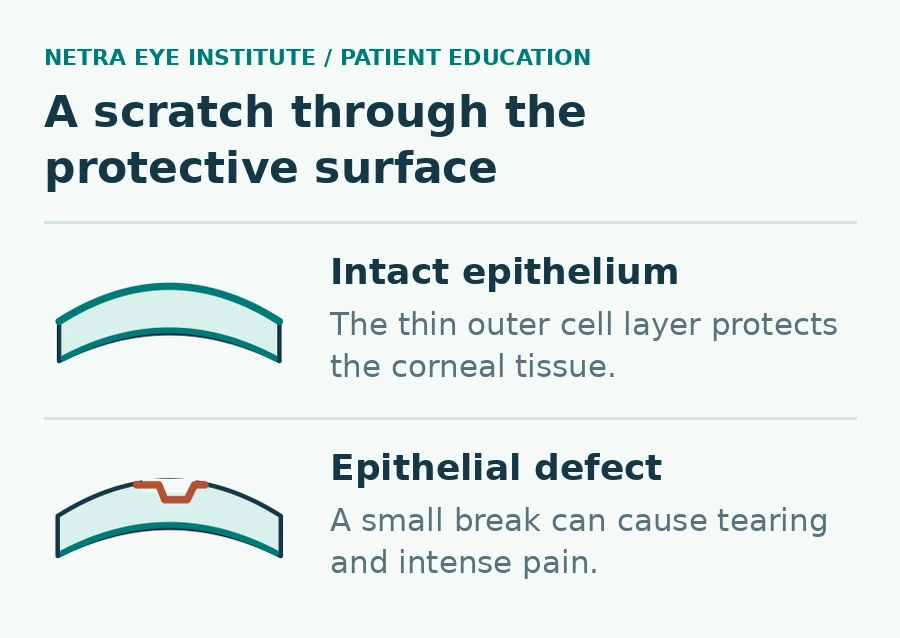
A scratched eye usually feels gritty, as if sand or an eyelash is stuck under the lid. Other common symptoms are sharp pain, especially when you blink, heavy tearing, redness, light sensitivity and squinting. Vision can be blurry, especially if the scratch is near the center of the cornea [1,2,6].
Some people also feel stinging or burning, or have swollen eyelids [6]. Our article on light sensitivity (photophobia) explains why bright light hurts.
The amount of pain does not tell you how deep the injury is. A small scratch can be very painful, while a fragment can pierce the eye after what seems like minor trauma [2]. An exam is the only way to know.
Blink a few times and rinse the eye gently with clean water or saline to wash out loose grit. Do not rub it. Take out contact lenses if they come out easily, and leave them out. Then have the eye checked the same day, because only an exam can rule out a hidden particle, infection or deeper injury [3,4,8].
Do:
Don't:
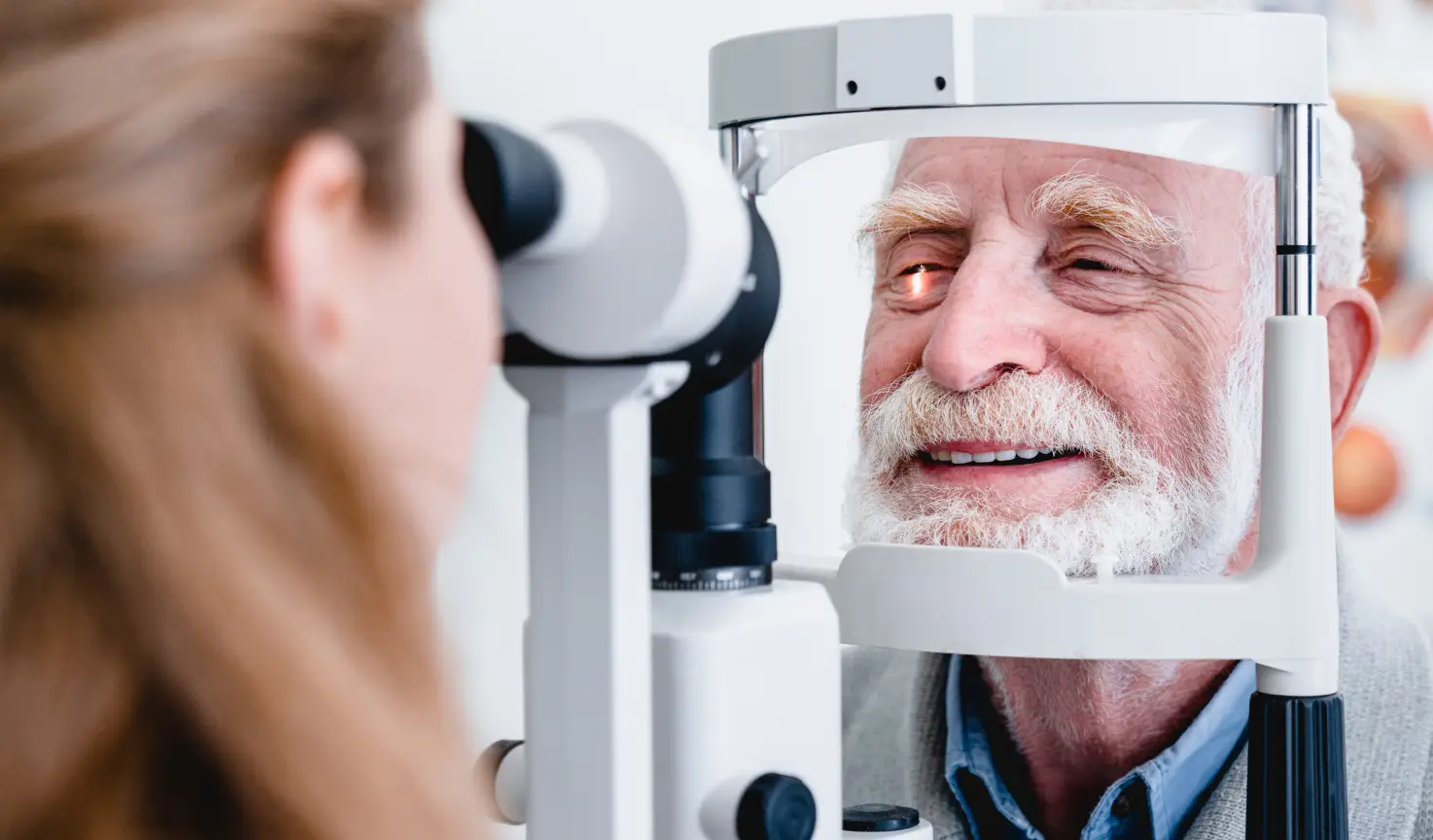
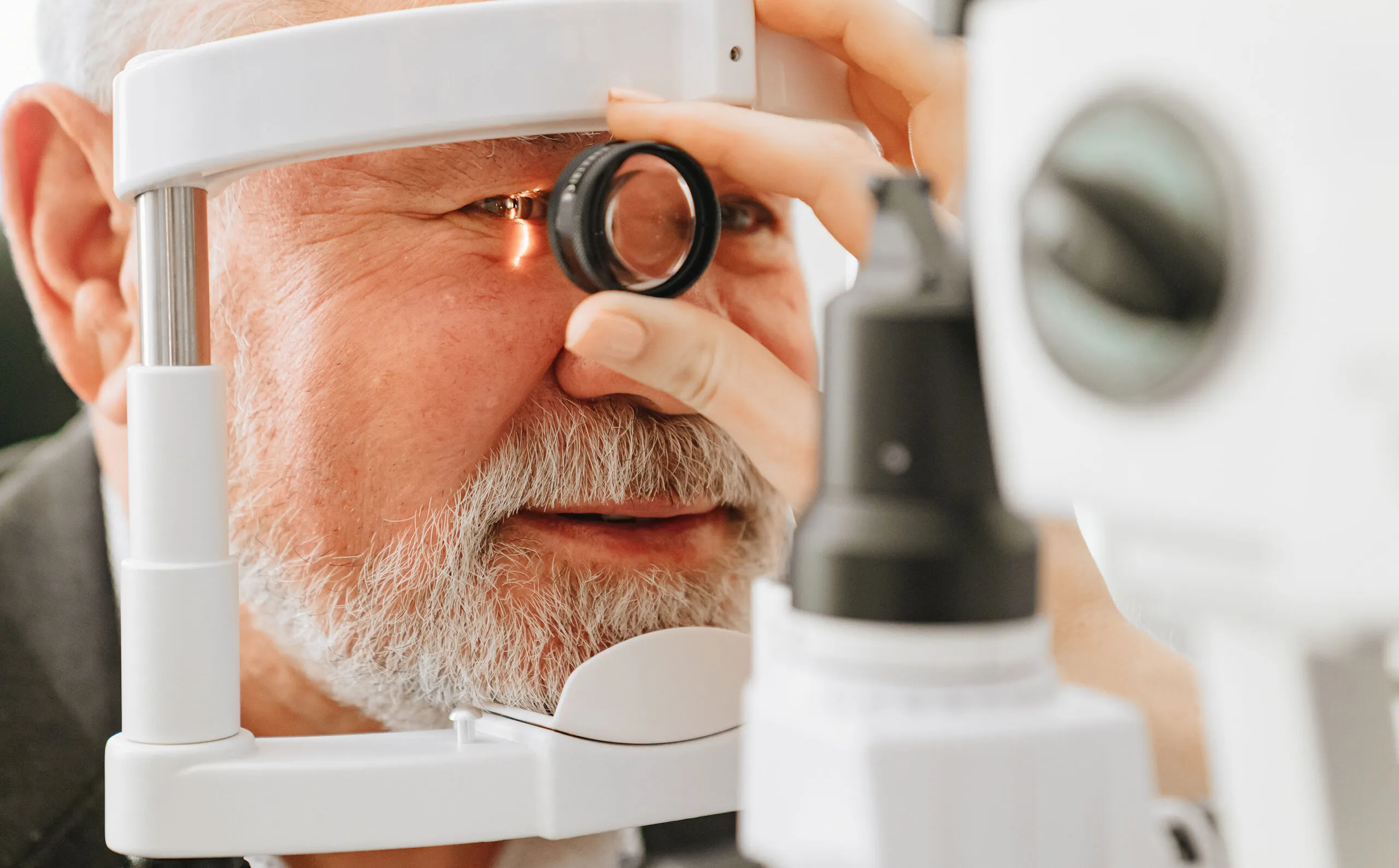
Doctors confirm the scratch with fluorescein, a yellow-orange dye that makes damaged areas glow green under blue light. They also look under the eyelid for trapped particles. Treatment usually means antibiotic drops or ointment to prevent infection, plus pain relief. Eye patches, steroid drops and take-home numbing drops are not recommended [1,2,10].
The visit usually starts with a vision check in each eye, then a numbing drop [1]. Straight-line scratches can mean a particle is caught under the upper lid, so the clinician flips the lid to look [1,2]. A branching pattern can point to a herpes virus infection, which needs different treatment [1]. If iron or steel was involved, the doctor checks for a rust ring, which an ophthalmologist can usually remove in the office [2].
Most people use antibiotic drops or ointment until the surface heals [2]. Ointment is often preferred for children because it does not sting [1]. Contact lens wearers need an antibiotic that covers Pseudomonas, a germ linked to lens infections [1,2]. For larger scratches or strong light sensitivity, a doctor may use a short-acting dilating drop, which can blur reading for a while [1,2]. Pain relievers by mouth, such as ibuprofen, help many people [1]. Steroid drops should not be used on a fresh abrasion, because they can slow healing and raise the risk of infection, including fungal infection [1,2].
A Cochrane review of 12 trials with 1,080 people found no evidence that patching simple abrasions speeds healing or reduces pain [11]. Patches may also raise the risk of infection, especially after a contact lens injury [2].
Numbing (anesthetic) drops make the exam easier. Some emergency medicine guidance allows their use for the first 24 hours, but longer use is debated because they may hide a worsening injury [2]. A 2023 Cochrane review found too little evidence to support home use [10].
Most small corneal abrasions heal in 24 to 48 hours. Most uncomplicated abrasions heal within 1 to 3 days, and some take up to 5 days. Large, deep, central or infected injuries take longer. See an eye doctor if the eye is not clearly better within 2 to 3 days [1,2,6,9].
| Time after injury | What is typical | When to get help |
|---|---|---|
| First 24 hours | Pain, tearing and light sensitivity that start to ease | Now, for a chemical or high-speed injury, vision loss or severe pain |
| 1 to 3 days | Most scratches close and the eye feels much better | Same day, for worse pain, discharge or a white spot |
| 3 to 5 days | Larger scratches finish healing | If symptoms last beyond 3 days, see an ophthalmologist |
| Weeks to months later | Usually no symptoms | Prompt exam for sudden sharp pain on waking, a sign of recurrent erosion |
Follow-up depends on the injury. Contact lens wearers often need daily checks, and large abrasions or reduced vision usually call for a recheck within 24 hours [1]. A recheck 1 or 2 days after the injury is advised when a particle was removed or plant material was involved [2].
Yes. Contact lenses are a common cause of abrasions, and lens wearers have a higher risk of a corneal infection called bacterial keratitis. Overnight wear, storing or rinsing lenses in water, and poor lens care add to that risk. Remove your lenses and call your eye doctor right away if your eye is red, painful or blurry [1,4].
An early infection can feel just like a scratch, and untreated bacterial keratitis can cause vision loss [4]. Do not put your lenses back in to see better on the way to the appointment. Netra's page on keratitis explains corneal infection and inflammation.
Wait until your eye doctor says the eye has healed before you wear lenses again [2,4]. Ask whether the fit, wearing time or removal technique played a part, and keep a current pair of glasses as a backup.
A corneal abrasion is a scratch of the surface layer. A corneal ulcer is an open sore with inflammation underneath, usually from infection, and it often shows as a gray-white spot. Ulcers need urgent treatment with antimicrobial drops, because they can scar the cornea or, if treatment is delayed, even perforate it [5].
| Feature | Corneal abrasion | Corneal ulcer | Recurrent corneal erosion |
|---|---|---|---|
| What it is | A scratch of the surface layer | An open sore with infection or inflammation beneath it | A healed surface that keeps coming loose |
| Common causes | Fingernail, grit, plant matter, contact lens | Contact lens wear (bacteria) or plant injury (fungi) | An earlier abrasion, a basement membrane dystrophy, or past eye surgery |
| Typical signs | Gritty pain, tearing and light sensitivity soon after an injury | Gray-white spot, worsening pain, redness, light sensitivity | Sudden sharp pain in one eye on waking |
| How soon to be seen | Same day | Urgently, the same day | Promptly, during an episode |
Sources for this table: [1,5,12].
Plant injuries need extra care. Fungal ulcers most often follow an injury with plant material, and steroid drops can make fungal infections worse [5,13]. If a scratch seems worse on the second day, get it rechecked. Netra's guide to corneal ulcer healing explains how doctors track recovery, and our article on a white spot on the eye covers other causes.
Sharp pain in one eye on waking, weeks or months after a scratch, is a classic sign of recurrent corneal erosion. The healed surface does not stick down firmly, and it can tear loose when the eyelid opens. It is more likely after an earlier abrasion, eye surgery, or a basement membrane dystrophy [1,12].
Diagnosis needs a careful exam of both eyes [12]. Treatment often starts with lubricating drops or ointment, sometimes with an antibiotic and pain relief. A bandage contact lens can help if those are not enough. People with frequent episodes may need a procedure, such as polishing the surface layer [12]. Netra's page on corneal dystrophy covers inherited conditions that can lead to erosions. Dry eye can also cause morning eye pain; see waking up with dry eyes.
Wear eye protection that fits the task when you use power tools, hammers or chemicals, and when you play sports with fast-moving balls. Follow your contact lens instructions for cleaning, storage, replacement and wearing time. Avoid rubbing your eyes, which can scratch the cornea [3,4,8,14].
Small particles such as metal slivers, wood chips and dust are the main cause of workplace eye injuries, so eye protection should match the hazard [14]. People working nearby need protection too. If you rely mainly on one eye, ask an eye doctor about protective eyewear for sports and work.
No. Netra Restoration Therapy (NRT) is not a treatment for a corneal abrasion, and it has not been tested in controlled trials for this injury. A fresh scratch needs a medical exam and standard care, such as antibiotic drops and follow-up. NRT should never delay or replace that care.
Some people still have burning or pain after the surface has fully healed. An eye doctor should first check for recurrent erosion, dry eye, or nerve-related corneal pain (corneal neuralgia). If nerve-related pain is confirmed, some patients ask about adjunctive care alongside their cornea team. You can read what Netra Restoration Therapy involves and how Netra reviews program outcomes by diagnosis.
Do not put herbal products, oils or eye baths on an injured or healing cornea. Avoid elective treatment near the eye until the doctor managing your cornea says it is safe. Less pain after any added therapy cannot show that the surface or nerves have healed. Sudden sharp pain, a white spot, redness or blurry vision still needs a medical recheck.
There is no safe way to force a scratch to heal overnight, but many small corneal scratches heal within 24 to 48 hours. Help it along by not rubbing the eye, leaving contact lenses out, and using any prescribed drops or ointment as directed. Get the eye checked the same day if the pain is severe, vision is blurry, or you wear contact lenses.
The fastest route is a prompt eye exam and the treatment your doctor prescribes, usually antibiotic drops or ointment and pain relief by mouth. Do not rub the eye or wear contact lenses until it has healed. Patching does not make a corneal abrasion heal faster.
Rinse the eye gently with clean water or saline, rest your eyes, and wear sunglasses if light hurts. An over-the-counter pain reliever such as ibuprofen can help if it is safe for you. Do not use leftover numbing or steroid eye drops, because they can slow healing or make an infection worse.
Small corneal scratches often heal on their own within a day or two. Larger scratches may need antibiotic drops or ointment to prevent infection. Because a hidden particle or an early infection can feel like a simple scratch, it is safest to have a suspected corneal abrasion examined.
No. A Cochrane review of 12 trials found no evidence that patching simple corneal abrasions speeds healing or reduces pain. Patching may also raise the risk of infection, especially for contact lens wearers. A rigid shield that does not touch the eye is used only for a suspected penetrating injury on the way to emergency care.
No. Do not wear contact lenses until the scratch has healed and your eye doctor says it is safe. A lens on a scratched cornea raises the risk of a serious infection. Wear glasses in the meantime.
Most surface scratches heal without a scar. Deeper scratches and corneal infections can leave a scar, which may blur vision if it sits near the center of the cornea. If your vision is not clear after the surface has healed, ask your eye doctor to look for the cause.
Yes. A child with eye pain, light sensitivity, or a red, watering eye after an injury should be examined the same day. A child who still will not open the eye 24 hours later needs to be seen again. Do not force the eyelids open or press on the eye.
Sources checked October 31, 2026.
This article provides general education and does not replace an individual eye examination, diagnosis or treatment plan. For a chemical splash, rinse the eye with clean water for at least 15 minutes and call 911 or Poison Control (1-800-222-1222); for a possible penetrating injury, shield the eye without pressure and go to the emergency room.