Search conditions, treatments, research reviews and articles. Press Enter to see all results, Esc to close.
Search conditions, treatments, research reviews and articles. Press Enter to see all results, Esc to close.
Blog
November 22, 2026
Valeda light therapy is FDA-authorized for early-to-intermediate dry AMD, adding about 2.4 letters over sham. See who qualifies and how NRT compares.
Key points
Valeda light therapy is a clinic-based photobiomodulation treatment that shines three measured wavelengths of light (590, 660 and 850 nanometers) into the eye. In 2024 the US FDA authorized it for one use: improving vision in people with early-to-intermediate dry age-related macular degeneration (AMD) whose best-corrected vision is between 20/32 and 20/70. In its main trial, treated eyes gained 5.4 letters on the eye chart and sham-treated eyes gained 3.0 at 13 months, a difference of 2.4 letters, about half a line. Netra Restoration Therapy (NRT) is a different kind of treatment: an individualized phytoceutical (herbal) program, supported by acupuncture, designed to act on several drivers of retinal cell loss at once. Valeda acts directly on one of those drivers, mitochondrial energy production. The two are not rivals and may be used together.
See your eye doctor promptly if you have dry AMD and notice new distortion, a central blur or dark patch, or a sudden drop in vision. These can signal wet AMD, which needs injections quickly. No light therapy or herbal program treats wet AMD.
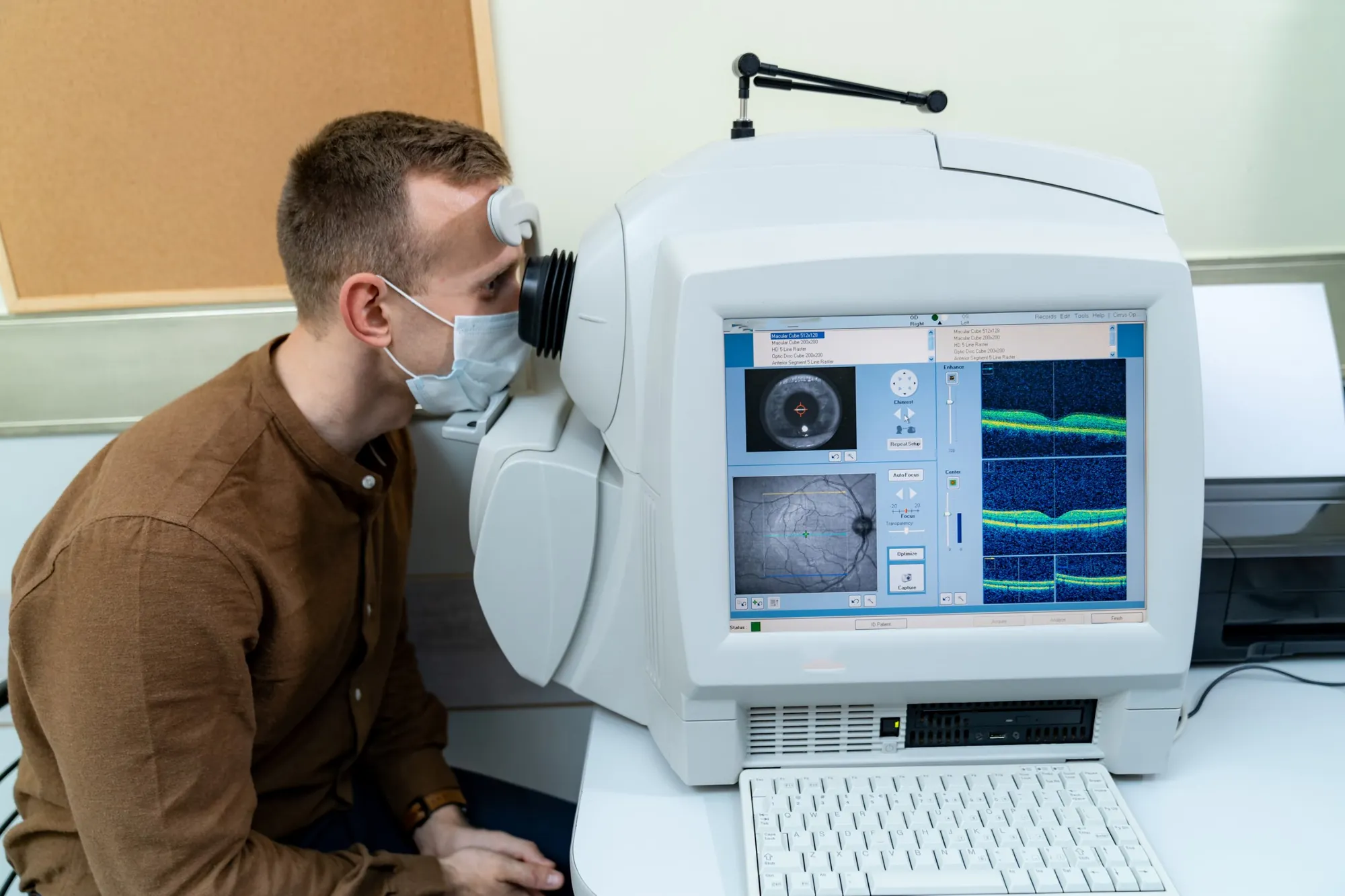
The Valeda Light Delivery System is a tabletop instrument used in an eye clinic. It was developed by LumiThera and is now marketed by Alcon. You sit at the device as you would at an eye-testing machine, and it delivers a programmed sequence of light from light-emitting diodes to one eye at a time.
It uses three wavelengths:
The light is low-power and non-heating. It is not a laser that burns or cuts tissue, and it is unrelated to the retinal laser used for diabetic eye disease or retinal tears. The general name for this kind of treatment is photobiomodulation (PBM). It is often marketed to the public as “red light therapy,” though the prescription device is very different from home panels, masks and wands. We cover the wider category in red light therapy for eyes vs NRT.
Inside every retinal cell, mitochondria turn fuel and oxygen into ATP, the cell’s energy currency. The last enzyme in that chain is cytochrome c oxidase. Red and near-infrared photons are absorbed by this enzyme. For a short time it works harder, a little more ATP is made, and the cell’s stress chemistry shifts: nitric oxide that was inhibiting the enzyme is displaced, and signaling molecules that influence antioxidant defenses and inflammation are released.
For a cell that is tired but alive, that can be meaningful. Photoreceptors and their support cells, the retinal pigment epithelium, have some of the highest energy demands in the body, and mitochondrial decline is part of AMD. That is the honest reason light therapy shows a few letters of improvement in early dry AMD.
Two features of the biology shape what light can and cannot do:
In November 2024, the FDA granted marketing authorization for Valeda through its De Novo pathway (decision DEN230083). The authorized use is:
The labeling addresses precautions for people with photosensitivity and with light-triggered neurological disorders.
Just as important is what the authorization does not cover:
“FDA-authorized” through the De Novo pathway means the agency judged the device to have a reasonable assurance of safety and effectiveness for that specific use, with special controls. It is not a statement that the treatment cures or halts AMD.
LIGHTSITE III is the pivotal study behind the authorization.
Results at 13 months
Results over 24 months
Safety
How to read this fairly
Based on the authorized use, a typical candidate:
People who are outside the studied group include those with very early AMD and 20/20 vision, those with advanced atrophy, and those with other retinal diseases. Use outside the label is at the treating doctor’s discretion and is not supported by the pivotal trial.
To understand where your own AMD sits, see dry AMD stages, drusen and geographic atrophy and AMD diagnosis.
A session. You sit at the device with your chin on a rest. Each eye is treated for under five minutes, in phases with eyes open and eyes closed. You see pulsing yellow and red light. There are no drops, no needles and no recovery time. You can drive afterward.
A series. Nine sessions over three to five weeks, so roughly two to three visits a week.
Repeat. About every four months. That is around 27 sessions a year if both the schedule and the benefit are to be maintained.
Monitoring. Your ophthalmologist continues OCT scans and vision checks.
Cost. At the time of writing, Valeda is generally not covered by Medicare or commercial insurance in the United States, and patients pay out of pocket. Prices are set by each practice and vary widely. Ask for the cost per series and per year, since treatment is ongoing.
Finding a provider. Valeda is offered by a growing number of retina and comprehensive ophthalmology practices. The manufacturer maintains a provider locator, and your own eye doctor can refer you.
Reported experience. Trials reported no serious device-related adverse events. Side effects were infrequent and mild.
Precautions
A point that matters for consumers. The retina can be injured by light. The safety record above belongs to one calibrated prescription instrument used by clinicians. It does not transfer to consumer devices. A wavelength printed on a box is not a dose. The energy that reaches your retina depends on the light’s power, the distance, the exposure time, your pupil size and the clarity of your lens. A clinic instrument controls these. A home panel controls none of them. In 2023, eye doctors reported damage to the fovea in a 12-year-old after five months of daily low-level red light used for myopia; her vision partially recovered after she stopped.
Dry AMD is not one problem. Research into AMD, glaucoma and other chronic eye diseases points to a set of processes that injure retinal cells together and reinforce one another:
Mitochondrial dysfunction: Energy failure in cells with very high energy needs
Vascular dysregulation: Reduced or unstable blood flow in the choroid, the macula’s blood supply
Loss of neurotrophic support: Too little of growth signals such as BDNF that keep nerve cells alive
Oxidative stress: Free-radical damage in a tissue with intense light exposure and high oxygen use
Low-grade inflammation: Chronic immune activation, including the complement system and microglia
Ferroptosis: Iron-driven damage to cell membranes; iron accumulates in AMD maculas
Excitotoxicity: Overstimulated nerve cells flooded with calcium
Mechanical or pressure stress: Central in glaucoma; less so in AMD
In AMD specifically, waste clearance through Bruch’s membrane and abnormal lipid handling are part of the vascular and inflammatory picture. See drusen and AMD causes.
Where red light fits. Photobiomodulation addresses one of these directly, mitochondrial dysfunction, and touches two indirectly, oxidative stress and inflammation, through the cell’s downstream signaling.
What light cannot do:
Think of a house with a failing furnace, leaking pipes, a flickering electrical panel and a rusting foundation. Red light is a skilled furnace technician. The house still needs a plumber, an electrician and a mason.
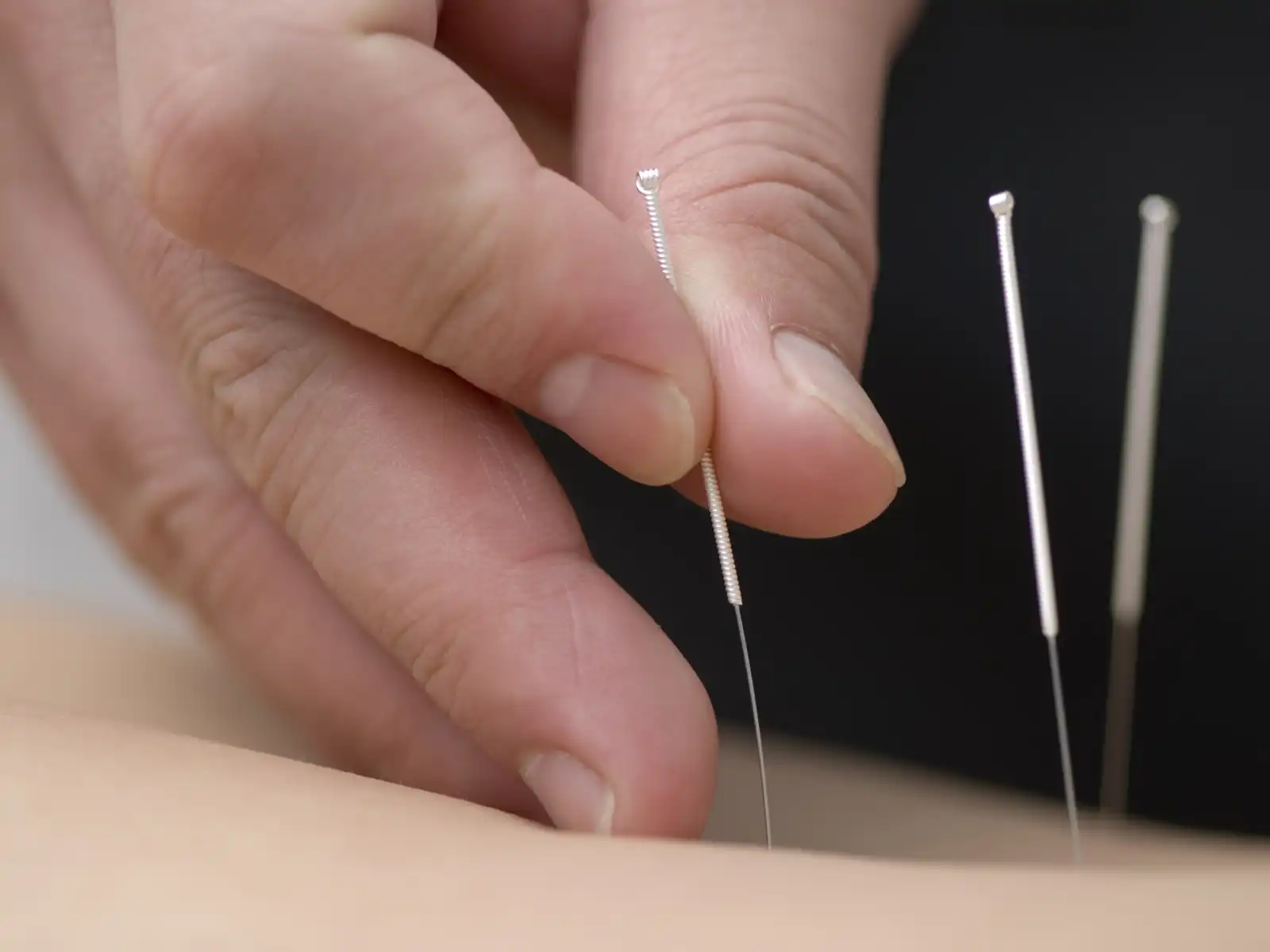
Netra Restoration Therapy (NRT) is a phytoceutical eye-care program: individualized herbal formulas drawn from Traditional Chinese Medicine (TCM) ophthalmology and Ayurvedic ophthalmology, selected and combined using a modern understanding of retinal and optic nerve biology. Acupuncture and electroacupuncture play a supportive role. They are used to enhance the body’s response to the herbal program, not to treat the eye on their own.
It is a complementary approach to conventional ophthalmic care, used particularly for chronic retinal, optic nerve, corneal, genetic and neurodegenerative eye disorders. You keep your drops, injections, surgical plans and regular monitoring.
How it is designed to work. Ocular herbal medicines act on several targets at once:
The evidence, stated plainly
More detail: what is Netra Restoration Therapy, the science behind NRT and synergistic multi-target treatment.
Valeda light therapy (PBM): Measured doses of yellow, red and near-infrared light delivered to the retina
Netra Restoration Therapy (NRT): Individualized phytoceutical (herbal) program from TCM and Ayurvedic ophthalmology, supported by acupuncture
Valeda light therapy (PBM): Mitochondrial energy production
Netra Restoration Therapy (NRT): Blood flow, BDNF/NGF, inflammation, oxidative stress, ferroptosis, excitotoxicity, antioxidant supply, neuroprotection
Valeda light therapy (PBM): Through the pupil, as light
Netra Restoration Therapy (NRT): Through the bloodstream to the retina and choroid; circulation-improving herbs help carry the other compounds
Valeda light therapy (PBM): Randomized sham-controlled trial in early-to-intermediate dry AMD; FDA-authorized device
Netra Restoration Therapy (NRT): Randomized placebo-controlled trials of individual botanicals: Ginkgo in normal-tension glaucoma, goji in RP, crocin in glaucoma
Valeda light therapy (PBM): One device, one protocol, tested
Netra Restoration Therapy (NRT): Complete combined program not yet tested in a controlled trial
Valeda light therapy (PBM): Dry AMD (early-to-intermediate) only
Netra Restoration Therapy (NRT): Used across chronic retinal, optic nerve and corneal conditions
Valeda light therapy (PBM): 9 sessions over 3 to 5 weeks, repeated every 4 months
Netra Restoration Therapy (NRT): Daily herbal formula over months, reviewed and adjusted; supportive acupuncture scheduled around it
Valeda light therapy (PBM): Same protocol for every eye
Netra Restoration Therapy (NRT): Yes: formula and supportive sessions chosen per patient
Valeda light therapy (PBM): Not applicable
Netra Restoration Therapy (NRT): Dry eye from long-term drops, ocular comfort, sleep, stress and circulation
Valeda light therapy (PBM): Adjunct
Netra Restoration Therapy (NRT): Adjunct
Valeda light therapy (PBM): Photosensitivity, photosensitizing drugs, light-triggered neurological disorders
Netra Restoration Therapy (NRT): Herb-drug interaction check (for example Ginkgo with blood thinners); clinic-specified preparations only; paused with active infection, recent surgery or uncontrolled inflammation
Ask of any therapy: which drivers of cell loss does it reach, and how was that shown?
Red light (PBM): Direct
NRT: Supportive
How NRT reaches it: Botanicals with mitochondrial and antioxidant activity (Lycium, saffron, Ginkgo); better perfusion delivers substrate
Red light (PBM): No
NRT: Yes
How NRT reaches it: Vasoactive botanicals: Ginkgo extract raised peripapillary and ophthalmic-artery blood flow and improved visual field damage in randomized normal-tension glaucoma trials, and was associated with slower field loss over 12 years in a retrospective series
Red light (PBM): No
NRT: Yes
How NRT reaches it: Neuroprotective botanicals (Lycium, saffron, Ginkgo) support survival signaling
Red light (PBM): Indirect
NRT: Yes
How NRT reaches it: Antioxidant botanicals: Lycium in a year-long placebo-controlled RP trial; crocin in a triple-blind glaucoma trial
Red light (PBM): Indirect
NRT: Yes
How NRT reaches it: Herbs inhibit NF-κB and MAPK; adaptogenic botanicals steady autonomic signaling
Red light (PBM): No
NRT: Yes
How NRT reaches it: Ferroptosis-reducing botanicals for iron balance and lipid-peroxidation control
Red light (PBM): No
NRT: Yes
How NRT reaches it: Botanicals (Ginkgo, crocin) proposed to calm glutamate and calcium overload
Red light (PBM): No
NRT: Yes
How NRT reaches it: Anti-apoptotic botanicals (Lycium, crocin, resveratrol, curcumin)
One direct target, two indirect ones, five untouched. That is the reason a plan built only on red light leaves most of the disease process running.
A note on this table. It maps mechanisms, not strength of evidence. Much of the botanical evidence comes from glaucoma and retinitis pigmentosa trials and from laboratory studies, and it is applied to AMD by biological reasoning. The mapping does not mean each target carries equal clinical weight.
We hold the view that for a multi-driver disease, a multi-target plan is the more complete approach. Here is the reasoning, and its limits.
The reasoning
The limits
We think patients are best served by knowing both halves of that.
Often, yes. They are not rivals. Red light asks the mitochondria to make more energy. NRT’s herbal formulas work to make sure the cell has the blood supply, the growth signals, the antioxidant reserves and the calm immune environment it needs to use that energy and survive.
If you are receiving prescription PBM for dry AMD, tell both teams. Your herbal formula and supportive acupuncture are scheduled around your light series, and your ophthalmologist’s OCT, visual field and acuity tests become the shared scorecard.
What is not known. The combination itself has not been studied. The case for pairing them rests on biology: the two approaches reach different targets, and neither undoes the other. Some botanicals can increase sensitivity to light in rare cases; your formula is reviewed with that in mind when you are having light treatment.
Netra Eye Institute is a holistic and integrative eye care center. We do not provide Valeda treatment. If Valeda is appropriate for you, it is delivered by an ophthalmology or retina practice, and we are glad to coordinate with them. What we provide is NRT, as a complement to the care you receive from your ophthalmologist.
If you searched for “Valeda light therapy near me,” the manufacturer’s provider locator and your retina specialist are the right starting points. If you would like to understand whether a full-spectrum, complementary program makes sense alongside it, or instead of repeating light series indefinitely, we can help with that conversation.
Ask your eye doctor
Ask us
Valeda is a clinic-based photobiomodulation treatment that delivers yellow, red and near-infrared light to the retina. It is FDA-authorized to improve vision in early-to-intermediate dry age-related macular degeneration.
In its main trial, treated eyes gained 5.4 letters and sham eyes 3.0 letters at 13 months, a difference of 2.4 letters, about half a line on the eye chart. Fewer treated eyes developed geographic atrophy over two years. The benefit is real but modest on average.
It received FDA marketing authorization through the De Novo pathway in 2024 for improving vision in early-to-intermediate dry AMD with vision between 20/32 and 20/70 and no central geographic atrophy.
Prices are set by each practice and vary. It is generally not covered by insurance at present, and treatment repeats about three times a year, so ask for the annual cost.
Nine sessions over three to five weeks make one series. The series is repeated about every four months for as long as treatment continues.
Trials reported no serious device-related adverse events. It is not advised for people with photosensitivity or light-triggered neurological conditions without medical review.
No. It does not cure or halt AMD. It is authorized to improve visual acuity in a specific stage of dry AMD.
It is not authorized for any of these. Small uncontrolled studies in retinitis pigmentosa showed short-term gains that faded. A controlled trial of red light in diabetic macular edema found no benefit. No human trial has shown protection in glaucoma.
Valeda delivers light to boost mitochondrial energy, using the same protocol for every eye. NRT is an individualized herbal program supported by acupuncture, designed to act on several drivers of retinal cell loss, including blood flow, inflammation, oxidative stress and nerve-cell survival.
They do different things, and no trial has compared them. Valeda has one sham-controlled trial of the device. NRT addresses more disease mechanisms and has trial evidence for individual botanicals, but the full program has not been tested in a controlled trial. Many patients may reasonably use both.
Often, yes, with both teams informed. The combination has not been studied, but the two act on different targets.
No. Home devices do not control the dose reaching the retina and have not been tested or authorized for eye disease. The retina can be injured by light.
Through ophthalmology and retina practices that have the device. Ask your eye doctor or use the manufacturer’s provider locator.
This article is general education and does not replace an individual eye examination. NRT is adjunctive to conventional ophthalmic care and is not presented as a cure. Individual results vary. Continue all prescribed treatment and monitoring with your ophthalmologist. Valeda is a trademark of its owner; Netra Eye Institute is not affiliated with the manufacturer.