Search conditions, treatments, research reviews and articles. Press Enter to see all results, Esc to close.
Search conditions, treatments, research reviews and articles. Press Enter to see all results, Esc to close.
Blog
October 27, 2026
The eye vitamin with the strongest evidence is the AREDS2 formula: vitamins C and E, lutein, zeaxanthin, zinc and copper. It lowers the risk of late macular degeneration, but only in people who already have intermediate AMD, or late AMD in one eye. For most other people, eye vitamins have not been shown to prevent eye disease or sharpen vision, and a varied diet is the better plan. Vitamin A helps eyesight only when you are truly deficient.
Whether an eye vitamin helps depends on which eye condition you have, and on its stage. This table sums up the main trials.
| Condition | What the evidence shows | Should you take it? |
|---|---|---|
| Intermediate AMD, or late AMD in one eye | AREDS2 formula. In AREDS, a similar formula lowered the risk of late AMD by about 25% over five years. Over 10 years, people taking lutein and zeaxanthin had a 20% lower risk of late AMD than those taking beta-carotene. | Yes, if your eye doctor confirms the stage |
| Early AMD or healthy eyes | No benefit from AREDS formulas for early AMD or for people without AMD. In trials of 76,756 people, vitamin E, beta-carotene and vitamin C did not prevent AMD. | No. Focus on diet, not smoking and regular eye exams |
| Cataract | AREDS found no effect on cataract. A Cochrane review found no evidence that vitamin C, vitamin E or beta-carotene prevents or slows cataract. In AREDS2, lutein and zeaxanthin helped only people who ate the least of them. | No |
| Dry eye | In the DREAM trial, 3,000 mg a day of fish oil omega-3 for 12 months was no better than an olive oil placebo. | Not as a routine treatment |
| Glaucoma | No vitamin is proven. In small, short trials, nicotinamide (vitamin B3) improved a measure of retinal function, and nicotinamide with pyruvate improved some visual field results; larger trials are under way. A participant in one trial had liver injury. | Only within a supervised clinical trial, alongside your usual treatment |
| Diabetic retinopathy | No vitamin is proven. Managing blood sugar is the best way to lower the risk, and controlling blood pressure and cholesterol helps too. | No; keep up yearly dilated exams |
| Night blindness from vitamin A deficiency | Vitamin A treats the deficiency. It is rare in the United States and more likely with conditions that affect fat absorption, such as cystic fibrosis or Crohn's disease. | Only after a doctor confirms the deficiency |
| Retinitis pigmentosa | A Cochrane review of 4 trials with 944 people found it uncertain whether vitamin A, DHA or both slow the disease. | Only on a retina specialist's advice |
| Stargardt disease | The NEI advises against supplements with more than the daily recommended amount of vitamin A. | Avoid extra vitamin A |
| Night vision in healthy eyes | The most rigorous studies found that bilberry did not improve night vision in healthy people. | No |
These are the daily amounts tested in the AREDS2 trial. The brand matters less than matching these doses and choosing a product with a third-party quality seal.
| Nutrient | Daily amount | Notes |
|---|---|---|
| Vitamin C | 500 mg | |
| Vitamin E | 400 IU | Large doses can add to the effect of blood thinners |
| Lutein | 10 mg | Replaced beta-carotene in AREDS2 |
| Zeaxanthin | 2 mg | |
| Zinc | 80 mg, as zinc oxide | Twice the usual adult upper limit of 40 mg a day. In AREDS2, 25 mg gave similar results, but that finding is preliminary and the NEI still recommends 80 mg |
| Copper | 2 mg, as cupric oxide | Included because high-dose zinc can lower copper |
| Beta-carotene | None | Left out of AREDS2; it raised the risk of lung cancer in former smokers |
Read labels carefully. In a 2015 study of 11 eye supplements from the five top-selling US brands, using sales data from 2011 and 2012, only 4 contained the same doses as the AREDS or AREDS2 formulas. All of them claimed to support or protect eye health, and none said that the evidence applies only to people with certain stages of AMD. Supplements can go on sale without FDA approval, and the FDA does not check whether they work before then. Seals from U.S. Pharmacopeia, NSF International or ConsumerLab.com show that a product was properly made and contains what the label lists. They do not show that it is safe or effective.
Our guide to macular degeneration vitamins explains the AREDS trials in more detail.
Most other people do not need an eye vitamin. That includes people with healthy eyes, early AMD, cataracts, dry eye or glaucoma. A family history of AMD is not a reason on its own: AREDS showed no benefit in people without AMD, and the NEI says nutritional supplements cannot prevent AMD.
High doses act more like medicines than food. Check these before you start:
| Ingredient | Risk | Who should take care |
|---|---|---|
| Beta-carotene | In a large trial of male smokers, beta-carotene raised lung cancer risk by 18%. In another, of smokers, former smokers and asbestos workers, beta-carotene with vitamin A raised it by 28%. In AREDS2 follow-up, it nearly doubled the risk in people who had ever smoked. | Current and former smokers: choose a formula without it |
| Zinc (80 mg) | Above the 40 mg daily upper limit; high doses can lower copper. Zinc can reduce the absorption of quinolone and tetracycline antibiotics. | Take those antibiotics at least 2 hours before or 4 to 6 hours after zinc |
| Vitamin E (400 IU) | Vitamin E supplements were linked to more bleeding strokes in two large trials, and large doses can add to the effect of blood thinners. | People taking warfarin or other blood thinners: ask your doctor first |
| Vitamin A (retinol) | The adult upper limit is 3,000 mcg a day. Too much can cause headaches, blurred vision, nausea and abnormal liver tests, and can cause birth defects. | Pregnant women and anyone taking high-dose vitamin A |
| Nicotinamide (high dose) | Liver injury was reported in a participant in a glaucoma trial. | Use only under medical supervision |
Tell your doctors and pharmacist about every supplement you take, and bring the bottles to your eye appointment.
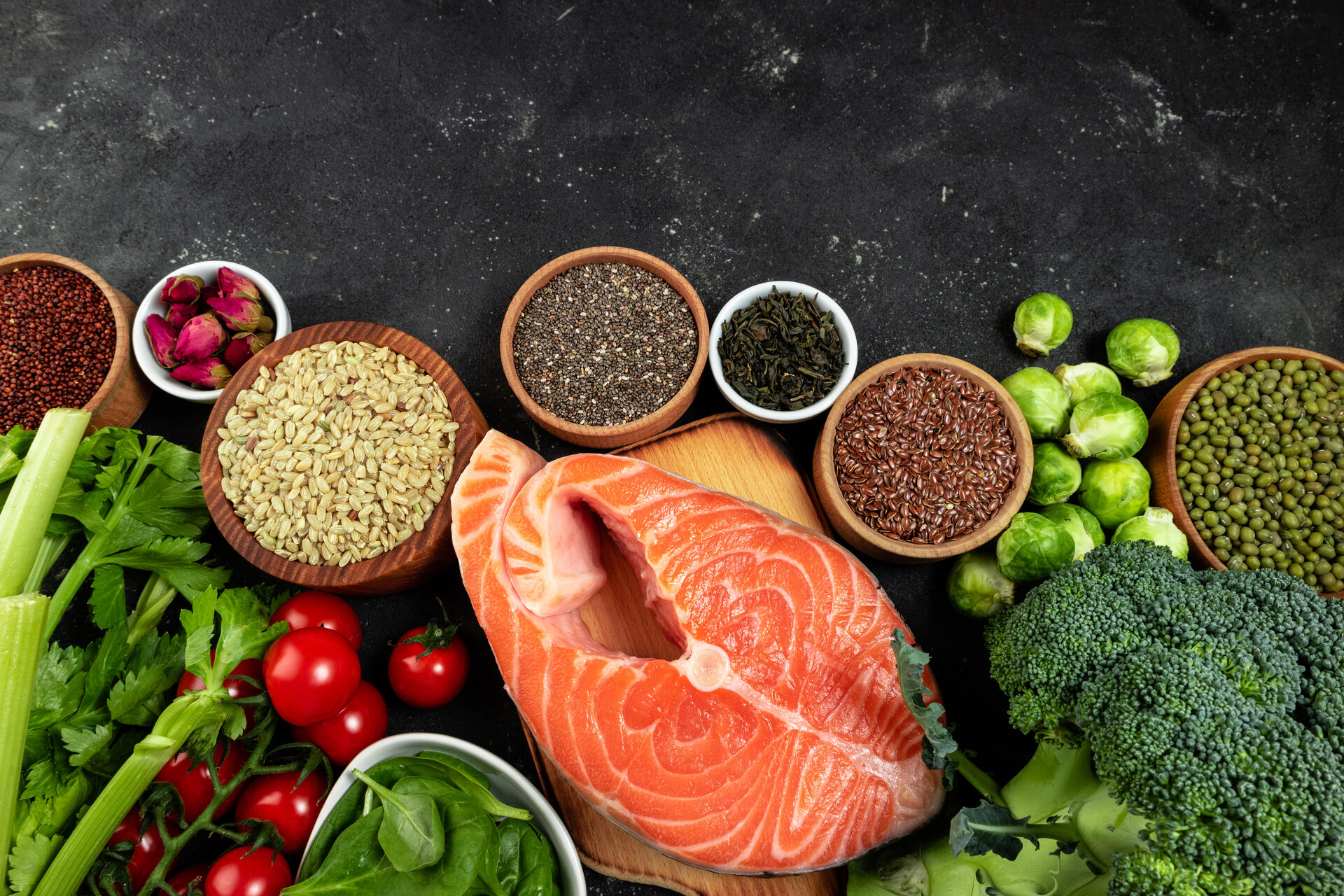
For most people, food is the better source of eye nutrients. Green leafy vegetables are a good source of lutein and zeaxanthin, and fish, nuts, beans and colorful fruit and vegetables add other nutrients. In long-term studies of people in the AREDS trials, those whose diets were closest to a Mediterranean pattern were less likely to progress to late AMD. Our guides to lutein and zeaxanthin and the macular degeneration diet go into specific foods. Not smoking matters too; see how smoking affects your eyes.
Netra Restoration Therapy (NRT) is an integrative program at Netra Eye Institute that can include nutrition guidance. As part of it, we compare the supplements you already take with the trial evidence, check for beta-carotene if you smoke or used to, and look for doubled-up doses, in coordination with your eye doctor. If you qualify for AREDS2, it remains the evidence-based choice, and NRT does not replace it. No supplement and no NRT session treats glaucoma or reverses macular degeneration. Learn about Netra Restoration Therapy.
For people with intermediate macular degeneration, or late AMD in one eye, the AREDS2 formula: 500 mg vitamin C, 400 IU vitamin E, 10 mg lutein, 2 mg zeaxanthin, 80 mg zinc and 2 mg copper a day. For people with healthy eyes, no vitamin has been shown to prevent eye disease. A varied diet is the better choice.
For one group, yes. AREDS-type formulas lower the risk of late AMD in people with intermediate AMD, or late AMD in one eye. They have not been shown to prevent AMD, help early AMD, slow cataracts or treat dry eye or glaucoma.
Only if you lack a nutrient. Vitamin A treats night blindness caused by vitamin A deficiency, which is rare in the United States. There is no good evidence that extra vitamins sharpen vision in people who are not deficient. For blur from dry eye, screens or an old prescription, see how to fix blurry vision naturally.
People with intermediate AMD in one or both eyes, or late AMD in one eye, after a dilated eye exam confirms the stage. It showed no benefit for early AMD or for people without AMD, so a family history alone is not a reason to take it.
AREDS2 was tested as a daily supplement over years, but its zinc dose is twice the usual upper limit, so take it only if your eye doctor recommends it. Avoid formulas with beta-carotene if you smoke or used to, and ask your doctor first if you take a blood thinner.
Not as a rule. In the DREAM trial, fish oil omega-3 was no better than an olive oil placebo for moderate to severe dry eye. Warm compresses, screen breaks, moister air and artificial tears have better support. See our page on natural remedies for dry eyes.
No. The AREDS formula had no effect on cataract, and a Cochrane review found no evidence that vitamin C, vitamin E or beta-carotene prevents or slows it. Surgery is the only way to remove a cataract. Read how to prevent cataracts for what lifestyle can do.
Lutein and zeaxanthin build up in the retina. In AREDS2 they worked as well as beta-carotene in the formula without its lung cancer risk, and over 10 years did better. Taken alone, they may have little or no effect on AMD progression. Green leafy vegetables are a good food source.
Smokers and former smokers who need an eye vitamin should choose AREDS2, which has no beta-carotene. In large trials, beta-carotene raised the risk of lung cancer in smokers, and in AREDS2 follow-up it nearly doubled the risk in people who had ever smoked.
Yes. The NEI says AREDS formulas do not replace a multivitamin, and most trial participants took one. Check that the two together do not double up on zinc or vitamin A.
Medical Disclaimer: This article provides general education. It is not medical advice, a diagnosis or a personal treatment plan, and it does not establish a doctor-patient relationship. Do not start, stop or change any prescribed medicine, supplement or treatment without the clinicians responsible for your care. Sudden blurred vision or vision loss, new wavy lines, or eye pain with a red eye needs urgent care.