Blog
August 9, 2026
AREDS2 is the only supplement formula shown in trials to slow progression, and only for intermediate AMD or advanced disease in one eye — not for early AMD and not for prevention. Older beta-carotene versions are unsafe for smokers. This page covers what AREDS2 contains, who it is for, and what diet adds.
Medical note: Nutrition can be an important part of age-related macular degeneration care, but food and supplements do not replace a dilated eye examination, retinal imaging, prescribed injections, or other treatment. Ask your ophthalmologist and medical clinician before starting a high-dose supplement or herbal product.
Diet appears to matter, but not in the simple way suggested by claims that one “superfood” or antioxidant can prevent or reverse age-related macular degeneration (AMD). The strongest overall dietary signal comes from eating patterns similar to the Mediterranean diet: vegetables, fruit, legumes, whole grains, nuts, fish, and unsaturated fats, with less red and processed meat and fewer heavily refined foods. In large observational analyses, people who adhered more closely to this pattern had a lower rate of progression to late AMD. These studies show association, however—not proof that the diet alone caused the lower risk.
The strongest treatment-level nutrition evidence is different. The National Eye Institute’s Age-Related Eye Disease Studies established that a specific high-dose vitamin and mineral combination can lower the risk of progression to advanced AMD in selected people at higher risk. The current formula, known as AREDS2, is intended mainly for intermediate AMD in one or both eyes, or late AMD in one eye with the other eye still at risk. It is not a general multivitamin, does not prevent AMD in people without the disease, and has not shown benefit for early AMD. [1–4]
This distinction is the foundation of responsible nutrition advice:
The macula is a small, specialized region near the center of the retina. It gives us the detailed vision used for reading, driving, recognizing faces, and distinguishing fine contrast. Its photoreceptors and supporting retinal pigment epithelium (RPE) work continuously in a tissue with high oxygen consumption, abundant light exposure, and lipid-rich cell membranes. The RPE also helps recycle visual pigments, transports nutrients, removes waste, and supports the outer retina through its relationship with Bruch’s membrane and the choriocapillaris.
AMD does not result from a single nutrient deficiency. Age, inherited susceptibility, smoking, and retinal anatomy are major influences. Research also implicates oxidative injury, complement and immune signaling, lipid handling, mitochondrial stress, and changes in the RPE–Bruch’s membrane–choriocapillaris unit. Nutrition intersects with several of these processes, but a plausible mechanism is not the same as a proven clinical benefit.
For example, lutein and zeaxanthin accumulate in the macula and contribute to macular pigment. Laboratory and physiological research supports antioxidant and light-filtering roles. That makes them biologically relevant, but the clinical question is more exact: does consuming or supplementing them change the outcomes that matter—progression to late AMD, loss of visual acuity, growth of geographic atrophy, or development of neovascular AMD? The answer depends on the person’s AMD stage, the intervention, the dose, and the quality of the study.
This is why evidence must be sorted into three levels:
All three levels are useful, but they do not carry the same certainty. A food pattern supported by observational data can be reasonable for general health even when it has not been tested as a drug. A high-dose supplement, by contrast, should be recommended only when trials support the exact formulation and the potential benefits outweigh its risks.
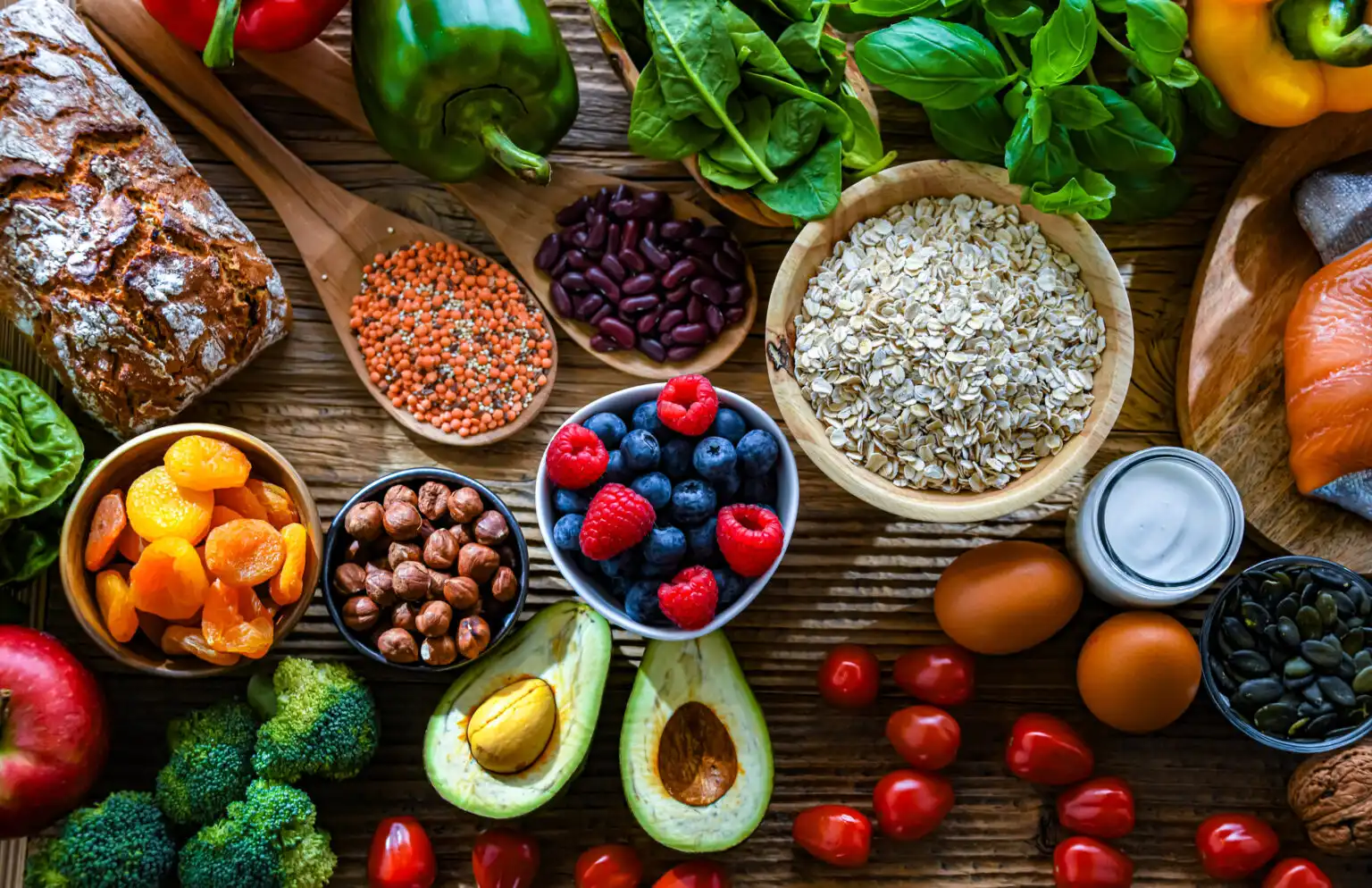
The best-supported eating pattern for AMD is not an “eye detox” or a restrictive protocol. It resembles a Mediterranean diet: frequent vegetables and fruit; legumes; whole grains; nuts; fish; olive oil or other unsaturated fats; less red and processed meat; and avoidance of heavy alcohol intake. This pattern provides carotenoids, vitamin C, vitamin E, minerals, fiber, omega-3 fatty acids, and a wide variety of plant compounds as part of real foods rather than isolated megadoses.
In a prospective analysis of 2,525 AREDS participants followed for up to 13 years, a high Mediterranean-diet score was associated with a 26% lower hazard of progressing to advanced AMD than a low score after adjustment for demographic, behavioral, ocular, and genetic factors. Because food intake was measured by questionnaire and participants were not randomly assigned to diets, residual confounding remains possible. People who eat this way may also smoke less, exercise more, obtain better medical care, or have other protective characteristics despite statistical adjustment. [5]
A later analysis combining AREDS and AREDS2 data also found that closer Mediterranean-diet adherence was associated with a lower risk of progression to late AMD and large drusen. Fish intake contributed strongly to the association. The finding was particularly consistent for geographic atrophy, although it still came from an observational analysis within clinical-trial cohorts rather than from a randomized feeding trial. [6]
The practical message is not that Mediterranean food is a cure. It is that a plant-forward, minimally processed dietary pattern is a reasonable default for a person with AMD because it aligns with the available eye research and with cardiovascular and metabolic health. The retina is not isolated from blood pressure, glucose regulation, smoking exposure, or vascular health.
Dark leafy vegetables such as spinach, kale, collard greens, Swiss chard, and romaine contain lutein and other nutrients. Green vegetables are also an important source of dietary nitrate, which the body can use in nitric-oxide pathways involved in vascular function.
An analysis of 7,788 AREDS and AREDS2 participants found that those in the highest quarter of dietary nitrate intake had a lower rate of progression to late AMD than those in the lowest quarter. The association was stronger for geographic atrophy than for neovascular AMD. The authors adjusted for Mediterranean-diet adherence and lutein/zeaxanthin intake, but the study still cannot prove that nitrate itself produced the benefit. Dietary nitrate may be a marker for a generally healthier vegetable-rich pattern. [7]
Patients sometimes conclude that eating spinach eliminates the need for an AREDS2 formula. That is incorrect when an ophthalmologist has determined that the person is in a stage that benefits from AREDS2. Food offers a complex nutritional matrix and supports overall health, while AREDS2 provides specific nutrients at trial-tested doses that are difficult to obtain from diet alone. These are complementary strategies, not interchangeable ones. [1]
Prospective studies have repeatedly found that people reporting higher fish or marine omega-3 intake have lower rates of some forms of AMD. In a 12-year AREDS cohort analysis, participants with the highest reported long-chain omega-3 intake were about 30% less likely to develop central geographic atrophy or neovascular AMD. A later meta-analysis also found lower risks of early and late AMD with higher dietary omega-3 intake, although findings varied across studies. [8,9]
Those associations are not proof that omega-3 capsules prevent progression. AREDS2 directly tested the addition of 1,000 mg per day of DHA plus EPA to the original supplement framework and found no additional overall reduction in progression to advanced AMD. [3] The most careful interpretation is therefore:
For patients who eat fish, practical choices include salmon, sardines, trout, herring, and other oily fish. Preparation matters: baked, grilled, or stewed fish fits the studied dietary pattern more closely than heavily breaded or deep-fried fish. People who are pregnant, immunocompromised, allergic to seafood, following a vegetarian diet, or managing anticoagulation should individualize advice with their medical team.
The AREDS trials are often reduced to the phrase “eye vitamins work.” That is too broad. Their benefit was demonstrated for a defined formula, in defined risk groups, for defined outcomes.
The original randomized, double-masked AREDS trial assigned 3,640 participants in the AMD component to antioxidants, zinc plus copper, antioxidants plus zinc and copper, or placebo. In higher-risk participants, the combination of antioxidants plus zinc reduced the odds of developing advanced AMD compared with placebo. The commonly communicated estimate is an approximately 25% reduction in risk over five years. The combination also reduced the odds of losing 15 or more letters of visual acuity. People with mild findings had a low five-year progression risk and did not show a meaningful treatment benefit. [2]
The original formula contained beta-carotene. Subsequent evidence linked high-dose beta-carotene supplementation to an increased risk of lung cancer in people who smoke, and the safety concern extended to former smokers in AREDS2 follow-up. This led to the current preference for lutein and zeaxanthin in place of beta-carotene. [4]
AREDS2 enrolled 4,203 people with bilateral intermediate AMD or intermediate AMD in one eye and advanced AMD in the other. It tested whether adding lutein and zeaxanthin, omega-3 fatty acids, or both would improve the original formulation. In the primary analysis, neither addition produced a statistically significant overall reduction beyond the base formulation. Secondary comparisons, however, supported replacing beta-carotene with lutein and zeaxanthin. Participants with the lowest dietary intake of lutein and zeaxanthin appeared to benefit most. [3,4]
Ten-year follow-up reinforced the safety reason for the substitution. Participants originally assigned beta-carotene had a higher odds of lung cancer, while lutein and zeaxanthin were not associated with that increase. The long-term analysis also supported lutein/zeaxanthin as an effective replacement for beta-carotene. [10]
The National Eye Institute lists the following daily formula:
Commercial labels vary. A product that says “eye health” or “inspired by AREDS” may not contain the tested ingredients or doses. Patients should compare the supplement facts panel against the formula and review it with an eye-care professional. [1]
According to the National Eye Institute, AREDS2 may benefit people with intermediate AMD in one or both eyes. It may also lower the risk in the fellow eye when one eye already has late AMD. It has not shown benefit for people without AMD, for preventing AMD, or for early AMD progressing to intermediate AMD. If late AMD is present in both eyes, the formula is unlikely to provide the same preventive benefit, although the decision should remain individualized. [1,4]
The deciding step is therefore not a symptom quiz or an online supplement advertisement. It is an eye examination that determines the stage in each eye. Retinal photographs and optical coherence tomography may be used to evaluate drusen, pigment changes, fluid, atrophy, and other features. The same person may have different stages in the two eyes.
AREDS2 does not dissolve drusen, regenerate lost photoreceptors, reverse geographic atrophy, cure wet AMD, or guarantee stable vision. The outcome is risk reduction across a population, not certainty for an individual. A person may progress despite excellent adherence, while another person may remain stable without a visible short-term change. Benefits are generally understood over years, not as an immediate improvement in the eye chart.
AREDS2 is also not evidence that larger doses are better. Taking separate zinc, vitamin E, or carotenoid products on top of an AREDS2 formula can create unnecessary duplication and risk. The combination was studied as a package; isolated high-dose vitamins have not consistently prevented AMD in trials. [11]
Lutein and zeaxanthin are carotenoids present in the retina and lens. Food sources include dark leafy greens, peas, broccoli, corn, and egg yolks. Their place in the AREDS2 formula is supported as a replacement for beta-carotene, especially because they avoid the smoking-related lung-cancer concern and may be particularly useful when dietary intake is low. That does not mean taking increasingly high doses is proven to improve vision.
Vitamin C is abundant in citrus fruit, berries, peppers, tomatoes, and cruciferous vegetables. Vitamin E occurs in nuts, seeds, and vegetable oils. Foods containing these vitamins fit naturally into a healthy diet. The high doses in AREDS2 are different from ordinary dietary intake. Vitamin E can affect platelet function, and high-dose supplementation can interact with anticoagulant or antiplatelet drugs. Patients should not assume that a vitamin is risk-free because it is sold without a prescription. [12]
Zinc participates in many enzymes and cellular processes, but 80 mg per day is far above the amount in an ordinary diet. Copper was added to the AREDS formulations to reduce the risk of copper deficiency associated with high-dose zinc. High zinc intake can cause gastrointestinal symptoms and can interact with some antibiotics and other medications. A lower-zinc arm in AREDS2 did not show a statistically significant change in the formula’s effectiveness, but the widely referenced NEI formula remains 80 mg zinc and 2 mg copper. [4]
The difference between food evidence and supplement evidence is especially important here. Fish intake is a marker within beneficial dietary patterns and may be associated with lower risk. The AREDS2 omega-3 supplement did not add benefit to the formula. Omega-3 capsules also vary in dose, purity, oxidation, and EPA/DHA content. They should not be marketed as a replacement for AREDS2 or retinal treatment.
Small clinical studies and laboratory research have explored several botanicals for retinal function, antioxidant signaling, or inflammation. These areas are scientifically interesting, but the evidence is much less mature than AREDS2. Short studies using visual sensitivity or electrophysiological measures cannot establish that a product prevents late AMD or preserves long-term vision. Botanical products may also interact with anticoagulants, diabetes medicines, blood-pressure medicines, immunosuppressants, or surgery plans.
The responsible wording is “being studied,” not “proven to reverse AMD.” Within an integrative plan, a botanical should have a clear purpose, documented ingredients and dose, interaction screening, and a plan to stop it if it is ineffective or poorly tolerated. It should never delay anti-VEGF treatment for wet AMD.
Researchers have reported associations between AMD and vitamin D status, homocysteine-related pathways, B vitamins, and gut-microbiome features. These subjects remain active areas of investigation. An association with a blood marker does not establish that routine supplementation prevents AMD, and microbiome mechanisms do not justify commercial “gut-retina” cures. Testing and treatment should be based on the patient’s broader medical indications, documented deficiency, and clinician judgment rather than AMD marketing alone.
A useful AMD eating plan should be sustainable, culturally adaptable, and compatible with the patient’s medical conditions. It should not turn every meal into a treatment claim.
1. Make vegetables routine, not occasional. Include dark leafy greens several times a week and vary colors across red, orange, yellow, green, and purple produce. Cooking some greens with a modest amount of unsaturated fat can make carotenoid-rich meals more enjoyable and may support absorption.
2. Choose minimally processed sources of protein. Fish, beans, lentils, peas, tofu, yogurt, eggs, and poultry can reduce reliance on processed and red meat. For people who eat fish, aim for regular meals rather than treating fish oil as an automatic substitute.
3. Favor intact carbohydrates and fiber. Oats, barley, brown rice, quinoa, beans, and whole-grain breads generally produce a different metabolic response from sugary drinks, sweets, and highly refined snack foods. Research on glycemic patterns and AMD is not as definitive as AREDS2, but reducing heavily refined foods supports cardiometabolic health.
4. Use unsaturated fats in sensible portions. Olive oil, nuts, seeds, and avocado fit a Mediterranean-style pattern. This does not make unlimited oil or nuts therapeutic; total dietary balance still matters.
5. Reduce exposures with clearer harm. Smoking is a major modifiable AMD risk factor and makes beta-carotene supplements particularly unsafe. Heavy alcohol intake and poorly controlled vascular or metabolic disease can also undermine health goals. Smoking cessation deserves more emphasis than any unproven supplement.
This example illustrates a pattern, not a medical prescription:
People with diabetes, kidney disease, food allergies, swallowing difficulty, malabsorption, or unintended weight loss need individualized guidance. A generic “eat more greens” message may be inappropriate for someone taking warfarin who needs stable vitamin K intake, while high-potassium foods may require modification in advanced kidney disease. Coordination matters more than nutritional enthusiasm.
Before recommending AREDS2 or any other product, a clinician should document:
Genetic testing should not be used to decide who receives AREDS2. NEI analyses found no clinically meaningful evidence that common CFH and ARMS2 genotypes changed the relative benefit, and both the NEI and American Academy of Ophthalmology have advised against genotype-directed AREDS treatment. [4,13]
The phrase “macular degeneration” includes different clinical states. A nutrition plan that ignores stage can be misleading or dangerous.
For early AMD, priorities include periodic dilated examinations, smoking cessation, a high-quality dietary pattern, physical and metabolic health, and symptom awareness. AREDS2 has not shown benefit for preventing early AMD from becoming intermediate AMD. For intermediate AMD, the ophthalmologist should assess whether AREDS2 is appropriate and establish a monitoring interval. [1]
Geographic atrophy is an advanced form of dry AMD involving progressive loss of retinal tissue. Food and AREDS2 cannot restore the area already lost. FDA-approved complement inhibitors—pegcetacoplan and avacincaptad pegol—are available to slow lesion growth in eligible patients; these treatments require intravitreal injections and a discussion of potential benefits, burdens, and risks with a retina specialist. Nutrition remains supportive rather than a substitute for this decision. [14]
New distortion, a central gray or dark spot, rapidly worsening blur, or straight lines appearing wavy can signal conversion to wet AMD. Anti-VEGF injections are the principal treatment and may need to be repeated. Delaying evaluation while trying supplements, acupuncture, or diet can allow irreversible central vision loss. Photodynamic therapy is used less often in selected situations. [15]
Patients receiving injections can still benefit from an organized nutrition and lifestyle plan, but the goal is supportive health, medication reconciliation, and adherence—not replacing VEGF suppression.
Netra Restoration Therapy is described by Netra Eye Institute as an individualized, physiology-based, integrative program that may combine acupuncture-based care, Traditional Chinese Medicine, Ayurveda, nutrition, lifestyle guidance, stress support, and functional evaluation. For AMD, the clinically defensible role is as adjunctive care organized around a confirmed diagnosis and an ongoing relationship with an ophthalmologist or retina specialist. [16–18]
1. Start with the retinal diagnosis. Record whether each eye has early, intermediate, or late AMD; whether late disease is geographic atrophy or neovascular AMD; and what imaging and treatment the retina specialist recommends. NRT should not relabel an inherited macular dystrophy, medication toxicity, diabetic macular disease, or another retinal condition as AMD.
2. Reconcile nutrition and supplements. Compare every product with the AREDS2 evidence. Identify beta-carotene exposure in current or former smokers, duplicate high-dose nutrients, possible drug interactions, and products built mainly around marketing language. If the patient qualifies for AREDS2, coordinate the recommendation with their eye and medical clinicians.
3. Improve the dietary pattern, not just one nutrient. Translate Mediterranean-style principles into the patient’s culture, budget, cooking ability, dentition, appetite, diabetes plan, kidney status, and medication needs. A pattern the patient can sustain is more meaningful than a perfect menu followed for one week.
4. Address modifiable systemic factors. Smoking cessation, movement as medically appropriate, sleep, blood-pressure care, glucose management, and cardiovascular follow-up support whole-person health. These measures should be framed accurately: they improve risk management and general resilience; they are not promises of retinal regeneration.
5. Use objective monitoring and functional goals. Retinal imaging belongs with the ophthalmologist. Within supportive care, clinicians can also track medication adherence, adverse effects, dietary goals, reading comfort, glare, contrast complaints, and quality-of-life needs. A perceived improvement should not be interpreted as proof that drusen or atrophy has reversed.
6. Preserve urgent-care boundaries. A patient with new distortion, central scotoma, sudden blur, or rapid decline needs prompt retinal evaluation. Wet AMD treatment schedules should continue exactly as directed.
Research supports the relevance of oxidative stress, inflammation, perfusion, metabolic health, and neuroretinal biology to AMD. Research also evaluates individual supportive modalities. A 2023 systematic review of acupuncture trials for AMD reported possible visual-acuity effects but judged the evidence low to very low certainty because of study quality and heterogeneity. A 2025 review of acupuncture for degenerative eye disease found mixed results and called for stronger trials. [19,20]
These publications do not directly test the complete proprietary NRT protocol. Netra’s own NRT information appropriately states that its cited sources support mechanisms or individual components and should not be interpreted as proof that the full protocol treats, cures, or prevents an eye disease. [16] Until controlled NRT-specific outcome data are available, the article should use language such as “supports,” “coordinates,” “may complement,” and “is designed to address,” while avoiding claims that NRT has been proven to halt AMD, regenerate retina, replace injections, or prevent blindness.
That evidence boundary does not make integrative care irrelevant. It makes the care plan more credible. NRT can add value by giving nutrition and lifestyle implementation sustained attention, identifying supplement risks, coordinating whole-person factors, documenting functional experience, and helping patients remain active participants in long-term care. Those are meaningful clinical services without converting a biological rationale into an unproven disease claim.
No diet has been proven to guarantee prevention. A vegetable-rich Mediterranean-style pattern is associated with lower risk and slower progression in several cohorts and is reasonable for general health. Age, genetics, smoking, and other factors still matter.
Family history alone is not an indication. AREDS2 eligibility is based primarily on the retinal findings and stage in each eye. Schedule a comprehensive dilated examination rather than self-prescribing the formula.
AREDS2 does not treat active leakage or replace anti-VEGF injections. It may be recommended because of the status of the fellow eye or earlier-stage tissue, but that decision belongs with the treating ophthalmologist.
Leafy greens and other foods can provide these carotenoids and should be part of a healthy pattern. If a patient qualifies for AREDS2, diet alone does not reproduce the full trial-tested formula or doses.
Do not abandon the plan or change doses without discussion. Bring the bottle to the clinician. Timing, formulation, capsule size, duplicate zinc, and other medical issues can be reviewed. Persistent symptoms need medical attention.
No. NRT should be coordinated as integrative, supportive care. Retinal diagnosis, imaging, injections, and decisions about geographic-atrophy therapy remain essential.
Nutrition belongs in AMD care, but it works best when claims are precise. A Mediterranean-style dietary pattern is associated with lower risk of progression and supports broader vascular and metabolic health. AREDS2 has randomized-trial evidence for specific higher-risk stages, not for everyone. Fish as food and omega-3 capsules should not be treated as equivalent. High-dose vitamins and herbs require the same attention to eligibility, interactions, dose, and follow-up as other clinical interventions.
For Netra Eye Institute, the strongest educational approach is not to promise that NRT can reverse AMD through nutrition. It is to show how a disciplined integrative program can connect a verified retinal diagnosis with evidence-based supplementation, a sustainable food pattern, systemic risk management, safety screening, functional support, and ongoing specialist care. That is both more useful to patients and more defensible scientifically.
Learn more about dry age-related macular degeneration, wet age-related macular degeneration, and Netra Restoration Therapy. For an individualized discussion of supportive care alongside your ophthalmic treatment, request a consultation.
Medical Disclaimer: This article is for educational purposes only and does not constitute medical advice. It is not a substitute for diagnosis, monitoring, or treatment by a qualified ophthalmologist or retina specialist. If you have symptoms of macular degeneration or concerns about your central vision, seek professional evaluation. New distortion, a central dark or gray spot, rapidly worsening blur, straight lines appearing wavy, or sudden vision loss requires prompt medical attention.