Search conditions, treatments, research reviews and articles. Press Enter to see all results, Esc to close.
Search conditions, treatments, research reviews and articles. Press Enter to see all results, Esc to close.
Blog
October 31, 2026
An ocular migraine is usually a migraine visual aura: shimmering zigzags or a spreading blind spot that fade within an hour, with or without a headache [1,4]. It starts in the brain's vision center, so it affects the same side of your view in both eyes, not one eye [1,4]. Call 911 for sudden vision loss in one eye, weakness, face droop or trouble speaking, even if it clears [5,6].
This article is general education, not a diagnosis. If this is your first visual episode, or it feels different from your usual pattern, get checked before you assume it is a migraine.
Key takeaways
In this article
Some conditions that need fast treatment can look like an "ocular migraine" at first [5]. See also Netra's guide to urgent vision changes.
Call 911 right away if you have:
Note the time the symptoms started. Do not drive yourself or let someone drive you; an ambulance team can start care on the way [6].
Go to an eye doctor or emergency room right away if you have:
Book a prompt (non-emergency) visit if:
"Ocular migraine" is an everyday term, not a formal diagnosis. Most people use it for migraine visual aura, a short-lived vision change that starts in the brain and is seen with both eyes. Some people, and some doctors, also use it for retinal migraine, a very rare condition that affects one eye only [1,2,10].
Visual aura, sometimes called a visual migraine, is part of a condition doctors call migraine with aura. More than 90% of people with migraine with aura have visual symptoms in at least some attacks [1]. An aura can also include tingling or numbness, or trouble finding words [1].
Doctors sort aura symptoms into two kinds. Positive symptoms add something to your view, like sparkles or zigzag lines. Negative symptoms take something away, like a blind spot (scotoma) [1]. Many auras have both: a bright edge with a patch of missing vision behind it.
Because the term is loose, describe what you saw. "I could see a bright edge, but not the word behind it" tells a doctor more than the label.
A typical visual aura starts as a small flickering or zigzag spot near the center of your vision. Over several minutes it grows into a shimmering, jagged edge that drifts toward one side. Behind the edge there may be a blurry or missing patch. Then vision returns to normal [1,4].
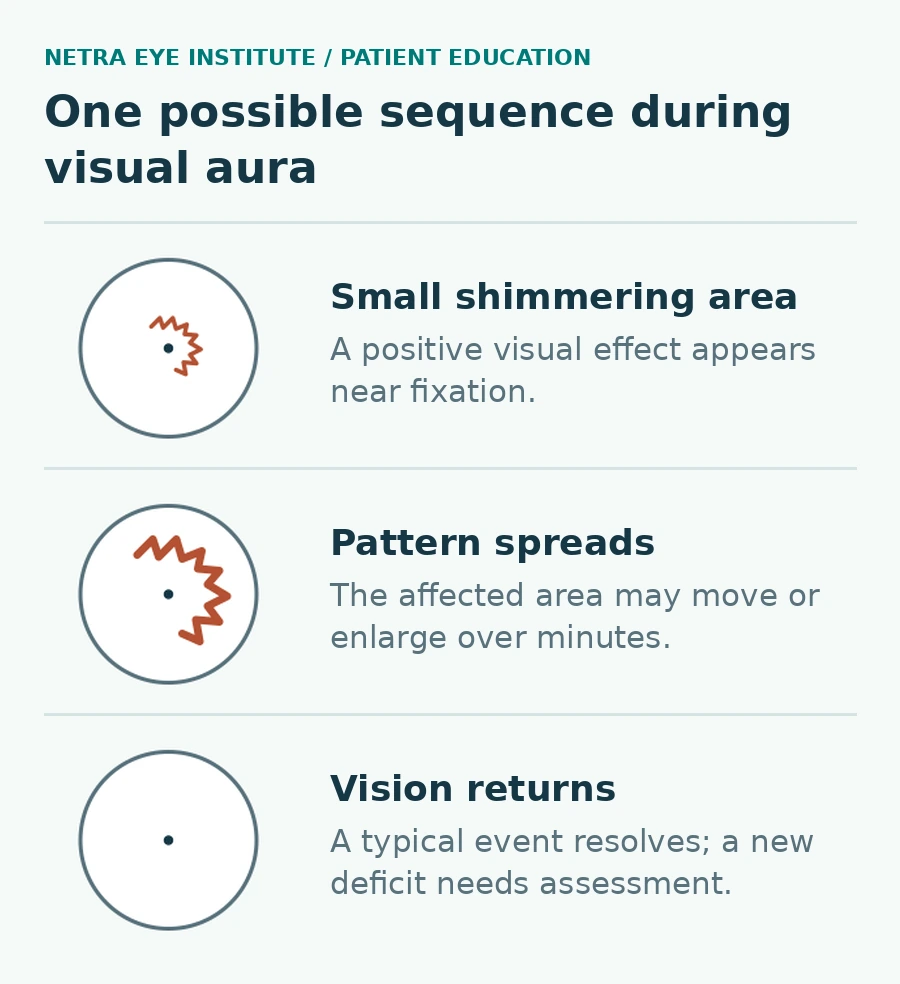
Doctors call the zigzag pattern a fortification spectrum [1]. Other people see dots, lines, colored spots or stars, or only a dim patch with no bright edge [1,4,7].
Many people are also sensitive to light or sound during a migraine [7]. Describe light sensitivity (photophobia) separately from any missing vision.
A visual aura usually lasts about 30 minutes, within a typical range of 5 to 60 minutes [4]. A headache may start during the aura or within an hour after it. Some people have the aura with no headache at all [1,3].
An aura with no headache is called typical aura without headache [3]. It is more common after age 50 [4]. It is harder to tell apart from a mini-stroke, or transient ischemic attack (TIA). Doctors look for other causes when an aura first appears after age 40, has only negative symptoms, or is very short or very long [3].
Afterward, your vision should be exactly as it was before. If it is not, get checked [4].
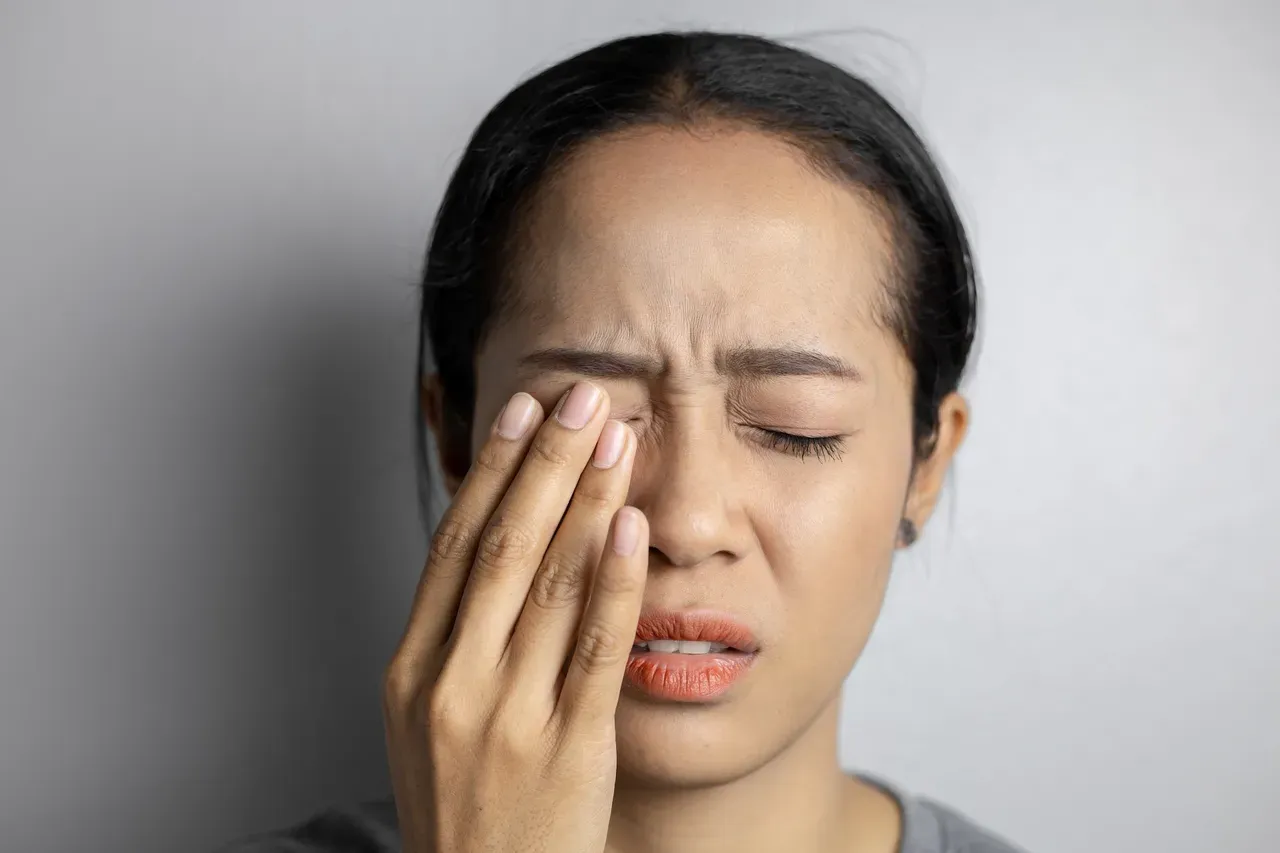
Visual aura almost always affects both eyes, because it comes from the brain. It often feels like one eye because it hits one side of your view. Symptoms that are truly limited to one eye point to the eye or its blood supply, and they need urgent assessment [4,5,10].
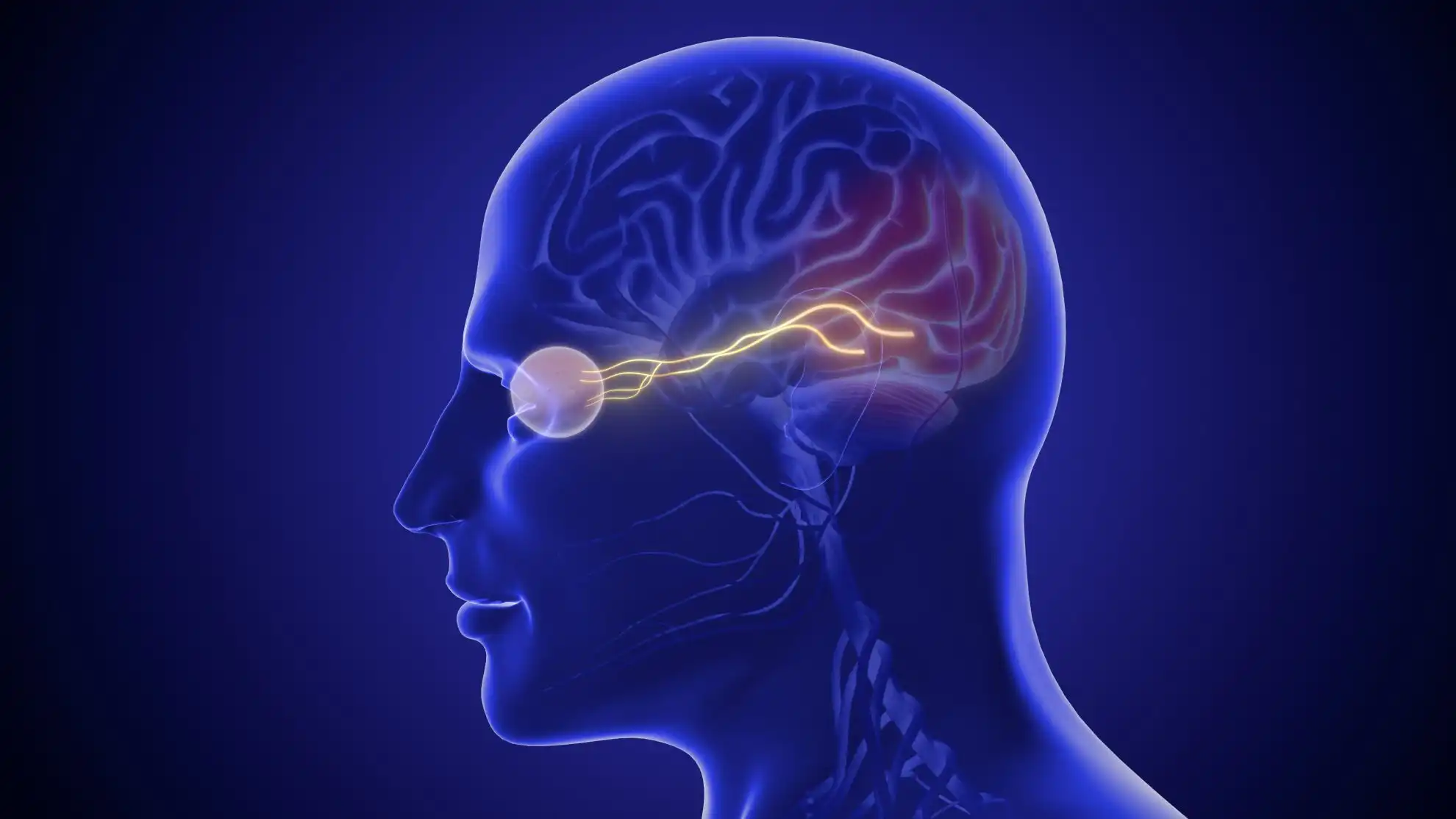
The vision area at the back of the brain receives signals from both eyes. A change on one side of it affects the same half of the view in each eye. For example, the right side of the scene is disturbed whether you look with your right eye or your left [10,13]. You can read more in how the eye and brain build vision.
Aura symptoms also tend to feel stronger in the eye on the outer side of the affected half [4]. So people often say "my right eye went blurry" when the right half of the view was affected in both eyes. Mixing up one eye with one side is a common mistake [1,10].
If it is safe, cover one eye and then the other during an episode, and note what each eye sees. If you did not check, say so.

| Feature | Migraine visual aura | Retinal migraine | Possible emergency |
|---|---|---|---|
| Where it starts | Visual cortex of the brain | The eye (cause not fully understood) | Blocked blood flow, retinal tear or detachment, artery inflammation |
| Eyes affected | Same side of the view in both eyes | One eye only, confirmed during an attack | One eye or both |
| How it starts | Builds and spreads over 5 minutes or more | May spread over several minutes | Often sudden, at full strength |
| What you notice | Zigzags, shimmer, spreading blind spot | Sparkles, blind spot or blackout in one eye | Curtain, shadow, gray-out, new floaters, or weakness or speech trouble |
| How long | 5 to 60 minutes per symptom | 5 to 60 minutes | Minutes or longer; may clear before you are seen |
| How common | Common | Extremely rare | Varies |
| What to do | First episode: see a doctor. Familiar and diagnosed: follow your plan | Diagnosed only after other causes are ruled out | Call 911 or go to the emergency room |
Sources for the table: [1,2,4,5,6,8].
Retinal migraine means repeated, fully reversible attacks of flashing, blind spots or blackout in one eye only, linked with migraine headache. It is an extremely rare cause of short-lived vision loss in one eye. Doctors diagnose it only after other causes, such as blocked blood flow, have been ruled out [2,10].
The diagnostic criteria require one-eye symptoms to be confirmed during an attack, by an exam or a careful drawing. Other causes of temporary one-eye blindness (amaurosis fugax) must be excluded first [2].
Some people who believe they had a retinal migraine actually had a visual aura in both eyes [2,10]. Others had a circulation or eye problem. Brief one-eye vision loss can come from a blood clot from the arteries or heart. It can also come from a spasm of the eye's blood vessels, or from inflammation such as giant cell arteritis [5].
Testing may include a full eye exam, blood vessel imaging of the head and neck, heart tests such as an echocardiogram and rhythm monitoring, and bloodwork [5]. Permanent one-eye vision loss linked to migraine has also been described [2]. Never brush off a one-eye episode as "just a migraine."
Visual aura is most likely caused by a slow wave of changed nerve activity across the brain's visual cortex. Blood flow in that area also dips for a while. The spreading wave fits the way the pattern drifts across your view. Common triggers include stress, sleep changes, missed meals, bright lights and hormone changes [1,7].
Doctors call this wave cortical spreading depression [1]. Migraine triggers listed by MedlinePlus include [7]:
Triggers differ from person to person. Keep a diary of sleep, meals, drinks and stress before each episode; a pattern may take months to show [4]. One coincidence does not prove a trigger.
Migraine flashes usually form a pattern that spreads over several minutes and then clears. Flashes from a retinal tear or detachment may come with a burst of new floaters or a shadow or curtain over part of your vision. That combination is a medical emergency, and a migraine history does not rule it out [1,8].
An eye doctor checks for a tear or detachment with a dilated eye exam [8]. If you notice new floaters with flashes, get seen right away [8]. Netra's article on flashes and floaters from vitreous detachment explains this common cause.
A visual aura usually clears on its own within an hour, and it does not damage your eyes. Stop driving or any risky task, and rest until your vision is fully back. Treatment mainly targets the headache, using pain relievers or prescription migraine medicines your clinician recommends [4,7].
During an episode:
Over-the-counter pain relievers such as acetaminophen, ibuprofen, naproxen or aspirin often help mild attacks. Prescription options include triptans [4,7]. Taking pain medicine more than 3 days a week may lead to rebound headaches [7]. If attacks are frequent, your clinician may suggest a daily preventive medicine [4]. The aura itself is usually not the target of treatment [4].
Ask which medicines suit you, especially if you are pregnant or have other health conditions.
If you have diagnosed, recurring aura, plan ahead. Do not sign documents or read account numbers while part of your view is missing. Arrange a handover for driving, machinery or child care.
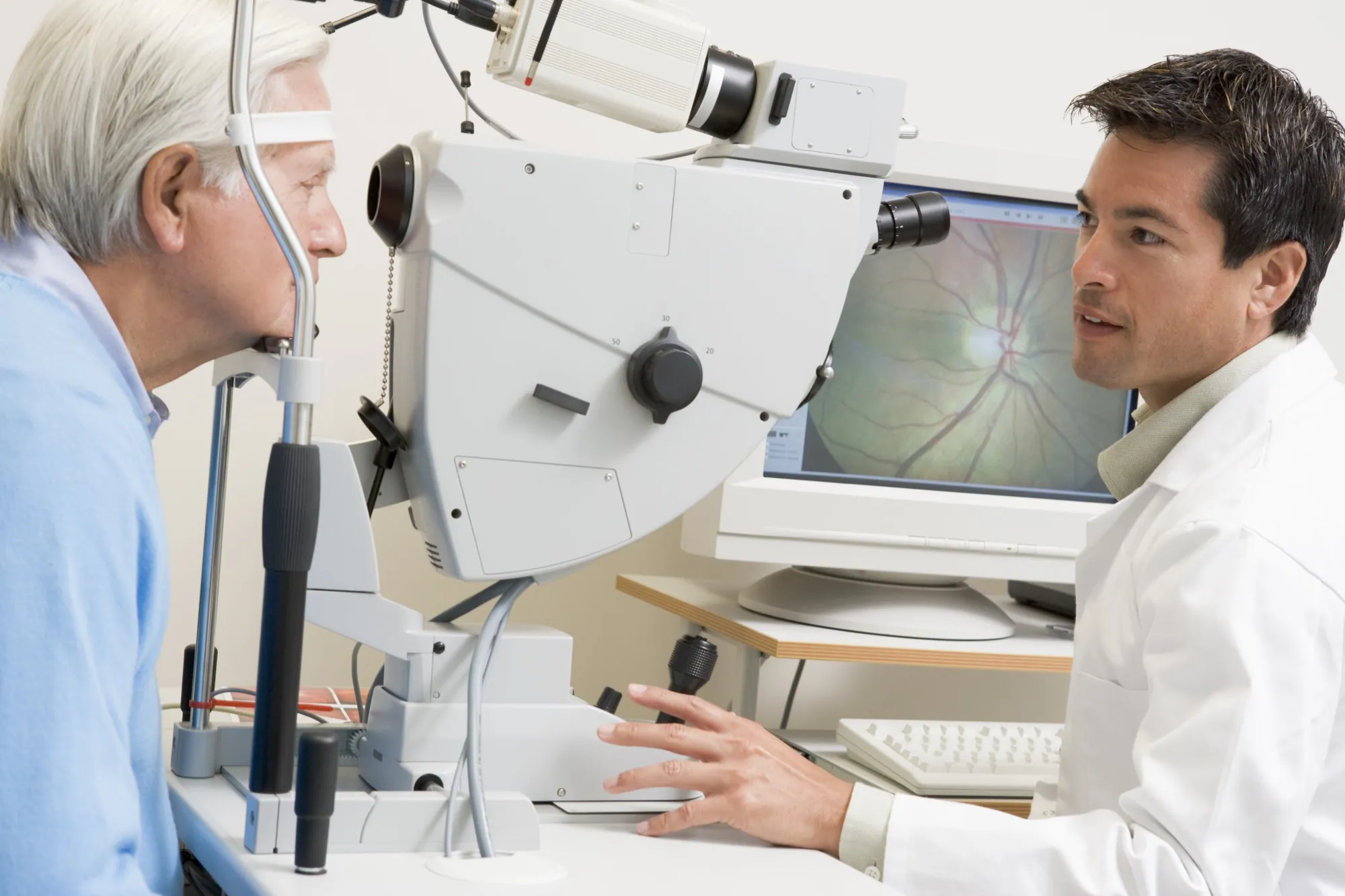
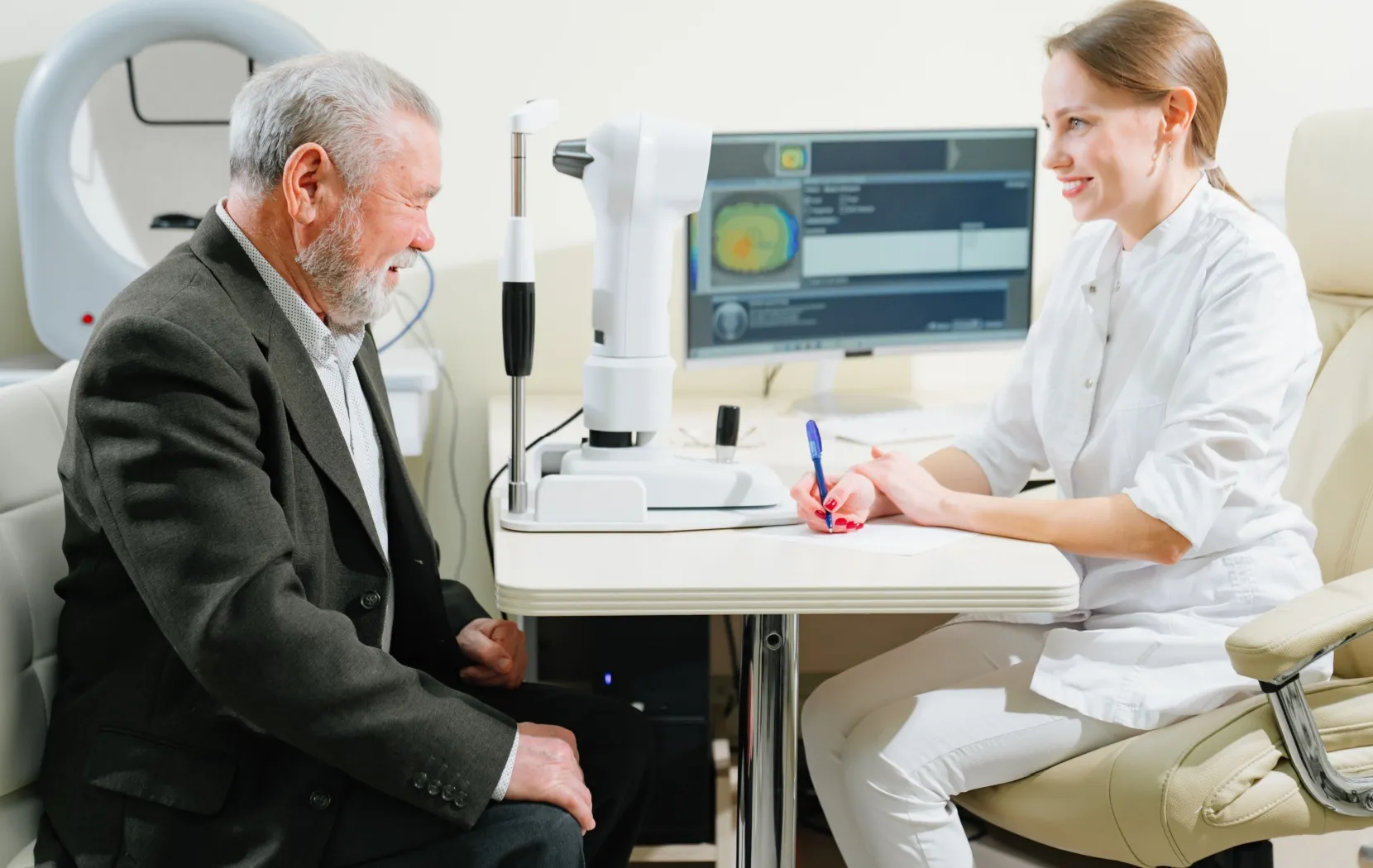
Doctors diagnose visual aura mainly from your description of the episode, plus an exam. The exam may check your vision, pupils, side vision, eye movements and retina. More tests are needed when the story does not fit a typical aura, for example a first aura after age 40 or vision loss in one eye [3,5].
A normal eye exam after the episode is reassuring about your eyes now. It cannot show what happened during the episode, because vision often recovers before you are seen [5]. So a doctor may still test your blood vessels or heart.
What to tell your doctor:
A simple sketch helps. Draw a circle with a dot in the center, shade the missing area, and label which eye or eyes. The retinal migraine criteria accept a careful drawing as evidence [2]. During the exam your doctor may also check your optic nerve and retina.
Netra Restoration Therapy (NRT) is not a treatment for ocular migraine, visual aura or retinal migraine. NRT has not been tested in controlled trials for these conditions. It has no role during an episode, and it cannot restore blood flow or rule out a stroke. If you have new or changed vision symptoms, follow the emergency steps above first. Do not wait for an NRT visit.
Netra describes NRT as adjunctive care, used alongside your eye doctor and other physicians, never instead of them [12]. Some patients with diagnosed migraine ask about acupuncture. One randomized trial in 150 adults in China with migraine without aura compared 20 acupuncture sessions with sham acupuncture and usual care [11]. The acupuncture group had about 1.4 fewer migraine days per four weeks than the sham group at weeks 13 to 16 [11]. The trial did not study visual aura, retinal migraine or the NRT program.
If you choose complementary care for diagnosed migraine, keep your prescribed plan in place. Tell all your clinicians about any herbs or supplements, especially if you are pregnant or take other medicines. See NRT effectiveness by diagnosis for how Netra reviews outcomes.
A typical migraine visual aura does not cause permanent vision damage and usually clears within an hour. The risk is mistaking something else for it. Sudden one-eye vision loss, a curtain over your vision or stroke signs need emergency care, even if they pass [4,5,6].
Yes. Doctors call this typical aura without headache, and it is more common after age 50. Because there is no headache, it is harder to tell apart from a mini-stroke (TIA). A first episode, especially after age 40, should be checked by a doctor [3,4].
Common migraine triggers include stress, changes in sleep, missed meals, alcohol, caffeine withdrawal, bright lights, strong smells and hormone changes. Some foods, such as aged cheese, chocolate and cured meats, trigger attacks in some people. Triggers vary, so a diary kept over several months is the best way to find yours [4,7].
No. Even a small zigzag can grow and hide signals, cars or people. Pull over when it is safe and wait until your vision is completely normal. If the episode is new or unusual for you, get medical help instead of driving on.
"Ocular migraine" is a loose term that most often means a visual aura from the brain, seen with both eyes. A retinal migraine is a rare condition that causes attacks in one eye only. Doctors diagnose retinal migraine only after ruling out circulation and eye problems that can cause one-eye vision loss [1,2,10].
A typical visual aura does not cause lasting vision damage [4]. Rare cases of permanent one-eye vision loss linked to migraine have been reported [2]. Any vision loss that does not fully recover needs prompt medical care.
Not always. Vision often recovers before you see a doctor, so the eye can look normal even after a blood-flow problem. A normal exam rules out some ongoing eye problems, but your doctor may still order other tests based on what you describe [5].
Call 911 if vision loss is sudden, affects one eye, or comes with weakness, numbness, face droop, trouble speaking, confusion or a sudden severe headache. Also get care right away if your vision does not return to normal after an episode. A familiar, diagnosed aura that clears completely usually does not need emergency care [4,6].
Sources checked October 31, 2026.
This article provides general education and does not replace an individual eye examination, diagnosis or treatment plan. If you have sudden vision loss in one or both eyes, a curtain or shadow over your vision, or weakness, face droop or trouble speaking, call 911 now, even if the symptoms go away.