
Search conditions, treatments, research reviews and articles. Press Enter to see all results, Esc to close.
Search conditions, treatments, research reviews and articles. Press Enter to see all results, Esc to close.
Blog
October 27, 2026
Optic nerve damage usually shows up as blurred or dim vision, faded colors, a blind spot or lost side vision, although the most common type of glaucoma often causes no signs until late. Whether it heals depends on the cause. Nerve fibers that have died do not grow back, but vision often recovers after optic neuritis, and fast treatment of other causes can save the sight you still have.
The signs vary with the cause, and they can be temporary or permanent. The ones people notice most are:
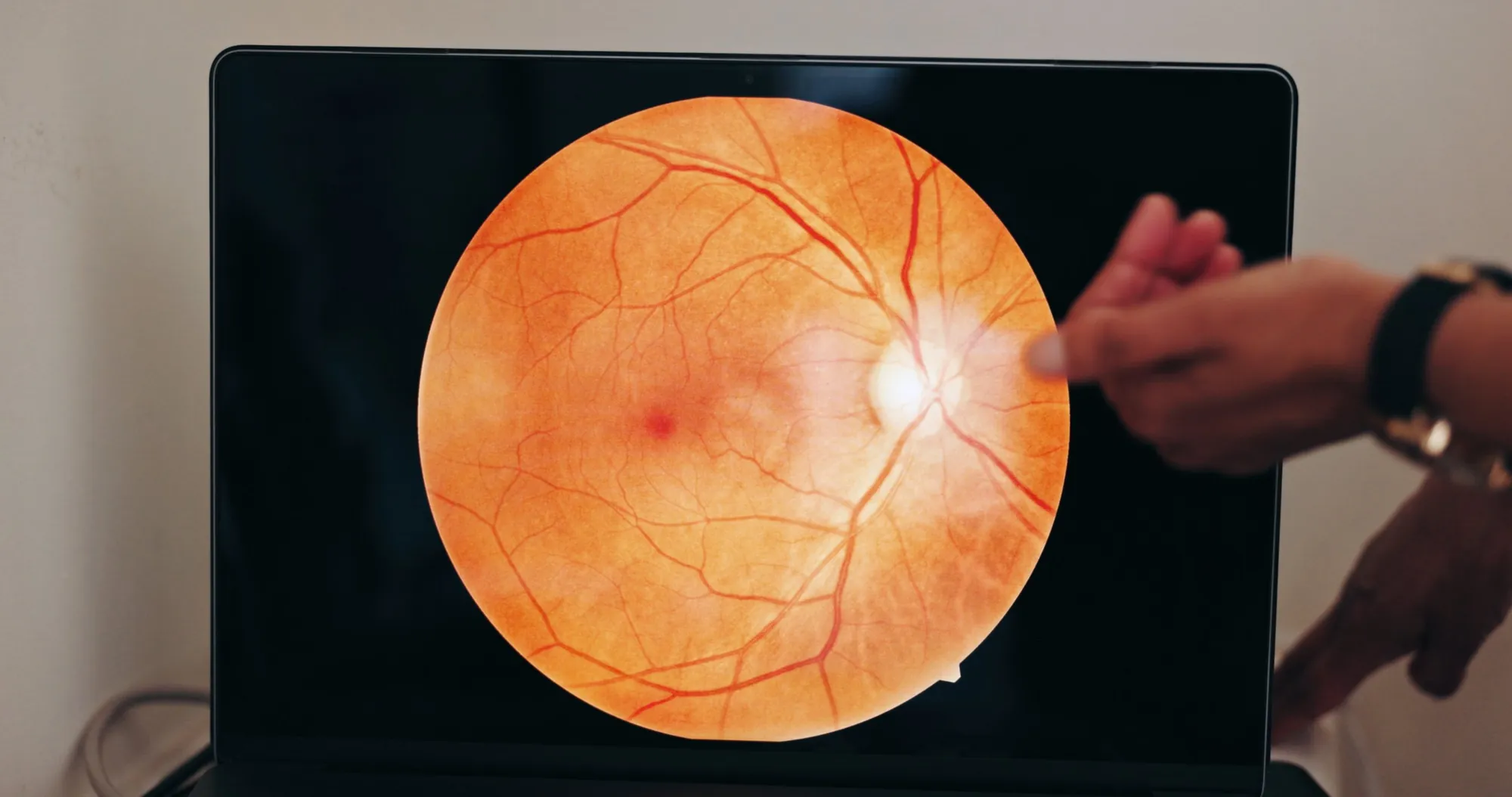
An eye doctor may also find signs you cannot feel: a swollen, pale or reshaped optic disc at the back of the eye, a weaker pupil reaction to light in one eye, gaps on a visual field test, or a thinner nerve fiber layer on an OCT scan, a quick, painless light scan of the back of the eye.
| Cause | How it starts | What else you may notice |
|---|---|---|
| Open-angle glaucoma (the most common type) | Slowly, over years | Nothing at first. Side vision fades so gradually that many people do not notice |
| Angle-closure glaucoma | Suddenly | Intense eye pain, a red eye, blurred vision and nausea. A medical emergency that can cause blindness within days |
| Optic neuritis | Over hours to days, usually in one eye | Pain that is worse when you move the eye, faded colors, flashing lights |
| NAION (non-arteritic anterior ischemic optic neuropathy, a sudden drop in blood flow to the front of the nerve) | Suddenly, in one eye | No pain. A doctor sees a pale, swollen optic disc |
| Giant cell arteritis (inflamed arteries) | Suddenly; vision loss is often complete | Headache, scalp tenderness, jaw pain when chewing. Mostly over age 50. One or both eyes |
| Papilledema (swollen optic discs from raised pressure inside the skull) | Often with brief blackouts of vision lasting seconds, or no symptoms | Headaches that are often worse in the morning or lying down, double vision, nausea. Almost always both eyes |
| Compression (a growth pressing on the nerve) | Slowly getting worse | Often headaches. Both eyes if the tumor sits in the middle, such as a pituitary tumor |
| Leber hereditary optic neuropathy | Over weeks, in a young adult | Painless loss of central vision in one eye, then the other weeks to months later |
| Injury | After an injury, such as a fall, a sports injury or a car accident | Blur, faded colors, partial or complete vision loss |
For the full list of causes and how the nerve works, see our guide to the optic nerve.
Some causes are. Go to an emergency room now if:
Call 911 if vision loss comes with weakness, numbness, a drooping face or trouble speaking.
Get medical help the same day if:
See when an eye problem is an emergency.
Not when the nerve fibers have died. In humans and other mammals, these fibers normally do not regrow, which is why the vision loss lasts. Damage that has not yet killed the fibers is different. Inflamed, swollen or compressed fibers can recover, and that is where treatment makes the biggest difference.
| Cause | What usually happens |
|---|---|
| Optic neuritis | Most people recover their vision, usually over several weeks to months, even without treatment. In the Optic Neuritis Treatment Trial, 72% of affected eyes saw 20/20 or better 15 years later. Some loss can be permanent |
| NAION | Some people improve. In the main trial, 42.6% of people who had no surgery could read 3 or more extra lines on the eye chart at six months. No treatment is proven |
| Giant cell arteritis | Vision that is lost most often stays lost. Starting treatment quickly may help prevent further loss |
| Compression | Vision can improve once the pressure is removed, especially if the nerve has not yet wasted away. In one surgical series, 49.4% of treated eyes improved in sharpness or field of vision, and 22.9% got worse |
| Papilledema | The outlook is good if it is found early. Untreated, it can lead to partial or complete blindness |
| Medicines and toxins | Damage from ethambutol, a tuberculosis medicine, can be permanent but is largely preventable with regular eye checks. After methanol poisoning, 30% to 40% of survivors keep lasting vision problems |
| Poor nutrition | Outcomes can be excellent if the missing nutrients are replaced in time |
| Glaucoma | Treatment will not undo damage, but it can often stop further loss |
| Injury | Some vision often comes back on its own. Steroids and surgery have not been shown to add any benefit |
| Optic nerve atrophy | Once the nerve has wasted away, vision recovery is minimal |
After optic neuritis, vision usually improves over several weeks to months. Steroids given into a vein can speed recovery but make little difference to final sharpness of vision. After NAION, about 4 in 10 untreated people in the main trial had improved by six months. After compression is relieved, recovery is more likely if the nerve had not yet wasted away. Fibers that have died do not heal, so in glaucoma and optic nerve atrophy the goal is to keep the vision you have.
There is no single treatment for the optic nerve itself. Doctors treat the cause:
Most new approaches are still in research:
Be wary of "stem cell" clinics. The FDA has received reports of blindness, tumors and infections from unapproved stem cell products and says they are not approved to treat blindness. In one report, three people became severely visually impaired after injections of their own fat-derived "stem cells" for macular degeneration at a US clinic; a year later, their vision ranged from 20/200 to being unable to see light at all.
Vision lost to optic nerve damage cannot be fixed with glasses or contact lenses. If it makes daily tasks hard, ask about vision rehabilitation. A low vision specialist can teach you to use magnifiers, anti-glare lenses and the larger text and higher contrast settings on your phone or computer. Regular checks still matter, because they show whether the cause is under control.
Netra Restoration Therapy (NRT) is an integrative program at Netra Eye Institute. For people with optic nerve damage, it can include acupuncture, traditional Chinese medicine, Ayurvedic therapies and nutrition guidance, offered as supportive care after the cause has been diagnosed and alongside your eye doctor's treatment. NRT does not regrow the optic nerve, restore lost vision, treat glaucoma or lower eye pressure, and it never replaces urgent care for sudden vision loss. Our article on neuroprotective eye therapy explains the research ideas behind this approach, which have not been proven to protect the optic nerve in people. Tell your eye doctor about any herbs or supplements you take, because some can interact with medicines and some botanical products can harm the liver. You can also read about Ayurvedic treatment for optic nerve damage and the evidence on acupuncture for eye disease.
Not once nerve fibers have died, because the human optic nerve does not regrow. Some damage does recover: most people regain good vision after optic neuritis, and vision can improve after pressure on a compressed nerve is removed early. For glaucoma, treatment can often stop further loss but cannot undo it.
Blurred or dim vision, faded colors, blind spots, loss of side vision, pain when moving the eye and sudden vision loss. A doctor may also see a pale or swollen optic disc and a weaker pupil reaction. Open-angle glaucoma, the most common type, often causes no symptoms until late, so regular eye exams matter.
After optic neuritis, vision usually improves over several weeks to months. After NAION, about 4 in 10 untreated people in the main trial had improved by six months. Damage from glaucoma or optic nerve atrophy does not heal, so treatment aims to protect the vision you have. Your doctor can track changes with visual field tests and OCT scans.
Nicotinamide (vitamin B3) is being tested to protect nerve cells in glaucoma, and gene therapy for LHON is in clinical trials. Regrowing the optic nerve has been tested only in animals so far. In the EU, idebenone is approved for vision loss from LHON. Avoid unapproved "stem cell" injections, which have caused blindness.
Often, but not always. Damage from glaucoma or long-standing compression is usually permanent, and NAION often leaves some permanent loss. Optic neuritis usually improves, and damage from nutrition problems or some medicines can improve if caught early. The sooner the cause is found and treated, the better the chance of keeping vision.
No. Glasses correct focusing problems, but they cannot replace lost nerve fibers. If vision loss from optic nerve damage affects daily life, a low vision specialist can help with magnifiers, lighting, anti-glare lenses and phone or computer settings.
Acupuncture has not been shown to repair the optic nerve or restore lost vision. A few small studies reported short-term changes, but none showed lasting benefit. At Netra it is used only as supportive care alongside standard treatment, and sudden vision loss always needs urgent medical care first.
Yes. High eye pressure can damage the optic nerve in glaucoma, and glaucoma treatment works by lowering eye pressure to prevent further damage. Glaucoma can also happen with normal eye pressure. See our guide to high eye pressure.
Medical Disclaimer: This article provides general education. It is not medical advice, a diagnosis or a personal treatment plan, and it does not establish a doctor-patient relationship. Do not start, stop or change any prescribed medicine, supplement or treatment without the clinicians responsible for your care. Sudden vision loss, or intense eye pain with a red eye, needs emergency care now. Vision that gets worse with pain on eye movement, or vision changes with a new headache, scalp tenderness or jaw pain, needs same-day medical care.