Search conditions, treatments, research reviews and articles. Press Enter to see all results, Esc to close.
Search conditions, treatments, research reviews and articles. Press Enter to see all results, Esc to close.
Blog
November 11, 2026
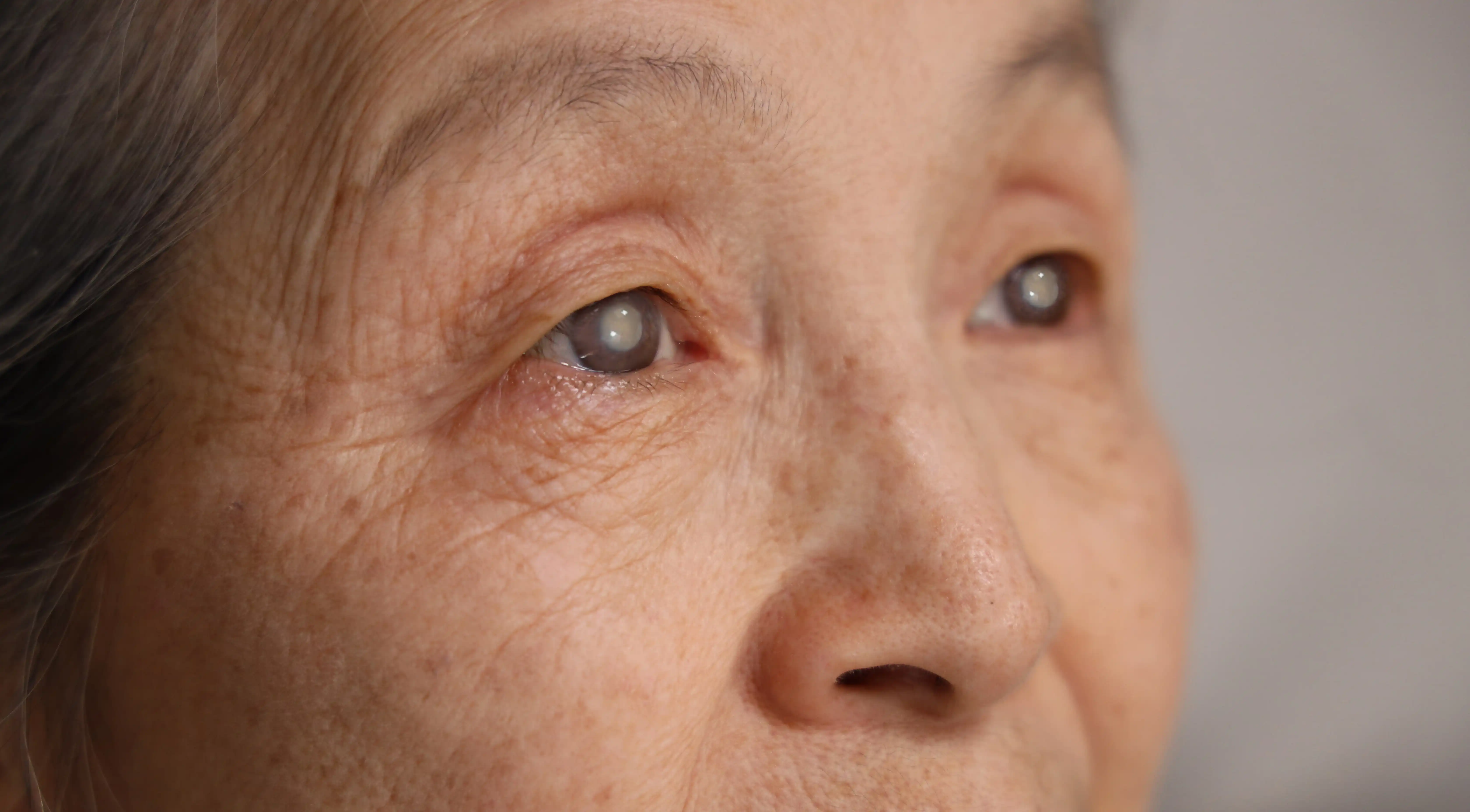
No natural remedy, eye drop or supplement has been shown to reverse or dissolve a cataract. Surgery is the only way to get rid of one, but most people do not need to rush into it [1]. What you can do naturally is lower your risk and look after your eyes in general: do not smoke, protect your eyes from the sun, manage diabetes, limit alcohol and eat plenty of fruit and vegetables [1,2]. Even these steps have not been proved to prevent or slow a cataract [2]. In the early stages, brighter lighting, anti-glare sunglasses and an updated glasses prescription can help you see better [1].
This guide is general education and does not replace an eye exam. See an eye doctor promptly for any sudden change in vision, eye pain or a red eye.
Key takeaways
In this article
No. A cataract is a cloudy area in the lens inside your eye, and surgery is the only way to get rid of it [1]. Mayo Clinic notes that no studies have proved how to prevent or slow the growth of cataracts [2]. Claims that a food, herb, oil or eye drop can dissolve a cataract have not held up when tested, as the sections below explain.
That does not mean there is nothing to do. Early on, small changes at home can help you see better, and most people do not need surgery right away [1]. The realistic aims are to lower your risk, see as well as you can now, and know when surgery makes sense.
These are the steps the National Eye Institute and Mayo Clinic suggest. They may lower your risk of cataracts, but none has been shown to clear a cataract you already have [1,2].
| Step | Why it matters |
|---|---|
| Do not smoke | Smoking and other tobacco use raise the risk of cataracts. The National Eye Institute lists 1-800-QUIT-NOW for free help to quit [1,2]. |
| Protect your eyes from the sun | Ultraviolet light raises cataract risk. Outdoors, wear sunglasses that block UVB rays and a hat with a brim [1,2]. |
| Manage diabetes and other health problems | Diabetes raises cataract risk. Follow your treatment plan for diabetes and any other condition that can increase your risk [1,2]. |
| Eat plenty of fruit and vegetables | Fruit, vegetables, leafy greens, nuts and whole grains supply vitamins and antioxidants that may reduce cataract risk [1,2]. |
| Limit alcohol | Drinking too much alcohol raises the risk of cataracts [1,2]. |
| Wear eye protection | A past eye injury raises cataract risk. Wear protective eyewear when using power tools and for some sports [1]. |
| Ask about long-term steroids | Prolonged use of corticosteroid medicines raises cataract risk [2]. Do not stop a prescribed steroid on your own; ask your doctor whether the dose or form can change. |
| Have regular eye exams | Exams can find cataracts and other eye conditions at their earliest stages [2]. |
Our guide to preventing cataracts goes into each of these in more detail.
Several kinds of eye drops are promoted online as a way to treat cataracts without surgery. The evidence behind the best-known ones is weak or missing.
NAC drops are designed to carry carnosine, an antioxidant, through the cornea into the front of the eye. A 2017 Cochrane review found only two studies, both run by the same research group in Russia and the United States, with 114 people in total. The reviewers could not get enough information to judge how the studies were done, and concluded that there is no convincing evidence that NAC reverses cataracts or stops them getting worse [5].
In 2015, researchers reported that lanosterol drops shrank cataracts in dogs, rabbits and lab-made cataracts. The American Academy of Ophthalmology pointed out that the drops had not been tested in people or approved, and said it was too early to tell whether they would work [6]. Later lab studies were discouraging. Soaking 40 cataract nuclei removed from human eyes in lanosterol for six days did not clear them, and a 2019 study found that lanosterol neither cleared cataracts in rat lenses nor dissolved the clumped proteins in human lenses [7,8].
In 2023, the FDA sent warning letters to eight companies for illegally marketing unapproved eye products to treat conditions including cataracts. Some letters also cited problems with sterility, and the FDA warned that unapproved products can lead people to delay or stop treatments that have been found safe and effective [9]. Castor oil is also promoted for "dissolving" cataracts. The American Academy of Ophthalmology says there is no scientific evidence for this, and putting castor oil on the eye can irritate and damage the cornea [10].
If you are looking at MSM drops, our review of MSM eye drops covers what the evidence shows. Always ask an eye doctor before putting any new product in your eye.
The idea that antioxidants protect the lens has been tested in large trials, and the results were disappointing. A Cochrane review of nine randomized trials with 117,272 people aged 35 or older found no evidence that beta-carotene, vitamin C or vitamin E supplements prevent cataracts or slow them down. The doses tested were higher than the recommended daily allowance [3].
Lutein and zeaxanthin, the yellow pigments found in leafy greens, were tested in the AREDS2 trial of 4,203 people aged 50 to 85. Taking 10 mg of lutein and 2 mg of zeaxanthin a day had no overall effect on the need for cataract surgery or on vision loss over about five years. People whose diets were lowest in these pigments did need surgery less often on the supplement, but that was a subgroup finding rather than the trial's main result [4].
Food is a better place to start than pills. Our guide to eye vitamins explains who may benefit from a supplement and what to look for.
Many plants have been studied for cataract, including the Ayurvedic formulation Triphala, turmeric (curcumin) and ginkgo. A 2019 review of this research found that most of it comes from lab experiments and animal studies, such as cataracts induced in rats. Its authors wrote that clinical evidence of benefit is still needed, and that rigorous clinical studies are required to validate the use of these plants [11].
At Netra, Ayurvedic care is used for comfort and general health around a cataract, not to clear the lens. Netra Tarpana can help with surface dryness and eye strain, but it does not reach the lens. We do not recommend herbal drops or home-made eye washes for cataract, and we never suggest delaying surgery to try an alternative first. Our page on Ayurvedic treatment for cataract explains what this care can and cannot do.
Early on, small changes can help you see better [1]:
Our guide to early cataract symptoms covers glare, halos and night driving.
Your eye doctor may suggest surgery when a cataract starts to get in the way of everyday activities such as reading, driving or watching TV. Most people do not need to rush, and waiting usually will not harm your eyes or make surgery harder later [1]. When the time comes, cataract surgery is very safe, and 9 out of 10 people who have it see better afterwards [1].
The main question is how much the cataract affects your daily life [1]. Our guide to deciding when cataract surgery is needed walks through the questions to ask.
Not in any way that has held up in trials. Surgery is the only way to get rid of a cataract [1]. Eye drops such as NAC and lanosterol have not been shown to clear cataracts in people, and antioxidant vitamins did not prevent or slow them [3,5,7].
No food stops a cataract. A diet with plenty of fruit, vegetables, leafy greens, nuts and whole grains supports eye health and may lower your risk [1,2].
No treatment has been proved to stop or slow a cataract [2]. Not smoking, protecting your eyes from UV light and managing diabetes may lower your risk, and they are worth doing for your health in general [1,2].
No. Early cataracts are managed with brighter lighting, anti-glare sunglasses, magnifiers and new glasses, and surgery is considered when the cataract starts to affect daily life [1].
No. NAC drops have no convincing evidence behind them, lanosterol has not cleared human cataracts in lab tests, and the FDA has warned companies for illegally marketing unapproved eye products for cataracts [5,7,9].
Researchers have studied drops based on lanosterol and related compounds, which cleared cataracts in some animal studies. They have not been shown to work on human cataracts, so surgery is still the only way to get rid of a cataract [1,6,7].
No. The American Academy of Ophthalmology says there is no scientific evidence that castor oil dissolves cataracts, and putting it on your eye can irritate and damage the cornea [10].
No. Herbal remedies for cataract have mostly been tested in labs and animals [11]. At Netra, Ayurvedic care supports comfort and general health alongside cataract care, not in place of surgery.
Sources checked November 11, 2026.
This article provides general education and does not replace an individual eye examination, diagnosis or treatment plan. Do not stop prescribed medicines, including steroids, without your doctor. See an eye doctor promptly for a sudden change in vision, eye pain or a red eye.