Search conditions, treatments, research reviews and articles. Press Enter to see all results, Esc to close.
Search conditions, treatments, research reviews and articles. Press Enter to see all results, Esc to close.
Blog
August 22, 2026
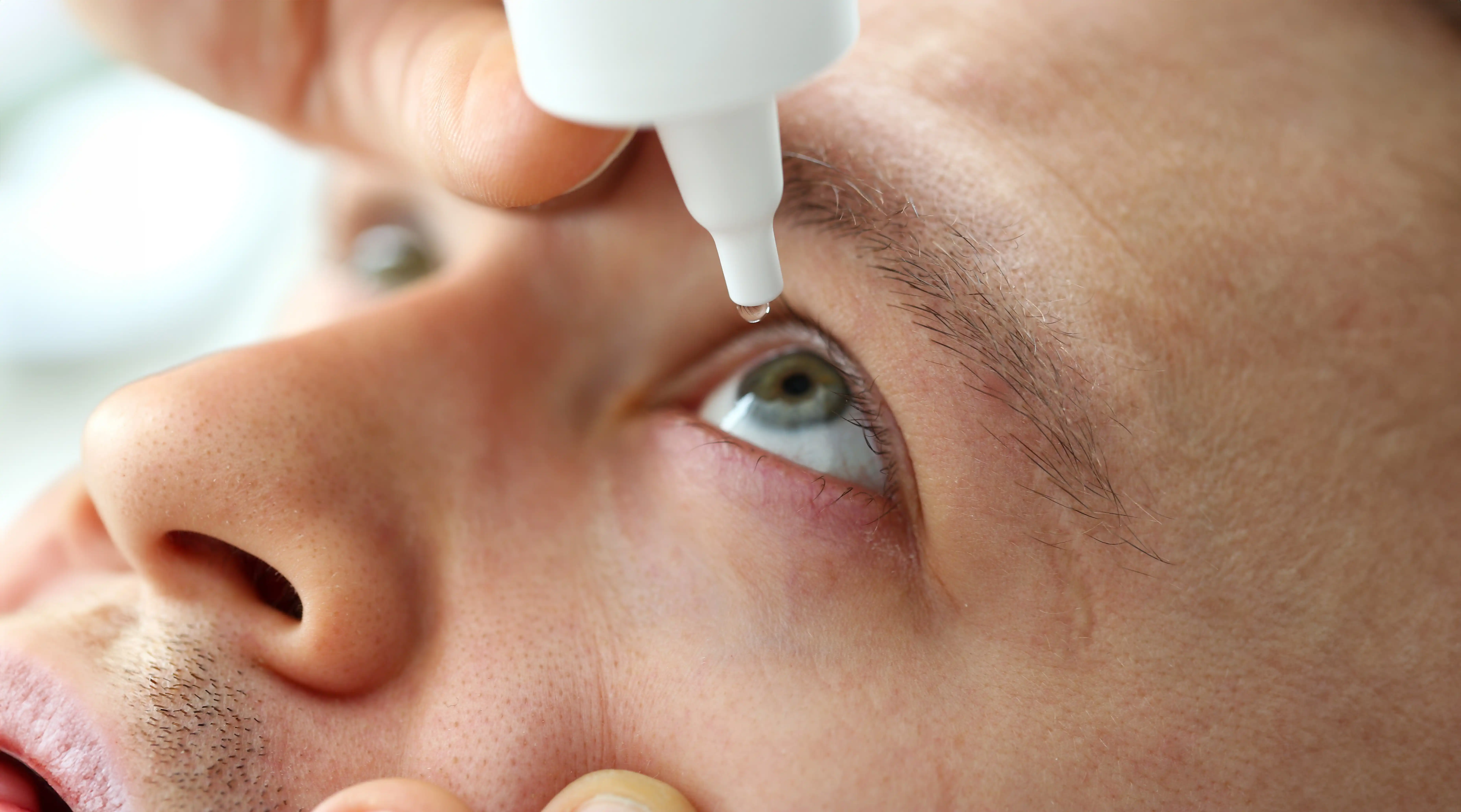
MSM eye drops are not an approved eye medicine. The FDA has stated that there are no legally marketed ophthalmic drugs containing MSM, and no clinical trial has shown they treat any eye condition. Most MSM research is oral and unrelated to the eye. This page reviews what exists and the safety concerns.
Written for patients and families. This is the plain-language edition. Eye-care professionals may prefer the referenced version: MSM Eye Drops: An Evidence Review for Eye-Care Professionals.
This article is general education, not medical advice. If you are being treated for glaucoma, macular degeneration, diabetic retinal disease or any other eye condition, continue the care your ophthalmologist has prescribed and speak with them before adding anything. Do not reduce or stop prescribed drops, injections, laser treatment or scheduled monitoring on the basis of anything you read here.
People who have watched their vision change, and who have been told there is nothing further to do, often arrive at an appointment with a bottle in hand. Increasingly it is a bottle of MSM eye drops.
The question they ask is whether the ingredient works. It is a reasonable question, and it is the wrong one, or at least it is three questions compressed into one, and separating them changes the answer.
Has this specific, sterile product been shown to reach the tissue it is meant to act on? Does it improve an outcome a person would actually notice? And does it stay safe with repeated use over years, rather than weeks?
Most eye products sold directly to consumers have never been asked any of the three. That is not an accusation aimed at any company. It is a description of how this part of the market works, and understanding it is more useful than a verdict on any single ingredient.
Methylsulfonylmethane, or MSM, also called dimethyl sulfone, is a small organosulfur compound. It has a real scientific literature, and it is worth being precise about what that literature covers.
Most of it is oral. Human trials have focused on musculoskeletal outcomes: knee osteoarthritis, exercise recovery. Reviews describe proposed anti-inflammatory and antioxidant effects and a generally favourable short-term safety profile at the doses studied by mouth. Laboratory work has reported effects on inflammatory signalling in cultured cells; animal work has examined oral toxicology and distribution.
None of that transfers automatically to a drop. Route of administration changes exposure, tissue concentration, metabolism, formulation requirements and risk. Oral tolerability cannot establish corneal safety. A systemic anti-inflammatory signal cannot demonstrate that anything reached the retina after a drop landed on the surface of the eye.
Three animal studies are frequently cited as evidence that MSM eye drops have direct ocular support. They deserve a careful reading.
In those experiments, MSM was used as a permeability enhancer, a vehicle to help a chelating agent, EDTA, penetrate ocular tissue in rats. The combination was then evaluated in rat models of elevated intraocular pressure and diabetic cataract. MSM was the delivery aid, not the therapy under test.
One detail from that work is directly relevant to how MSM drops are marketed for glaucoma. In the raised-pressure model, the EDTA and MSM combination reduced markers of oxidative and inflammatory damage without changing intraocular pressure at all. The most frequently cited animal evidence for MSM in glaucoma is, on inspection, evidence that the combination did not lower pressure.
It is also worth saying that enhanced penetration is not automatically a benefit. Increasing how much of a formulation crosses into the eye increases exposure of sensitive tissue to everything in the bottle: the active ingredient, the excipients, any impurities, and any contaminants.
A published case report describes bilateral acute angle closure in an otherwise healthy 35-year-old woman who had started several MSM-containing oral supplements at the same time; it resolved within four days of stopping them. The authors proposed a sulfonamide-like idiosyncratic mechanism.
A single case with several simultaneous exposures cannot establish causation or quantify risk, and it does not concern eye drops. It does illustrate a broader point: a widely consumed compound is not automatically inert.
The position of the agency is a matter of public record, and it is worth quoting rather than paraphrasing. The FDA states that there are no legally marketed ophthalmic drugs that contain MSM as an active ingredient. That statement appears in the 2023 consumer alert and remains on the consumer eye-drops page, last refreshed in June 2026.
In August 2023 the FDA warned consumers not to use two specific marketed MSM eye-drop products after agency testing found bacterial contamination in both and fungal contamination in one. Warning letters to both firms followed. Separately, a third company recalled its MSM drops earlier that year for non-sterility, a recall the FDA classified in its most serious category.
Two things follow, and the difference between them matters.
Those findings condemn the products that were tested and recalled. They do not establish that every bottle containing MSM is contaminated, and nobody should suggest otherwise.
The durable point is the category-level one. No MSM ophthalmic product has been through a process in which effectiveness, safety, quality and labelling were established and reviewed.
Market presence is not the same as approval. A company can place a product into commerce before the FDA has inspected it or taken any action. Agency oversight combines premarket requirements with postmarket surveillance, inspections, sampling, adverse-event reports, warning letters, import actions and recalls, resources allocated by risk, on a timeline that is neither instant nor a verdict on what came before.
Labelling does not change the category, either. A product intended to treat, mitigate or prevent disease is regulated as a drug regardless of whether it is described as natural, homeopathic, traditional, or a supplement. Dietary-supplement rules govern things that are swallowed. They do not govern products placed in the eye.
A drop bypasses defenses the rest of the body has, and it contacts tissue that does not regenerate the way skin does, repeatedly, often for years.
A safe ophthalmic product must be sterile throughout its shelf life and every use, with controlled particulate and endotoxin burden, tolerable pH and osmolality, ophthalmically appropriate excipients, a reproducible delivered dose, and packaging that protects the formulation from the first drop to the last.
None of that is paperwork. Published studies repeatedly document microbial contamination of multidose ophthalmic containers in clinical and patient-use settings, and contaminated solutions have been linked to serious corneal infection for decades. The 2023 outbreak of extensively drug-resistant Pseudomonas aeruginosa traced to a preservative-free imported artificial tear is the modern reference case: 81 patients across 18 states, four deaths within thirty days among those with clinical cultures, four eyes removed, and fourteen patients with vision loss. That product contained no exotic active ingredient. It failed on manufacturing.
Preservatives are part of this picture and are often misunderstood. They reduce microbial growth in multidose containers, and chronic exposure to some of them, benzalkonium chloride in particular, can affect the ocular surface in susceptible patients. But preservative-free systems do not remove the contamination problem; they relocate it to single-use packaging or validated closure technology. Preservative-free on a label is not a safety claim. It tells you which of two problems the manufacturer chose to solve.
Tear turnover, blinking, nasolacrimal drainage, the corneal barrier, conjunctival absorption into the bloodstream, and the blood-ocular barriers all work against a topically applied molecule reaching the retina or optic nerve at a meaningful concentration.
A drop can coat the surface, feel soothing, and never approach a therapeutic concentration in the tissue it is advertised to help. An entire field of ophthalmic formulation research exists because this is difficult. So a claim that a simple topical solution reaches the macula, the optic nerve or the vitreous is a pharmacokinetic claim, and it needs pharmacokinetic evidence rather than analogy.
We should apply the same standard to our own work, so here it is plainly.
Netra Restoration Therapy is not a bottle and not a single pathway. It is a practitioner-supervised, individualized programme, designed to complement, never to replace, standard ophthalmic care. Its scientific rationale draws on research into ocular perfusion, oxidative stress, mitochondrial function, neuroinflammation, neurotrophic signalling and related pathways, on the reasoning that chronic retinal and optic-nerve disorders involve several interacting processes rather than one isolated mechanism.
What supervision adds is specific and checkable. A clinician can confirm the diagnosis and its urgency and screen for symptoms needing same-day attention. They can review every prescribed drug, over-the-counter product and supplement for interactions, including anticoagulant and antiplatelet risk, pregnancy, liver or kidney disease, and planned surgery. They can establish baseline measurements and repeat them on a defined schedule: visual acuity, contrast sensitivity, visual fields, intraocular pressure, optical coherence tomography. And they can interpret those measurements against what is known about their variability.
That last point is where most of the value sits. In the Ocular Hypertension Treatment Study, 86% of visual field abnormalities detected during follow-up were not confirmed on repeat testing. For structural imaging, the between-visit tolerance limit for average retinal nerve fibre layer thickness is roughly 3.9 microns. Those numbers cut both ways: they are why a patient should not be alarmed by one poor test, and equally why nobody should be reassured by one good one, or by feeling better after a week. A programme that treats every fluctuation as a response is not measuring anything.
Treatment that is measured can be modified, or stopped, or escalated to the treating ophthalmologist. A bottle cannot do any of that.
An article like this is only worth reading if it says what it cannot support. So:
Prospective, controlled research is the only thing that will resolve any of this, and it has not yet been done.
Five tests, in the order that eliminates the most claims fastest.
And one phrase settles it faster than any of them. Clinically proven is a claim about the state of the evidence, which makes it checkable in a way that efficacy claims are not. If a product has been tested in a controlled human trial, that trial has investigators, a registration number and a published result. Ask for all three. A long list of mechanism papers is not the same thing.
No. The FDA states that there are no legally marketed ophthalmic drugs that contain MSM as an active ingredient.
That is not established. In 2023 the FDA found contamination in specific tested products and issued warning letters; a separate company recalled its MSM drops for non-sterility. Those findings concern the products tested. The broader issue is the absence of a legally marketed MSM ophthalmic drug and the limited direct human evidence.
Yes, but mostly for oral use and mostly for musculoskeletal outcomes. The ocular animal studies used MSM chiefly as a permeability enhancer for a chelating agent, and in the raised-pressure model that combination did not lower intraocular pressure.
No. There is no head-to-head trial, and the complete NRT protocol has not been evaluated in controlled trials. The difference that can be described accurately is structural: a supervised programme can be individualized, screened for interactions, coordinated with standard care and measured objectively.
No. Integrative care is adjunctive. Continue the treatment and monitoring your ophthalmologist has prescribed unless that clinician changes the plan.
No. They support biological plausibility and help design trials. Human benefit requires product-specific clinical research with a standardized formulation, dose, outcomes and safety monitoring.
No controlled human trial has tested an MSM eye drop for any eye condition, so there is no result to report in either direction. The animal work most often cited used MSM as a delivery aid for a different compound, and in the raised-pressure model that combination did not lower intraocular pressure. Absence of evidence is not proof that something fails. It means the question has not yet been asked properly.
Marketing typically claims reduced inflammation, softening of the lens in cataract, improved ocular circulation, clearer vision, or slowed progression of macular degeneration and glaucoma. Those claims are generally extrapolated from oral MSM studies on joint pain, or from laboratory work in cells and rodents. None has been demonstrated for an eye drop in people.
Please do not. Recipes circulate online that involve dissolving MSM powder in distilled water or saline. Home preparation cannot achieve or maintain sterility, cannot control pH or osmolality, and cannot establish that the powder is free of contaminants. Powder sold for oral or industrial use is not manufactured to ophthalmic standards. The 2023 artificial-tear outbreak described above involved a commercially manufactured product that failed on sterility alone, and it was linked to four deaths and fourteen patients with vision loss.
Sudden loss of vision. Flashes or a shower of new floaters, particularly with a curtain or shadow across your field of view. Severe eye pain. Trauma or chemical exposure. An acutely red eye with light sensitivity. Any new symptom after eye surgery.
Published by Netra Eye Institute, which provides integrative eye care as a paid clinical service. This is not independent third-party product research. It is general education and not medical advice, a diagnosis, or a treatment recommendation for any individual. No programme or product described here has been shown in controlled trials to change the course of any eye disease. Regulatory statements are current as of 22 August 2026.
Full reference list, 84 peer-reviewed sources and 15 regulatory sources, all verified 22 August 2026, available on request.