

A cataract is clouding of the eye's own lens, and once that clouding is established nothing applied to the surface of the eye will clear it. No Ayurvedic preparation, no herbal drop, and no supplement dissolves a cataract; the only treatment that restores vision is surgery to remove the cloudy lens and replace it with a clear implant. That operation is among the most successful in modern medicine. What Ayurvedic care at Netra Eye Institute can honestly offer is help with ocular surface comfort, glare tolerance, sleep and the habits that influence how quickly lenses cloud, along with straight guidance about when waiting has stopped being reasonable.
Complementary-care boundary: Ayurvedic therapy does not replace cataract surgery, intraocular lens implantation, Nd:YAG capsulotomy for a clouded posterior capsule, or urgent surgical management of a lens dense enough to raise eye pressure. It does not replace a dilated examination, biometry before surgery, or treatment of any corneal, retinal or optic nerve disease found along the way. Anyone who tells you a drop or a course of herbs will reverse a cataract is wrong, and acting on that advice costs years of sight you do not get back.
An Integrative Approach to the Drivers of Cataract
The human lens is built from crystallin proteins laid down before birth and never replaced. Across decades those proteins oxidize, cross-link and begin to scatter light instead of transmitting it. Ultraviolet exposure, tobacco smoke, poorly controlled diabetes, long courses of corticosteroids, blunt trauma and age itself all push that process along. None of it is reversible once the protein damage has happened, which is why the treatment is mechanical removal rather than chemical repair.
That does not make how you live irrelevant. The same factors that accelerate lens opacity act on the retina, the optic nerve and the blood vessels that feed them, and slowing those factors has real value for the fellow eye, for the years before surgery, and for the decades after it. A person who stops smoking, wears genuine ultraviolet protection and brings blood glucose into range is doing something measurable, even though none of it will clear the lens that is already cloudy.
Netra Eye Institute treats cataract as an ophthalmic diagnosis with a surgical answer, and treats the person around that diagnosis with integrative care. We will tell you when your cataract is mild enough that a new spectacle prescription and better lighting are the sensible next step. We will also tell you, without softening it, when that stage has passed.
Why Cataract Care Should Be Multi-Factorial
Vision Is Not the Only Thing at Stake
Untreated cataract costs more than sharpness on a chart. It raises the risk of falls and hip fracture in older adults, ends safe night driving, shrinks the world to the inside of a house, and carries a measurable burden of low mood and social withdrawal. When we discuss timing, the conversation is about function and safety, not about a number.
The Lens Is Only One Optical Surface
Light passes through the tear film, cornea, lens and vitreous before it reaches the macula, and any of those can blur vision. Removing a cataract from an eye whose macula is scarred, whose optic nerve is damaged by glaucoma, or whose corneal surface is dry and irregular produces a disappointed patient. The full examination exists to predict the result honestly before anyone books a theater date.
Timing Changes the Operation Itself
A moderately dense cataract is a routine day case. A rock-hard, long-neglected lens takes more ultrasound energy, stresses the corneal endothelium, and carries a higher rate of posterior capsule rupture and dropped nuclear fragments. Delay does not keep the operation in reserve unchanged; it makes the same operation harder and less predictable.
Risk Factors Act on the Fellow Eye Too
Cataract is rarely one-sided for long. Whatever accelerated the first lens is still working on the second, so the period around the first surgery is the natural moment to address smoking, ultraviolet exposure, steroid use and glycemic control. This is where lifestyle and integrative work genuinely earn their place.
Systemic Health Shapes the Surgical Plan
Diabetes affects healing and macular thickening after surgery. Tamsulosin and related alpha blockers cause intraoperative floppy iris syndrome, which the surgeon must plan for. Anticoagulation, breathing difficulty and the ability to lie flat all change the anesthetic approach. A careful medication and medical history is part of the eye assessment, not separate from it.
Expectations Decide Satisfaction
Two people with identical lenses and identical surgery can end up with opposite opinions of the result, because one expected to read without glasses and the other did not. Choice of intraocular lens, the refractive target, and whether you want distance or near vision without correction should be settled in clinic while there is still time to think.
Key Biological Mechanisms in Cataract
Crystallin Aggregation and Light Scatter
Lens transparency depends on crystallin proteins staying in an orderly, tightly packed arrangement. When they unfold and clump, the clumps become large enough to scatter visible light. The lens does not go dark so much as it turns milky, which is why glare and haze usually arrive before a drop in measured acuity.
Oxidative Stress and Glutathione Depletion
The lens defends itself with high concentrations of glutathione and related antioxidant systems. Those defenses fall with age and with smoking, leaving crystallins exposed to oxidation of their sulfur-containing amino acids. This is the mechanism most often invoked to justify antioxidant supplements, and it is also where the trial evidence has been consistently disappointing.
Ultraviolet Radiation and Cortical Change
Ultraviolet-B reaching the lens generates reactive oxygen species in the outer cortical fibers. Population studies across differing latitudes and outdoor exposure levels show a dose relationship between lifetime ultraviolet exposure and cortical lens opacity. This is one of the few cataract risk factors that is both well supported and easy to reduce.
Glycation in Diabetes
Persistently high glucose drives sorbitol accumulation inside lens fibers and non-enzymatic glycation of lens proteins. The result is earlier cataract, often posterior subcapsular, and a lens that changes refraction as glucose swings. Stabilizing glucose does not clear existing opacity, but it slows the process and makes biometry before surgery far more reliable.
Corticosteroid Effect on the Posterior Capsule
Systemic, inhaled and periocular corticosteroids all carry a dose-related risk of posterior subcapsular cataract. Because that opacity sits directly on the visual axis, it disables vision at a stage when the rest of the lens still looks reasonably clear. Anyone on long-term steroid therapy needs scheduled lens checks rather than symptom-driven ones.
Why Topical Agents Cannot Reach the Problem
The lens has no blood supply and sits behind the cornea, the aqueous humor and the iris. A drop must cross all of that at a useful concentration and then reverse decades of covalent protein cross-linking inside a tissue with almost no capacity for turnover. The laboratory work on lanosterol showed some reduction of protein aggregation in animal and cell models, but nothing has translated into a drop that clears a human cataract. The Cochrane review of N-acetylcarnosine drops found no reliable evidence of benefit and poor-quality trials behind the marketing.

How Cataract Presents and How It Progresses
Nuclear Sclerosis and the Myopic Shift
The commonest age-related pattern hardens and yellows the center of the lens. It increases the lens's refractive power, so distance vision blurs while near vision may briefly improve. Patients describe a spell of reading without glasses again, then a steady decline as color perception dulls and blue tones wash out.
Cortical Spokes and Glare
Cortical opacity forms wedge-shaped spokes in the outer lens. These may spare central acuity for a long time while making oncoming headlights unbearable and daytime sun painful. A patient with good chart vision who has quietly stopped driving at night is telling you the cataract already matters.
Posterior Subcapsular Cataract in Younger Eyes
This type sits at the back of the lens on the visual axis and is linked to steroids, diabetes, uveitis and radiation. It progresses faster than the other patterns and disables reading and bright-light vision early, often in people in their forties and fifties who assumed cataract was decades away.
The Slow Loss of Contrast
Contrast sensitivity falls before letter acuity does. Faces look flatter, steps and curbs lose their edges, and print on low-contrast backgrounds becomes tiring. People rarely report this directly; they report that they are clumsier, or more nervous walking outside at dusk.
When the Lens Becomes Mature or Hypermature
Left long enough, a lens turns white and opaque, and vision falls to perception of hand movements or light. The lens also swells. A swollen lens can crowd the drainage angle and produce phacomorphic glaucoma, or leak protein and cause lens-induced inflammation. Both are painful, sight-threatening emergencies, and both are entirely avoidable with timely surgery.
What Happens If Nothing Is Done
Cataract does not stabilize. It may progress slowly, but the direction is one way, and untreated mature cataract remains a leading cause of avoidable blindness worldwide. The vision lost to the cataract itself is recoverable by surgery at almost any stage; the vision lost to a secondary pressure spike or to optic nerve damage is not.
How Cataract Is Assessed at Netra Eye Institute
Assessing a cataract is only partly about the lens. The purpose of the examination is to work out how much of your visual difficulty the lens is responsible for, what else is contributing, and what a successful operation would realistically give you. Everything below is standard ophthalmic practice, and none of it is replaced by any Ayurvedic assessment method.
Visual Acuity and Refraction
We measure best-corrected acuity in each eye and refract carefully. Early nuclear cataract often hides behind an out-of-date prescription, and a person whose vision is restored by new lenses does not need surgery yet. A refraction that has shifted markedly toward myopia is itself a clue to nuclear change.
Glare and Contrast Assessment
Chart acuity in a dark room can look reassuring in an eye that fails badly under a bright light source. Testing acuity with glare, and asking specifically about headlights, low sun and fluorescent-lit supermarkets, brings the real functional deficit into the record.
Slit-Lamp Grading of the Lens
Under dilation we grade the type, density and position of the opacity, and note whether the zonules supporting the lens look weak, whether the pupil dilates well, and whether there is pseudoexfoliation material. Each of those findings changes surgical planning and the consent conversation.
Dilated Fundus Examination
The retina and optic nerve must be seen before surgery is offered. Diabetic retinopathy, age-related macular degeneration, glaucomatous cupping or an old retinal problem all limit the visual result, and finding them afterward is a poor way to learn.
Intraocular Pressure and Angle Assessment
Pressure is measured and the drainage angle assessed, particularly in short, hyperopic eyes with dense lenses where the angle may already be narrow. Recognizing a crowded angle before it closes is one of the clearest reasons not to postpone surgery indefinitely.
Macular Imaging
Optical coherence tomography of the macula, where the view allows it, identifies an epiretinal membrane, macular edema or drusen that would otherwise be blamed on a poor surgical outcome. It also gives a baseline for comparison if vision does not improve as expected.
Biometry and Lens Power Calculation
Optical biometry measures axial length, corneal curvature and anterior chamber depth so the implant power can be calculated. Accuracy here decides whether you meet your refractive target. Dry eye distorts these measurements, which is one practical reason we treat the surface before we measure.
Ocular Surface, Medication and Medical Review
We examine the tear film and lid margins, review alpha blockers, anticoagulants, steroids and diabetes control, and check that you can lie flat and still. This is the part of the workup where integrative care contributes most usefully, by improving the surface and the metabolic picture before surgery rather than after.
What Ayurvedic Eye Care Offers in Cataract
The honest summary is narrow. There is no controlled trial showing that any Ayurvedic formulation slows, halts or reverses cataract in humans. The handful of published herbal eye-drop studies from Indian centers examined conjunctivitis and non-specific ocular irritation rather than lens opacity, were small, and would not meet current standards for a treatment claim. We cite them because they exist, not because they support one.
What supervised Ayurvedic and lifestyle care can address is the layer of discomfort and function that sits around the cataract, and the metabolic and behavioral factors that influence the fellow eye. That is a genuine contribution to how you feel and how the eye tolerates surgery. It is not a contribution to lens clarity, and we do not present it as one.
- Dry eye and blepharitis that worsen glare and degrade biometry accuracy before surgery
- Tolerance of bright light and discomfort in the weeks before a surgical date
- Sleep disruption and anxiety in the run-up to an operation
- Dietary patterns that support glycemic control in diabetes-related cataract
- Structured support for stopping tobacco, the strongest modifiable cataract risk factor
- Consistent ultraviolet protection as a daily habit rather than an occasional one
- Comfort measures after surgery that do not interfere with prescribed drops
- Realistic guidance on what surgery will and will not change about your vision
What it cannot do is remove an opacity from the lens. Ayurvedic therapy will not restore clarity to a clouded lens, will not delay the need for surgery in an eye that already needs it, and must never be used as a reason to wait. If a practitioner offers you a cataract-dissolving preparation, the correct response is to leave.
Where Ayurvedic Therapy Fits Alongside Cataract Surgery
Before Surgery: Preparing the Ocular Surface
An inflamed lid margin and an unstable tear film blur the corneal measurements that determine implant power, and they make the first postoperative weeks miserable. Lid hygiene, warm compresses, an anti-inflammatory dietary pattern and supervised lubrication in the weeks before surgery are a practical, low-risk contribution to a better refractive result.
Netra Tarpana and What It Is Actually For
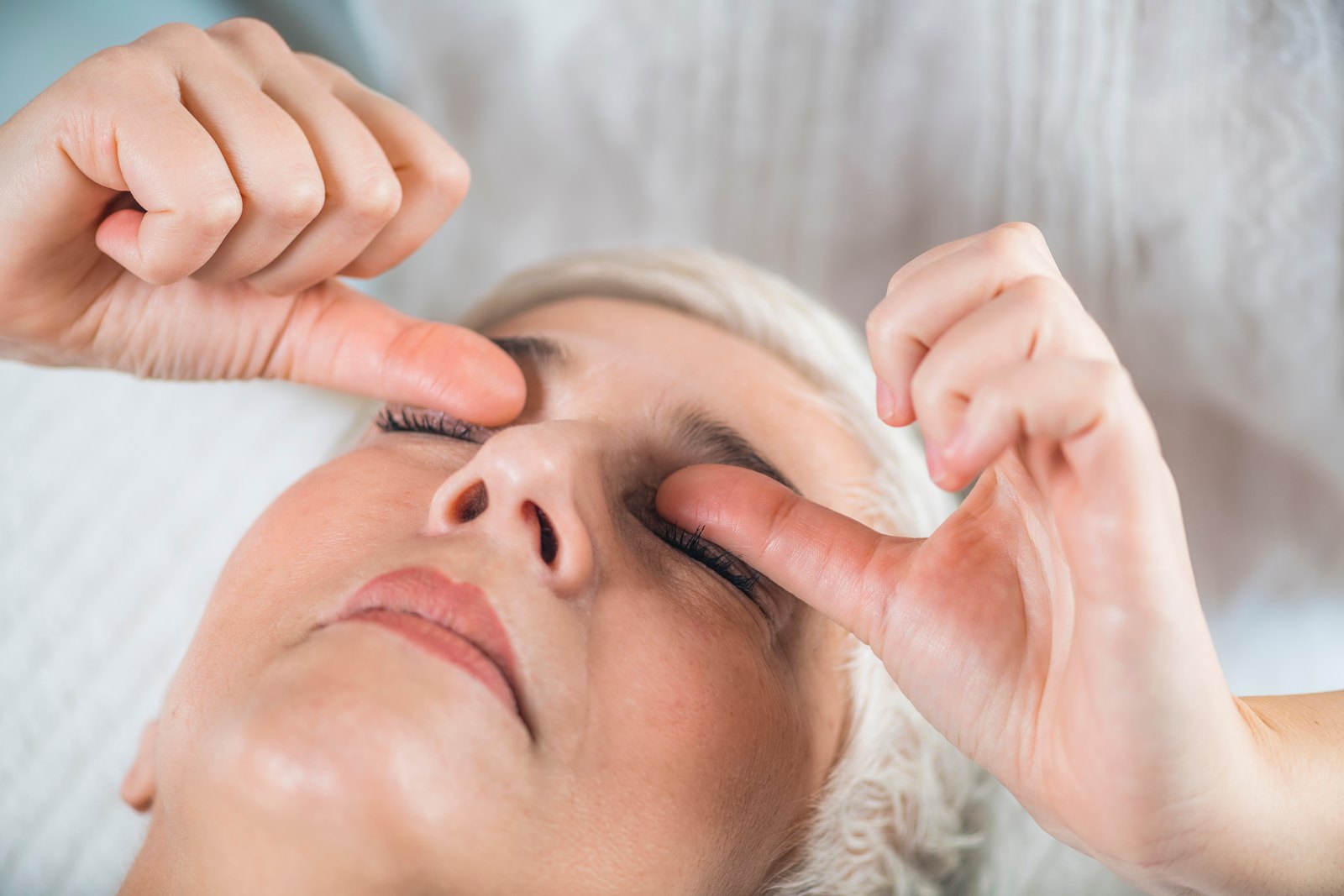
Netra tarpana, in which warmed medicated ghee is held over the eye within a dough ring, is used in our clinic for surface dryness and eye strain. It does not enter the lens and has no effect on a cataract. When it is offered around cataract care, it is offered for comfort on a clear-eyed basis, and it is never performed on an eye with active infection or in the immediate postoperative period.
Diet and Metabolic Support
Dietary work has its strongest justification in diabetes-related cataract, where glycemic control affects both the speed of lens change and the risk of macular edema after surgery. A consistent eating pattern, weight management and coordination with your physician are worth more here than any single herb or supplement.
Sleep, Stress and Surgical Recovery
Most people are anxious before eye surgery, and anxiety makes lying still under drapes harder. Breathing practice, regular sleep timing and a clear explanation of what the operation feels like reduce that. This is ordinary supportive care, and it is one of the few places where our integrative work reliably changes a patient's experience.
After Surgery: Comfort Without Interference
For the first weeks after surgery the eye belongs to the surgical protocol. Prescribed antibiotic and anti-inflammatory drops are taken exactly as instructed. We do not apply oils, medicated ghee, herbal washes or any topical preparation to an operated eye. Supportive work in that period is limited to diet, sleep, glare management and general comfort.
Looking After the Fellow Eye
After the first eye is done, attention shifts to the second. Ultraviolet protection, stopping smoking, reviewing whether long-term steroids remain necessary, and keeping diabetes controlled are all worth doing. None of this guarantees the second eye escapes surgery, but the risk-factor evidence for smoking and ultraviolet exposure is strong enough to act on.
What We Will Not Do
We do not use kajal, surma or any traditional eye cosmetic, several of which have been shown to contain lead. We do not use unregulated or imported Ayurvedic preparations of unverified composition; testing of such products has repeatedly found lead, mercury and arsenic. We do not recommend home-made eye washes, herbal decoctions dripped into the eye, or any so-called cataract-dissolving drop. And we do not, under any circumstances, support delaying surgery so that an alternative treatment can be tried first.
Treatment Options, Honestly Compared
New Spectacles and Better Lighting
For early cataract this is the right answer. An updated prescription, stronger and better-placed task lighting, matte reading surfaces and anti-reflective coatings can restore comfortable function for a year or more. It changes nothing in the lens, but it postpones surgery legitimately, which a herbal preparation does not.
Phacoemulsification with Intraocular Lens Implantation
This is the standard operation in most of the world. Through an incision of two to three millimeters the surgeon opens the front of the capsule, breaks up the lens with ultrasound, aspirates it, and places a foldable implant in the capsular bag. It usually takes fifteen to twenty minutes under local anesthesia. Large European registry data covering hundreds of thousands of procedures show very high rates of good visual outcome, with serious complications in a small fraction of cases.
Manual Small-Incision Cataract Surgery
In very dense or mature cataracts, and in high-volume settings without phacoemulsification equipment, a manual sutureless technique through a slightly larger incision is used. Visual outcomes are close to phacoemulsification in trained hands, with somewhat slower refractive settling. Netra Eye Institute does not perform cataract surgery; we refer to ophthalmic surgical colleagues and share the workup.
Femtosecond Laser-Assisted Cataract Surgery
A laser performs the capsular opening and some lens fragmentation before the surgeon completes the case. It is marketed heavily and costs more. Across the published comparisons it has not shown a convincing advantage in final visual acuity or complication rate over conventional phacoemulsification for routine cataracts. It is a reasonable option, not a necessary one.
Nd:YAG Capsulotomy for Posterior Capsule Opacification
Months or years after successful surgery the capsule left in place to support the implant can cloud, and vision dims again. This is not the cataract returning. A brief outpatient laser opens a clear window in the capsule and vision is usually restored within a day. It carries a small risk of pressure rise, retinal tear and implant pitting, so it is done when symptoms justify it.
Cataract Drops and Couching: Two Things That Do Not Work
Drops sold as dissolving cataract have no supporting human evidence; the Cochrane assessment of N-acetylcarnosine found none, and laboratory findings on lanosterol have never produced a usable human treatment. Couching, in which the cloudy lens is pushed backward into the vitreous with a needle, is still practiced in parts of West Africa and South Asia. Population studies of couched eyes report blindness in the majority, from glaucoma, retinal detachment and inflammation. It is the clearest illustration available of what happens when a traditional practice is allowed to substitute for surgery.
Building a Daily Plan That Protects the Eye You Have
Ultraviolet Protection You Will Actually Wear
Choose wrap-around sunglasses rated for full ultraviolet-A and ultraviolet-B blocking, and add a brimmed hat outdoors. Dark lenses without ultraviolet filtration are worse than none, because they widen the pupil. The exposure that matters accumulates over decades of ordinary days, not just bright holidays.
Stopping Tobacco
Smoking is the strongest modifiable risk factor for cataract, with a clear dose relationship in meta-analysis. Risk falls after stopping, though the excess takes many years to decline toward that of people who never smoked. This is the single most valuable change available for the fellow eye.
Glycemic Control
If you have diabetes, cataract arrives earlier and progresses faster, and the postoperative course is less straightforward. Working with your physician on glucose and blood pressure protects the retina as well as the lens, and stabilizes the refraction enough for reliable biometry.
Food First, Supplements Second
A diet with plenty of vegetables, fruit, legumes and fish is sensible for eyes and everything else. The Cochrane review of antioxidant vitamin supplementation found no evidence that vitamin E, beta-carotene or vitamin C prevents or slows age-related cataract. Buy food rather than pills, and be skeptical of any supplement marketed specifically for cataract.
Lighting and Glare Indoors
Bring light close to the task rather than brightening the whole room. Position lamps behind and to the side so the beam falls on the page, not the eye. Reduce reflective glare from glass tabletops and polished floors, and keep contrast high between steps, thresholds and furniture edges.
Driving Honestly
Night driving fails first. If headlights now produce starbursts wide enough to hide a pedestrian, stop driving after dark and say so at your appointment. Quietly restricting your own driving is a common way of hiding from the decision about surgery, and it carries real risk.
Keeping the Appointment Schedule
Attend reviews even when nothing seems to have changed, particularly if you take long-term steroids, have diabetes, or have been told your drainage angle is narrow. Monitoring exists to catch the transitions that are silent, and to make sure surgery happens while it is still straightforward.
Red Flags That Need Urgent Care
Cataract itself is painless and gradual. Any of the following means something other than simple lens clouding is happening, and needs same-day ophthalmic assessment rather than a clinic appointment next month.
- Sudden loss of vision in one eye, over minutes or hours rather than months
- A severe, aching eye with redness, haloes around lights, nausea or vomiting, which may be angle closure or a swollen lens raising pressure
- A shower of new floaters, flashes of light, or a shadow or curtain moving across the field
- A white pupil in a child, or in an adult with a lens that has gone completely white
- Eye pain with light sensitivity and blurring, suggesting inflammation inside the eye
- Any blunt or penetrating injury to the eye, whether or not vision seems affected
- Rapidly worsening vision over days or weeks, which cataract does not usually cause
- Double vision in one eye that persists when the other eye is covered, or new double vision with both eyes open
- Increasing pain, redness or falling vision at any point after cataract surgery, which must be treated as possible endophthalmitis until excluded
- Loss of part of the visual field, particularly if one half or one quadrant has gone
If any of these apply, contact an ophthalmologist or attend an emergency eye service immediately. Do not put anything into the eye, do not wait to see whether it settles overnight, and do not attend a complementary medicine appointment instead.
Frequently Asked Questions on Cataract
No. No topical preparation of any kind has been shown to clear an established cataract in humans. The most-studied candidate, N-acetylcarnosine, was assessed by Cochrane reviewers who found the trials too poor and too conflicted to support any claim of benefit. Laboratory work on lanosterol has produced interesting biology and no usable treatment. Drops marketed for cataract in any tradition are selling delay, and delay is the harmful part.
Not for lens opacity. The published herbal eye-drop trials from Indian centers looked at conjunctivitis and non-specific ocular discomfort, involved small numbers, and did not measure cataract progression. We offer Ayurvedic care for surface comfort and lifestyle support with that limitation stated openly, because pretending otherwise would encourage people to postpone the one treatment that works.
There is no fixed deadline, and mild cataract can reasonably be managed with new spectacles and better lighting. The point to act is when vision interferes with driving, reading, work or safe walking, or when the lens is dense enough that your angle is narrowing. Waiting until the lens is mature makes the operation harder and risks a painful pressure emergency, so waiting has a cost even though it is not an emergency today.
The evidence says no. Cochrane reviewers assessed randomized trials of vitamin E, beta-carotene and vitamin C and found no reduction in cataract development or progression. Eating well is worth doing for many reasons. Buying supplements specifically to hold off cataract surgery is not supported, and it can create a false sense that something is being done.
The cataract itself cannot; the natural lens has been removed. What can happen is that the thin capsule retained to hold the implant becomes cloudy, usually months to years later, and vision dims in a way that feels like the original problem. This is treated with a short outpatient Nd:YAG laser that opens the capsule, and vision generally returns quickly.
Selected References for Scientific Support
- Miller KM, Oetting TA, Tweeten JP, et al. Cataract in the Adult Eye Preferred Practice Pattern. Ophthalmology. 2022. PubMed
- Lundström M, Dickman M, Henry Y, et al. Changing practice patterns in European cataract surgery as reflected in the European Registry of Quality Outcomes for Cataract and Refractive Surgery 2008 to 2017. J Cataract Refract Surg. 2021. PubMed
- Dandona L, Dandona R, Naduvilath TJ, et al. Population-based assessment of the outcome of cataract surgery in an urban population in southern India. Am J Ophthalmol. 1999. PubMed
- Zhao L, Chen XJ, Zhu J, et al. Lanosterol reverses protein aggregation in cataracts. Nature. 2015. PubMed
- Dubois VD, Bastawrous A. N-acetylcarnosine (NAC) drops for age-related cataract. Cochrane Database Syst Rev. 2017. PubMed
- Mathew MC, Ervin AM, Tao J, et al. Antioxidant vitamin supplementation for preventing and slowing the progression of age-related cataract. Cochrane Database Syst Rev. 2012. PubMed
- Wang H, Li Y, Wong MOM, et al. Incidence and associated factors of Nd:YAG posterior capsulotomy after premium IOL implantation surgery: a systematic review and meta-analysis. Int J Surg. 2026. PubMed
- Hage A, Bastelica P, Majoulet A, et al. Changes in rates of endophthalmitis after cataract surgery over the last 23 years. J Fr Ophtalmol. 2025. PubMed
- Rathi VM, Sharma S, Das T, et al. Endophthalmitis Prophylaxis Study, Report 2: Intracameral antibiotic prophylaxis with or without postoperative topical antibiotic in cataract surgery. Indian J Ophthalmol. 2020. PubMed
- Lindblad BE, Håkansson N, Wolk A. Smoking cessation and the risk of cataract: a prospective cohort study of cataract extraction among men. JAMA Ophthalmol. 2014. PubMed
- Beltrán-Zambrano E, García-Lozada D, Ibáñez-Pinilla E. Risk of cataract in smokers: A meta-analysis of observational studies. Arch Soc Esp Oftalmol (Engl Ed). 2019. PubMed
- Miyashita H, Hatsusaka N, Shibuya E, et al. Association between ultraviolet radiation exposure dose and cataract in Han people living in China and Taiwan: A cross-sectional study. PLoS One. 2019. PubMed
- Gilbert CE, Murthy GV, Sivasubramaniam S, et al. Couching in Nigeria: prevalence, risk factors and visual acuity outcomes. Ophthalmic Epidemiol. 2010. PubMed
- Oyediji FJ, Ramyil AV. Traditional Eye Practices: Economics and Visual Status of Users in North Central Nigeria. Niger J Clin Pract. 2024. PubMed
- Chukwukwe IO, Ekwufulem ON, Chikezie TF, et al. Traditional Eye Remedies and Ocular Complications in Sub-Saharan Africa: A Systematic Review. Niger Med J. 2026. PubMed
- Biswas NR, Gupta SK, Das GK, et al. Evaluation of Ophthacare eye drops: a herbal formulation in the management of various ophthalmic disorders. Phytother Res. 2001. PubMed
- Biswas NR, Beri S, Das GK, et al. Comparative double blind multicentric randomised placebo controlled clinical trial of a herbal preparation of eye drops in some ocular ailments. J Indian Med Assoc. 1996. PubMed
- Saper RB, Phillips RS, Sehgal A, et al. Lead, mercury, and arsenic in US- and Indian-manufactured Ayurvedic medicines sold via the Internet. JAMA. 2008. PubMed
- Mukhopadhyay S, Abraham SE, Holla B, et al. Heavy Metals in Indian Traditional Systems of Medicine: A Systematic Scoping Review and Recommendations for Integrative Medicine Practice. J Altern Complement Med. 2021. PubMed