Blog
September 15, 2026
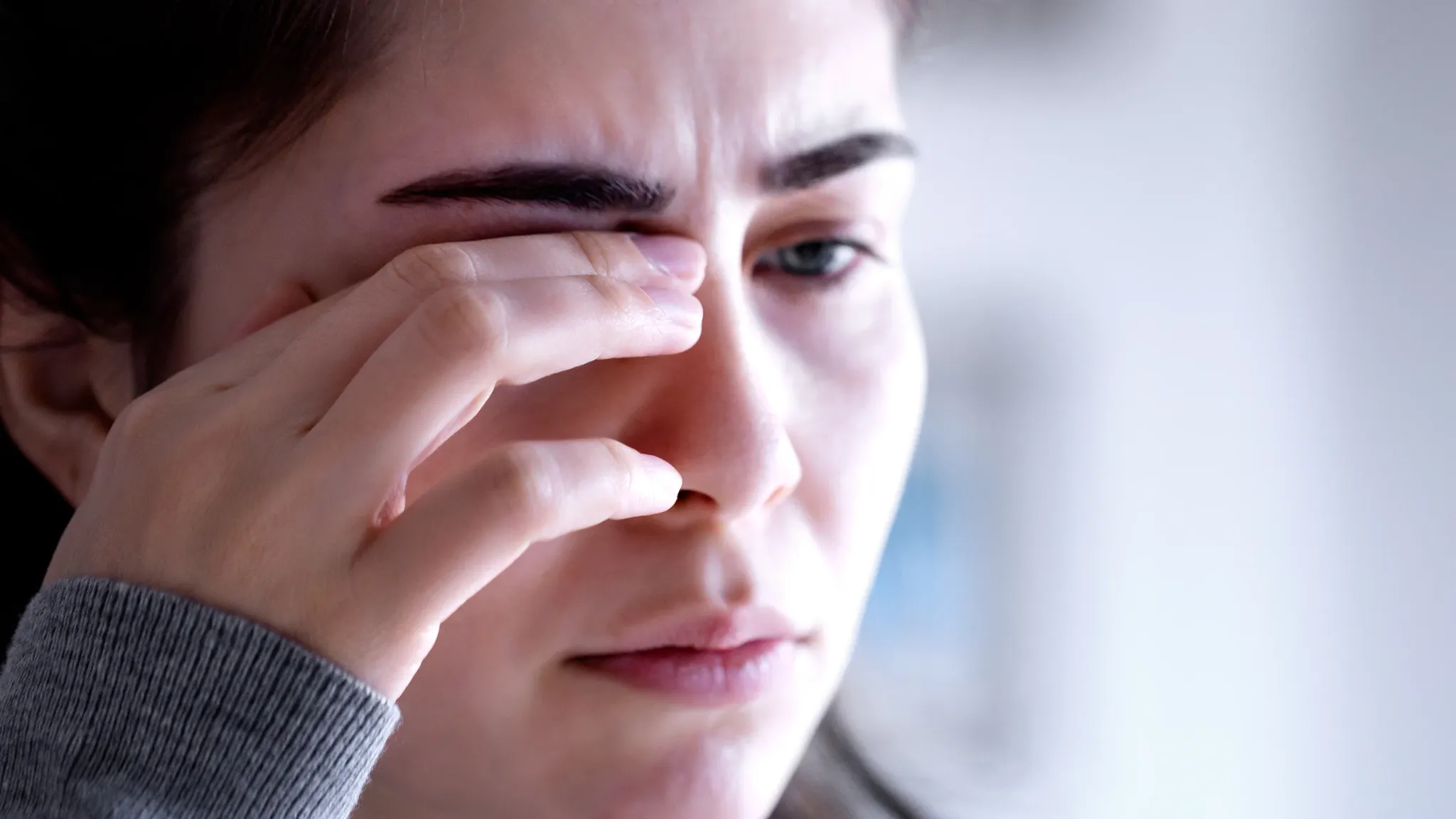
Waking up with dry eyes can happen when the tear film becomes unstable overnight, the eyelids do not close fully or moving air reaches the eye during sleep. Eyelid-gland disease, reduced tear production and some medicines can contribute. However, sharp pain when the eye first opens, persistent blurred vision or a painful red eye may have another cause. The useful next step is to identify the pattern and have recurring symptoms assessed, then choose care that matches the findings.
Morning dryness and dry eyes at night are related complaints, but they are not always the same problem. Evening discomfort may build during a day of screen use or contact-lens wear. Waking discomfort directs attention toward the sleeping environment, eyelid closure and conditions that affect the cornea overnight. This guide explains both patterns, practical measures to discuss with your clinician and the symptoms that should change the urgency of care.
Seek urgent assessment for substantial or sudden loss of vision, significant eye pain, pronounced light sensitivity, a painful red eye or symptoms after an injury or recent eye operation. Contact-lens wear makes pain and redness especially important because a corneal infection needs prompt treatment. New flashes, floaters or a curtain in the vision require a retinal assessment and should not be attributed to a dry surface. [1,7,10]
Repeated sharp pain as the eyelid opens can occur with recurrent corneal erosion, in which the corneal surface does not adhere normally. Tearing and light sensitivity may accompany the pain. A previous scratch is relevant, but an erosion can occur in other circumstances too. Do not repeatedly force the eye open, rub it or assume that an additional bedtime supplement will solve the problem. An eye examination is needed to distinguish an erosion from infection, ordinary surface irritation and other causes. [4]
If there are no acute warning signs but symptoms recur, arrange a routine eye appointment rather than continually adding products. Increasing frequency, one eye consistently being worse or a gradual decline in visual function deserves attention. The absence of severe pain does not establish that the surface is healthy, particularly when corneal sensation is reduced. A personal triage recommendation from an eye-care service is more reliable than a general article when the symptoms are uncertain.
During the day, blinking distributes tears over the cornea, renews the optical surface and moves fluid toward the drainage openings. During sleep, that regular blinking stops and tear secretion changes. Closed eyelids normally help protect the surface from evaporation. If closure is incomplete or the surface is already unstable, the overnight conditions can leave the eye uncomfortable when normal blinking resumes.
The tear film depends on more than water. Eyelid oil glands, the lacrimal system, surface cells, nerves and eyelid position work together. A problem in one part may be partly compensated during the day but become noticeable after several hours of sleep. This is why an eye can water on waking and still have an unstable tear film: irritation may trigger reflex tears without correcting the underlying problem.
Morning symptoms do not prove that you slept poorly or failed to drink enough water. They also do not identify one universal deficiency. The explanation may involve the lids, the environment, medicines, a systemic condition or an entirely different corneal disorder. A useful assessment connects the timing with examination findings instead of treating the clock as a diagnosis.
Notice when the discomfort begins to change. Does gentle blinking improve it within a short period? Does a painful episode occur specifically with the first opening? Does a haze persist well into the morning? Does the problem reappear later during screen work? These observations help organize the consultation, even though none can safely exclude disease on its own.
Dry eyes at night can describe symptoms before going to bed, symptoms that wake a person from sleep or symptoms noticed on waking. Tell the clinician which meaning applies. “My eyes are dry at night” is less precise than “they burn during the last hour of computer work” or “the left eye hurts when I first open it in the morning.”
Discomfort before bed can reflect the accumulated demands of the day. Long contact-lens wear, concentrated visual work, incomplete blinking, air conditioning and an untreated lid problem may all contribute. The sleeping environment may be normal, so adding an overnight product alone can leave the daytime driver unchanged. The assessment should include what happens in the hours leading up to sleep.
Symptoms that wake you repeatedly raise different practical questions. Is a fan blowing across the face? Is a breathing-mask leak noticeable? Do the lids close comfortably? Does an established eye treatment wear off? Pain that disrupts sleep deserves clinical attention rather than an assumption that an ordinary dryness routine is sufficient.
Both patterns can occur in the same person. For example, an unstable surface after a demanding workday may also tolerate overnight exposure poorly. The treatment plan then needs to address both contributors without assuming that one product can compensate for every exposure. A short description of the whole day is often more useful than a long list of remedies already tried.
Nocturnal lagophthalmos means that the eyelids do not close completely during sleep. Even a limited gap can allow exposure in a susceptible eye. Eyelid anatomy, previous surgery, facial nerve function, thyroid-related eye changes and other factors can affect closure. Some people are unaware of the problem until someone notices it or an examination raises the possibility.
Research has linked reported nocturnal lagophthalmos with dry-eye symptoms and poorer sleep-related outcomes. A 2020 survey provides evidence of an association, but a questionnaire cannot establish the cause of one person’s symptoms or measure their overnight corneal exposure. The finding supports considering lid closure during assessment; it does not justify diagnosing everyone who wakes with dry eyes as having lagophthalmos. [3]
The clinician can examine eyelid position, blink completeness and the surface pattern of irritation. Closing the eyes deliberately while awake does not perfectly reproduce sleep, so the history still matters. If a family member has already noticed incomplete closure, mention it. There is no need to arrange intrusive nightly recordings or repeatedly wake someone to check their eyes before seeking an assessment.
Treatment depends on the cause and severity. Lubrication, a protective device or a lid-focused intervention may be considered by the responsible clinician. Do not improvise tight masks, glue or eyelid taping from an online demonstration. A protective method that presses on the eye, irritates the skin or fails to close the lid can create another problem. Ask for a demonstrated, individualized technique when mechanical protection is recommended.
Meibomian glands deliver oil through openings along the upper and lower eyelids. Their secretions contribute to tear-film stability. When the glands are obstructed or function poorly, tears can become unstable even when watery secretion is adequate. MGD can therefore contribute to dry, gritty or intermittently blurred eyes at several times of day, including morning.
Clues include a history of lid irritation, recurrent lumps, contact-lens intolerance or a clinician’s previous finding of altered gland secretion. Crusting alone does not prove MGD, and a photograph of the lid margin does not establish its severity. The examination may need to distinguish gland obstruction from anterior blepharitis, allergy, a localized eyelid lesion and other conditions.
A warm compress or lid-care routine may be useful when the diagnosis supports it. Such care is directed at the glands; it does not mechanically close an exposed eyelid or treat every source of morning pain. A person with both MGD and incomplete closure may need a plan addressing each contributor. The response to one measure should be interpreted in that broader context.
Netra’s guide to blocked eyelid glands and dry-eye testing explains gland expression, meibography and tear-film measurements in greater detail. The important question for morning symptoms is whether the findings actually explain the overnight pattern. A dramatic gland image alone does not show that an expensive procedure is the next necessary step.
Some people produce insufficient watery tears. Others have a mixture of low secretion and excessive evaporation. Persistent dryness throughout the day, repeated surface injury or dry mouth may lead the clinician to investigate a wider problem. Sjögren disease is one possible cause, but symptoms alone cannot diagnose it, and many people with dry eyes do not have an autoimmune disorder.
Mention joint symptoms, salivary-gland swelling, unusual dental problems, fatigue and relevant medical diagnoses when they are present. The eye clinician may coordinate with primary care or rheumatology if the pattern warrants it. A single tear test is not a substitute for the systemic assessment, and a normal result at one visit does not settle every possible cause of recurrent symptoms.
Medicines can also affect the surface through different mechanisms. Bring a complete list of oral medicines, eye drops, inhalers and supplements, including occasional allergy or sleep products. The timing of a new medicine relative to symptoms may be informative. Do not stop a prescribed medicine because dryness is listed as a possible adverse effect; the prescriber can consider the reason for treatment and suitable alternatives.
Hydration belongs in this history, particularly after illness, heat exposure or a change in fluid intake. However, drinking excessive water is not an established treatment for blocked glands, eyelid exposure or autoimmune tear deficiency. Follow any fluid restriction or other medical advice already provided. A sustainable plan should address the actual mechanism rather than assume that every morning symptom is dehydration.
If you use CPAP or another prescribed breathing device, tell both the eye clinician and the sleep-care team about morning symptoms. Air escaping near the upper edge of a mask can reach the ocular surface and may contribute to discomfort. The presence of a mask does not prove it is the cause, because sleep disorders and eye-surface conditions can coexist for other reasons.
Notice whether you feel airflow near one eye, hear an unusual leak or wake with the mask displaced. Bring information about the mask type and recent fit changes to the sleep-care team. Their assessment can consider fit, equipment condition, leak data and the treatment’s effectiveness. This is more useful than tightening the straps repeatedly without knowing where the leak originates.
Do not stop prescribed sleep-apnea treatment or change pressure settings on your own to test an eye theory. Ask the responsible team about safe adjustments while the ocular-surface problem is assessed. Eye lubrication may improve comfort, but it should not be used indefinitely to compensate for a correctable equipment problem.
Some people have eyelid laxity or other anatomy that deserves examination alongside the mask review. If one side is consistently worse, or irritation persists after an appropriate fit adjustment, report that rather than assuming the equipment question is resolved. The eye and sleep teams can address their respective findings without treating the problem as belonging exclusively to one specialty.
Air movement can increase discomfort when it reaches an exposed or vulnerable ocular surface. A ceiling fan, bedside fan, heater or air-conditioning vent may affect one sleeping position more than another. Start by observing the direction of airflow. Redirecting a vent can be simpler and less costly than adding a new eye-care product.
A humidifier may be worth considering if the room air is genuinely dry. It is not automatically useful in a room that is already humid, and excessive moisture creates maintenance and dampness problems. Keep the device clean, follow its water and servicing instructions and avoid wetting surrounding materials. EPA guidance recommends keeping relative humidity at or below 50 percent. [6]
Do not aim mist directly at the face or assume that adding fragrance improves the effect on the eyes. Comfortable air is the objective. A room should still be adequately ventilated and suitable for sleep. If condensation or a musty smell develops, reconsider the settings and room conditions rather than running the device harder.
Change one environmental factor at a time when it is reasonable to do so. Otherwise, if a new mask, humidifier, lubricant and supplement all begin together, the source of any improvement becomes difficult to understand. An environmental experiment is appropriate for familiar, nonurgent symptoms; it should not postpone an examination for pain, persistent visual change or a worsening pattern.
Sleeping or napping in contact lenses increases the risk of contact-lens-related infection, including when lenses are prescribed for extended wear. The CDC recommends avoiding overnight wear unless specifically directed by an eye-care provider and emphasizes correct cleaning and replacement. Contact lenses should also be kept away from water. These precautions protect against infection; they are not simply comfort tips. [7]
If you wake with pain, redness, light sensitivity or blurred vision after sleeping in lenses, contact an eye-care service promptly. Do not assume that the lens has merely made the eye dry. Use glasses and avoid putting a lens back into a painful or red eye while awaiting advice. Do not force a lens off the surface or use tap water to loosen it.
Even people who remove lenses every night can have morning symptoms related to an underlying surface condition or an unsuitable wearing pattern. Discuss the lens type, fit, hours of wear, solution and any recent changes. A switch to a different lens or care product should be guided by the examination rather than a claim that one material solves dry eye for everyone.
Bring backup glasses when travelling, and plan for a shorter wearing day when the eyes are uncomfortable. A lubricant must be compatible with the lenses if it is used during wear. Bedtime ointments and other treatments can have different instructions, so ask explicitly when lenses may be inserted again. The goal is a safe lens routine alongside treatment of the surface problem.
An unstable tear film can cause vision to fluctuate, and blinking may briefly improve the image. That response is a useful observation, not confirmation of a diagnosis. Corneal disease, a glasses prescription, cataract and retinal conditions can coexist with dryness. Tell the clinician how long the blur lasts and whether the sight returns fully to its usual level.
Fuchs endothelial dystrophy is one example of a condition that can produce blur on waking which improves as the day progresses. Its mechanism involves the cornea’s ability to regulate fluid, rather than simply a lack of tears on the surface. A prolonged morning haze therefore deserves examination even if it gradually clears. The National Eye Institute describes this time-of-day pattern in its information on corneal dystrophies. [8]
Recurrent corneal erosion is another important distinction, particularly when the main complaint is sharp pain with the first opening. Allergy, infection and eyelid disorders can also produce morning redness or discharge. A description such as “my eyes are dry when I wake up” may be the starting point, but the clinician should clarify the actual sensation and findings before choosing treatment.
Avoid using repeated home tests to reassure yourself about a worsening symptom. A temporarily clearer image after a drop does not rule out another disease. If sight is unreliable, postpone driving and other activities that depend on clear vision until it is safe to resume them. Persistent change deserves a timely eye assessment, even in someone who has had uncomplicated dry eye for years.
Begin with the care already prescribed. Check whether each product is intended for daytime, bedtime or a specific condition, and whether the sequence matters. Keep the routine short enough to maintain. If the instructions involve several drops or a contact-lens schedule, ask for a written sequence rather than guessing which treatment should come first.
Remove contact lenses as directed and clean your hands before handling lenses or eye products. Remove eye makeup gently using a suitable method, avoiding vigorous rubbing and residue along an irritated lid margin. If warm compresses or lid cleansing are part of the plan, follow the demonstrated technique and device instructions. More heat or more pressure does not make the routine more effective.
Review the sleeping environment before adding another product. Redirect airflow that reaches the face, check whether a breathing mask is leaking and keep any humidifier appropriately maintained. These steps address plausible exposures while leaving medical treatment intact. A comfortable room can still be ventilated and cool; the objective is to avoid a direct drying stream across the eyes.
Use a bedtime lubricant only according to the product directions and the individual plan. Do not substitute a household oil or homemade preparation. If a gel or ointment blurs vision, allow for that effect before reading, moving through dim spaces or performing tasks that require clear sight. Bedtime care should fit the person’s needs, including anyone who must wake during the night for work or caregiving.
For an established, mild pattern without warning signs, allow the eyes to open gently and blink normally. Avoid rubbing, pulling at the eyelids or pressing on the eyeball. If your clinician has recommended a morning lubricant, use it as directed. The aim is to support the surface comfortably, not to force it through a painful episode.
Notice whether the symptoms settle in their usual way. If the pattern is more painful, vision is worse, one eye is newly affected or the expected improvement does not occur, contact the eye-care service. A routine that worked before should not become a reason to overlook a change. Severe first-opening pain should be evaluated for a corneal problem rather than repeatedly managed as ordinary dryness.
Do not use leftover antibiotic, steroid or numbing drops without current clinical advice. Their purpose and risks differ from those of lubricants. In particular, a product that removes pain can make it harder to appreciate what is happening without treating the cause. Bring any previously prescribed medicines to the appointment so the clinician can explain their appropriate role.
Once the eyes are comfortable, note only the information likely to help: which eye was affected, the main symptom, how long it lasted and any unusual overnight exposure. A brief record is enough. Repeated photographs and constant symptom checking can make a manageable routine burdensome without adding useful diagnostic information.
Lubricants vary in thickness, ingredients and persistence. A preparation that is comfortable during daytime tasks may not last through the night, while a thicker product may interfere with vision after application. Preservative exposure, allergies, contact-lens compatibility and the condition of the corneal surface can affect the choice. There is no single best nighttime product for every cause of morning dryness.
Ask what the preparation is expected to do. A lubricant can reduce friction or protect the surface, but it does not correct every eyelid-position problem, treat an infection or remove the need for prescription anti-inflammatory care when that is indicated. If you need increasingly frequent application, review the diagnosis and treatment plan rather than simply adding more bottles.
Handle products according to their instructions and keep the tip away from fingers, lashes and the eye. Check expiry and any discard period after opening. The FDA emphasizes that ophthalmic products need to be sterile because contamination can cause serious harm. Household ingredients and a sterile medicinal formulation containing a related substance are not interchangeable. [9]
When a product causes persistent irritation, tell the clinician exactly which one was used and how the reaction developed. Brief optical blur from a thick formulation differs from worsening pain or a sustained reduction in vision. If several products are in use, a written list can help identify duplication, incompatibility or a treatment that no longer serves a clear purpose.
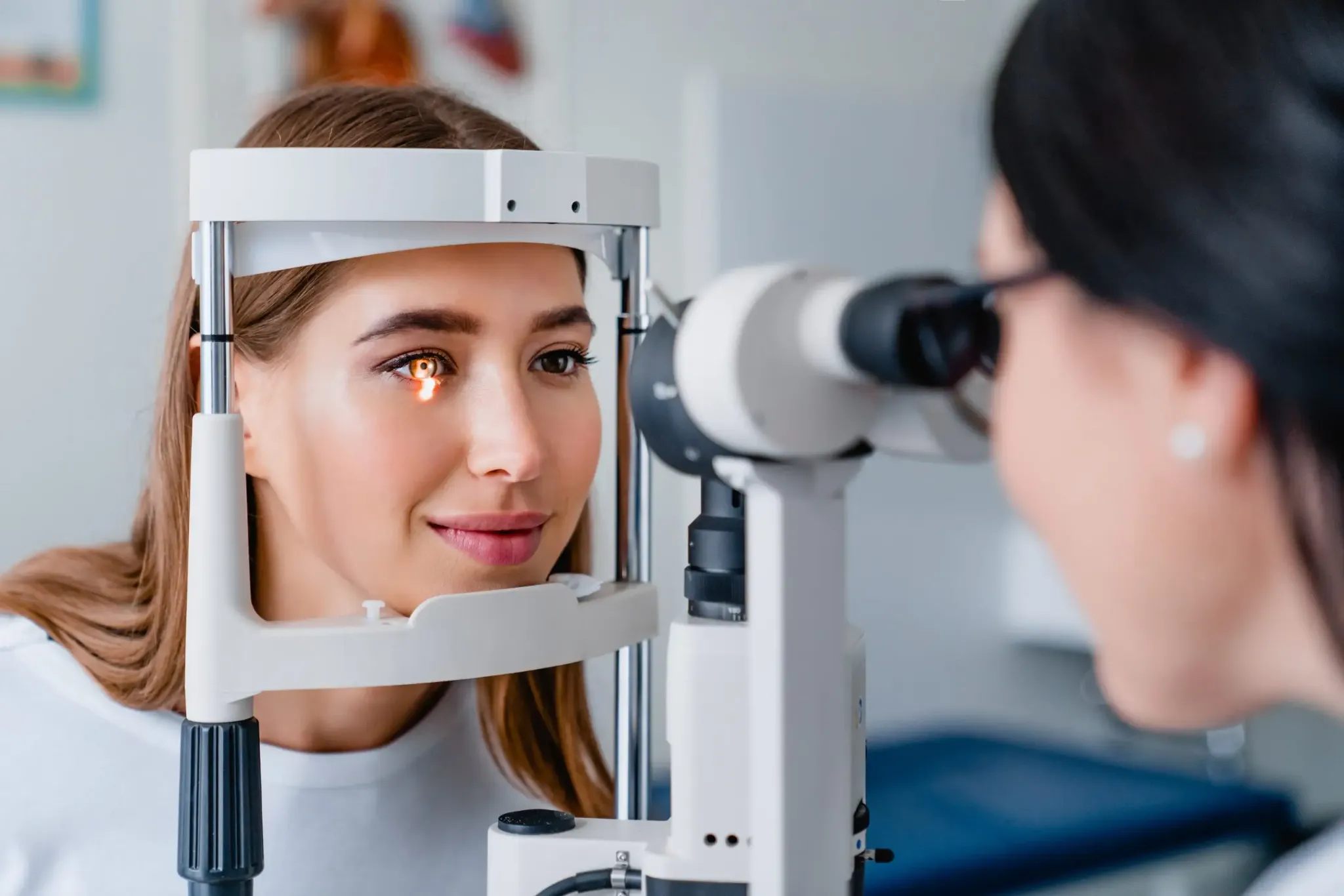
The consultation should begin with the symptom pattern and safety assessment. Visual acuity, eyelid position, blink completeness and slit-lamp examination help identify surface injury and alternative diagnoses. The clinician may assess gland secretion, tear-film breakup, staining and tear volume, selecting tests that answer the actual clinical question. Not every person needs every available device test. [2]
Morning complaints make it especially useful to discuss sleep, airflow, contact lenses and first-opening pain. Tell the clinician about previous corneal scratches or eye surgery even if they occurred some time ago. If symptoms are worse at a particular time, ask whether an appointment during that period or a record of the pattern would add useful information.
Tests sample a changing system. Recent drops, bright light, reflex tearing and the order of examination can influence measurements. A difference between two visits does not automatically mean that a treatment worked or that one test was wrong. Ask the clinician to explain which findings are reliable enough to guide a decision and what will be repeated at follow-up.
The resulting plan may combine surface lubrication, treatment of lid disease, anti-inflammatory therapy, protection from exposure or referral for another condition. Some causes require care beyond a routine dry-eye clinic. The important outcome is a coherent explanation: what is causing the symptoms, what each treatment addresses and what would lead the clinician to reconsider the diagnosis.
Choose one or two outcomes that matter in daily life. Examples include opening the eyes comfortably, reading after breakfast without repeated blur or sleeping without waking because of irritation. A simple symptom rating can help, but a number alone does not capture whether the routine is useful and sustainable.
For a short agreed period, record the main morning symptom, approximate duration, relevant overnight exposure and treatment used. Keep the wording consistent. “Burning for about fifteen minutes after waking” is easier to compare than a different collection of adjectives each day. Do not record private health details in a public app or share identifiable symptom logs as marketing material.
Compare reasonably similar situations. A new routine introduced during a holiday may appear successful partly because screen use, climate and stress changed at the same time. That does not make the improvement unreal; it means its cause needs careful interpretation. Tell the clinician about those changes so that a helpful measure is not credited with effects it may not have produced.
At follow-up, include burden and adverse effects. A treatment may improve comfort but be too irritating to the skin, too expensive or impractical for the person’s schedule. The plan can then be adjusted. Better care does not necessarily mean more steps; it can mean identifying the few measures that address the findings and maintaining them consistently.
Start by checking what the plan was intended to address. A lubricant may reduce friction but leave an eyelid gap untreated. A lid routine may improve secretion while an unrelated corneal condition still causes morning pain. An environmental adjustment may help at home but not explain symptoms during travel. Lack of complete relief is a reason to review the explanation, not automatically to increase the intensity of every treatment.
Bring the actual products and instructions to the review if the routine has become confusing. Similar packaging can hide differences in ingredients, concentration or purpose. The clinician can check whether the treatment was used as intended, whether a product is irritating the surface and whether another prescribed medicine complicates the schedule. This review should be practical and nonjudgmental; difficulty maintaining a routine is information about the plan’s suitability.
Discuss changes in symptoms separately from changes in test results. More comfortable mornings are valuable, but an epithelial defect still requires protection. Conversely, a better staining score may not explain persistent pain or visual difficulty. Severe symptoms with limited visible findings can require a broader assessment, including corneal sensation and other sources of ocular pain. They should not be dismissed as a failure to relax.
Sometimes the next step is a referral or a more targeted examination. Lid-position problems, recurrent erosion, significant corneal disease and suspected systemic illness may need different expertise. Ask what question the referral is meant to answer and which treatment should continue while waiting. Keep urgent return instructions clear so a routine referral does not delay assessment of a new acute change.
“Bedtime” means the beginning of the person’s main sleep period, which may occur during daylight for shift workers. Describe the actual schedule rather than fitting symptoms into a conventional morning-and-evening pattern. Bright rooms, daytime cooling systems and an irregular contact-lens routine may create practical issues that a generic nighttime checklist misses.
People who wake to care for a child, work on call or move around a dark home also need to discuss temporary blur from thicker preparations. A product that is suitable for uninterrupted sleep may be inconvenient when immediate clear sight is needed. The clinician can consider timing and alternatives while preserving the protective purpose of treatment. The best routine should work within ordinary responsibilities, not depend on an ideal night that rarely happens.
These examples are hypothetical and do not describe Netra patient outcomes. In the first, a person develops mild bilateral grittiness after moving a fan beside the bed. Examination identifies an unstable surface without an acute corneal problem. Redirecting the fan may be a useful part of the plan, but the clinician still considers any underlying lid disease rather than treating the environmental change as the entire diagnosis.
In the second, a contact-lens wearer wakes with a painful red eye and reduced vision after an unplanned night in lenses. The priority is urgent examination for a corneal complication. A humidifier, compress or natural remedy would not be an appropriate substitute for that assessment. The same phrase “dry eyes in the morning” can therefore describe a much more urgent situation.
In the third, a person has recurring sharp pain when one eyelid first opens, with a history of a previous scratch. The clinician investigates recurrent erosion and other corneal causes. The treatment and follow-up differ from a routine aimed only at evaporation. These examples illustrate why the symptom’s quality, timing and associated changes matter more than selecting a remedy by keyword.
If Netra Restoration Therapy is considered, the plan should state its proposed role alongside the established eye diagnosis. Discussion of sleep habits, environmental exposures and treatment adherence can be relevant. Any acupuncture, botanical or other intervention should be evaluated on its own evidence, suitability and risks rather than assumed effective because it is part of a named program.
Studies of an individual component do not establish that the complete program prevents overnight corneal injury or corrects eyelid closure. Likewise, improvement in general wellbeing does not prove that tear-gland structure has changed. Ask what outcome is expected, how it will be measured and what treatment remains under the responsibility of the ophthalmic or sleep-care team.
Complementary care should not delay evaluation of pain, infection, persistent blur or a systemic condition. Keep all clinicians informed about medicines, herbs and supplements. A useful integrative plan is transparent about uncertainty and coordinated with necessary treatment, with a clear opportunity to stop optional measures that do not provide meaningful benefit.
If morning dryness keeps disrupting your routine after an appropriate eye assessment, you can request a consultation with Netra to discuss whether its approach fits your needs. Bring your examination findings and current care plan so the discussion starts with what is already known. Ask who will provide each proposed service and how care will be coordinated. New pain or a significant visual change needs prompt clinical assessment rather than a routine booking.
Learn more about integrative dry-eye care at Netra and how a consultation can fit alongside your existing eye-care plan.
Sleep duration does not show whether the eyelids closed completely, the tear film remained stable or airflow reached the surface. A person can sleep for an adequate period and still have an ocular-surface problem. Describe the overnight environment and the morning pattern so the assessment can investigate the relevant causes.
Dehydration can be relevant, particularly after illness, heavy sweating or reduced intake, but it is one possible contributor. Adequate hydration does not rule out MGD, exposure, medication effects or another condition. Follow individual fluid advice and avoid excessive water intake as an experiment to cure recurring eye symptoms.
A general sleep mask blocks light and may not close the eyelids or protect the ocular surface in a controlled way. A device intended for a specific exposure problem needs appropriate fit and clinical guidance. Avoid tight pressure on the eyes and ask whether the proposed device addresses the findings in your case.
That depends on the diagnosis and prescribed routine. Warmth can be relevant to suitable obstructive MGD, but it is not a universal response to morning pain or redness. Use the recommended method and discuss poor tolerance or lack of benefit instead of increasing heat or pressure.
Yes, symptoms can be asymmetric, but consistent one-sided discomfort deserves examination. Eyelid position, local corneal disease, airflow and other conditions can differ between eyes. Do not assume that a unilateral painful episode has the same explanation as previously diagnosed dryness in both eyes.
The appropriate interval depends on the cause and treatment. An environmental change may alter comfort quickly, while a plan for inflammation or a corneal condition needs a clinician-defined review. Ask what early response is expected, what symptoms require earlier contact and when lack of improvement should trigger reassessment.
Bring your medicine and product list, contact-lens details, relevant previous eye reports and a short description of the morning pattern. Include breathing-device information when applicable. You do not need to diagnose yourself or purchase tests beforehand. The clinician should explain which findings matter and how they connect to your symptoms.
Ask for a plan that specifies the purpose of each treatment, the sequence of any products, the follow-up interval and the changes that require urgent contact. If Netra cannot provide a particular examination or treatment, ask about coordination with the appropriate ophthalmologist or other clinician. Access to the right assessment is more important than keeping every part of care within one program.
For further detail, read Netra’s guides to blocked eyelid glands, dry eye and blurred vision, and natural dry-eye care. Together, they explain the testing, optical effects and daily habits that may complement a plan for morning symptoms. Recurring discomfort deserves an explanation, and a clear diagnosis makes it possible to choose a routine with a defined purpose.
This article provides general education and does not replace an individual eye examination, diagnosis or treatment plan. Seek prompt clinical advice for new pain, a red eye with reduced vision or a significant visual change.