Search conditions, treatments, research reviews and articles. Press Enter to see all results, Esc to close.
Search conditions, treatments, research reviews and articles. Press Enter to see all results, Esc to close.

Blog
November 11, 2026
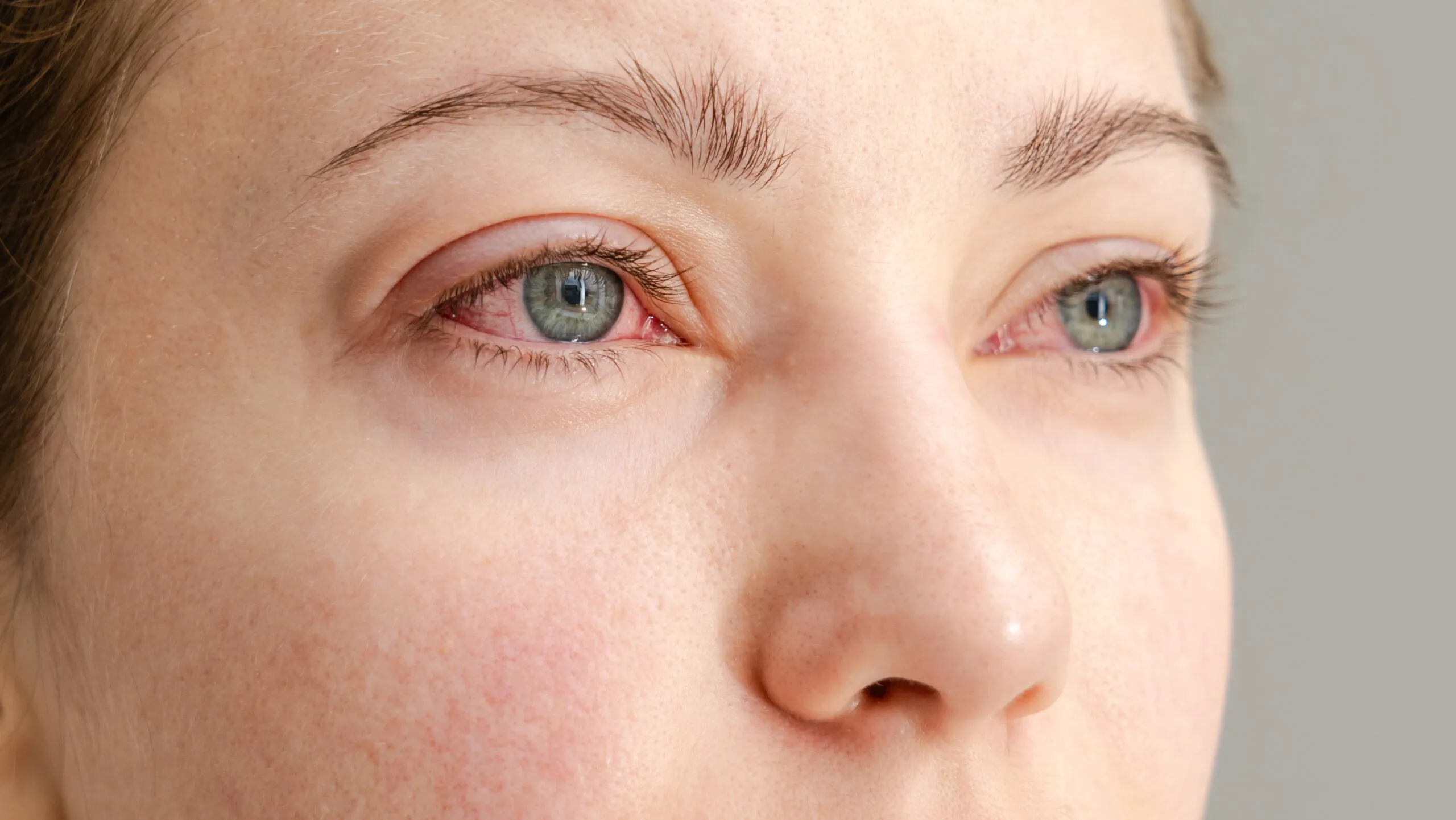
Iritis is inflammation of the iris, the colored part of the eye. It is the most common type of uveitis, and eye doctors often call it anterior uveitis [1]. It typically causes a painful red eye, sensitivity to light and blurred vision, and it needs an eye doctor's diagnosis because untreated inflammation can damage the eye [1,2]. Treatment is usually steroid eye drops to calm the inflammation and dilating drops to ease pain, and an episode usually settles within a few weeks [1,3].
A red, painful eye with light sensitivity or blurred vision should be seen by an eye doctor promptly, the same day if possible. Sudden vision loss, severe pain, fever or eye discharge needs immediate care [1].
Key takeaways
In this article
Symptoms often build over a few days [3]. The most common are:
Iritis usually affects one eye at a time, but it can involve both [1].
Both cause a red eye, which is why iritis is sometimes mistaken for conjunctivitis. Pain, light sensitivity and blurred vision point toward iritis, while sticky discharge and itching without pain are more typical of pink eye. Only an eye examination can tell them apart, because the sign that confirms iritis, inflammatory cells floating in the front chamber of the eye, is visible only through a slit-lamp microscope [3].
Most cases have no identifiable cause [1]. When a cause is found, it usually falls into one of these groups:
| Group | Examples |
|---|---|
| HLA-B27 and related conditions | Ankylosing spondylitis and other spondyloarthritis, reactive arthritis, psoriatic arthritis and inflammatory bowel disease [3,4] |
| Other autoimmune and inflammatory diseases | Sarcoidosis, lupus and multiple sclerosis [1,2] |
| Infections | Herpes viruses including shingles, and other infections that reach the eye [1,2] |
| Injury | A blow to the eye (traumatic iritis) [1] |
| Medicines | Iritis is a side effect of some medicines [1] |
HLA-B27 is a common gene marker, and having it does not mean you will develop iritis. But in people who do get sudden-onset iritis, about half carry it [4]. Back pain and stiffness that is worse in the morning, or bowel or skin symptoms, are worth mentioning to your eye doctor, because they can point to an underlying condition that a rheumatologist can treat.
An eye doctor examines the front of the eye with a slit lamp, checks your vision and measures eye pressure. Other tests may include optical coherence tomography (OCT) and a dilated examination of the back of the eye [1,3]. Blood tests are chosen by the pattern of inflammation rather than run as a broad panel. For a first episode, HLA-B27 and a syphilis test are common starting points [3].
| Treatment | What it does | What to know |
|---|---|---|
| Steroid eye drops, such as prednisolone acetate 1% or difluprednate | Calm the inflammation | The main treatment. The dose depends on how severe the inflammation is, and drops are tapered gradually [3]. |
| Dilating (cycloplegic) drops, such as cyclopentolate | Relax the iris muscles | Ease pain and light sensitivity, and stop the iris sticking to the lens [1,3]. |
| Steroid injections near the eye or steroid tablets | Stronger anti-inflammatory effect | Used for severe inflammation [3]. |
| Antiviral, antibiotic or antiparasitic medicines | Treat an infection causing the iritis | Used when an infection is found [1]. |
| Medicines that act on the immune system | Prevent repeated or ongoing inflammation | For recurrent or chronic iritis that threatens vision, usually with a rheumatologist or uveitis specialist [3]. |
Use the drops exactly as prescribed and keep every follow-up visit. Steroid drops can raise eye pressure and, with longer use, contribute to cataract, so your eye doctor checks for both during treatment [2]. Stopping drops early or suddenly can let the inflammation flare again.
An episode of iritis usually lasts a few weeks with treatment [1]. Doctors describe the pattern in three ways:
In a review of HLA-B27-associated iritis, people followed for more than a year had a median of three attacks, a median of 14 months apart [4]. Starting treatment promptly at the first sign of a recurrence may shorten the attack [3].
Most people recover well when iritis is treated promptly. Without treatment, or with repeated attacks, complications can include [2,3]:
Our guide to steroid-induced glaucoma explains why eye pressure is checked during steroid treatment.
Frequent episodes deserve a plan rather than a new prescription each time. Useful steps include a referral to a uveitis specialist, a rheumatology review for back, joint, skin or bowel symptoms, and a written plan for what to do at the first sign of a flare. When iritis threatens vision, systemic immune-modulating treatment can reduce flares [3]. Inflammation that spreads further back in the eye is covered in our guides to uveitis and panuveitis.
Iritis needs diagnosis and treatment by an eye doctor, usually with steroid drops, and nothing Netra offers replaces that. There are no reliable trials showing that herbs or acupuncture control uveitis, and some herbs interact with immune-suppressing medicines. Any integrative care at Netra for people with recurrent iritis is supportive and coordinated with the treating specialist. Read about what the evidence shows for Chinese medicine in eye conditions.
It can be. Most episodes respond well to treatment, but untreated or repeated inflammation can lead to glaucoma, cataract and vision loss [1,2]. That is why a painful red eye with light sensitivity should be seen promptly.
Sometimes, but it should still be diagnosed and treated [1]. Untreated inflammation can cause the iris to stick to the lens and raise eye pressure.
No. Iritis is inflammation inside the eye, and most cases are not caused by infection. When an infection is the cause, it is treated with medicine aimed at that infection [1].
See an eye doctor early and start the prescribed steroid and dilating drops straight away. Treatment started promptly, including at the first sign of a recurrence, may shorten the attack [3].
Stress is not an established cause. Iritis is linked to immune and inflammatory conditions, infections, injury and some medicines, and most cases have no identified cause [1].
Ask your eye doctor. You may be advised to avoid contact lenses while the eye heals [1].
Uveitis is inflammation of the middle layer of the eye. Iritis is the type that affects the front of that layer, the iris, and is the most common type [1,2].
Sources checked November 11, 2026.
This article provides general education and does not replace an individual eye examination, diagnosis or treatment plan. Do not stop or change steroid drops without your eye doctor. Seek prompt care for a painful red eye with light sensitivity or blurred vision, and immediate care for sudden vision loss.