
Netra Tarpana is a procedure, not a cure. A ring of dough is sealed around the bony orbit, warm medicated ghee is poured into the well it forms, and the open eye stays bathed in it for several minutes. Here is the honest bottom line: the only human trials that exist are small, unblinded, single-center studies in Indian patients with dry eye, and none of them can separate the effect of the ghee from the effect of warmth, occlusion, and sustained clinical attention. Netra Tarpana does not treat glaucoma, retinal disease, cataract, or refractive error. Done on the wrong eye, it causes real harm.
Complementary-care boundary: Netra Tarpana does not replace lubricant eye drops, lid hygiene, warm compress therapy, topical cyclosporine or lifitegrast, punctal occlusion, antibiotic or antiviral treatment of ocular infection, pressure-lowering drops for glaucoma, intravitreal injections, laser, or surgery. If an ophthalmologist or optometrist has prescribed any of those, keep using them. At Netra Eye Institute, Tarpana is offered only as an adjunct to that care, never as a substitute for it and never before a diagnosis has been made.
An Integrative Approach to Netra Tarpana in Modern Eye Care
Patients usually arrive asking about Tarpana because someone described it vividly: the ring of dough, the pool of warm ghee, the strange instruction to open and blink underneath it. It is a memorable procedure, and memorable procedures acquire claims. Over the last two decades those claims have expanded far past anything the classical texts said and far past anything that has been measured. Separating the procedure from the marketing around it is the first useful thing a clinic can do.
What integrative care means in practice is a sequence, not a menu. A complete eye examination comes first, performed by a clinician qualified to perform it, with the diagnosis established and any sight-threatening disease identified and referred. Only then does the question of adjunctive therapy arise, and only for the narrow set of complaints where a warm lipid bath over the ocular surface makes any physiological sense. Anything else is a therapy in search of an indication.
This page is written for someone deciding whether to book a session. It describes the procedure step by step, weighs the published literature without inflating it, names the situations in which the procedure is dangerous, and sets out what to ask a practitioner before you hand over your eyes.
What Netra Tarpana Is and Where It Comes From
The Word Itself
Netra means eye. Tarpana means to satisfy or nourish, the same root used for offerings of water in other ritual contexts. The name describes intent rather than mechanism: the eye is to be steeped and satiated in a fatty medium. Nothing in the term implies regeneration of tissue, and the classical sources do not make that claim either.
Shalakya Tantra, the Branch Above the Collarbone
Ayurveda organizes its surgical and procedural knowledge into eight branches. Shalakya Tantra covers the eye, ear, nose, throat, and head, and Tarpana belongs to it. The descriptions in the Sushruta Samhita and later commentaries are procedural: which vessel, which fat, how long, in what season, followed by what rest. They are recipes recorded by observant clinicians, not results from controlled comparison.
The Classical Indication
Tarpana is classically indicated for eye complaints attributed to aggravated Vata and Pitta: dryness, roughness, burning, stiffness of the lids, and strain. It is explicitly not indicated for conditions described as Kapha-predominant, meaning heavy discharge and congestion. That internal restriction is the classical rule most often ignored by clinics offering Tarpana to everyone.
Ghrita as the Vehicle
The medium is ghee, clarified butter from which water and milk solids have been removed. It is stable at room temperature, tolerates gentle heating, and carries fat-soluble plant constituents. Triphala Ghrita is the most commonly used preparation. Plain clarified butter, Goghrita, is also used, and in at least one published trial it performed comparably.
Where It Sits Among the Kriyakalpa Procedures
Tarpana belongs to a small family of local eye treatments called Kriyakalpa. The others are Aschyotana, drops instilled into the eye; Seka, a stream poured over it; Anjana, a paste applied to the lid margin; Putapaka, a more concentrated retention procedure; and Vidalaka, a paste applied outside the closed lid. Tarpana has the longest contact time, which is why it carries more risk.
What the Classical Texts Do Not Contain
They contain no measurement of intraocular pressure, no view of the retina, no microbiology, and no concept of the meibomian glands or the tear film lipid layer. That is not a criticism of texts written before the instruments existed. It is a reason to stop treating those texts as evidence for claims about structures their authors could not see.
How a Netra Tarpana Session Runs, Step by Step
Before Any Ghee Is Warmed
A session begins with an examination, not with the dough. The cornea is checked for staining or a break in the epithelium, the lid margins and meibomian glands are assessed, and the eye is confirmed to be quiet. Redness of unknown cause, pain, discharge, reduced vision, or recent surgery all stop the session. Consent should cover the expected blur afterward and the small but genuine infection risk.
Preparing the Dough Ring
A stiff dough, traditionally black gram or whole wheat flour with water, is rolled into a rope and pressed into a ring about two fingers high. It is seated on the bony rim around the eye and pressed down until it seals. The seal has to be watertight without compressing the globe, which is why it is built on bone and never on soft tissue over the eye itself.
Choosing and Preparing the Medicated Ghee
The ghee is selected according to the complaint and the practitioner tradition, with Triphala Ghrita common for dryness and strain. It should come from a source that can document what is in it, and it should be handled as an ophthalmic preparation: a fresh, dedicated portion for each patient, not a communal jar reheated across a working day.
Temperature, and Why It Is Tested First
The ghee is warmed to a little above body temperature, roughly the warmth of a comfortable compress. It is tested on the practitioner wrist and then on the patient forearm before anything goes near the eye. Ghee holds heat well and cools slowly, an advantage for sustained warmth and a hazard if the starting temperature is judged carelessly. Too hot is not a minor error on a cornea.
Filling the Well
With the patient lying flat and the head supported, ghee is poured slowly into the ring with the eye closed, until the level covers the lashes. The patient then opens the eye gently into the pool. The first moments are the least comfortable, and most people describe a brief blur and mild pulling rather than pain. Pain here means the session stops.
Retention Time
Classical retention times are graded by complaint and expressed in hundreds of seconds. In practice, contemporary clinics hold the ghee for roughly five to fifteen minutes, shorter for a first session and for strain, longer for established dryness. Published Indian protocols have used durations in this range. Longer is not better, and the temptation to extend a session because the patient enjoys the warmth should be resisted.
The Blinking Instruction
Through the retention period the patient is asked to blink slowly and deliberately rather than stare into the pool. This keeps the lids and the ocular surface moving under the lipid, and it is one of the few parts of the procedure with an obvious physical rationale. It also gives the patient something to do, which makes a long still procedure easier to tolerate.
Removal and Aftercare
A cotton pad absorbs the ghee while a small gap is opened in the dough at the outer corner, so the pool drains away from the eye rather than across it. The ring is lifted off and the eye left closed for several minutes. Vision is blurred and lights look haloed for twenty minutes to a few hours, so patients should not drive themselves home and should avoid sun, screens, and dust for the rest of the day.

What Netra Tarpana Is and Is Not Used For
Evaporative Dry Eye and Meibomian Gland Dysfunction
This is the one indication with both a rationale and a small body of human data. In evaporative dry eye the oily layer that slows tear evaporation is deficient, usually because the meibomian glands are blocked or their secretion has thickened. Warmth applied for several minutes softens that secretion. A warm lipid bath is an unusual delivery method for an ordinary idea.
Eye Strain and Digital Screen Use
People who spend long days on screens blink less often and less completely, which dries the surface and produces ache, heaviness, and intermittent blur. One small uncontrolled pilot of an Ayurvedic protocol in computer vision syndrome reported symptomatic improvement. Screen-related dryness also responds to blink training, humidity, breaks, and lubricants, and those cost nothing.
Chronic Surface Irritation After Refractive Surgery
Dryness after LASIK and similar procedures is common and often persistent. Tarpana is not appropriate anywhere near the healing period. We do not consider it until the surface is fully healed, the surgeon has cleared the eye, and several months have passed, and even then only as an adjunct to lubrication and lid care.
Blepharitis and Lid Margin Disease
Anterior blepharitis and Demodex-related lid disease need directed lid hygiene and sometimes topical or oral antibiotic treatment. A ghee bath does not clear crusting from the lash base and can make an inflamed, colonized lid margin worse. Where lid disease and evaporative dryness coexist, the lid disease is treated first.
Glaucoma: No
Glaucoma is optic nerve damage driven by pressure the nerve cannot tolerate, and the only treatments with evidence are those that lower it: drops, laser, and surgery. Nothing about a warm surface application reaches the drainage angle or the nerve head. Substituting Tarpana for pressure-lowering treatment causes permanent, painless, irreversible loss of visual field.
Retinal Disease: No
Diabetic retinopathy, macular degeneration, retinal vein occlusion, and retinal detachment are diseases of tissue at the back of the eye, and topical ghee does not reach it. These conditions have time-sensitive treatments, and delay in starting them is measured directly in lost vision. Anyone offered Tarpana for a retinal diagnosis is being told something untrue.
Cataract and Refractive Error: No
A clouded lens does not clear, and nothing applied to the surface of the eye changes its focusing power. Cataract is corrected by removing the lens and replacing it. Blurred near vision after the mid-forties is presbyopia, a change in the lens itself. Tarpana may make a gritty eye more comfortable while reading; it does not change the prescription.
The Published Evidence, Honestly Weighed
A reasonable question to ask any clinic is how much human evidence supports what it is selling. For Netra Tarpana the answer is a short and specific list, and it is better to know what that list contains than to accept an assurance that the procedure is well studied. It is not.
What Actually Exists
Searching the indexed literature for Tarpana and for Shushkakshipaka, the classical term mapped onto dry eye syndrome, returns a handful of papers. Nearly all come from Indian Ayurvedic teaching hospitals and appear in specialty journals such as Ayu. Sample sizes run from a single case to a few dozen patients per arm. There is no multicenter trial and no masked outcome assessment.
The 2020 Comparative Trial
An open-label randomized comparison in Ayu tested Triphala Ghrita Tarpana against Goghrita Manda Tarpana in Shushkakshipaka and reported improvement in both groups. Open-label means everyone knew the allocation, including the person recording the outcome. The most interesting result is the least emphasized: plain clarified butter did not perform obviously worse.
The 2014 Keshanjana Study
A separate clinical study assessed Keshanjana with Netra Parisheka in the same diagnostic category and again reported benefit, with the same design limits. A related quality-control paper from that group is in some ways more useful, because it documents how variable the physical characteristics of these preparations are between batches.
A 2026 Ghee Eye Drop Comparison
A more recent single-blind randomized trial compared Shatavari Ghrita eye drops against Triphala Ghrita eye drops in postmenopausal ocular surface disease. It is a better-designed study than most in this literature, but it compares two Ayurvedic preparations with each other rather than against an inactive control or an established treatment, so it cannot tell us whether either beats a conventional lubricant.
Why Unblinded Dry Eye Trials Overstate Benefit
Dry eye is a symptom-led diagnosis and the placebo response in its trials is large and well documented. Add an elaborate, warm, hands-on procedure and the expectation effect climbs further. When the assessor also knows the allocation, the direction of bias is predictable. Modern dry eye programs insist on masked assessment for exactly this reason.
How This Compares With Conventional Evidence
The contrast is instructive. The TFOS DEWS II reports synthesize hundreds of studies into staged treatment. Cochrane reviews exist for topical cyclosporine, lifitegrast, and thermal pulsation devices, and a large randomized trial of omega-3 supplementation found no benefit over placebo. That negative result is the point: properly controlled trials can return a negative answer. The Tarpana literature has never been designed to.
What Would Change Our Assessment
A randomized trial with a credible sham, such as warm inert oil of matched duration, masked assessors, objective endpoints including tear break-up time and corneal staining, and follow-up at three months. Until a study of that shape exists, Tarpana should be described as a comfort measure with a plausible physical basis, and nothing stronger.
Why the Mechanism Is Coherent for Dry Eye and Incoherent for Most Other Conditions
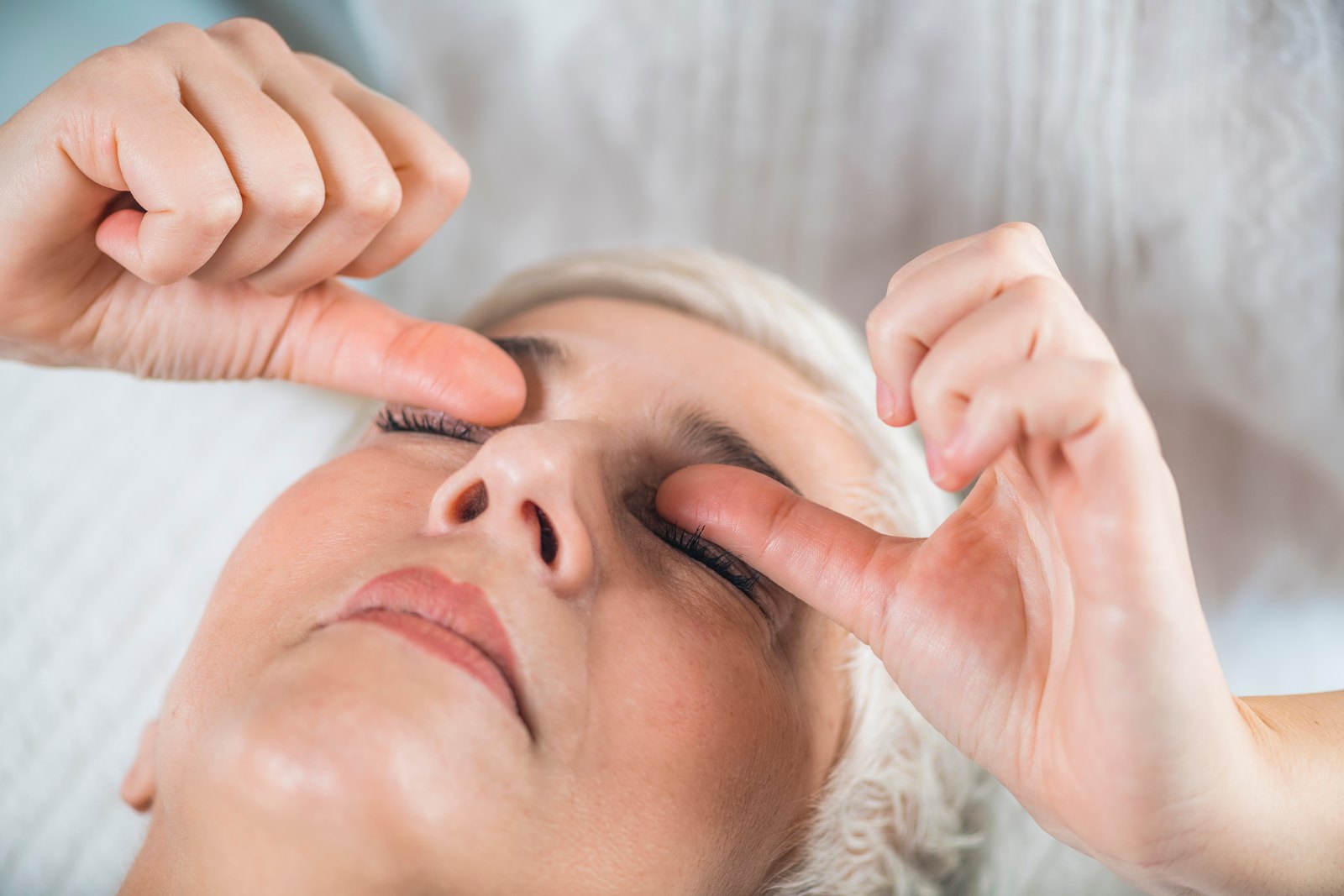
Evaporative dry eye has a physical problem at its center. The meibomian glands secrete a lipid that spreads across the tear film and slows evaporation. When that secretion thickens or the gland openings block, tears evaporate faster than they are replaced and the surface becomes inflamed and sore. Warmth softens thickened meibum; this is the accepted rationale behind warm compresses and behind thermal pulsation devices, and it is measurable.
Tarpana delivers sustained warmth to the lids and the ocular surface for longer than a compress usually stays warm, adds a lipid film over the surface, and forces the eye closed and away from screens for the duration. Those three things are individually plausible. Whether the specific herbs in a medicated ghee add anything beyond what warm oil alone would do is unknown, and the one trial that came closest to testing it found little difference. Judged fairly, the reach of the procedure is limited to the surface it touches:
- Softening thickened meibomian secretion through several minutes of steady warmth
- Temporarily supplementing a deficient lipid layer over the tear film
- Reducing friction between the lid and the surface during blinking
- Relieving the sensation of grittiness, burning, and heaviness for a period afterward
- Enforcing a genuine rest from screens and near work during the session
- Softening crusting and debris on the lid skin, though not at the lash base
- Providing a structured point at which lid hygiene and lubrication habits get reviewed
Now consider what it cannot reach. The trabecular meshwork that drains aqueous fluid sits inside the eye. The optic nerve head lies at the back of it. The retina, the macula, and the lens are all behind a cornea that is a deliberate barrier to exactly this sort of substance. No amount of warm ghee on the outside changes pressure inside the eye, restores photoreceptors, clears a lens, or reopens a blocked retinal vein. A claim that it does is not a difference of tradition. It is a factual error with a cost attached.
Who Should Not Have Netra Tarpana
Any Active Eye Infection
Bacterial, viral, or fungal infection of the cornea or conjunctiva is an absolute bar. Bathing an infected eye in warm fat for ten minutes provides an incubator and delays the antimicrobial treatment the eye actually needs. Herpes simplex keratitis in particular can be provoked and worsened. An eye with discharge, light sensitivity, and pain needs a slit lamp and a prescription the same day.
A Break in the Corneal Surface
An abrasion, an ulcer, a recurrent erosion, or any area of epithelial loss removes the barrier that normally keeps material out of the corneal stroma. Traditional eye remedies applied to a compromised cornea are a documented route to microbial keratitis and scarring in several parts of the world. If fluorescein staining shows a defect, there is no version of this procedure that is safe.
Recent Surgery or Intravitreal Injection
Cataract surgery, corneal transplant, glaucoma surgery, refractive surgery, and intravitreal injections all leave wounds that take weeks to months to become watertight. Any fluid held against the eye during that window risks entering it. We do not perform Tarpana on a recently operated eye, and clearance is a conversation with the operating surgeon rather than an assumption based on how the eye looks.
An Undiagnosed Red or Painful Eye
Redness with pain, photophobia, reduced vision, or a fixed mid-dilated pupil can mean acute angle closure, uveitis, scleritis, or infectious keratitis. Every one of those is an urgent referral, and several can blind an eye within days. Treating an undiagnosed red eye with a comfort procedure wastes precisely the time that determines the outcome.
Uncontrolled or Unstable Glaucoma
Anyone whose pressure is not at target, whose field loss is progressing, or whose treatment has recently changed needs their ophthalmologist, not a spa appointment. Lying flat for a prolonged period is itself associated with a rise in intraocular pressure. The greater risk is feeling treated and skipping the next monitoring visit.
Contact Lens Wearers
Lenses must be out well before a session and should stay out for the rest of the day, because oil residue clings to both soft and rigid materials and degrades them. Lens wearers already carry an elevated baseline risk of microbial keratitis, and reinserting a lens onto a surface coated in warm fat compounds it.
What We Will Not Do
We do not use kajal, surma, or any traditional collyrium on or near the eye, because these have repeatedly been shown to contain lead. We do not use bhasma or other metal-containing preparations, and we do not dispense unregulated imported products of unverifiable content. We do not recommend home-made eye washes of any kind. We also do not perform Tarpana on anyone weighing it against treatment they have been told they need.
What Genuinely Goes Wrong
The Blur Afterward
Every patient gets this, and it is the complication people are least warned about. A film of oil across the cornea scatters light, so vision is smeared and lights carry halos. It usually settles within an hour and occasionally takes an afternoon. It is not dangerous, but it makes driving unsafe, and a clinic that books a session without telling you to arrange a ride is not paying attention.
Reactions to the Ghee Itself
Stinging, redness of the lid skin, and itchy contact dermatitis around the orbit all occur. Medicated preparations contain plant material, and plant material causes allergy. Anyone with atopic disease, known reactions to topical herbal products, or fragile lid skin should be treated cautiously, and a patch test on the forearm the day before is reasonable.
Sterility and How the Preparation Was Made
Ghee is not sterile, is not manufactured to ophthalmic standards, and is warmed and handled repeatedly in a busy clinic. Any fluid held against an eye for ten minutes is an inoculation opportunity. Traditional eye remedies are an established cause of corneal infection and blindness where they are widely used, and a published case report documents bilateral acute keratitis from an Ayurvedic topical preparation.
Non-Clinical Settings
Most of the risk comes from where the procedure is done rather than from the procedure. A wellness center with no slit lamp cannot see an epithelial defect, measure pressure, recognize herpetic disease, or identify the red eye that needed a same-day referral. Tarpana without a prior eye examination is not traditional practice either.
Pressure on the Globe and Poor Positioning
A dough ring built on soft tissue rather than bone, or pressed down hard to stop a leak, transmits force onto the eye. That matters most in eyes already vulnerable: advanced glaucoma, thin or ectatic corneas such as keratoconus, and operated eyes. Prolonged flat positioning also raises intraocular pressure modestly in everyone.
The Harm You Do Not See
The most serious injury associated with this procedure is not caused by the ghee. It is caused by the months a patient spends in a course of comfortable treatments while glaucoma quietly removes peripheral field or a retinal tear progresses to detachment. Neither announces itself with pain. Feeling better is not the same as being examined.
What a Course Looks Like and How to Judge Whether It Is Working
A Typical Course
Most protocols run five to seven sessions on consecutive or alternate days, with each session taking thirty to forty-five minutes including preparation and rest. Some practitioners extend a course to fourteen days. Beyond that you are being sold a subscription rather than a treatment.
Measure Something Before You Start
Without a baseline you cannot tell improvement from a good week. A standardized dry eye symptom questionnaire takes two minutes and gives a number. Tear break-up time and corneal staining give two more. Write down how many times a day you reach for drops. Any later claim of benefit is judged against those four figures.
What Counts as a Real Response
A meaningful result is a fall in the symptom score that holds for weeks rather than hours, fewer lubricant drops per day, more comfortable reading late in the day, and ideally a measurable change in break-up time or staining. Two of those together, sustained at a month, is a genuine signal.
What Does Not Count
Feeling wonderful for two hours after a warm procedure counts for nothing; a warm compress does that. Neither does the practitioner reporting that your eyes look brighter, nor an acuity measured the same afternoon, when the oil film is still degrading vision. Claims about pressure, nerve, or retinal improvement based on how you feel are not evidence.
The Checkpoint at Two Weeks
Repeat the same questionnaire two weeks after the course ends, not on the last day, and compare it with the baseline. This single step prevents most of the money wasted on this kind of therapy, because impressions formed after an expensive course are reliably generous.
When to Stop
Stop if the score has not moved by that checkpoint. Stop immediately if the eye becomes red, painful, or more light-sensitive, if vision drops and stays down, or if discharge appears, and have the eye examined the same day. Stop if you find yourself postponing an ophthalmology appointment because the sessions feel productive.
Maintenance, If It Helped
Where a course produced a real and durable change, occasional sessions every few months are reasonable alongside the things that do the steady work: lid hygiene, warm compresses at home, deliberate blinking, humidity, screen breaks, and whatever your eye doctor has prescribed. Tarpana at its best is one component of that plan, and the least important one.
Questions to Ask Any Practitioner Before You Book
These questions are not adversarial. A good practitioner will answer all of them without hesitation, and the answers tell you more about where you are sitting than any description of the procedure will. If several answers are vague, that is the finding.
- Who will examine my eyes before the first session, what are their qualifications, and will a slit lamp be used?
- Will my cornea be stained and checked for a surface defect before any ghee is applied?
- What exactly is in the preparation, who manufactured it, and can I see documentation of its contents and testing?
- Does the preparation contain any bhasma, metal, or mineral component of any kind?
- Is a fresh portion used for each patient, and how is the ghee stored and warmed between patients?
- How long will the ghee be retained, at what temperature, and how is that temperature checked?
- What is the specific outcome you expect for my diagnosis, and how will we measure it?
- At what point would you tell me this has not worked and stop?
- What are you going to do if my eye becomes red or painful the night after a session, and who do I call?
- Are you asking me to change, pause, or stop any medication an ophthalmologist has prescribed?
The last question matters most. Any practitioner who suggests reducing glaucoma drops, deferring injections, postponing surgery, or skipping a scheduled retinal review has told you to stop trusting them. Leave, and keep the appointment you were about to cancel.
Frequently Asked Questions on Netra Tarpana
No. There is no evidence that it changes refractive error, reverses cataract, or improves vision lost to retinal or optic nerve disease. Where a dry, unstable tear film is blurring vision between blinks, improving surface comfort can make vision feel steadier. That is a different claim, and it does not change what a sight test measures.
It should not. Most people describe warmth, mild heaviness, and a moment of odd sensation when the eye first opens into the ghee. Pain, burning, or a stinging that does not settle within seconds means the temperature is wrong, the preparation is irritating the eye, or the eye should not have been treated. In all three cases the session stops.
Usually twenty minutes to a couple of hours, occasionally longer. Plan not to drive afterward and not to return to detailed work the same day. If vision is still reduced the next morning, or if it drops rather than clears, that is not expected and the eye needs to be examined.
No, and we would ask you not to try. At home you cannot judge temperature safely against a cornea, cannot see a surface defect, cannot control contamination, and have no one to stop the procedure if something is wrong. If the appeal is warmth on the lids, a clean warm compress held for ten minutes gives you most of the plausible benefit with almost none of the risk.
Only where the glaucoma is stable, at target pressure, monitored by an ophthalmologist, and all prescribed drops continue unchanged. Even then, the benefit is limited to surface comfort, which is a real problem for people using preserved drops long term. Tarpana treats none of the disease, and using it as a reason to reduce or delay pressure-lowering treatment causes permanent vision loss.
Selected References for Scientific Support
- Timmapur GM, Fiaz S. Efficacy of Triphala Ghrita and Goghrita Manda Tarpana in the management of Shushkakshipaka w.s.r. to dry eye syndrome: An open labelled randomized comparative clinical trial. Ayu. 2020. PubMed
- Vardhan P, Dhiman KS. Clinical study to assess the efficacy of Keshanjana and Netra Parisheka in the management of Shushkakshipaka (dry eye syndrome). Ayu. 2014. PubMed
- Ashwini BN, Sivabalaji K, Bhutada R, et al. Comparative efficacy of Shatavari Ghrita eye drops with Shatavari Ksheerapaka versus Triphala Ghrita eye drops with Shatavari Ksheerapaka in postmenopausal ocular surface disease: a randomized, single-blind trial. Front Med (Lausanne). 2026. PubMed
- Dhiman KS. Shushkakshipaka (dry eye syndrome): A case study. Int J Ayurveda Res. 2011. PubMed
- Dhiman KS, Ahuja DK, Sharma SK. Clinical efficacy of Ayurvedic management in computer vision syndrome: A pilot study. Ayu. 2012. PubMed
- Dhiman KS, Shukla VJ, Bhalodia NR, et al. Quality control evaluation of Keshamasi, Keshanjana and Keshamasi eye ointment. Ayu. 2014. PubMed
- Craig JP, Nichols KK, Akpek EK, et al. TFOS DEWS II Definition and Classification Report. Ocul Surf. 2017. PubMed
- Wolffsohn JS, Arita R, Chalmers R, et al. TFOS DEWS II Diagnostic Methodology report. Ocul Surf. 2017. PubMed
- Jones L, Downie LE, Korb D, et al. TFOS DEWS II Management and Therapy Report. Ocul Surf. 2017. PubMed
- Goto E, Shimazaki J, Monden Y, et al. Low-concentration homogenized castor oil eye drops for noninflamed obstructive meibomian gland dysfunction. Ophthalmology. 2002. PubMed
- Maulvi FA, Desai DT, Kalaiselvan P, et al. Lipid-based eye drop formulations for the management of evaporative dry eyes. Cont Lens Anterior Eye. 2024. PubMed
- Dry Eye Assessment and Management Study Research Group, Asbell PA, Maguire MG, et al. n-3 Fatty Acid Supplementation for the Treatment of Dry Eye Disease. N Engl J Med. 2018. PubMed
- Priyadarshini SR, Sadhu S, Tzang CC, et al. Topical cyclosporine A therapy for dry eye disease. Cochrane Database Syst Rev. 2026. PubMed
- Assi L, Lutfallah SC, Yim TW, et al. Topical lifitegrast therapy for dry eye disease. Cochrane Database Syst Rev. 2025. PubMed
- Pucker AD, Yim TW, Rueff E, et al. LipiFlow for the treatment of dry eye disease. Cochrane Database Syst Rev. 2024. PubMed
- Hlakudi KF, Nkoana PMW. Global Prevalence and Clinical Consequences of Traditional Eye Medicine: A Descriptive Review. Clin Optom (Auckl). 2026. PubMed
- Chukwukwe IO, Ekwufulem ON, Chikezie TF, et al. Traditional Eye Remedies and Ocular Complications in Sub-Saharan Africa: A Systematic Review. Niger Med J. 2026. PubMed
- Saper RB, Phillips RS, Sehgal A, et al. Lead, mercury, and arsenic in US- and Indian-manufactured Ayurvedic medicines sold via the Internet. JAMA. 2008. PubMed
- Mukhopadhyay S, Abraham SE, Holla B, et al. Heavy Metals in Indian Traditional Systems of Medicine: A Systematic Scoping Review and Recommendations for Integrative Medicine Practice. J Altern Complement Med. 2021. PubMed