
Dry eye disease is a loss of tear-film homeostasis, and it is the one ophthalmic condition where Ayurvedic eye therapy has something resembling an evidence base. Four controlled Indian trials of medicated ghee procedures report symptom improvement in Shushkakshipaka, the classical presentation that maps most closely onto dry eye. All were unblinded, all were small, and none of them compared their intervention against lid hygiene or lipid-based drops. That is a genuine signal worth taking seriously and a long way short of proof.
Complementary-care boundary: Ayurvedic eye therapy does not replace slit-lamp examination, prescribed anti-inflammatory or immunomodulatory drops, meibomian gland procedures, punctal occlusion, scleral lenses, or evaluation for Sjögren disease and corneal neuropathic pain. It is offered alongside them, not instead of them.
An Integrative Approach to the Drivers of Dry Eye Disease
Dry eye is not a single disease and it is not a deficiency of water. The TFOS DEWS II definition describes a multifactorial disorder in which tear-film instability, hyperosmolarity, ocular surface inflammation and damage, and neurosensory abnormality all play etiological roles. The 2025 DEWS III reports carry that framing forward and place still more weight on the lipid layer and on the mismatch between what a clinician can measure and what a patient feels.
The practical consequence is that two people with the same diagnosis can need opposite treatments. Someone with aqueous-deficient dry eye from an autoimmune lacrimal process needs a different plan from someone whose glands are obstructed and whose tear film evaporates in ninety seconds. Ayurvedic surface procedures are, mechanically, lipid-delivery and thermal treatments. That places them squarely in evaporative territory and makes them largely beside the point in severe aqueous deficiency — a distinction that matters far more than any dosha classification.
Roughly one adult in nine worldwide meets diagnostic criteria, by the most careful prevalence estimate available. It is common, it is chronic, and the gap between how disabling it feels and how unimpressive it looks on examination is the single most consistent source of frustration for the people who have it.
Why Dry Eye Care Should Be Multi-Factorial
The Lipid Layer and Meibomian Gland Function
Most dry eye seen in practice is evaporative, and most evaporative dry eye involves the meibomian glands. Altered meibum quality, obstructed orifices and gland dropout thin the lipid layer that slows evaporation. Treatment that ignores the lids is treating the wrong compartment, which is why warm compresses and lid margin hygiene remain the foundation of care rather than an afterthought.
Tear Hyperosmolarity as an Amplifier
When the tear film breaks up faster than blinking can replace it, solutes concentrate. Hyperosmolar stress injures the epithelium and activates inflammatory signaling, which in turn destabilizes the tear film further. This is the self-reinforcing loop at the center of the DEWS model, and it explains why symptoms often escalate out of proportion to the original trigger.
Ocular Surface Inflammation
Innate and adaptive immune activity sustains epithelial and lacrimal dysfunction once established. That is the rationale for ciclosporin, lifitegrast and short supervised corticosteroid courses, and it is also why purely lubricating strategies plateau in moderate disease.
Corneal Nerve Function and the Sign-Symptom Gap
Corneal nerves drive blink and tear reflexes and carry sensation. Reduced sensitivity, hypersensitivity, peripheral injury or central sensitisation all occur in dry eye, and they are the main reason a cornea can look almost clean while the person describes constant burning. Recognizing a neuropathic component changes the plan entirely.
Blink Behavior, Screens and Environment
Blink rate falls and incomplete blinks rise during sustained near work, leaving the lower cornea exposed. Low humidity, direct airflow, air travel and contact lens wear compound it. These are the cheapest variables to change and the ones most often left unexamined.
Systemic and Medication Contributors
Sjögren disease, thyroid disease, rosacea, diabetes, perimenopause, and anticholinergic, antihistamine, diuretic, isotretinoin and antidepressant medication all bear on the ocular surface. A dry eye assessment that never leaves the eye will miss the cause in a meaningful minority of patients.
Key Biological Mechanisms in Dry Eye Disease
Tear Film Instability
A healthy tear film holds together between blinks through the interaction of its mucin, aqueous and lipid components. Break-up before the next blink is the earliest measurable failure and the event that initiates everything downstream.
Meibomian Gland Obstruction and Atrophy
Hyperkeratinisation of the duct, thickened meibum and gland dropout progress over years. Meibography frequently shows structural loss in people who have never been told they have a lid problem, and gland tissue that has dropped out does not return.
Epithelial Injury and Goblet Cell Loss
Surface staining reflects epithelial damage. Loss of conjunctival goblet cells reduces mucin, which impairs tear spreading and adherence — another self-reinforcing step rather than an isolated finding.
Inflammatory Cascade
Matrix metalloproteinase-9, interleukin-6 and tumor necrosis factor-alpha rise on the stressed ocular surface, recruiting T cells and perpetuating the cycle independently of whatever started it.
Oxidative Stress
Reactive oxygen species accumulate on the exposed surface and contribute to epithelial and lacrimal damage. This is the mechanism most often invoked for antioxidant and herbal interventions, and it is plausible — though plausibility at the bench has a poor record of predicting clinical benefit here.
Neurosensory Abnormality
Peripheral nerve injury and central sensitisation produce pain that persists after the surface has been treated. Patients in this group do badly with escalating drops and better with an approach that addresses pain processing directly.
Lid Wiper Epitheliopathy
The strip of conjunctiva that wipes the ocular surface with each blink can itself become damaged when friction rises and lubrication falls. It stains in a characteristic band and correlates better with symptoms than corneal staining does, which makes it one of the more useful findings in a patient whose cornea looks clean but whose eyes hurt. It is easy to miss unless it is specifically looked for with lissamine green.
Blink Quality Rather Than Blink Rate
Rate gets the attention, but completeness matters more. A partial blink never respreads lipid across the lower third of the cornea, so that strip dries repeatedly through the day regardless of how often the person blinks. Video analysis shows partial blinking rising sharply during concentrated near work, and it is one of the few mechanisms a patient can directly change once it is explained to them.

How Dry Eye Presents and How It Progresses
What It Actually Feels Like
Burning, grittiness, a foreign-body sensation, heaviness by evening, fluctuating blur that clears for a moment after a hard blink. Many people describe everything except dryness, which is part of why the condition goes unnamed for years.
Why Dry Eyes Water
Reflex tearing from an irritated surface produces a flood of low-quality tears that lack a stable lipid layer. Watering is therefore a common presenting complaint in dry eye, not evidence against it — one of the most useful things a patient can be told.
The Daily Pattern
Evaporative disease typically worsens through the day with screen use and improves overnight. Waking with the eyes stuck shut, or pain worst on waking, points instead towards nocturnal lagophthalmos, anterior blepharitis or recurrent erosion — a different problem with a different fix.
Progression Over Years
Untreated meibomian gland dysfunction causes gland dropout that does not recover. This is the strongest argument for treating early and unglamorously, and the reason we would rather someone start warm compresses at forty-five than begin a therapy course at sixty.
When Symptoms Outrun Signs
A substantial group have severe symptoms and a near-normal surface. Escalating lubricants rarely helps them. Corneal neuropathic pain deserves consideration, and the honest conversation about it is more useful than another bottle of drops.
When Signs Outrun Symptoms
The reverse group — marked staining with little complaint — matters most in diabetes, after refractive surgery and in long-term contact lens wearers, where corneal sensitivity is reduced. Low symptom burden here is a risk factor, not reassurance.
Contact Lens Wearers
Lens wear alters the tear film, raises evaporation and reduces corneal sensitivity, and discomfort is the single commonest reason people abandon lenses. Because sensitivity is blunted, these patients often under-report symptoms relative to what the surface shows, so the examination matters more than the history. Material, replacement schedule, wearing hours and care solution are all modifiable before anyone concludes that lenses are impossible.
After Refractive and Cataract Surgery
Corneal nerves are divided in LASIK and, to a lesser extent, disturbed in cataract surgery, and reinnervation takes months. Dry eye in the months after surgery is common, usually improves, and is a known and disclosed part of the recovery rather than a complication. What matters clinically is separating that expected course from pre-existing disease that was never identified before the operation, which is the more frequent story.
How Dry Eye Is Assessed at Netra Eye Institute
The assessment is an ocular surface workup first. Nothing in the integrative plan is decided before we know which subtype we are dealing with, because the subtype determines whether Ayurvedic therapy is even relevant.
Symptom Questionnaire and History
A structured score such as OSDI gives a baseline that can be tracked. History covers screen hours, environment, contact lenses, prior surgery, systemic disease and a full medication review.
Tear Break-Up Time
The single most informative measure of tear film stability, and the one that separates evaporative from aqueous-deficient disease more reliably than symptoms ever will.
Ocular Surface Staining
Fluorescein and lissamine green reveal epithelial damage on cornea and conjunctiva, and the pattern of staining localises the problem — inferior for exposure, interpalpebral for evaporative, superior for lid-wiper and mechanical causes.
Meibomian Gland Assessment
Lid margin inspection, expression to judge meibum quality, and meibography where available to document structural dropout. This is the step most often skipped and the one that most often changes management.
Tear Volume and Osmolarity
Schirmer or phenol red thread testing where aqueous deficiency is suspected, and osmolarity or MMP-9 testing where the picture is unclear or inflammation needs confirming.
Corneal Sensitivity
Worth testing whenever symptoms and signs diverge, and essential in post-surgical patients, long-term lens wearers and anyone with diabetes.
Systemic Screening
Dry mouth, joint pain, fatigue or rapid onset in a younger patient prompt evaluation for Sjögren disease. Thyroid function and rosacea are assessed where the history suggests them.
Environment and Visual Demand
Screen hours, monitor height, airflow, humidity and break pattern. The least technical part of the assessment and frequently the most productive.
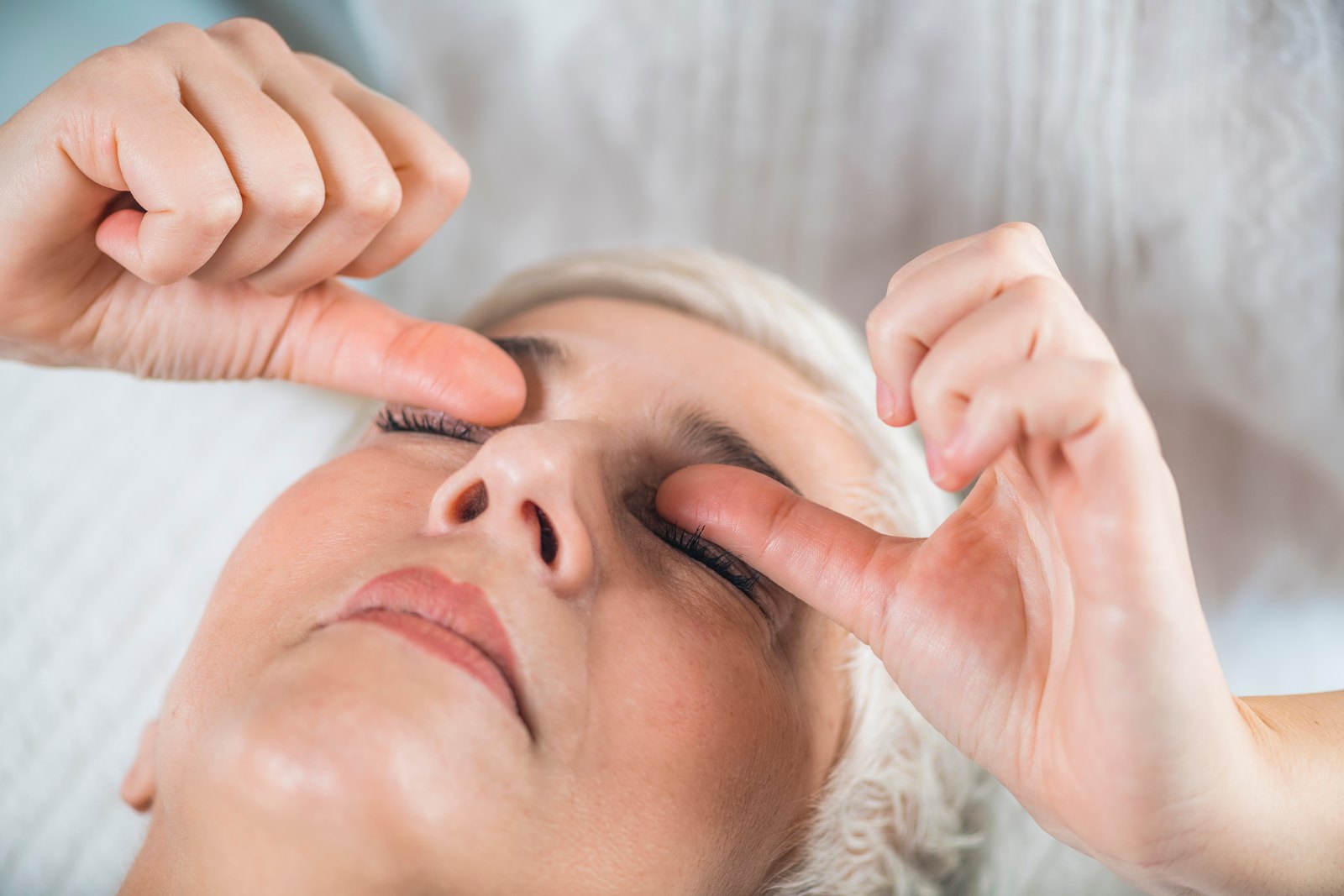
What Ayurvedic Eye Care Offers in Dry Eye
Classical Ayurvedic ophthalmology describes Shushkakshipaka, a dry, gritty, burning eye treated with unctuous and cooling measures. It is the closest classical analogue to dry eye disease, and it is the reason the small Indian trial literature exists at all.
What is genuinely on offer here is narrow but real:
- Lipid delivery and sustained warmth to the ocular surface through Netra Tarpana
- Lower-contact surface therapy where instillation is unsuitable, through Seka and Parisheka
- Structured attention to blink behavior, screen habits and daily routine
- Sleep regulation and autonomic balance, which bear on symptom perception
- Dietary pattern, including adequate omega-3 intake and glycaemic control
What is not on offer is regeneration of atrophied meibomian glands, reversal of autoimmune lacrimal destruction, or a substitute for anti-inflammatory therapy in moderate to severe disease.
Why Dry Eye Is the Exception in This Field
Across the whole of Ayurvedic ophthalmology, dry eye is the only condition with more than one controlled trial behind it. That is worth stating plainly for two opposite reasons. It means the interest here is not manufactured, and a patient asking about tarpana for dry eye is asking a more reasonable question than one asking about it for glaucoma or retinal disease. It also means the bar this field clears is low: three or four small unblinded studies from a handful of centers would not, in any other area of ophthalmology, be considered sufficient to recommend a therapy. Both things are true at once, and we would rather say so than pick whichever half suits the conversation.
What Would Actually Settle It
A sham-controlled trial comparing Netra Tarpana against a warm compress with a lipid drop, using tear break-up time and staining alongside symptom scores, in patients stratified by evaporative versus aqueous-deficient subtype. That study has not been done. Until it is, the honest position is that the procedure is plausible in evaporative disease, low-risk when performed properly with sterile preparations, and unproven against the cheap alternative it would have to beat.
Where Ayurvedic Therapy Fits Alongside Standard Dry Eye Care
Netra Tarpana and the Trial Evidence
Warm medicated ghee is retained over the open eye within a dough ring for ten to thirty minutes across a short course. A 2020 study in Ayu compared Triphala Ghrita with Goghrita Manda Tarpana in Shushkakshipaka and reported symptom improvement in both arms. A 2014 study in the same journal reported similar findings for Keshanjana and Netra Parisheka, and a 2026 comparative trial examined Shatavari Ghrita against Triphala Ghrita. None was blinded, none used a sham, and dry eye symptom scores are among the most placebo-responsive endpoints in ophthalmology. Read them as encouraging, not as established.
Why the Mechanism Is at Least Coherent
Unlike most Ayurvedic ophthalmic claims, this one has a plausible physical basis: a warm lipid held against the ocular surface, in a condition predominantly driven by evaporative loss and lipid layer failure. That is roughly what a warm compress and a lipid-containing drop do, delivered differently. The honest question is not whether it could work but whether it outperforms the cheap version, and no trial has asked that.
Seka and Parisheka for Sensitive Surfaces
These pour lukewarm medicated liquid over closed lids and never contact the ocular surface, which makes them appropriate where instillation is unsuitable — epithelial defect, recent surgery, or an undiagnosed red eye.
Acupuncture as an Adjunct
A 2020 meta-analysis in Experimental and Therapeutic Medicine and a 2019 double-blinded randomized trial both reported improvements in dry eye symptoms and some tear measures with acupuncture. The double-blinded design is notable in a field where almost nothing is blinded, though effect sizes remain modest and protocols vary widely.
Yoga and Breathing Practice
A 2026 twelve-week randomized controlled trial reported yoga as a cost-effective adjunct in dry eye. The likely mechanisms are blink retraining, stress reduction and improved sleep rather than anything ocular-specific, which does not make the benefit less real.
Daily Routine as the Active Ingredient
Much of what Dinacharya prescribes — regular sleep, regular meals, controlled screen exposure, deliberate rest — overlaps with standard dry eye advice. We treat that overlap as the point rather than a coincidence, and we make the recommendations specific enough to be checked.
What We Will Not Do
We do not use kajal, surma or unregulated herbal preparations on the eye. We do not recommend home-made Triphala eye washes, which are a documented route to microbial keratitis. And we do not substitute any of this for prescribed anti-inflammatory therapy in moderate or severe disease.
Treatment Options, Honestly Compared
Patients decide better when someone lays out the whole field, including the options we do not provide. The TFOS DEWS II Management and Therapy report and the 2025 DEWS III reports inform the summary below.
Lubricants
Preservative-free drops, gels and ointments remain first line and are not interchangeable: formulations differ in viscosity, osmoprotectants and lipid content. Preserved drops used more than four times daily can themselves damage the surface, which is a common and avoidable problem.
Warm Compresses and Lid Hygiene
The highest-value, lowest-cost intervention in evaporative disease, and the one with the worst adherence. Done properly it means sustained heat for long enough to soften meibum, not thirty seconds with a cooling flannel.
Anti-Inflammatory and Immunomodulatory Drops
Ciclosporin and lifitegrast target the inflammatory component and take weeks to months to show benefit, which patients should be told in advance. Short supervised corticosteroid courses can break a flare but need pressure monitoring.
Procedures
Punctal occlusion conserves tears in aqueous deficiency. Thermal pulsation and intense pulsed light target the glands; a 2024 Cochrane review of LipiFlow found the evidence for it uncertain relative to warm compresses, which is worth knowing before committing to the cost.
Advanced Options
Autologous serum tears and scleral lenses can transform severe disease, particularly with neurotrophic or neuropathic features. Both require specialist supervision and neither is a first step.
Nutrition
Omega-3 supplementation is widely recommended, but the large DREAM trial did not find benefit over placebo, and later analyses of that cohort have refined rather than overturned that result. Dietary intake is reasonable; expensive supplementation on the promise of a cure is not.
Treating the Lids as Well as the Tears
Where Demodex blepharitis is present, cylindrical collarettes at the lash base are the giveaway, and it responds to treatment directed at the mite rather than to lubrication. Where bacterial lid disease dominates, a course of topical or oral anti-inflammatory antibiotic may be appropriate. Neither is reached for first, but a patient who has cycled through four brands of artificial tears without relief usually has a lid problem nobody has examined.
Dry Eye Secondary to Systemic Disease
Sjögren disease, graft-versus-host disease, thyroid eye disease and rosacea each produce dry eye that will not resolve while the underlying condition is unaddressed, and each needs care beyond the eye. Rapid onset in a younger patient, dryness elsewhere in the body, or dry eye that escalates despite reasonable treatment should all prompt that wider evaluation rather than another escalation of drops.
Building a Daily Plan for Ocular Surface Comfort
This is where most of the durable improvement comes from, and where most plans quietly fail. It draws on the same Dinacharya logic of daily regularity, translated into steps that can be measured.
Heat, Properly Applied
A reusable heat mask held at temperature for the full recommended time, followed immediately by lid massage while the meibum is still liquid. Heat without expression accomplishes little.
Lid Margin Cleaning
Daily where anterior blepharitis or Demodex is present, using a product designed for the purpose rather than diluted baby shampoo, which is harsher on the surface than its reputation suggests.
Blink Retraining
Complete, deliberate blinks at intervals during screen work. Partial blinking leaves the lower cornea exposed and is close to universal during concentrated near tasks.
Screen and Workstation Setup
Monitor at or slightly below eye level so the lids sit more closed, reducing exposed surface area. Structured breaks on the 20-20-20 pattern restore blink rate as much as they rest accommodation.
Airflow and Humidity
Redirect vents, fans and car heaters away from the face. Low ambient humidity worsens evaporation. These cost nothing and are skipped almost every time.
Sleep and the Overnight Surface
Incomplete lid closure overnight is common and under-diagnosed. Ointment or a sleep mask helps where it is present, and pain worst on waking is the clue to look for it.
Diet and Systemic Health
Adequate omega-3 intake from food, hydration, glycaemic control and review of drying medications with the prescriber. General health does a great deal of work here, which is unglamorous but true.
When Eye Discomfort Is Not Dry Eye
Dry eye is chronic, bilateral, fluctuating and not associated with significant vision loss. Anything outside that description needs assessment rather than another course of therapy.
- Sudden severe pain, or pain with marked redness in one eye
- Vision loss that does not clear with blinking
- Light sensitivity severe enough to prevent opening the eye
- Discharge, lid swelling or a white spot on the cornea — possible microbial keratitis, which is sight-threatening
- Contact lens wear with pain — remove the lens and be seen the same day
- Symptoms in one eye only
- New dry mouth, joint pain or fatigue alongside the eye symptoms
- Rapid onset in a young person with no obvious trigger
- Pain that began after any home-made or unregulated preparation was put in the eye
If any of these apply, arrange an eye examination promptly. We would far rather see you for an assessment that turns out to be reassuring.
Frequently Asked Questions on Dry Eyes
No. Small unblinded trials report symptom improvement, which is not the same as cure and not the same as outperforming a warm compress. It may help comfort in evaporative disease. It does not regenerate lost glands.
An irritated surface triggers reflex tearing, and those tears lack a stable lipid layer. Watering is a classic dry eye symptom rather than evidence against the diagnosis.
Please do not. Non-sterile preparations put on the ocular surface are a documented route to microbial keratitis, which can cost vision permanently. This is the single most important safety point on this page.
Yes, temporarily, because ghee coats the surface. Arrange not to drive yourself home from a session.
No. Ciclosporin and lifitegrast act on inflammation, which Ayurvedic surface therapy does not address, and they take months to reach full effect. Stopping them to trial something else is how people lose ground.
Selected References for Scientific Support
- Craig JP, Nichols KK, Akpek EK, et al. TFOS DEWS II Definition and Classification Report. Ocul Surf. 2017. PubMed
- Bron AJ, de Paiva CS, Chauhan SK, et al. TFOS DEWS II Pathophysiology Report. Ocul Surf. 2017. PubMed
- Jones L, Downie LE, Korb D, et al. TFOS DEWS II Management and Therapy Report. Ocul Surf. 2017. PubMed
- TFOS DEWS III: Digest. Am J Ophthalmol. 2025. PubMed
- TFOS DEWS III. Am J Ophthalmol. 2026. PubMed
- Papas EB. The global prevalence of dry eye disease: a Bayesian view. Ophthalmic Physiol Opt. 2021. PubMed
- Dogru M, Kojima T, Simsek C, Tsubota K. Potential role of oxidative stress in ocular surface inflammation and dry eye disease. Invest Ophthalmol Vis Sci. 2018. PubMed
- Clinical practice patterns in the management of dry eye disease: a TFOS international survey 2023-24. Ocul Surf. 2025. PubMed
- LipiFlow for the treatment of dry eye disease. Cochrane Database Syst Rev. 2024. PubMed
- Efficacy of Triphala Ghrita and Goghrita Manda Tarpana in the management of Shushkakshipaka with reference to dry eye syndrome. Ayu. 2020. PubMed
- Clinical study to assess the efficacy of Keshanjana and Netra Parisheka in the management of Shushkakshipaka. Ayu. 2014. PubMed
- Comparative efficacy of Shatavari Ghrita eye drops with Shatavari Ksheerapaka versus Triphala Ghrita eye drops in dry eye. Front Med (Lausanne). 2026. PubMed
- Yoga as a cost-effective adjunct therapy for dry eye: clinical outcomes from a 12-week randomized controlled trial. Front Med (Lausanne). 2026. PubMed
- Gangamma MP, Poonam, Rajagopala M. A clinical study on computer vision syndrome and its management with Triphala eye drops and Saptamrita Lauha. Ayu. 2010. PubMed
- Dhiman KS, Sharma SK, Kumari S. Clinical efficacy of Ayurvedic management in computer vision syndrome: a pilot study. Ayu. 2012. PubMed
- Wei QB, et al. Acupoint selection for the treatment of dry eye: a systematic review and meta-analysis of randomized controlled trials. Exp Ther Med. 2020. PubMed
- Dhaliwal DK, et al. Acupuncture and dry eye: current perspectives. A double-blinded randomized controlled trial and review of the literature. Clin Ophthalmol. 2019. PubMed
- Saper RB, Phillips RS, Sehgal A, et al. Lead, mercury, and arsenic in US- and Indian-manufactured Ayurvedic medicines sold via the Internet. JAMA. 2008. PubMed
- Heavy metals in Indian traditional systems of medicine: a systematic scoping review and recommendations for integrative medicine practice. J Altern Complement Med. 2021. PubMed