Search conditions, treatments, research reviews and articles. Press Enter to see all results, Esc to close.
Search conditions, treatments, research reviews and articles. Press Enter to see all results, Esc to close.
Blog
October 23, 2026
Pressure behind the eyes is a common complaint, and it worries people because they have heard that glaucoma is a disease of eye pressure. In most cases the feeling has nothing to do with the pressure inside the eye. Headaches, blocked sinuses and tired eyes cause most of it. A few causes are urgent, though, and they are worth knowing. This guide covers both, and explains when to get checked the same day.
For glaucoma itself, including the types, symptoms, who is at risk and today’s treatments, read our glaucoma guide.
Usually not. Eye pressure, or intraocular pressure, is the pressure of the fluid inside the eye. It is measured in millimetres of mercury (mmHg), and readings of about 10 to 21 mmHg are typical. People with readings well above that often feel completely normal, which is why raised pressure is usually found at a routine eye exam rather than because of symptoms. The American Academy of Ophthalmology describes high eye pressure without damage (ocular hypertension) as usually having no signs or symptoms, and open-angle glaucoma as painless at first.
The exception is a sudden, large rise in pressure. When the drainage angle inside the eye closes abruptly, pressure can climb far above the normal range within hours. That hurts, and it comes with other symptoms described below.
So a feeling of pressure behind the eyes deserves an explanation, but it is not a reliable sign of glaucoma either way. Someone with no pressure sensation can have glaucoma, and most people who feel pressure do not. Our guide to the normal eye pressure range explains what the number on your eye exam means.
Migraine often causes pain in or behind one eye, sometimes felt as pressure rather than throbbing. A typical attack lasts four hours to three days if untreated, is moderate to severe, gets worse with routine activity such as climbing stairs, and comes with nausea or sensitivity to light and sound. Some people have an aura first, such as zigzag lines or flashing shapes in their vision. Migraine can also cause a blocked or runny nose and watery eyes, which is one reason it is so often mistaken for sinus trouble.
This is the most common type of headache. It feels like a band of tightness or pressing across the forehead, temples or behind the eyes, usually on both sides. It is mild to moderate, does not usually cause nausea and is not made worse by ordinary activity. Stress, poor sleep, long hours at a screen and neck and shoulder tension are frequent triggers.
The sinuses sit around the eyes: in the cheeks, between the eyes and in the forehead. When they are inflamed, usually after a cold, you can feel pressure and tenderness around the cheeks, eyes or forehead, along with a blocked or runny nose, a reduced sense of smell and sometimes green or yellow mucus or a fever. Bending forward often makes the pressure worse. Most sinusitis clears up on its own within about four weeks.
Repeated “sinus headaches” without a fever or thick green or yellow mucus are often migraine, even when they come with sinus pressure or a blocked nose. In a study of people who had had at least six self-described or doctor-diagnosed sinus headaches in the previous six months, 88% had migraine-type headaches, and 80% met the full International Headache Society criteria for migraine. That matters because the treatments are different: repeated courses of antibiotics or decongestants will not help a migraine.
Cluster headache is less common and distinctive, although it is often mistaken for sinus trouble or migraine for years. It causes severe, one-sided pain centered in or around the eye or temple that lasts 15 minutes to three hours. On the same side there is usually a red or watering eye, a blocked or runny nostril, a drooping eyelid or a small pupil, and many people feel restless and pace during an attack. Attacks tend to come in bouts lasting weeks, often at the same time of day or night. Cluster headache needs a doctor’s diagnosis, because specific treatments work for many people.
Long periods of close work, especially on screens, can cause tired, aching eyes, headache, blurred vision and dryness, often with neck and shoulder pain. The American Optometric Association calls this computer vision syndrome, or digital eye strain. Uncorrected focusing problems make it worse, including an out-of-date prescription or needing reading glasses, which most people do from their forties.
Dry eye more often causes burning, grittiness and vision that comes and goes than a deep pressure, but a tired, heavy, aching feeling around the eyes is common, especially late in the day or after screen use. Our guide to dry eyes explains the causes and treatments.
These are less common, but they are the reason pressure behind the eyes should not always be shrugged off.
In some eyes the iris can suddenly block the drainage angle. Pressure rises quickly and causes severe eye pain or pressure, a red eye, blurred or misty vision, rainbow-colored halos around lights, headache, and often nausea and vomiting. This is an eye emergency: without prompt treatment it can cause permanent loss of vision. People who are farsighted, older, female, of Asian or Inuit descent, or who have a family history of angle closure are at higher risk.
Some medicines can trigger an attack in susceptible eyes, including certain decongestants, antihistamines and antidepressants. Topiramate, which is used to prevent migraine and seizures, can rarely cause angle closure in both eyes, usually within the first two weeks of starting it or raising the dose. Some people have short, milder episodes that clear on their own, for example an evening headache with blurred vision or halos that settles after sleep. These are warnings and need an eye exam soon, because a full attack can follow. Read more about closed-angle glaucoma symptoms.
Optic neuritis is inflammation of the optic nerve, most often in young adults and more often in women. It typically causes pain behind one eye that is worse when the eye moves, followed by blurred or dim vision and faded colors in that eye over hours to days. In the Optic Neuritis Treatment Trial, 92% of patients had eye pain. Optic neuritis is sometimes the first sign of multiple sclerosis, so it needs prompt assessment, usually by an ophthalmologist or neurologist and often with an MRI scan. See our page on optic neuritis.
In people over 50, a new headache, often at the temples, with scalp tenderness, pain in the jaw when chewing, tiredness, fever or weight loss can be giant cell arteritis, an inflammation of blood vessels. It can cause sudden, permanent loss of vision, and brief episodes of lost vision can come first. This is a medical emergency. When doctors suspect it, they usually start steroid treatment the same day, before test results are back.
This is raised pressure in the fluid around the brain. It is most common in women of childbearing age, often after recent weight gain. Headaches may wake you at night or get worse when bending over, and there can be brief dimming or “whiteouts” of vision, double vision and a whooshing or rushing sound in the ears. An eye doctor can see swelling of the optic nerves at the back of the eye. Untreated, it can permanently damage vision.
Orbital cellulitis is an infection of the tissues around the eye, usually spreading from the sinuses. It causes a swollen, red, painful eyelid, pain when moving the eye, a bulging eye, double vision or reduced vision, often with a fever. It is more common in children. It needs emergency care and treatment in hospital with intravenous antibiotics.
Inflammation inside the eye, called uveitis, causes eye pain, redness, light sensitivity, blurred vision and floaters. Scleritis, inflammation of the white of the eye, causes a deep, boring ache that can wake people at night. Thyroid eye disease, most often linked to Graves’ disease, can cause an aching or pressure behind the eyes, especially when looking up or to the side, along with redness, puffy eyelids, bulging eyes or double vision. All three need an eye specialist.
New or changing headaches in people with cancer or a weakened immune system also need prompt medical review. If you are unsure about eye symptoms, an eye doctor’s office can usually tell you over the phone whether you need to be seen today.
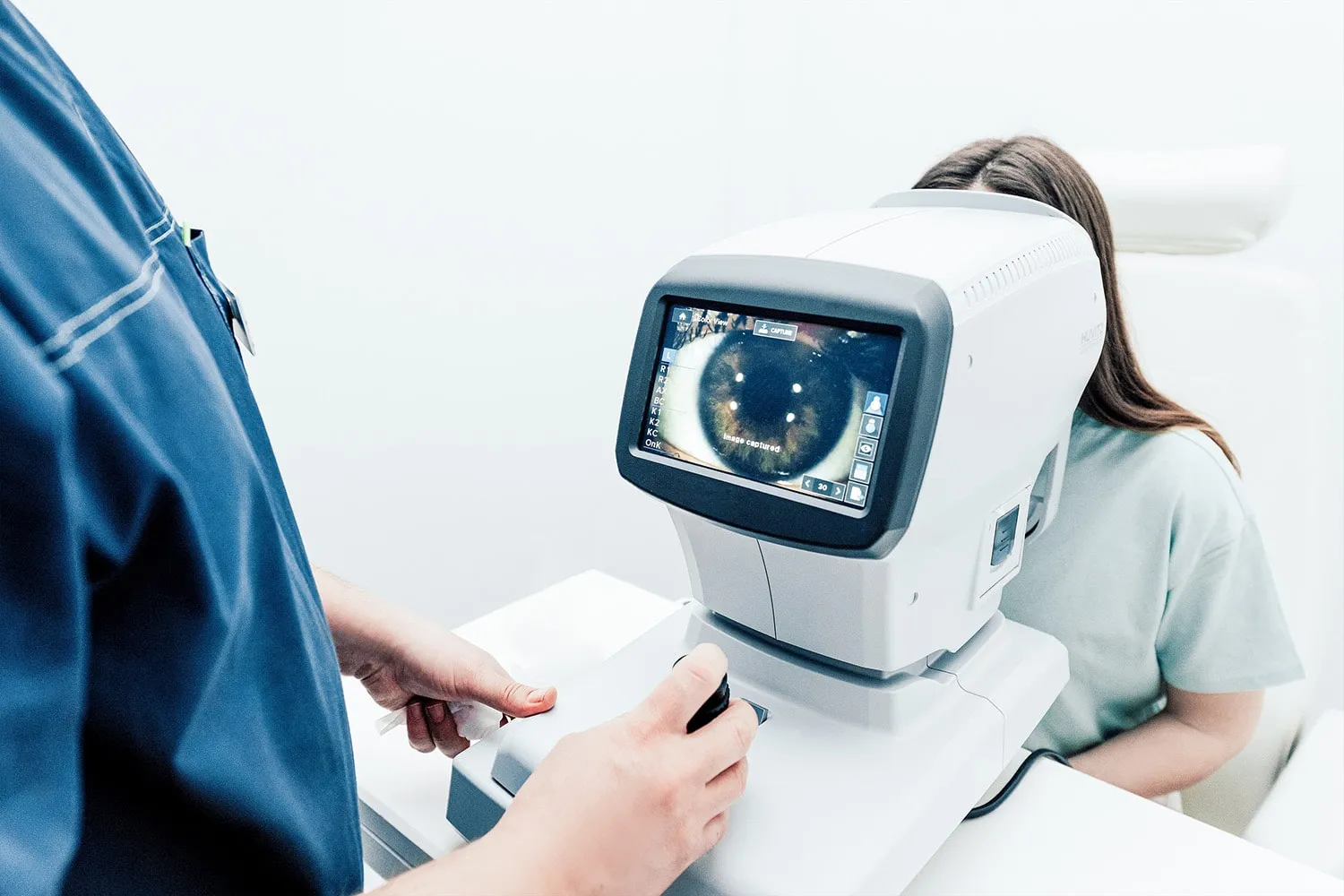
If pressure behind the eyes keeps coming back, an eye examination answers the question people worry about most: is this coming from my eyes? A comprehensive exam usually includes:
Our guides explain how glaucoma is tested and what “glaucoma suspect” means if your exam finds borderline results. If your eyes are healthy, the next step is usually your primary care doctor, a headache specialist or an ear, nose and throat specialist, depending on the pattern.
Relief depends on the cause, so the first step is working out which pattern fits. For the common, non-urgent causes:
If you have been told you have narrow drainage angles, ask your eye doctor before using decongestant or antihistamine tablets or “redness relief” eye drops, because some can trigger angle closure in susceptible eyes. Redness-relief drops can also cause rebound redness if used for more than a few days.
Netra Eye Institute is an acupuncture and Oriental medicine practice. We do not diagnose the causes of eye or head pain, and nothing we offer replaces an eye examination, emergency care or treatment from your doctor. If you have any of the red flags above, get medical care first.
Acupuncture does have evidence for preventing some headaches. Cochrane reviews found that acupuncture reduced how often episodic migraine and frequent tension-type headaches occurred, and for migraine the effect was similar to some preventive medicines, with moderate to low certainty in the evidence. Compared with sham (placebo) acupuncture, the extra benefit was small. It has not been studied for “pressure behind the eyes” as a symptom in its own right. If your headaches have been diagnosed and you want to explore acupuncture alongside your doctor’s plan, we can talk through what the evidence does and does not show.
Rarely. The common form of glaucoma, open-angle glaucoma, is painless and causes no pressure sensation. The exception is acute angle-closure glaucoma, which causes sudden severe pain with a red eye, blurred vision, halos and often nausea. Only an eye examination can rule glaucoma in or out.
Moderately raised eye pressure usually causes no symptoms, including headaches. A sudden, very high rise during an angle-closure attack does cause headache and eye pain. Our guide to high eye pressure explains what raises it and how it is treated.
Bending forward often makes sinus pressure and some headaches worse. Headaches that are consistently worse when lying down or bending, wake you at night, or come with brief dimming of vision or a whooshing sound in the ears should be checked, because they can be a sign of raised pressure around the brain.
Yes, indirectly. Stress, poor sleep and muscle tension are common triggers for tension-type headache and migraine, and both can be felt behind the eyes. Managing sleep, breaks and stress often reduces how often these headaches happen.
Allergies can cause nasal congestion and sinus pressure along with itchy, watery eyes. Antihistamines and steroid nasal sprays help many people. If you have narrow drainage angles, ask your eye doctor before using antihistamine or decongestant tablets or redness-relief eye drops.
It is very unlikely, especially when the pressure is the only symptom. Headaches that are new and steadily getting worse, are worse in the morning or when lying down, or come with vomiting, seizures, weakness, confusion, personality change or vision changes need prompt medical assessment.
If the pressure comes with any eye symptoms, such as redness, blurred vision, halos, double vision or pain when moving the eye, see an eye doctor first. If your eyes look and see normally and the pressure comes with headaches or nasal symptoms, your regular doctor is a good place to start, and an eye exam is still worthwhile if you have not had one recently.
Pressure behind the eyes is usually a headache, sinus or eye strain problem, not a sign of high eye pressure. Glaucoma is mostly silent, which is why regular eye exams matter more than any sensation. Know the red flags, especially a painful red eye with blurred vision and halos, pain on moving the eye with vision loss, and a new headache after 50 with scalp or jaw symptoms, and get urgent care if they appear.
Medical Disclaimer: This article is for general education and is not medical advice, diagnosis or treatment. Eye and head pain have many causes, and some need same-day care. Seek emergency care for a painful red eye with blurred vision, halos or nausea, sudden vision loss, a sudden severe headache, or headache with neurological symptoms or fever. Do not start, stop or change medicines without your doctor. Acupuncture and other integrative care must never delay medical assessment.