Search conditions, treatments, research reviews and articles. Press Enter to see all results, Esc to close.
Search conditions, treatments, research reviews and articles. Press Enter to see all results, Esc to close.

Blog
August 9, 2026
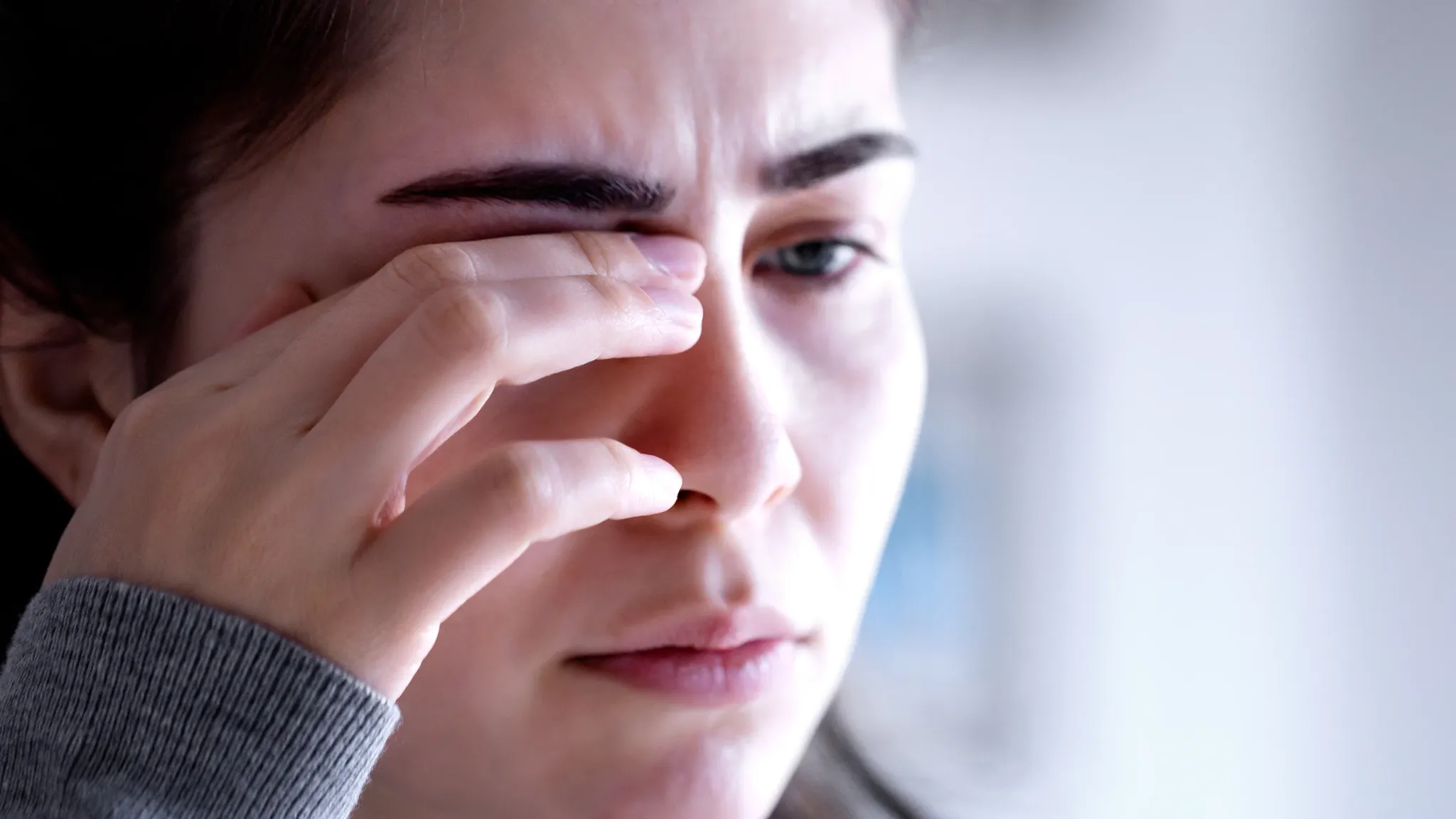
Usually grittiness, burning, a sandy or foreign-body feeling, tired eyes by evening, fluctuating blur — and, confusingly, watering. Dry eyes often water, because an irritated surface triggers reflex tears that overflow without forming a stable film. This page covers what the symptoms feel like, and which ones point somewhere other than dry eye.
A patient can truthfully say, “My eyes are dry, but tears run down my face.” Dry eye describes a failure of tear-film homeostasis, not the complete absence of liquid. Reflex tears released during irritation are different from a stable coating renewed between blinks.
This FAQ answers common questions about that paradox and the broader symptoms, tests and treatments surrounding it. It complements Netra Eye Institute’s dry-eye condition page.
When the surface breaks up, corneal nerves signal irritation. The lacrimal gland may release a burst of reflex tears. Those watery tears can overwhelm drainage and spill onto the cheek, yet they may lack adequate lipid coverage or disappear quickly.
They arise through the same system but differ in stimulus, volume and composition. A large reflex response can dilute irritants without restoring the balanced lipid, aqueous and mucin behavior needed for stable vision.
No. Some reserve may remain even when baseline secretion is low. Evaporative disease can trigger abundant reflex tears, and drainage obstruction can cause overflow regardless of tear quality.
Allergy, viral irritation, infection, blocked tear drainage, ectropion, entropion, inward lashes, foreign body and facial nerve problems are examples. In infants, congenital drainage obstruction is common; in adults, new unilateral tearing deserves assessment.
Airflow increases evaporation and directly stimulates corneal nerves. Wraparound eyewear can reduce exposure. Persistent watering in calm conditions may have another cause.
Cold wind and low humidity accelerate surface cooling and evaporation. Reflex tears then overflow. This does not necessarily indicate allergy.
Concentration reduces blink frequency and completeness. The tear film breaks up, creating irritation and reflex tearing. A vent, contact lens or high screen can magnify the effect.
Yes. Itch favors allergy; burning and fluctuating blur favor dry eye, but overlap is common. Oral antihistamines may dry the surface, while rubbing and preserved drops add irritation.
Stringy mucus can occur with tear imbalance, allergy or inflammation. Repeatedly pulling mucus can create a mucus-fishing cycle. Thick discharge with pain or infection signs needs evaluation.
Evaporation, screen work, incomplete blinking, contact-lens wear and cumulative exposure build over hours. Aqueous-deficient disease can also worsen as the tear reservoir is repeatedly depleted.
Incomplete closure during sleep, CPAP leak, overnight inflammation or recurrent corneal erosion are possibilities. Sharp pain on first opening the eye is not always routine dryness.
Yes. Epithelial stress and corneal nerve activation can cause photophobia. Uveitis, corneal infection, migraine and other disorders also cause it, so marked or new light sensitivity deserves examination.
Visual effort and ocular discomfort can coexist with headache, but migraine, refractive error, binocular dysfunction and neurologic causes must be considered. Treating the surface may not resolve every headache.
Unstable optics, squinting, lid inflammation and sustained near work contribute. “Eye fatigue” is nonspecific and can also reflect uncorrected prescription or binocular problems.
Yes. Eyelid anatomy, facial nerve function, surgery, contact-lens fit and airflow can be asymmetric. Marked one-sided pain or redness requires a local differential rather than assuming ordinary dry eye.
A complete blink redistributes tears and smooths the air–tear interface. If clarity fades over seconds, instability is plausible. Contact-lens movement and corneal mucus can behave similarly.
It can make refraction and corneal measurements variable. Large or persistent shifts also raise questions about glucose, cataract, corneal disease and accommodation.
An irregular tear surface scatters light and may create halos or ghosting. Cataract, corneal edema, uncorrected astigmatism and acute angle closure also cause halos. Pain, redness, headache or nausea with halos is urgent.
Yes. High-contrast chart acuity sampled after a blink may remain good while the image fluctuates during real tasks. Contrast, glare and endurance capture different aspects of visual quality.
Yes. Unstable corneal curvature can reduce repeatability of keratometry and topography. Surface optimization before final biometry removes one avoidable source of refractive error.
Dry eye primarily affects the tear film and ocular surface, not the retina. Retinal disease can coexist and cause distortion, fixed central blur, flashes, floaters or field changes that lubrication cannot treat.
The main supported mechanism is altered blinking and task exposure, not tear-gland injury from ordinary screen blue light. Blue-blocking glasses do not restore meibum or blinking.
Tear instability and corneal nerve changes are common contributors, but ectasia, epithelial problems, residual refractive error and neuropathic pain require assessment. Persistent worsening should return to the surgeon or corneal specialist.
Yes. Symptoms, staining and acuity often disagree. The disease can impair comfort and endurance before static acuity changes.
Risk rises with age because secretion, glands, lids, nerves and medication exposure change. Younger people can develop disease from contact lenses, screens, rosacea, isotretinoin, surgery or autoimmunity.
MGD is impaired production or delivery of eyelid oil. Thick or obstructed secretion weakens the lipid layer and increases evaporation. Gland structure and function both matter.
Ordinary screen use is not established as a direct cause of permanent gland destruction. Reduced blinking can worsen obstruction and evaporation, making good habits relevant.
Antihistamines, anticholinergic drugs, isotretinoin, some antidepressants and several systemic or topical therapies may contribute. Never stop an important medicine without the prescriber.
Active ingredients, preservatives and bottle burden can contribute. Pressure control remains essential. A glaucoma clinician can consider technique, preservative-free options, combinations, laser or surgery when appropriate.
Hormonal changes affect lacrimal and meibomian tissues, and dry eye is common after menopause. The relationship is complex; hormone therapy is not a universal ocular treatment.
Diabetes can affect corneal nerves, epithelium, secretion and glands. Reduced sensation may hide damage, and glucose fluctuation can blur vision through the lens.
Rosacea can inflame lid margins and alter meibum, promoting evaporative disease. Ocular findings may be present even when facial signs are mild.
Air leaking toward the eyes can increase evaporation, and floppy eyelid or sleep exposure may coexist. Refit the mask with the sleep team rather than stopping necessary therapy.
Lenses divide the tear film and can increase evaporation, friction and solution exposure. Fit, material, replacement and wear behavior determine risk. Painful redness is urgent.
Waterline eyeliner, debris and some cosmetics can obstruct openings or irritate the surface. Replace products, avoid sharing and remove makeup gently.
Sometimes. Sjögren disease is a major autoimmune cause, but common MGD and environmental disease are more frequent. Dry mouth and systemic symptoms help guide evaluation.
Yes. Anti-SSA can be negative in some patients. Diagnosis may integrate ocular staining, salivary flow, biopsy and rheumatologic assessment. A positive ANA alone is also insufficient.
Clinicians combine history, tear-film stability, staining, volume, Schirmer testing, lid-gland assessment, blink and sensation. Tests are selected to answer specific questions.
It measures how quickly the film becomes discontinuous after a blink. A short time indicates instability but does not distinguish MGD, low volume, mucin problems or exposure.
Fluorescein highlights epithelial disruption. Pattern and severity guide cause and urgency. Staining is not a direct pain scale.
A paper strip measures tear wetting over several minutes. Very low values support aqueous deficiency, but reflex tearing and technique make the test variable.
Infrared imaging shows gland structure and dropout. It does not measure secretion by itself or prove that a particular procedure is necessary.
No. A high value supports tear concentration and stress, but results fluctuate and do not identify the driver. A normal single result does not exclude disease.
Disease fluctuates, tests sample one moment and corneal sensation varies. Sensitization amplifies pain; neurotrophic disease can reduce it. Both objective safety and lived burden matter.
Telehealth can collect history and screen visible findings but cannot reliably stain the cornea, assess glands, measure pressure or exclude infection. Persistent or red-flag symptoms need in-person care.
No single product fits everyone. Preservatives, viscosity, lipid content, contact lenses, frequency and tolerance determine selection.
They are often preferred with frequent use, significant staining, multiple topical medicines or after surgery. Packaging still requires clean handling.
They last longer but blur more. Bedtime or severe exposure are common uses. They do not treat every inflammatory or gland mechanism.
They constrict vessels and may temporarily whiten the eye without restoring tears. Rebound redness or masking of disease can occur.
No. Repeated unsupervised anesthetic can cause severe corneal toxicity, nonhealing defects and vision loss.
They reduce T-cell-mediated inflammation and may increase tear production when inflammation suppresses secretion. Benefit often takes weeks to months, and burning can occur.
It blocks an inflammatory adhesion pathway and is approved for signs and symptoms of dry eye. Burning, transient blur and altered taste can occur.
Short monitored courses can help inflammation. Unsupervised use risks pressure elevation, cataract, delayed healing and worsened infection.
Varenicline nasal spray stimulates the trigeminal parasympathetic pathway to increase natural tearing. Sneezing, cough and nasal irritation are possible.
It is a water-free prescription drop that reduces evaporation in MGD-associated disease. It does not remove obstruction or regrow glands.
Correctly delivered safe heat may soften meibum and support expression. A cloth that cools immediately may be inadequate; excessive heat can burn or worsen rosacea.
Forceful expression can injure lids. Use clinician-directed gentle technique rather than trying to empty glands aggressively.
They slow tear drainage. They may help low-volume disease but can cause overflow, irritation, extrusion or canalicular complications and do not treat MGD.
Devices heat and express glands. Studies show benefit for selected MGD patients, but response and durability vary. Absent glands cannot be restored.
IPL applies filtered light to periocular skin and is often combined with expression. Selection, skin type, medications and ocular protection matter.
Routine reliable regrowth of established gland dropout is not an accepted outcome. Imaging technique and reduced obstruction can alter appearance. Ask for peer-reviewed evidence and independent interpretation.
Large rigid lenses vault the cornea and hold a fluid reservoir. They can protect severe surfaces and improve optics but require expert fitting, sterile filling and monitoring.
Autologous serum drops are made from a patient’s blood and contain biologic factors. They are used for selected severe or neurotrophic disease with regulated preparation and storage.
It can support healing in selected severe epithelial or inflammatory disease. It is not routine wellness treatment and does not replace correction of the underlying cause.
Correct dehydration, but excessive water does not fix obstructed glands, exposure or Sjögren disease. Fluid needs must respect heart, kidney and electrolyte conditions.
Not universally. Moderate habitual caffeine still contributes fluid, and small studies show mixed effects. Track individual dose, sleep and symptoms.
Evidence is mixed. DREAM found no advantage over olive oil, while some meta-analyses report benefit. Discuss dose, product, bleeding risk and a defined trial.
No universal diet is proved. A balanced food-first pattern supports general health. Extreme elimination diets can cause nutritional and psychological harm.
Only for a diagnosed need. True deficiency damages the surface, but excess preformed vitamin A is toxic and dangerous in pregnancy.
Exercise supports systemic health and may influence tear function, but evidence does not establish a cure. Wind and dehydration during activity can aggravate symptoms.
Yes, when indoor air is dry. Clean it carefully and avoid humidity that promotes mold or allergens.
Only sterile ophthalmic products specifically formulated for the eye should be used. Food, cosmetic and homemade products can cause toxicity or infection.
NRT is an integrative adjunctive program that may address behavior, environment, sleep, stress, nutrition and selected whole-person contributors while conventional eye care continues.
Trials and systematic reviews report improvement in some symptoms and tear measures, but protocols, controls and follow-up vary. Evidence supports cautious adjunctive discussion, not guaranteed cure.
No. Changes belong to the prescribing eye-care clinician after objective reassessment. NRT cannot replace corneal protection, gland treatment, rheumatology evaluation or infection care.
Reliable clinical evidence does not establish regeneration of absent glands. NRT claims should focus on measurable supportive outcomes and preserve established care.
Safety depends on ingredients, dose, quality, liver and kidney function, pregnancy and interactions. Disclose every product to all clinicians. Never put nonsterile herbs in the eye.
Choose outcomes such as comfortable screen time, evening burning, rescue-drop use, staining or breakup time. Review after a defined interval and stop burdensome ineffective additions.
Urgent features include severe pain, reduced vision, marked light sensitivity, focal opacity, discharge, trauma, surgery or contact-lens wear. Angle closure, infection and uveitis can threaten vision.
Mild disease often affects comfort and optics. Severe untreated surface disease can cause ulceration, infection, scarring or perforation, especially with autoimmunity or reduced sensation.
Temporary causes may resolve; chronic structural and autoimmune drivers often require maintenance. Good control can protect tissue and improve quality of life without claiming a one-time cure.
Environment, adherence, disease progression, placebo or contextual effects and incomplete mechanism coverage can change response. Reassess rather than simply adding more products.
Yes. Reduced corneal sensation can hide damage. Diabetes, herpetic disease and neurotrophic keratopathy require objective monitoring.
Record key tasks, symptom timing, drop use, lenses, airflow and new medicines. Avoid exhaustive monitoring that increases anxiety. Two or three outcomes are enough.
Ask which mechanism is active and how each treatment addresses it. That question turns a confusing product list into an accountable plan.
Not necessarily. A thin preservative-free tear may suit daytime tasks, while gel or ointment lasts longer at bedtime but blurs. Lipid-containing products may suit evaporation. The schedule should match mechanism, activity and tolerance rather than a brand’s marketing category.
It depends on onset. Lubricants act within minutes; lid heat may require consistent weeks; cyclosporine can take months. The prescriber should define a fair trial and earlier stop signs. Do not continue a painful or vision-reducing product blindly just to complete an arbitrary period.
An injured epithelium is sensitive to pH, osmolarity, preservatives and active ingredients. Brief mild stinging may be expected with some prescriptions, while severe or persistent pain, swelling or reduced vision requires contact with the clinician. Intolerance can sometimes be managed by changing formulation or treating inflammation.
Some people find cool drops soothing, and certain biologic products require cold storage. Follow the label or pharmacy because not every bottle should be refrigerated or frozen. Never use a product that was stored outside required conditions or has changed appearance.
They can dilute another drop if instilled immediately afterward, and preservatives or active ingredients can add burden. Space medicines as directed, use ointment last and keep a written schedule. Do not let lubricant use alter glaucoma or postoperative dosing.
Yes. Allergy, screens, contact lenses, isotretinoin, inflammatory disease and lid problems can affect children and adolescents. Persistent pain, photophobia, rubbing or visual change deserves pediatric eye evaluation. Adult devices, supplements and prescriptions require age-specific guidance.
Pregnancy changes hormones and medication safety. Some antibiotics, retinoids, herbs and systemic therapies are contraindicated. Discuss every topical and oral product with eye and obstetric clinicians. “Natural” and preservative-free do not automatically mean pregnancy-safe.
Fluctuating blur, glare and reduced contrast may impair night or prolonged driving even with good office acuity. Ointments and some drops temporarily blur. Stop driving when vision is unstable and ask for assessment; dry-eye treatment is not a substitute for legal or clinical driving evaluation.
Yes. Vent redirection, a lower screen, scheduled brief breaks, larger text, humidity control and flexibility to use drops can reduce burden. Severe disease may require occupational-health documentation. Accommodations support treatment; they do not prove the workplace caused the disease.
Incisions, nerve change, antiseptic, inflammation and postoperative drops can destabilize the surface. Preexisting disease may become more noticeable. The surgeon must exclude infection, pressure problems and epithelial injury before labeling worsening as expected dryness.
It is reasonable when the diagnosis, expected benefit, alternatives or package cost is unclear. Bring prior tests and ask whether the procedure targets documented disease, what evidence applies, how long benefit lasts and whether maintenance is required. A second opinion should not delay urgent corneal care.
Not always. Lubrication can soothe several conditions, and symptoms naturally fluctuate. Improvement after heat supports but does not prove MGD as the only mechanism. Diagnosis becomes more credible when history, examination and repeatable response converge.
Anxiety can amplify pain, reduce sleep and increase symptom monitoring, while severe eye symptoms understandably cause anxiety. Mental-health care can reduce suffering without implying that the ocular problem is imaginary. Surface safety should still be examined.
Recheck diagnosis, technique, adherence and duration. Consider exposure, allergy, Demodex, medication toxicity, autoimmune disease, neurotrophic cornea, recurrent erosion and neuropathic pain. “Refractory dry eye” may actually contain several untreated mechanisms. A corneal or multidisciplinary referral can reset the plan.
Prioritize essential protection, then retain only adjuncts with measurable benefit. Combine schedules, use reminders and review burden at each visit. The goal is a sustainable routine that supports participation, not a growing collection of products and rituals.
Start with urgency. Pain, reduced vision, marked light sensitivity, discharge, trauma, surgery or contact-lens wear needs prompt examination. If none is present, notice whether itch, airflow, screens, one-sided overflow or lid position predominates.
The clinician then examines cornea, conjunctiva, lids and drainage. Reflex tearing from instability is treated by stabilizing the film. Allergy receives allergy care; drainage obstruction may need irrigation or oculoplastic evaluation; malposition may need lid treatment. More drying drops are not automatically the answer to more visible tears.
Track response with both comfort and overflow frequency. If the surface improves but tearing continues, drainage or lid anatomy deserves renewed attention. If overflow stops but staining worsens, conservation alone was not sufficient. The treatment target can change as evidence accumulates.
For persistent symptoms, bring photographs of overflow, every eye-drop bottle, a medication list and notes about time, task and environment. Those details often reveal a pattern that a single office measurement cannot capture and help prevent repeated treatment of the wrong mechanism.
Watery eyes and dry eye are not opposites. Reflex tears can signal an unstable, irritated surface, while drainage and eyelid disorders create other forms of overflow. Diagnosis distinguishes them.
Protect the cornea, match treatment to mechanism and respect urgent warning signs. NRT may add individualized integrative support, but the safest claims remain proportional to evidence and coordinated with licensed eye and medical care.
For a new patient, the first practical step is often to stop guessing from visible tears. Write down whether watering is one-sided, whether vision clears after blinking, which environments trigger it and whether itch, pain, discharge or dry mouth is present. Bring every product and contact-lens detail to the examination. That information helps separate reflex tearing from allergy, drainage obstruction, exposure and infection. It also prevents a common mistake: adding increasingly thick lubricants to an eye whose main problem is blocked drainage or lid malposition. Diagnosis keeps a paradoxical symptom from becoming an endless product search.
A written mechanism and follow-up plan gives every future treatment, including NRT, an appropriate role and measurable purpose.
Medical Disclaimer: This FAQ provides general education and is not medical advice, diagnosis or treatment. Watering can result from dry eye, allergy, infection, eyelid problems or blocked drainage. Seek urgent eye care for sudden loss, severe pain, marked light sensitivity, focal opacity, trauma, chemical exposure, purulent discharge or a painful red contact-lens eye. Do not stop prescribed medicines or place nonsterile products in the eye. Netra Restoration Therapy is adjunctive and must not delay or replace ophthalmic, rheumatologic or emergency care.