
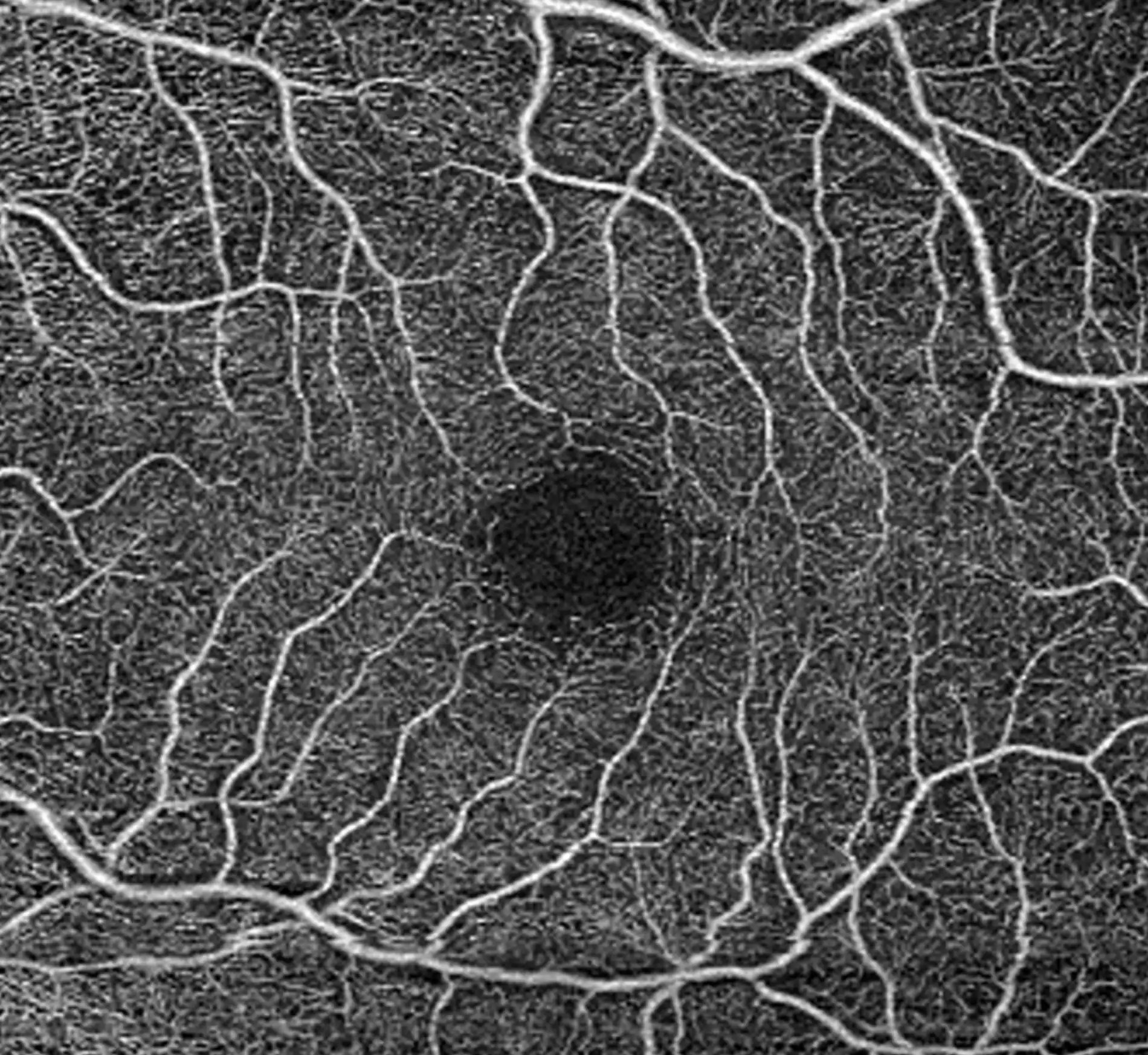
Clinicians have long suspected that primary open-angle glaucoma (POAG) involves more than elevated intraocular pressure. Vasospastic conditions such as migraine and Raynaud's phenomenon are known to be associated with the disease, and changes in retinal vessel caliber and tortuosity have been documented in glaucomatous eyes. What has remained unclear is whether vascular dysfunction precedes optic nerve damage or follows it. A new study from University College London and Moorfields Eye Hospital, published in the British Journal of Ophthalmology, approaches the question through erectile dysfunction (ED), a recognized early marker of systemic endothelial disease, and finds that men treated for ED were subsequently diagnosed with POAG at a higher rate than matched controls.
This was a prospective nested case-control study drawing on two population-based UK databases, Clinical Practice Research Datalink (CPRD) Gold and CPRD Aurum. The study population comprised men aged 40 and older between 2005 and 2022. In total, 218,056 POAG cases were matched by age and general practice to 876,872 controls, for just under 1.1 million participants. ED was defined by a diagnostic code or a prescription for ED medication recorded before the glaucoma index date; men whose ED was recorded after their glaucoma diagnosis were excluded. Conditional logistic regression was performed across five progressively adjusted models incorporating demographic, socioeconomic, cardiometabolic and respiratory covariates.
ED medications were prescribed in 20% of cases vs. 17% of controls. After adjustment for age, ethnicity and deprivation, ED was associated with 29% higher odds of POAG in CPRD Gold (OR 1.29, 95% CI 1.25–1.32) and 17% higher odds in CPRD Aurum (OR 1.17, 95% CI 1.15–1.18). In the fully adjusted model the excess narrowed to 12% to 23% but remained statistically significant. Older age and Black or Asian ethnicity were consistently associated with increased risk, as were hypertension, diabetes, asthma and migraine, while myocardial infarction and angina were associated with lower risk. Sickle cell disease showed the largest effect (OR 6.36 in Gold, 1.55 in Aurum), which the authors attribute in part to secondary rather than primary glaucoma.
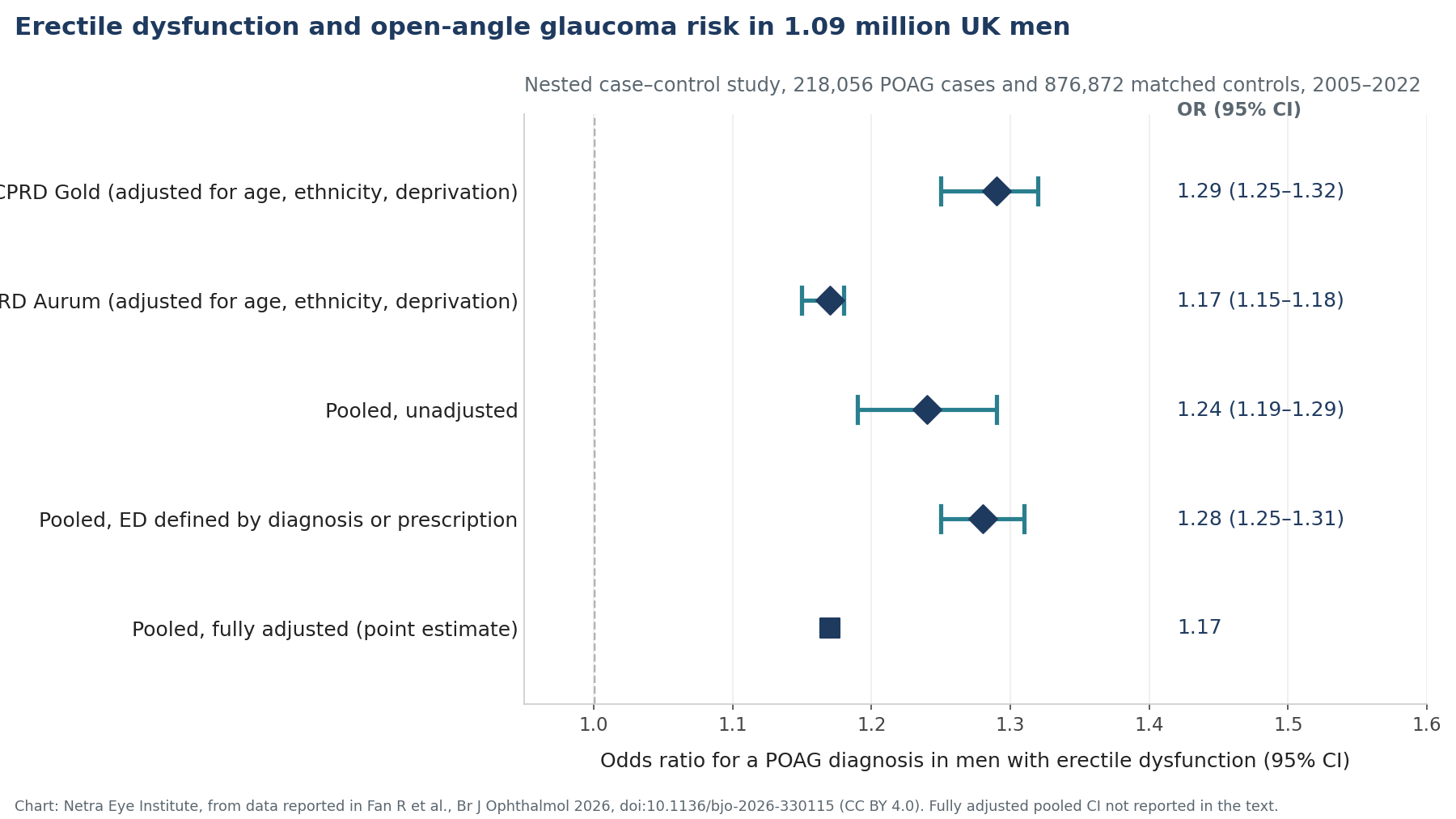
The authors devote considerable attention to whether the association reflects the medication or the condition it treats. A 2025 US electronic health record study had implicated sildenafil directly. The UK team favors the alternative explanation, noting that PDE5 inhibitors are taken on demand, roughly once a week, which limits any sustained pharmacological effect on ocular perfusion. Broadening the ED definition to include diagnosis codes alongside prescriptions slightly strengthened the association, which they interpret as further support for underlying vascular insufficiency as the driver. Because ED preceded POAG in every case, they propose that ED may act as a precursor, reflecting endothelial dysfunction or impaired microvascular autoregulation that later manifests at the optic nerve. They acknowledge emerging interest in repurposing PDE5 inhibitors for Alzheimer's disease but note that real-world on-demand dosing makes a comparable benefit to the eye unlikely.
The study's strengths are substantial: two independent national datasets, exposure recorded before outcome, reproduction of established POAG risk factors and estimates that remained stable across five levels of adjustment. Its limitations are those inherent to coded primary care data, and the authors address them candidly. More than half of POAG goes undiagnosed, and many men obtain ED treatment without a formal diagnosis, so both exposure and outcome are likely undercounted. Men who consult for ED may also be examined more frequently and have glaucoma detected earlier. Glaucoma subtype is inconsistently coded in general practice, so some angle-closure and secondary cases are included among POAG cases, and the two databases differed enough in effect size to produce formal heterogeneity. The authors argue that most of these biases would push the estimate toward the null, which seems reasonable. Even so, the dataset contains no intraocular pressure, visual field or OCT measurements, and the outcome rests entirely on a general practitioner's coding. An odds ratio in the range of 1.2 also describes a population-level signal rather than a useful predictor for an individual patient.
For eye care practitioners, the practical implication is incremental. A history of ED, or a PDE5 inhibitor on the medication list, represents a systemic vascular risk factor that can reasonably be considered alongside family history, ethnicity and blood pressure when judging how closely to monitor the optic nerve and how soon to schedule follow-up. The same vascular reasoning already underpins the clinical thinking on normal-tension glaucoma, where damage progresses despite unremarkable pressures. The findings offer no basis for discontinuing ED treatment; the authors state that on-demand dosing is unlikely to either harm or protect the eye. Whether structured, regular PDE5 inhibitor use could improve ocular perfusion remains untested and, as the authors conclude, will require experimental studies before any clinical recommendation can follow.
Source
Fan R, Gonzalez-Izquierdo A, Qummer Ul Arfeen M, Warwick A, Stuart KV, Ung CY, Fitzpatrick NK, Khawaja A, Rudnicka AR, Foster PJ, Owen CG. Erectile dysfunction and the risk of glaucoma in men: a prospective nested case–control study using large-scale UK primary care data. Br J Ophthalmol. Published online September 11, 2026. doi:10.1136/bjo-2026-330115. Open access (CC BY 4.0).
Read the journal articleThis review was prepared by the Netra Eye Institute editorial team together with clinicians in the relevant specialty. AI tools may have been used during drafting and editing; every statement was reviewed and approved by the human editors responsible for this series.