Blog
August 9, 2026
Treatment for computer vision syndrome is mostly mechanical rather than medical: correct the prescription for screen distance, take a 20-second break every 20 minutes, blink deliberately, fix glare and monitor height, and treat any underlying dry eye. Blue-light filters have not been shown to help. This page explains what each measure actually addresses.
Screens have become the place where many people work, study, communicate, bank, read and relax. As screen time has grown, so has a market promising protection from blue light. Advertisements often combine three different questions—eye damage, eye strain and sleep—then imply that a single tinted coating solves all three. The science is more nuanced.
People can experience burning, blur, headache, eye fatigue and difficulty refocusing after long periods on a device. These symptoms deserve to be taken seriously. Yet a symptom being triggered during screen use does not prove that blue wavelengths are injuring the retina. The strongest available clinical evidence points instead to how we use screens: we blink less completely, maintain one near distance, tolerate glare, sit in awkward positions and continue for long periods without changing visual demand.
This article separates established findings from plausible but unproven claims. It also provides a practical plan for screen comfort and explains when Netra Eye Institute’s neuro-visual rehabilitation therapy may be relevant as adjunctive care.
Visible light is a band of electromagnetic energy perceived by the human visual system. Blue light occupies the shorter-wavelength, higher-energy portion of the visible spectrum, often described broadly as approximately 400 to 500 nanometers. It is not ultraviolet radiation. UV is outside visible light and has distinct biological effects and protection standards.
Sunlight is by far the dominant natural source of blue light for most people. LEDs and digital displays also emit blue wavelengths, but screen intensity at normal viewing distances is much lower than daylight exposure. In the laboratory, researchers can expose retinal cells or animals to intense, prolonged or narrowly selected wavelengths and demonstrate photochemical stress. Those experiments help scientists investigate mechanisms; they do not establish that consumer screens used normally produce the same dose, tissue exposure or disease outcome in humans.
The human eye also filters light. The cornea and lens block most UV, while visible light reaches the retina so vision can occur. With age, the natural lens becomes more yellow and absorbs more short-wavelength light. After cataract surgery, modern intraocular lenses vary in spectral transmission but commonly include UV filtration. These facts are relevant to optics, but they do not mean everyone needs an additional blue-blocking spectacle lens.
No convincing clinical evidence currently shows that ordinary screen exposure causes retinal damage, AMD or blindness. The American Academy of Ophthalmology has stated that there is no scientific evidence that light from computer screens damages the eyes and does not recommend special eyewear solely for computer use.
Long-term epidemiologic questions are difficult, and research should continue as display technologies and behavior change. Still, a theoretical mechanism is not the same as demonstrated clinical risk. Articles that extrapolate directly from cell cultures, very high-intensity animal exposure or industrial light hazards to a phone at normal brightness overstate what those studies can prove.
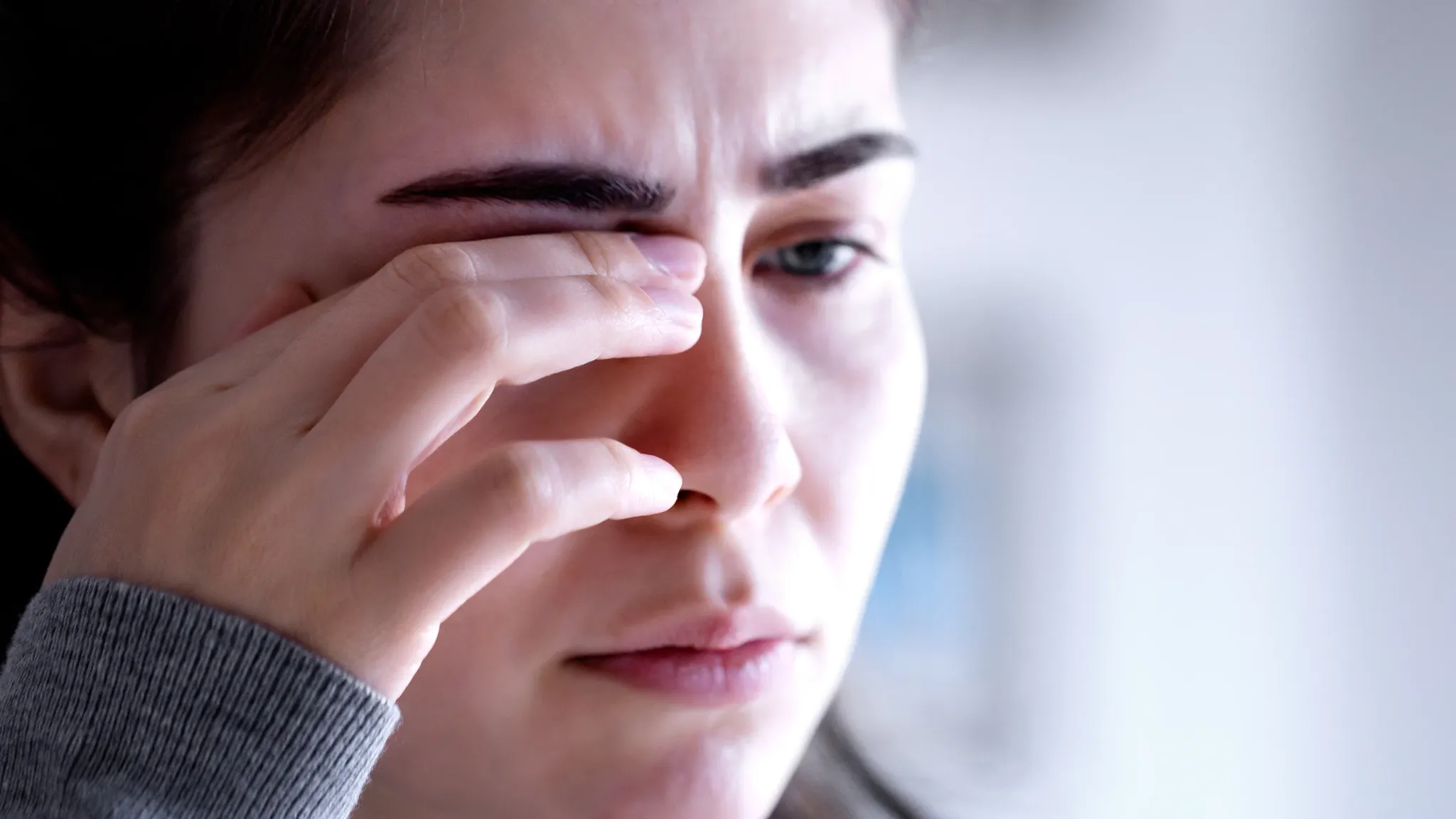
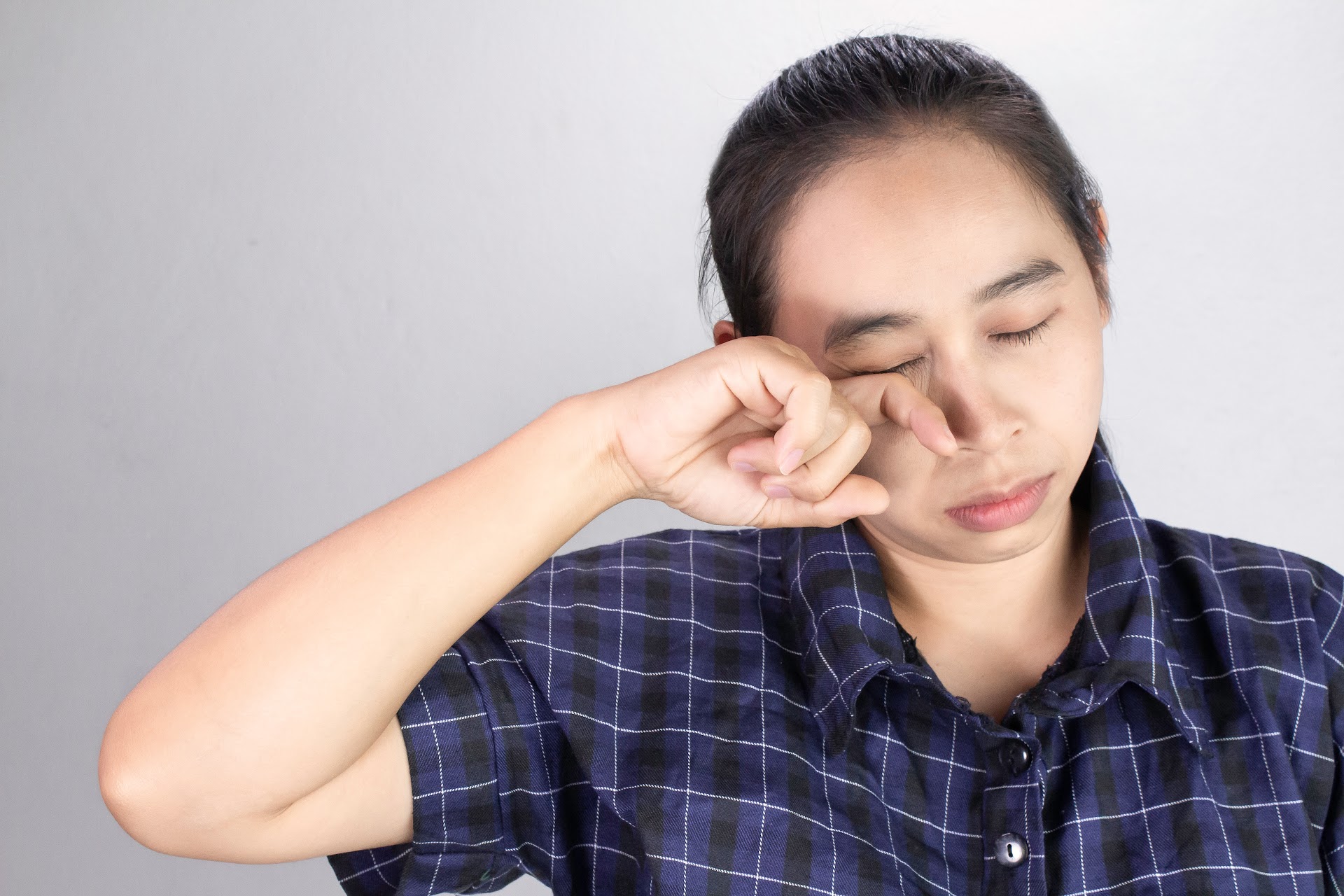
Digital eye strain—also called computer vision syndrome—is a genuine collection of symptoms associated with prolonged device use. It may include dryness, burning, grittiness, tearing, intermittent blur, focusing delay, headache, neck or shoulder pain and a sense that the eyes are “working too hard.” Blue light has been promoted as the main cause, but randomized trials have not shown a meaningful, consistent advantage for blue-filtering lenses over standard lenses.
The 2023 Cochrane review included 17 randomized trials. It concluded that blue-light-filtering spectacle lenses probably make little or no difference to short-term computer-related eye strain and found no evidence supporting retinal protection. Trials were generally small, brief and at risk of bias, so absolute certainty is not possible. The responsible conclusion is that these products have not demonstrated the broad benefits their marketing often implies.
Yes, light is a major signal to the circadian system. Specialized retinal ganglion cells containing melanopsin are particularly responsive to short-wavelength light and help communicate environmental timing to the brain. Bright evening light can delay melatonin timing, increase alertness and make it harder for some people to fall asleep.
But “light affects circadian biology” does not mean a lightly filtering clear lens is a proven treatment for every sleep problem. Studies of amber or blue-blocking lenses have used different products, intensities, timing and populations, producing mixed results. Screen content, emotional stimulation, notifications, irregular bedtimes, room lighting, caffeine, pain, sleep apnea and insomnia behavior can matter as much as wavelength. A sleep intervention should address the whole evening environment.
The tear film forms a smooth optical surface over the cornea. Each complete blink redistributes tears and helps express oils from the meibomian glands. During concentrated visual tasks, blink rate often falls and more blinks may be incomplete. Tears evaporate between blinks, producing surface irregularity, burning and fluctuating vision.
This explains a common pattern: text becomes blurry after staring, then clears for a moment after blinking. Air conditioning, fans, low humidity, contact lenses, eyelid-gland dysfunction and certain medicines can amplify the effect. The solution is not automatically a blue filter; it may require blink training, environmental changes, lubrication or a clinical dry-eye evaluation.
Near viewing requires accommodation—the lens-focusing response—and convergence, the coordinated inward turn of the eyes. Long uninterrupted periods can provoke fatigue, especially when a prescription is outdated or when binocular coordination is inefficient. Symptoms may include brow ache, words moving, loss of place, double vision, slow refocusing from near to far or a strong desire to close one eye.
A person can have 20/20 distance acuity and still have an accommodative or binocular-vision problem. Over-the-counter blue-blocking glasses do not diagnose or correct these conditions. An eye examination can determine whether refractive correction, prism, task-specific lenses or rehabilitation is appropriate.
Phones are often held closer than desktop monitors, increasing accommodative and convergence demand. Small fonts encourage leaning forward and suppress natural posture changes. Increasing text size and moving a device farther away can reduce demand without making the content harder to see.
As a starting point, place a desktop monitor roughly an arm’s length away, with the top of the screen near or slightly below eye level. There is no perfect universal measurement; screen size, prescription and work task matter. Comfort and upright posture are the goal.
Reflections lower contrast and cause people to squint or adopt awkward head positions. A bright screen in a dark room can feel harsh, while a dim display in a bright room can be difficult to read. Adjust screen brightness to resemble the surrounding work area, reposition lamps and windows, and consider a matte screen surface if reflections remain troublesome.
Anti-reflective lens coatings may improve comfort by reducing reflections from the front and back surfaces. That is a different optical feature from blue-light filtering and can be useful with or without a blue filter.
Small amounts of astigmatism, farsightedness or nearsightedness may become noticeable during prolonged screen work. After the early-to-mid forties, presbyopia reduces the ability to focus at near. Reading glasses selected for a book may not match a more distant desktop monitor, and a progressive-lens wearer may lift the chin to find the correct zone.
Task-specific computer glasses can be valuable when prescribed for working distance and posture. Their benefit comes primarily from optical power and lens design, not a blue coating.
Digital eye strain is not purely ocular. Forward-head posture, poorly positioned laptops, unsupported arms and sustained muscle tension contribute to headache and fatigue. Migraine, jaw tension and cervical problems can overlap with visual triggers. A workstation review should include chair height, keyboard, monitor, lighting and movement—not just spectacles.
Blue-filtering products range from nearly clear lenses that remove a small fraction of short wavelengths to deeply amber lenses that substantially change color. Pooling them under one label creates confusion. Outcomes also differ: immediate glare preference, visual performance, eye-strain ratings, melatonin timing and long-term retinal disease are not interchangeable.
Across randomized clinical trials, clear or lightly tinted blue-filtering spectacles have not shown a consistent clinically important reduction in digital eye strain compared with ordinary lenses. The Cochrane review also found mixed sleep outcomes and insufficient data on many possible adverse effects. No trial evidence established prevention of macular disease.
That does not mean no person can prefer a filter. Some individuals report reduced perceived glare or sensory comfort with a particular tint. Migraine and photophobia management sometimes uses precision tints selected for symptoms, although this is a separate clinical question from protecting everyone against screen blue light. Preference can be legitimate when claims remain proportionate.
Possible downsides include cost, color distortion, reduced light transmission and a false sense of security that leaves the actual problem untreated. Deep amber lenses worn during the day may change color discrimination or reduce alerting light exposure. Any filter used for driving must preserve safe visibility and signal recognition.
The familiar 20-20-20 suggestion—every 20 minutes, look about 20 feet away for 20 seconds—is a useful memory aid, not a precisely validated medical dose. Its value is behavioral: release sustained near focus, blink and change posture. Some people do better with shorter, more frequent microbreaks or a five-minute movement break each hour.
During a break, look genuinely far rather than switching from a computer to a phone. Stand, move shoulders, relax the jaw and notice whether blinking is complete. A timer or software reminder can help until the behavior becomes automatic.
Use a gentle full blink: upper and lower lids meet without squeezing. Clusters of several complete blinks can refresh the tear film. Keep fans and vents from blowing directly across the face. A humidifier may help in a dry room if maintained safely.
Artificial tears are not interchangeable. Preservative-free lubricants may be preferable when frequent dosing is needed, while lipid-containing formulations may help some evaporative patterns. Redness-relief drops can mask a problem and may cause rebound redness. Persistent burning, fluctuating vision or contact-lens intolerance warrants examination before repeated self-treatment.
Bring typical working-distance measurements and devices to an eye examination. Explain whether symptoms occur on a laptop, multiple monitors, tablet or phone and at what time of day. A clinician can assess refraction, presbyopia, accommodation, convergence, ocular alignment and surface health.
For people whose sleep is affected, begin with fundamentals:
Amber glasses that strongly filter blue light may be considered in selected circadian or sleep situations, ideally with professional guidance. A weak, nearly clear filter should not be assumed to have the same biological effect as a research intervention.
Parents reasonably worry about vision, attention, sleep and learning. Normal display blue light has not been shown to damage a child’s retina. The more useful concerns are displacement and behavior: prolonged near work can replace outdoor time, physical activity, face-to-face interaction and sleep.
More time outdoors is associated with lower risk of developing childhood myopia. The mechanism is not simply “getting blue light”; outdoor illumination, retinal signaling and different patterns of visual focus may all contribute. Children should have daily outdoor activity with appropriate UV protection, not unprotected sun staring.
Screens should be positioned at a reasonable distance, with age-appropriate content and breaks. A child who sits very close, covers one eye, has headaches, loses place, squints, develops a new eye turn or struggles with reading deserves an eye examination. School screening can miss refractive, binocular and focusing problems.
Nighttime devices can delay bedtime and expose children to stimulating content. Household routines—charging devices outside the bedroom, setting a consistent cutoff and modeling healthy use—usually matter more than buying special lenses.
A multi-monitor workstation can produce repeated large eye and head movements, while a laptop encourages neck flexion and close viewing. Place the primary monitor centrally, keep secondary displays at a similar height and arrange windows so gaze shifts do not cross strong glare. If documents are read continuously, a document stand near screen height reduces repeated refocusing.
Remote workers may spend fewer minutes walking between meetings than they did in an office. Calendar brief movement breaks and avoid using every break for another small screen. A headset can prevent cradling a phone, and an external keyboard allows a laptop display to be raised.
Students often alternate paper, laptop and phone while maintaining near focus for hours. Breaks should include distance and physical movement. Reading difficulty, loss of place or headache should not be attributed automatically to motivation. Comprehensive evaluation may reveal refractive error, accommodative dysfunction, convergence insufficiency, dry eye, migraine or a learning disorder requiring different professionals.
No lens has been shown to make unlimited study physiologically effortless. Sleep and spaced learning support performance more reliably than late-night screen accessories.
Fast games increase concentration and suppress blinking. High frame rates and low latency may improve motion smoothness, but they do not prevent surface dryness or postural strain. Reduce reflections, enlarge interface text, blink during natural pauses and stop if headache, nausea or persistent double vision develops. Motion sensitivity after concussion or vestibular illness may require graded clinical rehabilitation rather than forced exposure.
Light and visual motion can trigger symptoms without indicating retinal injury. Brightness, flicker, contrast, scrolling and crowded patterns may all contribute. Some screens use pulse-width modulation to control brightness, and sensitive users may perceive discomfort even when flicker is not consciously visible.
Management may include stable room lighting, slower scrolling, reduced animation, scheduled exposure, migraine treatment and individualized tints. Deep filters should not be worn constantly without review because excessive avoidance can reduce function. New neurologic symptoms or a major change from a typical migraine pattern needs urgent medical evaluation.
“Digital detox” language sometimes implies that the eye stores radiation or toxins from screens. It does not. Time away from devices can improve sleep, movement, attention and symptoms, but not because the retina is being chemically cleansed.
Claims that a filter increases productivity or prevents headache also need context. If a study compares a new prescription lens with an old scratched lens, improvement cannot be assigned to blue filtering alone. Placebo effects matter in subjective comfort research, which is why masking and a credible control lens are important.
Be cautious when a product cites only laboratory transmission graphs, testimonials or cell studies. Ask whether randomized human trials measured the outcome being advertised, whether the difference was clinically meaningful and whether the product used in the study matches the product being sold.
Screen software that shifts color temperature is low cost and generally safe for preference, but its effect depends on intensity and timing. Turning an image orange while keeping the device very bright may still deliver a strong circadian light signal. Reducing total light and ending use are more dependable levers.
Self-care is reasonable for mild, occasional fatigue that resolves with rest. Schedule an eye examination when symptoms are frequent, worsening or interfering with work or school, or when there is persistent blur, eye pain, double vision, pronounced light sensitivity, contact-lens intolerance or recurrent headache.
Urgent evaluation is needed for sudden vision loss, a curtain or shadow, a new shower of floaters or flashes, a painful red eye with nausea, chemical exposure, trauma or new neurologic symptoms. These are not typical digital eye strain. Review When Vision Changes Cannot Wait and follow emergency instructions rather than waiting to see whether a screen break helps.
Neuro-visual rehabilitation therapy at Netra Eye Institute focuses on how visual information is received, coordinated and used during daily activities. It is not an anti-radiation treatment and does not prevent retinal degeneration. For many people with uncomplicated digital eye strain, ergonomic changes, accurate prescription correction and dry-eye care are sufficient.
NRT may become relevant when a medically stable patient has persistent symptoms involving binocular coordination, accommodation, eye-movement control, visual motion sensitivity, post-concussion visual dysfunction or difficulty tolerating complex environments. Assessment may examine how symptoms change across distance, duration, visual field, posture and cognitive load. A program can include graded focusing and eye-teaming tasks, gaze stabilization, pacing, environmental modifications and home activities linked to specific functional goals.
Claims should remain diagnosis-specific. NRT does not cure dry eye, migraine, retinal disease or sleep disorders, although coordinated care may reduce secondary visual burden. Patients with ocular-surface disease may need optometric or ophthalmic treatment; patients with migraine may need neurologic care; patients with sleep disorders may need primary-care or sleep-medicine evaluation.
Learn more about Neuro-Visual Rehabilitation Therapy, read about Netra Eye Institute’s clinical approach, or request an evaluation. A useful evaluation starts by asking what the patient needs to do—not by assuming blue light is the diagnosis.
Night mode lowers short-wavelength output and often reduces brightness. It may feel more comfortable and can be part of an evening routine, but it does not make unlimited nighttime use harmless to sleep. A dim screen with stimulating content can still delay bedtime.
There is no clinical evidence that they prevent AMD. Established AMD care includes retinal examinations, smoking avoidance, cardiovascular risk management, a nutrient-rich diet and AREDS2 supplementation only for eligible disease stages.
Several explanations are possible: an accurate new prescription, an anti-reflective coating, slightly lower brightness, behavioral expectation or a tint that improves subjective comfort. Benefit to one person does not establish retinal protection for everyone. If they are comfortable and do not impair color or visibility, preference is reasonable.
Dark mode can reduce luminance in a dark environment, but readability depends on contrast, font size, astigmatism and individual preference. Some people find light text on a dark field blooms or appears less sharp. Choose the mode that permits relaxed reading and match it to room lighting.
Reflective e-ink screens can reduce glare and are comfortable for some readers, but any prolonged near task can reduce blinking and strain focusing. Distance, font, lighting and breaks still matter.
Some alter glare or spectral output, but ordinary screens have not been shown to create a retinal-damage hazard requiring a protector. A matte surface may be useful for reflections; evaluate it as a comfort accessory rather than medical protection.
When symptoms are mild and no warning signs are present, a short structured experiment can identify modifiable triggers more reliably than buying several products at once. For one week, keep the prescription and device constant while changing basic behaviors:
If function improves, preserve the smallest effective changes. If symptoms persist, bring the record to an examination; it can help distinguish surface dryness, refractive demand, binocular stress and migraine patterns. Do not conduct this experiment when there is pain, double vision, neurologic change, sudden loss, trauma or a red photophobic eye—those require professional triage.
Introduce a blue-filtering lens only after baseline changes if you want to test personal comfort. Compare it under the same task and lighting, and decide using function rather than the color of the coating. A lens that feels pleasant may be kept; lack of benefit is not a failure and does not leave the retina unprotected.
The record can also expose a nonvisual pattern. Symptoms that begin after missed meals, dehydration, poor sleep or long meetings may need a broader health and workload response. Conversely, one-eye blur that remains despite blinking, or double vision that appears at a predictable duration, gives the examiner a more specific starting point than the general phrase “screen strain.”
The phrase “blue light” has become a shortcut for several different experiences. Normal screen use has not been shown to damage the retina. Digital eye strain is common, but it is better explained by blinking, tear-film stability, near focus, visual correction, glare, posture and duration. Evening light can influence sleep, yet wavelength is only one part of a broader behavioral and environmental system.
Blue-filtering lenses are optional, not essential. Their value should be judged by measurable comfort and safe visual performance, without claims that outrun evidence. Start with the fundamentals: accurate examination, appropriate working distance, readable text, reduced glare, full blinking, meaningful breaks and a consistent sleep routine. When persistent visual-function problems remain after medical causes are addressed, NRT may offer a structured adjunct—not a cure for light exposure.
Medical Disclaimer: This article is for educational purposes only and does not provide medical advice, diagnosis or treatment. Persistent eye discomfort, headache, double vision, light sensitivity or blurred vision requires individualized assessment. Seek urgent care for sudden vision loss, flashes or a curtain-like shadow, severe pain, chemical exposure, trauma or neurologic symptoms. Supportive rehabilitation should not delay established eye, neurologic or emergency care.