
Ayurvedic eye treatment in the United States is almost always paid for out of pocket, and the total depends far more on how many procedure sessions you commit to than on any single headline price. A consultation is one figure. A supervised course of daily eye procedures over two or three weeks is a different order of magnitude. Herbal preparations sit on top of both. Insurance will rarely help, though a health savings account sometimes can. This page sets out the real line items, the ranges US integrative clinics typically quote, and the pricing behavior that should make you stop.
Complementary-care boundary: Paying for Ayurvedic eye care does not buy you a substitute for ophthalmic treatment. It does not replace intraocular pressure control in glaucoma, anti-VEGF injections in wet macular degeneration or diabetic macular edema, laser or surgery for retinal tears and detachments, cataract surgery, antimicrobial therapy for an infected cornea, or the prescription anti-inflammatory drops used in moderate to severe dry eye disease. If a clinic prices a package in a way that assumes you will stop any of those, the price is not the problem with it.
What You Are Actually Paying For
Most of the cost of Ayurvedic eye care is clinician time and hands-on procedure time, not materials. A netra tarpana session is a trained practitioner sitting with you for forty minutes or more, building a dough ring around each orbit, warming and holding medicated ghee at a controlled temperature, and monitoring your response throughout. Nasya, shirodhara, and abhyanga are similarly labor-dense. That is why the per-session price looks closer to a physical therapy visit than to a prescription refill.
The second thing you pay for is coordination. A clinic that is doing this responsibly has read your ophthalmology records, knows which drops you are on, knows what your last imaging showed, and has decided what it will not do. That review takes real time and it is usually folded into the consultation fee. A clinic that skips it can charge less, which is one reason cheap quotes deserve more scrutiny than expensive ones.
Why There Is No Single Price for Ayurvedic Eye Treatment
The phrase covers several different services
"Ayurvedic eye treatment" is not one procedure. It can mean a single consultation with dietary and routine advice, a course of netra tarpana, nasya, a herbal regimen, or a residential panchakarma program lasting weeks. These differ by an order of magnitude in cost. When someone quotes you a number without saying which of these they mean, the number is not usable.
Procedure courses are priced per session, not per condition
Most Ayurvedic ocular procedures are prescribed as a run of consecutive daily sessions rather than as a one-time intervention. The session price may look modest. Multiplied by seven, fourteen, or twenty-one days, it becomes the dominant line on your bill. Always ask how many sessions the practitioner expects before you compare one clinic's session rate against another's.
Your diagnosis changes the intensity, and the intensity changes the price
Someone with evaporative dry eye and stable vision may be advised a short course and a simple home routine. Someone with a chronic retinal or optic nerve condition, already under ophthalmic care, may be offered a longer protocol with more frequent review. The clinical picture drives the schedule, and the schedule drives the cost.
Geography and practitioner background move the number substantially
Fees in the New York and New Jersey metropolitan area run higher than in most of the country, as they do for every kind of clinical service. A program delivered by a licensed clinician inside a medical practice is priced differently from one delivered at a wellness spa, and the two are not interchangeable even when the procedure has the same Sanskrit name.
Herbal preparations are a separate, recurring expense
Oral formulations and medicated ghee are dispensed and paid for separately from procedure time. They recur monthly for as long as you stay on them, which is the part patients most often fail to budget for. A course that ends after three weeks can leave behind a supplement bill that continues indefinitely unless someone sets a review date.
Some of what you will be quoted is not Ayurveda at all
Integrative clinics frequently bundle acupuncture, microcurrent, nutritional testing, or supplement lines into the same quote. Those have their own evidence base, their own risks, and in the case of acupuncture, their own billing codes. Ask for the quote itemized by service so that you can see what share of the total is actually Ayurvedic therapy.
The Cost Structure, Line by Line
Initial integrative consultation
The first visit is typically sixty to ninety minutes and covers history, current medications, records review, and a plan. Across US integrative and Ayurvedic clinics this commonly falls somewhere in the range of roughly $150 to $400, with longer physician-led intakes at the upper end or above it. Netra Eye Institute's own consultation fee should be confirmed with the clinic directly rather than inferred from this range.
Diagnostic workup
Ayurvedic assessment itself does not usually carry a separate charge. What can carry one is conventional testing: tear film assessment, meibography, visual fields, OCT imaging. When those are performed by an ophthalmologist or optometrist they are ordinarily billed through your medical insurance in the usual way, and that part of your care often is covered even when the Ayurvedic part is not.
Per-session procedure cost
A single supervised ocular procedure session such as netra tarpana typically sits in the region of roughly $100 to $250 at US clinics, with longer or combined sessions costing more. Adjunct body therapies delivered the same day are sometimes priced into that figure and sometimes added to it. Ask which, because the difference across a three-week course is large.
A typical course
Courses of seven, fourteen, or twenty-one consecutive daily sessions are the usual prescribing pattern. At the ranges above, that puts a realistic course somewhere between roughly $1,000 and $4,000 before herbs, and higher for residential programs that include accommodation and meals. This is the number to ask for at the outset, because it is the one that actually determines whether you can afford the plan.
Maintenance
After an initial course, practitioners commonly suggest periodic maintenance sessions, often monthly or quarterly, alongside seasonal review visits. Each of those is charged at or near the standard session rate. Over a year, maintenance can quietly approach the cost of the original course. Agree in advance on how maintenance frequency will be decided and what would justify stopping it.
Herbal preparations as a separate line
Oral formulations, medicated ghee, and eye-specific preparations are dispensed separately. Monthly spending in the region of $40 to $150 is common, more if several formulations run at once. Ask for the name, the manufacturer, and the testing status of anything you are given, because product quality varies sharply and heavy metal contamination has been documented repeatedly in this market.
Travel, time away, and the costs nobody quotes
A daily course means showing up daily. For patients who work, that is parking, transit, or unpaid leave for three weeks. For patients traveling for a residential program, it is airfare and lodging. These are not on the clinic's price list and they routinely exceed the herbal line item. Put them in your own calculation before you commit.

How This Compares With Conventional Treatment Out of Pocket
The comparison people make is usually the wrong one
Patients tend to set the full price of an Ayurvedic course against their copay for an eye drop and conclude that Ayurveda is expensive. That is not a like-for-like comparison. The drop has an insurer paying most of it. The honest comparison is between what each approach costs you, what each one is actually expected to do, and what happens if you choose only one.
Prescription dry eye therapy
Cyclosporine and lifitegrast are covered by many commercial plans, but coverage often requires prior authorization and a documented trial of artificial tears first. Patients whose plans decline, or who have a high deductible, can face substantial monthly costs. In that specific situation the out-of-pocket gap between conventional and Ayurvedic care narrows considerably, which is worth knowing before you assume one is obviously cheaper.
Glaucoma medication over a lifetime
Pressure-lowering drops are generally inexpensive per bottle once generic, but they are taken daily for decades, and the monitoring visits and visual field testing around them recur indefinitely. Most of this is covered. None of it is optional. An Ayurvedic course does not reduce this spending, because it does not replace any part of it.
Intravitreal injections
Anti-VEGF injections for wet macular degeneration, diabetic macular edema, and retinal vein occlusion carry high list prices, and patients on coinsurance rather than a flat copay can owe a meaningful share of each dose. Injections often continue for years. This is genuinely expensive care, and it is also the care that preserves sight in these conditions. Cost pressure here is real, and it is not a reason to substitute.
Surgery
Cataract surgery, glaucoma procedures, and retinal surgery are typically covered when medically indicated, with the patient responsible for deductible and coinsurance. Elective upgrades, such as premium intraocular lenses, are not covered and are paid out of pocket. Those upgrade fees frequently exceed the cost of a full Ayurvedic course, which surprises patients who have assumed the opposite.
What the comparison should conclude
Conventional treatment is more expensive in absolute terms and far cheaper to you, because insurance absorbs most of it. Ayurvedic care is cheaper in absolute terms and more expensive to you, because you absorb all of it. Neither fact says anything about which one works. Budget for the conventional care first, since it is the part that protects vision, and treat the Ayurvedic spend as discretionary on top of it.
Why Health Insurance in the US Does Not Generally Cover Ayurvedic Therapy
There are no procedure codes to bill
American medical billing runs on CPT codes. Acupuncture has them. Physical therapy has them. Netra tarpana, nasya, shirodhara, and panchakarma do not. Without a code, a claim cannot be submitted in the ordinary way, and a clinic cannot bill your plan for the procedure even if it wanted to. This is the single most concrete reason coverage does not exist, and it is not something an individual practice can work around.
Practitioner licensure does not line up
Insurers pay licensed providers within a defined scope of practice. Ayurveda is not a separately licensed profession in New Jersey or in most other states. Practitioners may hold another license, most commonly in acupuncture, and may have completed substantial Ayurvedic training, but there is no state Ayurvedic license for a payer to credential against. Absent that, network participation for Ayurvedic services is not available.
Medical-necessity standards are not met
Plans cover services they consider medically necessary, which in practice means services supported by the kind of trial evidence their policy committees accept. The Ayurvedic ophthalmology literature is small, mostly conducted in India, often unblinded, and rarely powered for the outcomes payers care about. Whatever one thinks of that standard, it is the standard, and Ayurvedic eye procedures do not currently clear it.
Vision plans do not fill the gap
A vision plan is not health insurance. It pays toward routine refraction, frames, and lenses. It does not cover medical eye disease and it certainly does not cover complementary therapy. Patients sometimes expect their vision plan to help here. It will not.
Medicare and Medicaid
Medicare covers acupuncture only for chronic low back pain, under specific conditions set out in a national coverage determination, and covers no Ayurvedic procedure at all. State Medicaid programs do not cover Ayurvedic therapy. Any marketing that implies otherwise is wrong, and you should treat it as a signal about the clinic rather than about your benefits.
What may still be billable
The conventional parts of an integrative visit can sometimes be billed normally: an eye examination by a licensed eye care provider, imaging, laboratory testing, and in some plans acupuncture where a covered indication genuinely applies. Ask the clinic to tell you plainly which line items it will submit to insurance and which it will not, in writing, before your first appointment.
What Your Money Does and Does Not Buy
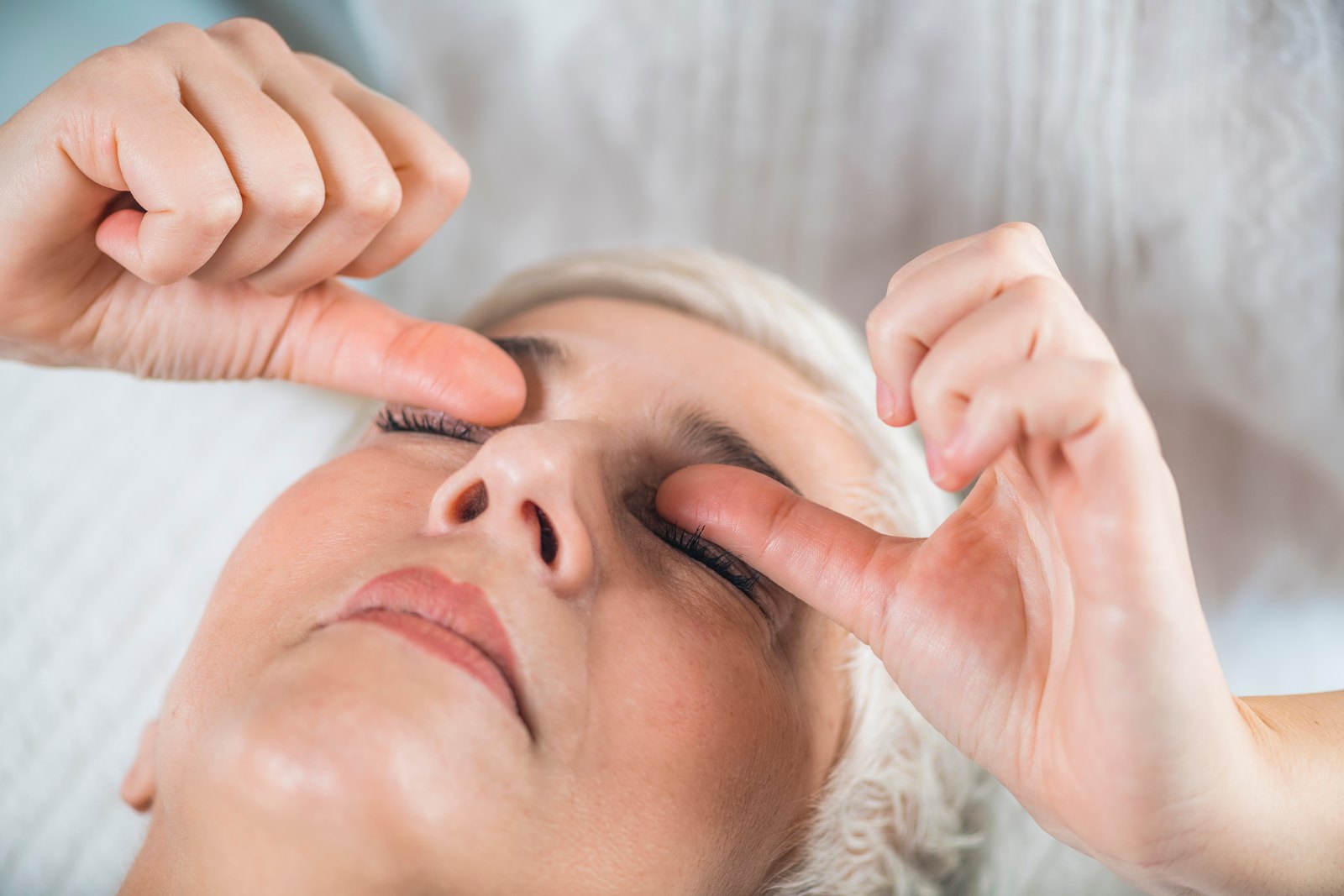
The fairest description of what an Ayurvedic eye course purchases is symptom-directed care and a structured routine, delivered by someone who spends a great deal of time with you. For ocular surface complaints in particular, small randomized trials from Ayurvedic centers have reported improvement in dryness, grittiness, and tear film measures after ghee-based tarpana, and acupuncture for dry eye has a larger and somewhat better-organized trial literature behind it. That is a genuine but modest evidence base, and it concerns comfort rather than structural disease.
What the money does not buy is reversal. No Ayurvedic procedure has been shown to regenerate retinal tissue, restore optic nerve axons, clear a cataract, or lower intraocular pressure to a degree that would allow glaucoma medication to be reduced. Any pricing conversation that rests on those claims is selling something the evidence does not support.
- Dedicated clinician time to review your records, medications, and current ophthalmic plan
- Supervised procedure sessions using prepared, practitioner-applied materials rather than home remedies
- Symptom-level support for dryness, grittiness, eye fatigue, and screen-related strain
- A structured daily routine covering sleep, screen habits, hydration, and diet
- Coaching and follow-up that tends to improve adherence to prescribed eye drops rather than compete with them
- Attention to systemic contributors such as blood glucose control, blood pressure, and sleep quality
- Stress and autonomic regulation work, which matters for symptom burden even where it does not alter disease
- A named practitioner who is accountable for what you were given and why
It does not buy cure, regeneration, reversal of field loss, avoidance of surgery, or a reason to reduce any prescribed medication. If a course is priced as though it delivers those things, you are paying for a promise rather than for care, and no amount of discounting makes that a good purchase.
How HSA and FSA Eligibility Is Genuinely Decided
The test is the purpose, not the name of the therapy
Health savings and flexible spending accounts reimburse expenses that meet the tax code's definition of medical care: amounts paid for the diagnosis, cure, mitigation, treatment, or prevention of disease, or for affecting a structure or function of the body. Nothing in that definition excludes a therapy because it is Ayurvedic, and nothing in it includes one because it is called a treatment. Eligibility turns on why the expense was incurred and whether that reason is documented.
A diagnosed condition has to be in the picture
Spending aimed at general wellness, relaxation, or prevention in the loose sense is not eligible, however beneficial it may be. Spending directed at a specific diagnosed condition can be. A course of ocular therapy tied to documented dry eye disease stands on very different ground from the same course described as a wellness retreat, even when the sessions are identical.
The practitioner's license matters
Administrators want the recommending clinician to be licensed to diagnose and treat. In New Jersey, a licensed acupuncturist is licensed; an Ayurvedic practitioner, as such, is not, because the state does not license Ayurveda separately. Where the recommendation comes from a physician or another licensed provider who has assessed you, the documentation is far stronger.
The Letter of Medical Necessity is the mechanism
For anything that is not obviously medical on its face, a Letter of Medical Necessity is how eligibility is established. It should name your diagnosis, state the specific service or product being recommended, explain how it addresses that diagnosis, give the expected duration, and be signed and dated by the licensed clinician. A generic letter that recommends wellness services is not worth the paper it is on.
Herbal products are handled separately and more strictly
Dietary supplements are usually treated as ineligible by default. They can become eligible with a Letter of Medical Necessity tying them to a diagnosed condition, but administrators scrutinize this category closely. Expect to be asked for substantiation on supplement receipts more often than on procedure receipts.
Your administrator decides, and can decide differently
No clinic, including this one, can promise that your account will reimburse anything. The plan administrator applies the rules to your paperwork, and different administrators apply them with different levels of strictness. Submitting a claim is not approval. If you need certainty, ask your administrator in writing before you pay, not after.
Getting it wrong has a tax consequence
A reimbursement later judged ineligible becomes taxable income, and for HSAs an additional penalty can apply. Keep itemized receipts that describe the service performed, the dates, and the provider, and keep the Letter of Medical Necessity with them. Good records are the difference between a defensible claim and a costly one.
What Acupuncture Coverage Does and Does Not Imply
Acupuncture is covered by some plans, and that is a real difference
Acupuncture sits in a different regulatory position from Ayurveda. It has Category I CPT codes, it is a licensed profession in New Jersey and most other states, and a number of commercial plans include a limited number of visits per year. Patients often reason from this that Ayurvedic procedures must be close behind. They are not, and the reasons are structural rather than a matter of time.
Coverage follows codes and licenses, not plausibility
The reason acupuncture can be billed is that someone built the billing infrastructure for it: defined codes, defined licensure, defined documentation. None of that exists for netra tarpana or nasya. Even a payer who thought Ayurvedic therapy was promising would have no mechanism to pay for it.
Covered indication is not the same as covered profession
Where acupuncture is covered, it is usually covered for specific indications, most often pain. Acupuncture delivered for an eye condition frequently falls outside those indications and is denied, even though the same needles in the same clinic would be paid for a back. Ask the clinic which diagnosis code it will submit, and check that code against your plan's policy.
Medicare's position is narrow and explicit
Medicare covers acupuncture only for chronic low back pain, with limits on the number of sessions and on who may supervise. It does not cover acupuncture for ocular disease and it does not cover Ayurvedic procedures. A clinic that tells Medicare patients otherwise is either mistaken or should not be trusted with your money.
A covered acupuncture visit does not launder an uncovered package
Bundling matters here. If a clinic bills an acupuncture code for a visit in which most of the time was spent on Ayurvedic procedures, that is a billing problem, and it is your name on the claim. Insist that what is billed matches what was done. A practice willing to blur this line on your behalf is telling you something about its standards generally.
The practical upshot
If acupuncture is part of your plan of care and your insurance covers it for a diagnosis you actually have, use that benefit properly and let it reduce your spend. Do not extrapolate from it. Assume the Ayurvedic component is entirely out of pocket, and be pleasantly surprised if some adjacent service turns out to be payable.
Questions to Ask Before You Pay for a Course
What is the total for the course you are recommending?
Not the session rate. The total, including the expected number of sessions, any adjunct therapies, and the herbal preparations for the first three months. Ask for it in writing. A clinic that will not produce a course total before you pay a deposit is not a clinic you should pay a deposit to.
What would make you stop this course early?
There should be an answer, and it should include worsening vision, ocular pain, redness, or any sign of infection. A practitioner who cannot name a stopping condition has not planned for one, and you are the person who will discover that.
How will we know whether it is working?
Agree on the measure in advance. Symptom scores, tear break-up time, and your own record of comfortable screen hours are all reasonable. Vague reassurance at the end of a course is not a measure, and it makes the decision about maintenance impossible to take rationally.
What exactly am I being given, and who made it?
Ask for the name of every preparation, the manufacturer, and whether it has been tested for heavy metals. Ask whether any bhasma or metal-containing formulation is involved, and decline if you cannot get a straight answer. This is a cost question as well as a safety one, because untested products are not worth paying for.
Which of my prescribed treatments will change?
The correct answer is none, unless the prescribing ophthalmologist changes them. Confirm that your drops, injections, and follow-up schedule continue unchanged throughout the course. If the plan is built around tapering something, stop and take that plan back to the prescriber first.
Will you communicate with my eye doctor?
Coordinated care is worth paying for; parallel care that neither clinician knows about is not. Ask whether the practice will send a summary of what you received. A refusal, or a suggestion that your ophthalmologist would not understand, is a reason to leave.
What is your refund policy if I stop?
Life interrupts courses. Ask what happens to unused sessions, whether prepaid blocks expire, and how a refund is calculated. Get it in writing. The answer to this question separates practices that expect you to make a considered decision from those relying on you not to.
Pricing Red Flags That Should Make You Walk Away
Most of the financial harm in this field is not caused by high prices. It is caused by pricing structures designed to commit you before you have information, and by claims that make an unreasonable price feel reasonable. These are the patterns worth recognizing.
- Prepaid multi-year packages, or any plan that asks for a large sum covering treatment more than a few months ahead
- Any guarantee of cure, restored vision, reversal, or a specific improvement in acuity or visual field
- Pressure to reduce, taper, or stop prescribed drops, injections, or a scheduled surgery
- A price that rises with how desperate or how frightened you appear, rather than with practitioner time
- Discounts that expire today, or a quoted price available only if you commit during the visit
- Refusal to itemize the quote, or to separate procedure fees from product sales
- Claims that insurance, HSA, or FSA reimbursement is assured rather than possible and documentation-dependent
- Unnamed proprietary preparations, or products with no manufacturer, no ingredient list, and no testing information
- Testimonials of dramatic recovery used in place of any account of what the treatment is expected to do
- Reluctance to communicate with your ophthalmologist, or discouragement from continuing ophthalmic follow-up
Any one of these is enough to pause. Two together are enough to leave. Honest complementary care is comfortable with being described accurately, priced transparently, and delivered alongside conventional treatment rather than instead of it, and a practice that meets that description will not need to rush you.
Frequently Asked Questions on the Cost of Ayurvedic Eye Treatment
Because a fixed price would be fiction. The cost depends on how many procedure sessions your clinical picture calls for, which preparations are used, and how long maintenance continues. The ranges on this page describe what US integrative clinics typically charge, so that you can sanity-check any quote. Netra Eye Institute's own fees should be confirmed with the clinic directly.
Almost certainly not for the Ayurvedic procedures, because there is no billing code to put on the claim and no credentialed provider type for the service. Out-of-network reimbursement works for covered services delivered by covered providers; it does not create coverage where none exists. Conventional testing performed by a licensed eye care provider is a separate matter and is often billable.
A card may go through at the point of sale and still be questioned later, because substantiation is often requested after the fact. Eligibility depends on a licensed practitioner documenting the service as treatment for a diagnosed condition, usually through a Letter of Medical Necessity. Nobody at a clinic can promise your administrator will accept it, and you should treat any such promise as a warning.
Not automatically, but ask what the lower price leaves out. Records review, coordination with your ophthalmologist, tested preparations, and a practitioner who stays with you through a procedure all cost money. A very low price sometimes means an efficient practice and sometimes means none of that is happening. The way to tell is to ask what is included, in writing.
Be clear-eyed about what you are buying. There is no evidence that Ayurvedic therapy alters the course of retinal or optic nerve disease, and spending on it must never come at the expense of injections, laser, pressure control, or monitoring, because delaying those causes permanent vision loss. If, after your conventional care is fully funded, you want support for comfort, sleep, and daily function, that is a reasonable discretionary choice made with accurate expectations.
Selected References for Scientific Support
- Nahin RL, Stussman BJ, Herman PM. Out-Of-Pocket Expenditures on Complementary Health Approaches Associated With Painful Health Conditions in a Nationally Representative Adult Sample. J Pain. 2015. PubMed
- Olaisen RH. Associations Between Complementary and Alternative Medicine and Health Care Expenditures Among Adults With Chronic Back Pain. Med Care. 2020. PubMed
- Johansen ME. Comparing Medical Ecology, Utilization, and Expenditures Between 1996-1997 and 2011-2012. Ann Fam Med. 2017. PubMed
- John GM, et al. Complementary and alternative medicine use among US cancer survivors. J Cancer Surviv. 2016. PubMed
- Timmapur GM, Fiaz S. Efficacy of Triphala Ghrita and Goghrita Manda Tarpana in the management of Shushkakshipaka w.s.r. to dry eye syndrome: An open labelled randomized comparative clinical trial. Ayu. 2020. PubMed
- Ashwini BN, et al. Comparative efficacy of Shatavari Ghrita eye drops with Shatavari Ksheerapaka versus Triphala Ghrita eye drops with Shatavari Ksheerapaka in postmenopausal ocular surface disease: a randomized, single-blind trial. Front Med (Lausanne). 2026. PubMed
- P S, Naranappa Salethoor S, K S. Integrating ayurvedic eye care into primary health practice: an exploratory study on the combined effect of pratimarsha nasya, avagundana, and aschyotana in meibomian gland dysfunction. Front Med (Lausanne). 2025. PubMed
- Dhiman KS, et al. Adjuvant effect of Chakshushya Rasayana with beta-blocker eye drops in the management of progressive glaucomatous optic neuropathy: An open-label randomized controlled trial. Ayu. 2016. PubMed
- Liu Q, et al. Evidence map for randomized controlled trials of treatment of acupuncture and moxibustion for dry eye disease. Front Med (Lausanne). 2026. PubMed
- Park SY, et al. Safety and efficacy of biodegradable microneedle acupuncture for dry eye: A multicenter, randomized, active-controlled pivotal trial. Integr Med Res. 2026. PubMed
- Saper RB, et al. Lead, mercury, and arsenic in US- and Indian-manufactured Ayurvedic medicines sold via the Internet. JAMA. 2008. PubMed
- Mukhopadhyay S, et al. Heavy Metals in Indian Traditional Systems of Medicine: A Systematic Scoping Review and Recommendations for Integrative Medicine Practice. J Altern Complement Med. 2021. PubMed
- Cline K, Beachy MW, Carr PW. Modernizing the Regulatory Framework for Dietary Supplements: A Position Paper From the American College of Physicians. Ann Intern Med. 2026. PubMed
- Hore P, Sedlar S. Traditional Eye Cosmetics and Cultural Powders as a Source of Lead Exposure. Pediatrics. 2024. PubMed
- Hlakudi KF, Nkoana PMW. Global Prevalence and Clinical Consequences of Traditional Eye Medicine: A Descriptive Review. Clin Optom (Auckl). 2026. PubMed
- Chukwukwe IO, et al. Traditional Eye Remedies and Ocular Complications in Sub-Saharan Africa: A Systematic Review. Niger Med J. 2026. PubMed