Bring your records
Share your eye doctor's notes, imaging (OCT, photos or fields), current drops or medications, and anything else that tells your story.
Post-LASIK - When Results Disappoint
Failed LASIK · Post-LASIK ectasia · Post-LASIK dryness
Halos, regression, relentless dryness - or a diagnosis of ectasia. When refractive surgery doesn't deliver the ending you paid for, Netra Restoration Therapy offers adjunctive support alongside your cornea specialist's care.
Most LASIK patients do well - but when things go wrong, they deserve more than reassurance. Regression, glare and halos, stubborn dryness from cut corneal nerves, and in rare cases ectasia (progressive corneal bulging) each need proper specialist evaluation, from enhancement assessment to cross-linking. NRT adds the supportive layer: ocular surface recovery, corneal nerve health, comfort, sleep and the very real emotional weight of an operation that disappointed - addressed together, coordinated with your cornea specialist.
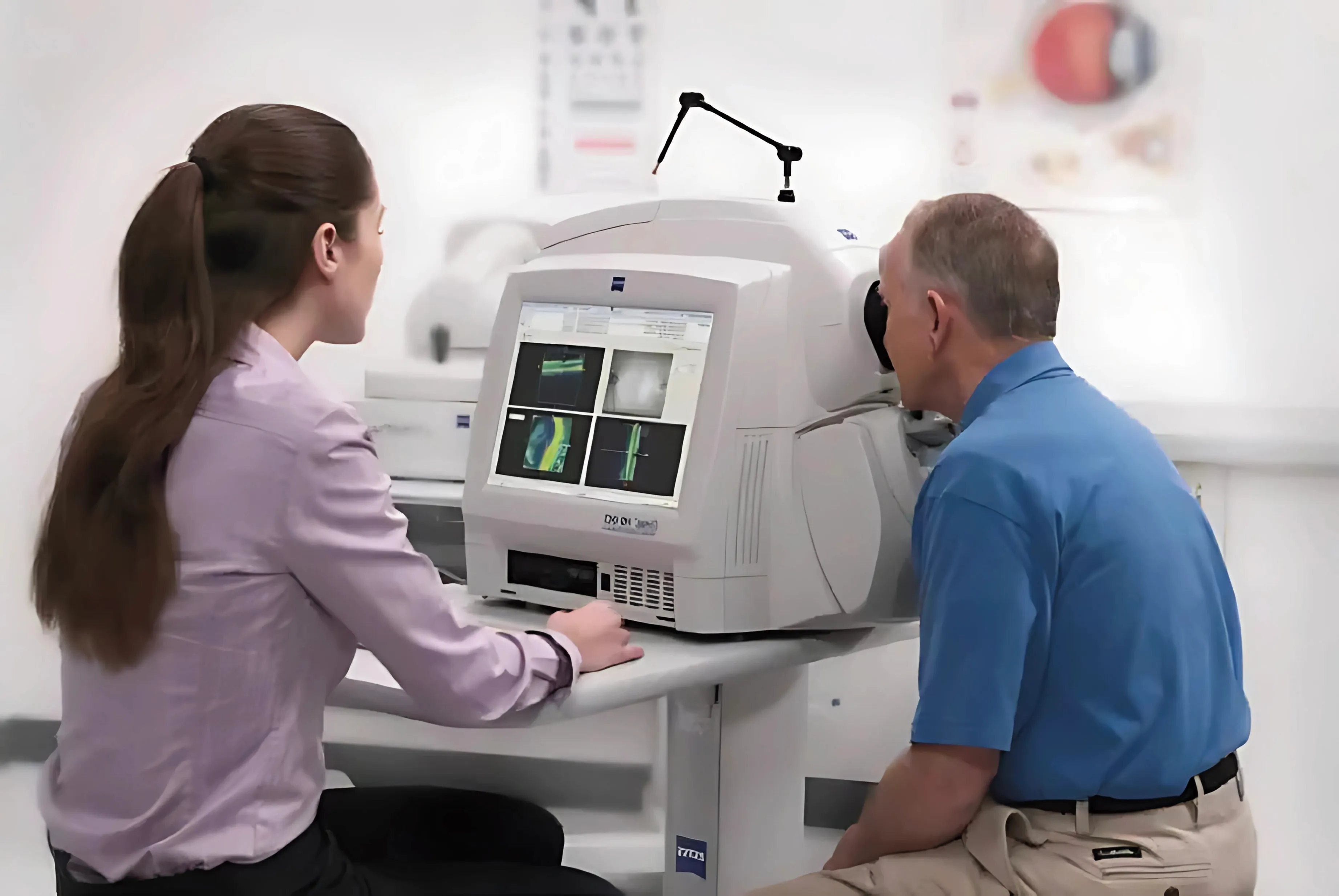

Supporting corneal nerve recovery - the root of post-LASIK dryness and discomfort.
Rebuilding tear film quality and ocular surface health after surgery.
Supporting corneal nutrition and healing through circulation and metabolic balance.
Coordinating specialist evaluation - topography, enhancement or cross-linking - where needed.
Optimizing nutrients, O₂ delivery, microcirculation, and reducing metabolic strain.
Addressing the stress, sleep loss and frustration that chronic eye symptoms create.
These pathways describe an integrative support framework; they do not reshape the cornea and do not replace evaluation for enhancement, cross-linking or medical treatment by your cornea specialist.
PersonalizedBuilt around your symptom pattern
Non-surgicalIntegrative, whole-person support
ComplementaryDesigned to work alongside eye care

'Failed LASIK' covers many different stories: vision that regressed, night glare and halos, dryness that never resolved, or - rarely - post-LASIK ectasia, where the weakened cornea begins to bulge like keratoconus. Each has a different medical answer, which is why precise diagnosis comes first and support builds from there.
Common experiences include:
A broader perspective
Specialist care remains essential: your ophthalmologist confirms the diagnosis, monitors the condition over time and delivers the treatments with proven benefit. Nothing on this page replaces that.
NRT adds an individualized, supportive layer focused on daily function, safe nutrition, lifestyle factors and whole-person wellbeing - coordinated with, never instead of, your specialist's plan.
Request ConsultationMaps the cornea, distinguishes regression from ectasia from surface disease, and offers enhancement, cross-linking or medical treatment as indicated.
Complements existing care with function-first support - nutrition safety, adaptation strategies and whole-person health - coordinated with your eye care team.
Different roles. One coordinated goal.
Is this relevant to you?
Your next step
Share your eye doctor's notes, imaging (OCT, photos or fields), current drops or medications, and anything else that tells your story.
Tell us what matters most: reading, school, work, faces, glare, mobility, device use or understanding research options.
If appropriate, we outline supportive priorities, referrals and function-first measures—then reassess as findings and goals evolve.
A disappointing surgery deserves two things: an honest diagnosis and a real support plan.
Clinically grounded. Humanly delivered.
Netra Eye Institute combines the perspective of Traditional Chinese Medicine, Ayurveda and modern ocular physiology within an individualized, adjunctive care framework. We consider the whole person—genetics, nutrition, daily function and personal goals—alongside the retinal diagnosis, in coordination with your specialist team.
Questions, answered
Netra Eye Institute is in South Plainfield, New Jersey. There are currently no branch offices.
NRT is a holistic treatment and is not covered by health insurance. It is offered as a self-pay treatment.
See Patient Financing and Financial Assistance for current options and eligibility information.
LASIK cuts corneal nerves that drive tear production and blink signaling; most recover within months, but some people are left with chronic neurotrophic dryness or even neuropathic symptoms. That nerve story is exactly where careful, patient support - alongside your eye doctor's treatment - earns its keep.
A rare complication where the surgically thinned cornea progressively bulges, distorting vision like keratoconus. It needs prompt cornea-specialist evaluation - cross-linking can stabilize it. New distortion or worsening vision years after LASIK should always be mapped with topography.
Specialist care is essential for diagnosis, retinal monitoring, genetic counseling and access to legitimate clinical trials. NRT is an adjunctive program that considers nutrition safety, daily visual function and whole-person factors alongside that care—it does not replace it.
No. NRT cannot reshape the cornea or undo surgery, and it is not a substitute for enhancement, cross-linking or medical treatment. It is adjunctive support for surface health, comfort and whole-person recovery, coordinated with your cornea specialist.
No - chronic post-LASIK dryness and glare are still workable problems years later, and ectasia can appear late and still be stabilized. The starting point is a current corneal map and surface assessment; support builds from what it shows.
Yes. A consultation can help determine whether an in-person assessment at Netra Eye Institute in South Plainfield, New Jersey, may be appropriate. The care team will explain the next step based on your history and location.
Ready when you are
Request a consultation to review your records and learn whether Netra Restoration Therapy may be an appropriate complement to your specialist retinal care.
Request ConsultationPrefer to call? (732) 503-9999