Bring your records
Share your eye doctor's notes, imaging (OCT, photos or fields), current drops or medications, and anything else that tells your story.
Fuchs' Dystrophy - Corneal Condition
Fuchs' endothelial dystrophy · Corneal dystrophies
Foggy mornings that slowly clear, glare that creeps in, and a transplant decision somewhere on the horizon. Netra Restoration Therapy offers adjunctive support alongside your cornea specialist's care.
In Fuchs' dystrophy the cornea's inner pump cells (the endothelium) gradually fail, letting fluid swell the cornea - classically worst on waking. Your cornea specialist stages the disease and, when vision warrants, modern partial-thickness transplants (DMEK/DSEK) work remarkably well. NRT supports the long in-between: mitochondrial and metabolic health (oxidative stress drives endothelial cell loss), comfort strategies, overall health optimization before any future surgery, and the daily management of glare and fluctuating vision.

Lowering oxidative stress - a central driver of endothelial cell loss in Fuchs'.
Supporting mitochondrial function in the cornea's high-energy pump cells.
Supporting corneal hydration balance and comfort through the day.
Optimizing whole-body health ahead of possible future transplant surgery.
Optimizing nutrients, O₂ delivery, microcirculation, and reducing metabolic strain.
Modulating inflammation via herbal medicine, gut health, sleep, and stress balance.
These pathways describe an integrative support framework; they do not regenerate endothelial cells or replace your cornea specialist's monitoring and surgical options.
PersonalizedBuilt around your symptom pattern
Non-surgicalIntegrative, whole-person support
ComplementaryDesigned to work alongside eye care

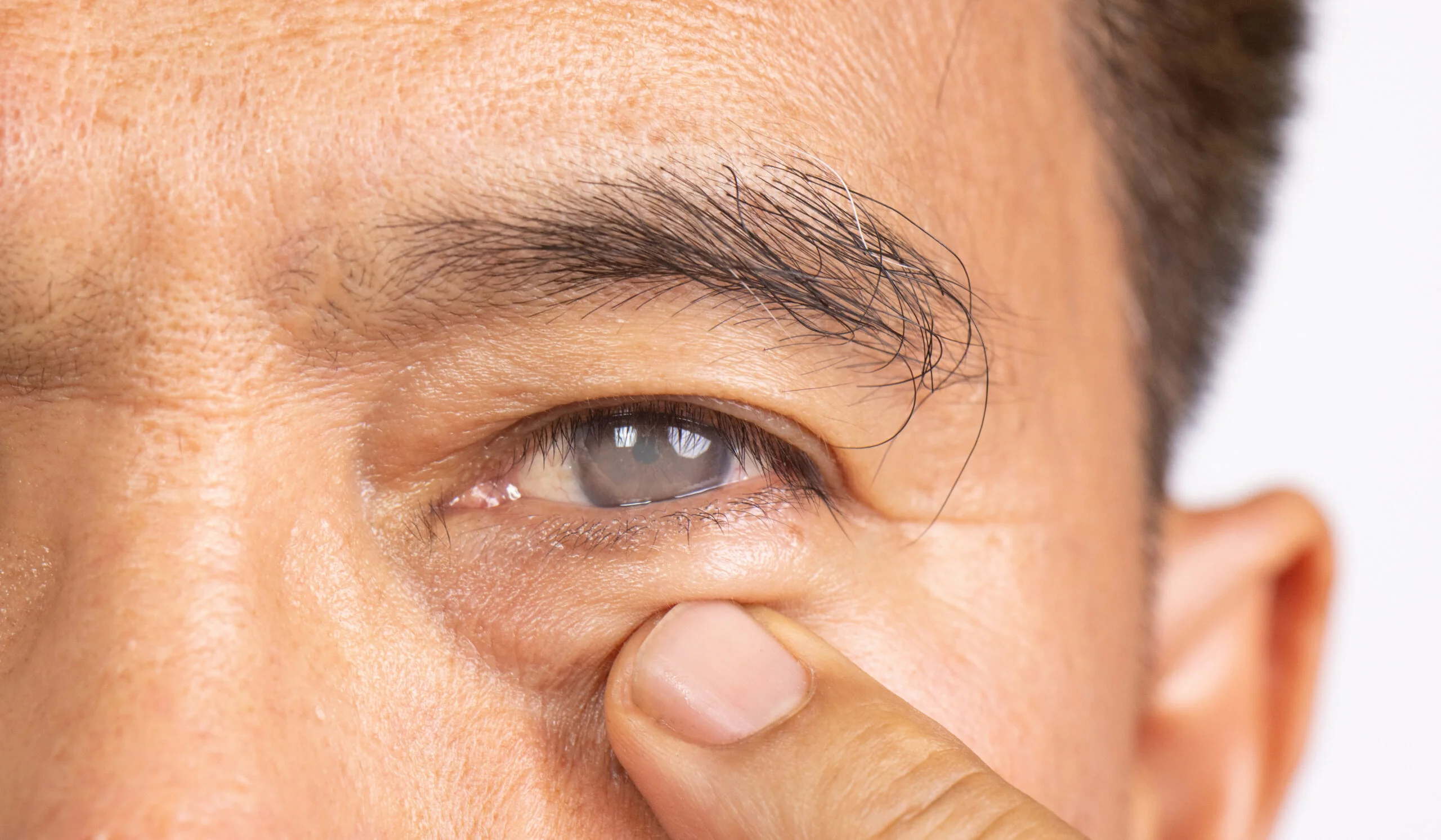
Fuchs' endothelial dystrophy is a gradual failure of the cells lining the inside of the cornea - the pumps that keep it clear. Overnight, with eyes closed, fluid builds and mornings blur; as it advances, swelling and glare persist longer into the day. Other corneal dystrophies deposit material in different corneal layers with their own patterns.
Common experiences include:
A broader perspective
Specialist care remains essential: your ophthalmologist confirms the diagnosis, monitors the condition over time and delivers the treatments with proven benefit. Nothing on this page replaces that.
NRT adds an individualized, supportive layer focused on daily function, safe nutrition, lifestyle factors and whole-person wellbeing - coordinated with, never instead of, your specialist's plan.
Request ConsultationStages the dystrophy, manages swelling with drops, and performs DMEK/DSEK transplantation when vision justifies it - with excellent modern outcomes.
Complements existing care with function-first support - nutrition safety, adaptation strategies and whole-person health - coordinated with your eye care team.
Different roles. One coordinated goal.
Is this relevant to you?
Your next step
Share your eye doctor's notes, imaging (OCT, photos or fields), current drops or medications, and anything else that tells your story.
Tell us what matters most: reading, school, work, faces, glare, mobility, device use or understanding research options.
If appropriate, we outline supportive priorities, referrals and function-first measures—then reassess as findings and goals evolve.
Between diagnosis and transplant there are years. They deserve a plan too.
Clinically grounded. Humanly delivered.
Netra Eye Institute combines the perspective of Traditional Chinese Medicine, Ayurveda and modern ocular physiology within an individualized, adjunctive care framework. We consider the whole person—genetics, nutrition, daily function and personal goals—alongside the retinal diagnosis, in coordination with your specialist team.
Questions, answered
Netra Eye Institute is in South Plainfield, New Jersey. There are currently no branch offices.
NRT is a holistic treatment and is not covered by health insurance. It is offered as a self-pay treatment.
See Patient Financing and Financial Assistance for current options and eligibility information.
Not necessarily - many people with Fuchs' never reach that point, and the decision rests on how much the swelling limits your life. When surgery is needed, modern DMEK/DSEK procedures replace only the inner layer and have strong success rates.
With eyes closed overnight, fluid accumulates in the cornea because the failing pump cells can't keep up; once your eyes open, evaporation helps clear it. Longer clearing times over the years are a marker of progression worth reporting to your specialist.
Specialist care is essential for diagnosis, retinal monitoring, genetic counseling and access to legitimate clinical trials. NRT is an adjunctive program that considers nutrition safety, daily visual function and whole-person factors alongside that care—it does not replace it.
No. NRT cannot regenerate endothelial cells and is not a substitute for specialist care or surgery. It is adjunctive support - oxidative, metabolic and comfort-focused - coordinated with your cornea specialist's monitoring.
Nothing is proven to halt Fuchs', but oxidative stress is central to its biology, which makes overall metabolic health, sleep, nutrition and not smoking rational supportive ground. UV protection is sensible for corneal health generally. We build this into a coordinated, realistic plan.
Yes. A consultation can help determine whether an in-person assessment at Netra Eye Institute in South Plainfield, New Jersey, may be appropriate. The care team will explain the next step based on your history and location.
Ready when you are
Request a consultation to review your records and learn whether Netra Restoration Therapy may be an appropriate complement to your specialist retinal care.
Request ConsultationPrefer to call? (732) 503-9999