Bring your records
Share your eye doctor's notes, imaging (OCT, photos or fields), current drops or medications, and anything else that tells your story.
CSCR - Central Serous Chorioretinopathy
Central serous chorioretinopathy · CSC · CSCR
A blurred, dim or distorted patch of central vision - often in the middle of a demanding season of life. Netra Restoration Therapy offers personalized, adjunctive support alongside your retina specialist's care.
In central serous chorioretinopathy, fluid collects beneath the central retina, often in connection with stress physiology and cortisol - it is one of the few eye conditions where lifestyle is openly part of the conversation. Many episodes resolve on their own and your retina specialist monitors for the cases that need laser or photodynamic therapy. NRT works on the terrain around the condition: stress load, sleep, steroid exposure review, nutrition and circulation, addressed systematically and coordinated with your specialist's monitoring.

Addressing stress physiology and cortisol load with structured lifestyle and mind-body support.
Supporting healthy sleep architecture - a core factor in stress and recovery.
Supporting choroidal circulation and vascular regulation beneath the macula.
Reviewing steroid exposure and other contributors with your prescribing physicians.
Optimizing nutrients, O₂ delivery, microcirculation, and reducing metabolic strain.
Modulating inflammation via herbal medicine, gut–retina health, sleep, and stress balance.
These pathways describe an integrative support framework; they do not drain subretinal fluid or replace retina-specialist monitoring, laser or photodynamic therapy when needed.
PersonalizedBuilt around your symptom pattern
Non-surgicalIntegrative, whole-person support
ComplementaryDesigned to work alongside eye care
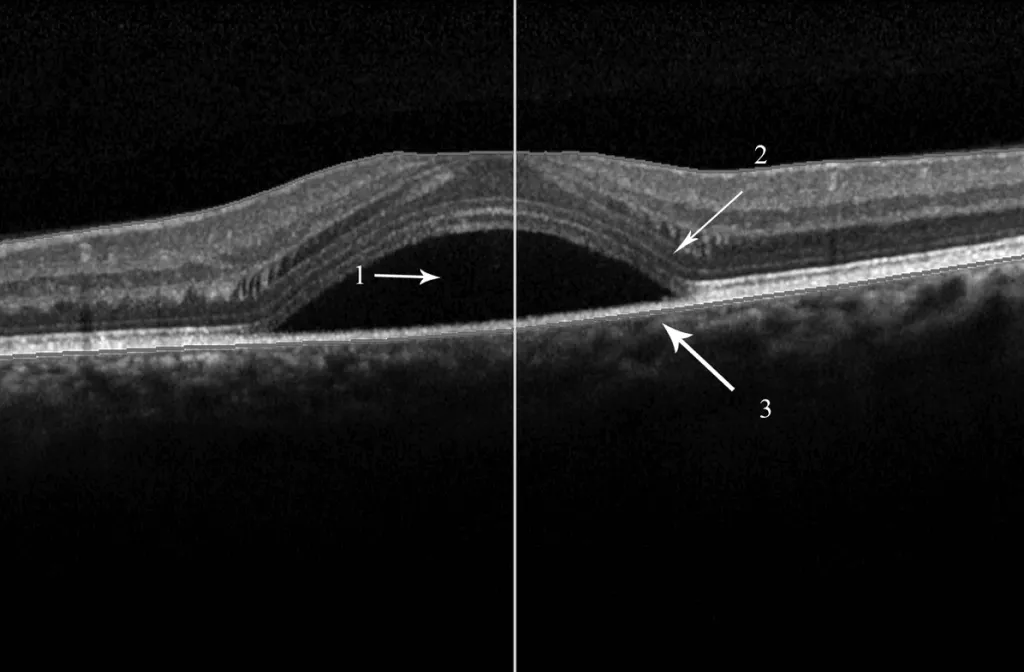
Central serous chorioretinopathy (CSCR) develops when fluid collects beneath the retina and blurs or distorts central vision. It most often affects adults in demanding years of life, is linked to stress physiology and corticosteroid exposure, and often resolves - but it can recur or become chronic, which is when structured support matters most.
Common experiences include:
A broader perspective
Specialist care remains essential: your ophthalmologist confirms the diagnosis, monitors the condition over time and delivers the treatments with proven benefit. Nothing on this page replaces that.
NRT adds an individualized, supportive layer focused on daily function, safe nutrition, lifestyle factors and whole-person wellbeing - coordinated with, never instead of, your specialist's plan.
Request ConsultationConfirms the diagnosis with OCT imaging, monitors the fluid, reviews steroid use, and treats persistent cases with laser or photodynamic therapy.
Complements existing care with function-first support - nutrition safety, adaptation strategies and whole-person health - coordinated with your eye care team.
Different roles. One coordinated goal.

Is this relevant to you?
Your next step
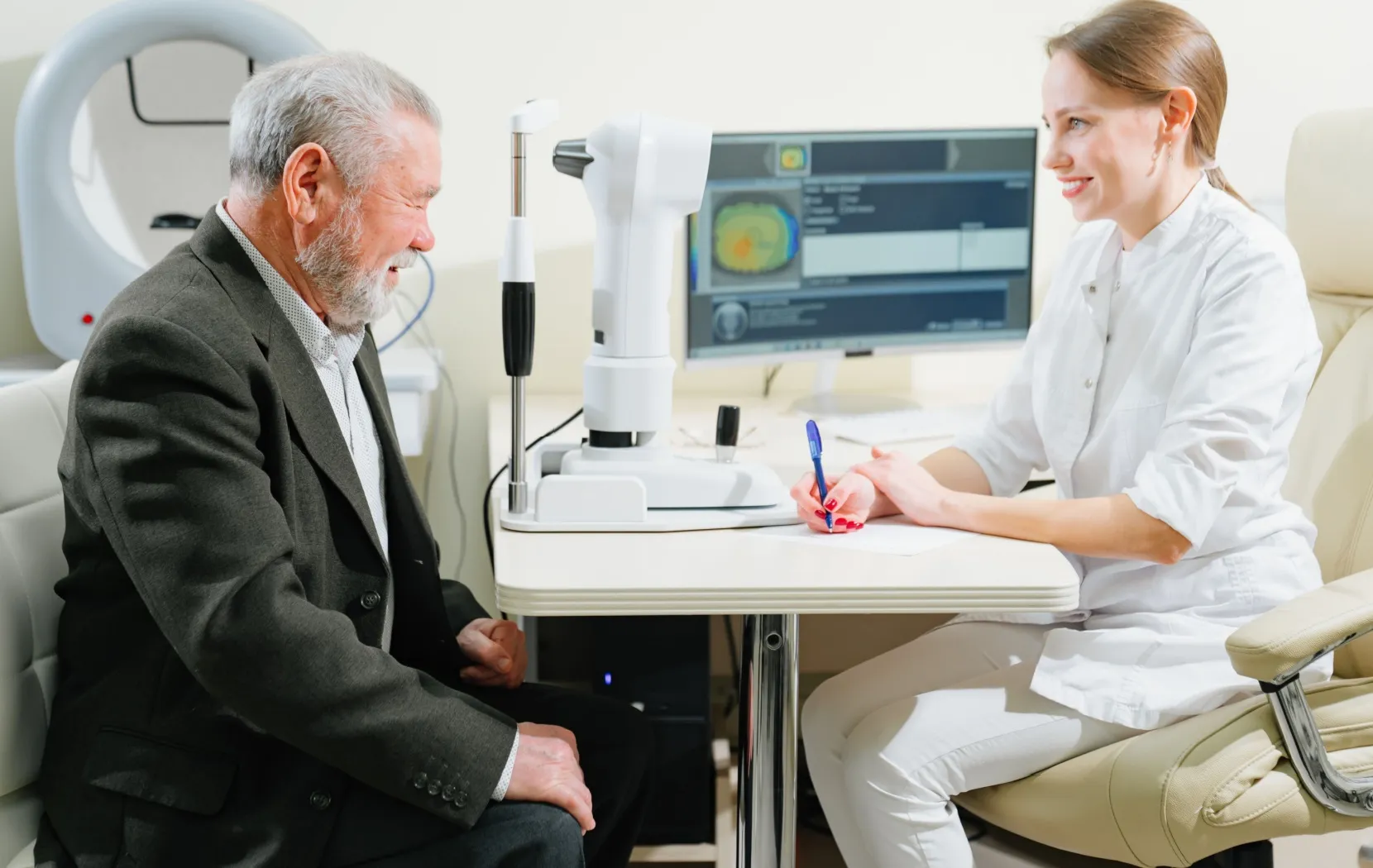
Share your eye doctor's notes, imaging (OCT, photos or fields), current drops or medications, and anything else that tells your story.
Tell us what matters most: reading, school, work, faces, glare, mobility, device use or understanding research options.
If appropriate, we outline supportive priorities, referrals and function-first measures—then reassess as findings and goals evolve.
CSCR is the retina asking about your life. Someone should take the question seriously.
Clinically grounded. Humanly delivered.
Netra Eye Institute combines the perspective of Traditional Chinese Medicine, Ayurveda and modern ocular physiology within an individualized, adjunctive care framework. We consider the whole person—genetics, nutrition, daily function and personal goals—alongside the retinal diagnosis, in coordination with your specialist team.
Questions, answered
Netra Eye Institute is in South Plainfield, New Jersey. There are currently no branch offices.
NRT is a holistic treatment and is not covered by health insurance. It is offered as a self-pay treatment.
See Patient Financing and Financial Assistance for current options and eligibility information.
Many first episodes resolve within a few months, which is why observation is often the first step. But some cases persist or recur, and chronic fluid can damage the retina - so monitoring with your retina specialist matters even when the plan is to wait.
Stress physiology and cortisol are strongly associated with CSCR - as are corticosteroid medications in any form, including creams, inhalers and injections. That makes a careful medication review and honest stress assessment part of good care, alongside retinal imaging.
Specialist care is essential for diagnosis, retinal monitoring, genetic counseling and access to legitimate clinical trials. NRT is an adjunctive program that considers nutrition safety, daily visual function and whole-person factors alongside that care—it does not replace it.
No. NRT should not be described as a cure, and it does not replace monitoring, laser or photodynamic therapy when your retina specialist recommends them. Any supportive benefit should be assessed against predefined functional goals alongside standard imaging.
Never stop a prescribed steroid on your own - some conditions make that dangerous. The right step is a coordinated review: your prescribing physician weighs the medical need while your retina specialist weighs the eye findings. We help organize that conversation.
Yes. A consultation can help determine whether an in-person assessment at Netra Eye Institute in South Plainfield, New Jersey, may be appropriate. The care team will explain the next step based on your history and location.
Ready when you are
Request a consultation to review your records and learn whether Netra Restoration Therapy may be an appropriate complement to your specialist retinal care.
Request ConsultationPrefer to call? (732) 503-9999