Blog
July 30, 2026
Netra Restoration Therapy (NRT) treats Retinitis Pigmentosa by targeting the downstream pathological processes that drive retinal cell death—rather than focusing only on the genetic mutation itself.
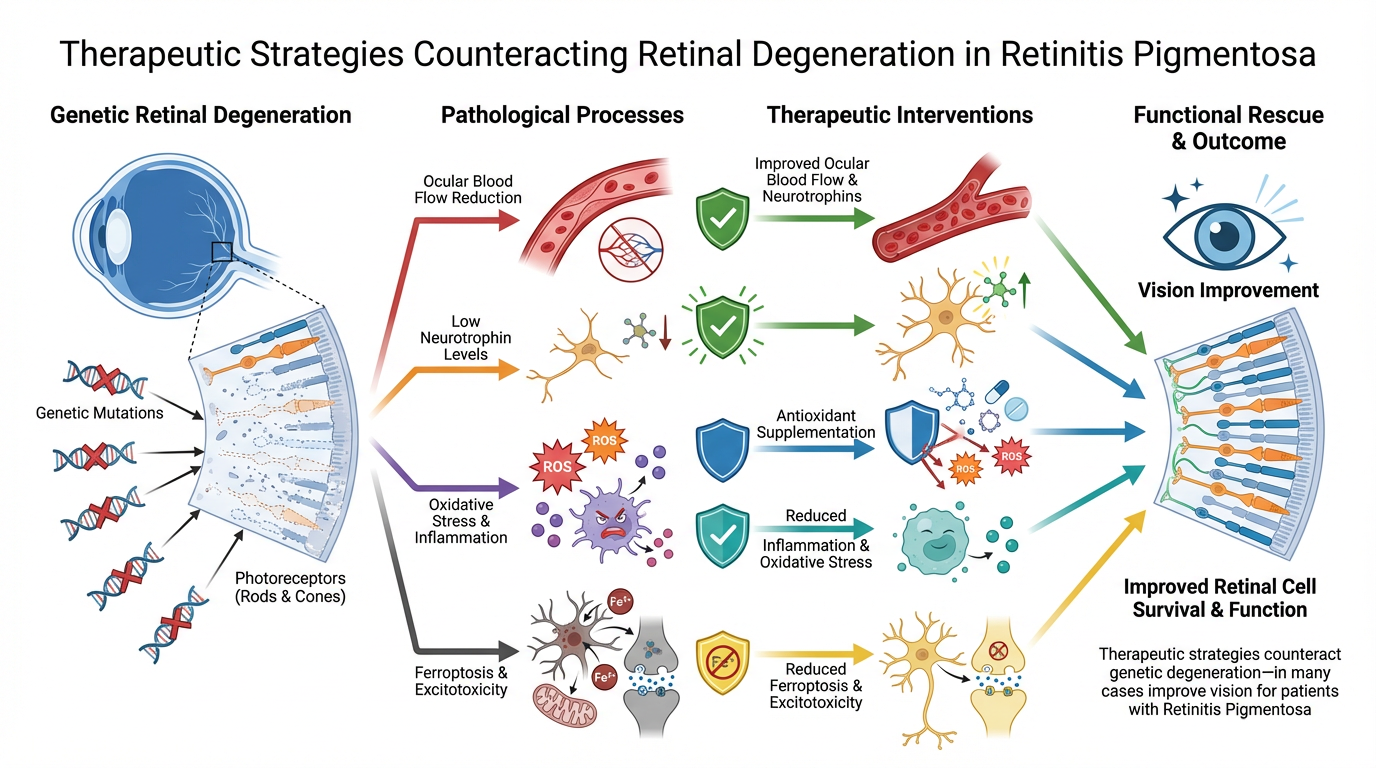
The therapy is built around four key mechanisms highlighted in the model:
RP progression is associated with reduced retinal and choroidal circulation and low neurotrophin levels. NRT enhances ocular perfusion and neurotrophic signaling, helping sustain photoreceptors (rods and cones) and retinal neurons.
Chronic oxidative damage (ROS) and inflammation accelerate photoreceptor loss. NRT incorporates targeted antioxidant and anti-inflammatory strategies to stabilize the retinal microenvironment and slow degeneration.
Cell death pathways such as ferroptosis and excitotoxicity contribute to ongoing retinal damage. NRT aims to modulate these pathways, protecting remaining viable retinal cells from further injury.
By improving the retinal environment and reducing cellular stress, NRT supports survival and reactivation of residual photoreceptors, leading to measurable functional gains—such as improved contrast, field awareness, and visual clarity.
Unlike conventional care—which is largely limited to monitoring, vitamin supplementation, or experimental gene therapy—NRT is designed as a continuous restorative model, aiming not just to delay degeneration but to recover usable vision where viable retinal cells still exist.
Unlike conventional care—which is largely limited to monitoring or slowing progression—NRT is a restorative, systems-based therapy that:
NRT does not claim to reverse genetic mutations but works by leveraging retinal plasticity and cell survival pathways to preserve and potentially enhance functional vision in RP patients. The goal is functional rescue of the retina—not by reversing the mutation, but by counteracting the biological cascade of degeneration, thereby improving retinal cell survival and enabling meaningful vision improvement in patients with RP.