
Search conditions, treatments, research reviews and articles. Press Enter to see all results, Esc to close.
Dry Eyes: Symptoms, Causes, Treatment and Integrative Support
What dry eye is, the symptoms that need prompt care, what treatment can do today and in trials, whether it can be cured, and where integrative care fits alongside your eye doctor.
Request a Consultation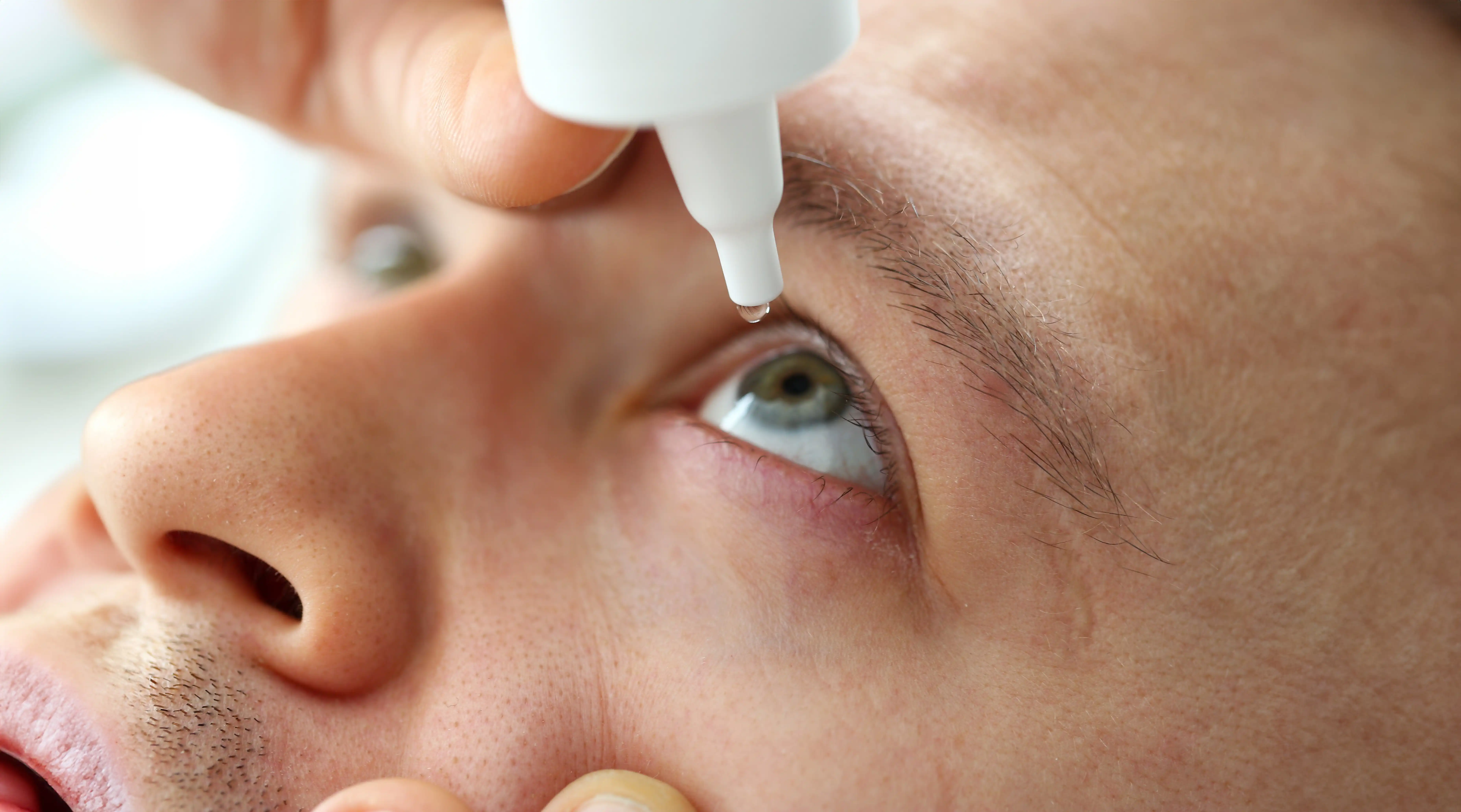
Dry eye, also called dry eye disease or dry eye syndrome, is a long-term condition of the front surface of the eye. The tear film that coats the eye becomes unstable, and the eye's surface becomes irritated and inflamed1,2. It causes burning, grittiness, redness, watering and blurred vision that comes and goes2,3. In a 2013 US survey, about 6.8% of adults, roughly 16.4 million people, said a doctor had diagnosed dry eye. It was more common with age and nearly twice as common in women as in men4. Dry eye rarely threatens sight2, but it can make everyday activities such as reading difficult5. Chronic dry eye usually cannot be cured, and treatment is usually long term2. Symptoms often improve with treatment. Removing a drying medicine or a dry, drafty environment often leads to marked improvement, and dryness after eye surgery often settles with time2.
This page explains what dry eye is and its main types, the symptoms that need prompt care, and the causes and risk factors. It covers how eye doctors diagnose it and what treatment can do today, from self-care and artificial tears to prescription drops and in-office procedures. It answers whether dry eye can be cured, lists the treatments in late-stage trials, and ends with where integrative care can and cannot fit alongside your eye doctor.
Dry eye at a glance
| What it is | A long-term disease of the tear film and the eye's surface, with symptoms such as burning, grittiness and blurred vision that comes and goes1,2 |
|---|---|
| How common | About 6.8% of US adults (16.4 million) reported a dry eye diagnosis in 2013; 2.7% of adults aged 18 to 34 and 18.6% of those 75 and older4 |
| Types | Evaporative (tears evaporate too fast, usually because oil glands in the eyelids are blocked), aqueous-deficient (too few tears), or a mix of the two, which is common6,2 |
| Common symptoms | Burning, stinging, a gritty or sandy feeling, redness, light sensitivity, watery eyes and fluctuating blur2,3 |
| Main risk factors | Older age, female sex, screen use, contact lenses, eye surgery, some medicines, autoimmune diseases such as Sjögren's, and dry or windy air4,7,8,2 |
| Treatment today | Self-care and artificial tears; eyelid care for blocked glands; prescription drops; in-office gland treatments and punctal plugs; specialist options for severe disease2,9 |
| Can it be cured? | Chronic dry eye usually not; it is managed long term. Dryness from a removable trigger can improve markedly2 |
| What is new | Three prescription dry eye drops approved since 2023 (Miebo, Vevye and Tryptyr), one for Demodex blepharitis (Xdemvy), and several drugs in late-stage trials10,11 |
On this page
What is dry eye?
Each blink spreads a thin film of tears over the front of the eye, keeping its surface moist and smooth6. Patient guides describe three layers. The oily outer layer comes from the meibomian glands in the eyelids, the watery layer from the tear (lacrimal) glands, and mucus from the conjunctiva, the thin membrane over the white of the eye6. Tear-film researchers now prefer a two-layer model: a very thin oily layer over a watery, mucus-rich gel. They see the three-layer picture as a simplification12.
In dry eye this system loses its balance. The Tear Film and Ocular Surface Society (TFOS), whose international reports set the definitions eye doctors use, updated its definition in 2025. It describes dry eye as a disease that always causes symptoms1. Its drivers are an unstable tear film, tears that are too concentrated (too salty), inflammation and damage of the eye's surface, and abnormal nerve signals1.
There are two main types, and most people have features of both2,13:
- Evaporative dry eye: tears evaporate too quickly, most often because of meibomian gland dysfunction (MGD), in which the oil glands in the eyelids become blocked or make poor-quality oil6. In a study at 10 US and European clinics, 86% of the dry eye patients whose type could be classified had signs of MGD14.
- Aqueous-deficient dry eye: the tear glands make too little of the watery part of tears. About 1 in 10 people with significant aqueous-deficient dry eye has Sjögren's, an autoimmune disease2.
The 2025 TFOS report sorts these drivers into three groups1. They are shortfalls in the tear film's layers, eyelid problems such as incomplete blinking, and problems of the eye's surface itself, such as nerve dysfunction and inflammation1. The aim is to match treatment to each driver9. Our guide to the two types of dry eye explains the difference in more detail.
Blepharitis, inflammation along the eyelid margins, is closely linked to dry eye2. One form is caused by Demodex mites that live in the lash follicles15. It is commonly linked to stubborn dry eye symptoms, although many people who carry the mites have no symptoms15. In a review of records of 1,032 people seen for any reason at six US eye clinics, 57.7% had signs of Demodex blepharitis16. The study was funded by the maker of a Demodex treatment16.
Some people have strong symptoms but few visible signs on examination. This can be neuropathic eye pain, in which the nerves of the eye's surface become oversensitive. It is often described as burning, stinging or aching, sometimes with light sensitivity2,17. Our page on corneal neuralgia covers it.
Symptoms of dry eye
- burning or stinging
- a gritty, sandy or scratchy feeling, as if something is in the eye
- redness
- sensitivity to light
- blurred vision that comes and goes
- watery eyes
- tired eyes, mucus discharge, and contact lenses that become uncomfortable
Watery eyes can seem odd in dry eye, but an irritated eye makes extra reflex tears6. Symptoms often vary through the day. Many people find them worse later in the day2, while others notice dryness most on waking17. Dry air, wind, fans or air-conditioning vents, air travel and long spells of reading or screen use tend to bring them on2. Our guides explain what dry eyes feel like and why they water, whether dry eyes can cause blurry vision and why some people wake up with dry eyes.
Most dry eye does not threaten sight2. Severe dry eye that is not treated can damage the cornea, the clear front surface of the eye3. In rare cases, usually in people with an underlying inflammatory disease, it can lead to corneal scarring or ulcers and serious vision loss2.
Signs that need prompt care
Some symptoms point to something other than ordinary dry eye, or to severe disease, and need an eye examination promptly rather than at your next routine visit2,17:
- moderate or severe eye pain, rather than discomfort
- vision that drops suddenly, or blur that does not clear when you blink
- symptoms that start suddenly, or that are much worse in one eye than the other
- a red, painful eye while wearing contact lenses: take the lenses out and call your eye doctor right away18
- a chemical splash: rinse the eye right away with plenty of clean water for 15 minutes and get medical help immediately19,20,21
Also see an eye doctor if symptoms do not go away, get worse, interfere with daily life, or do not ease with over-the-counter drops6.
Dry eye or pink eye?
The two can feel alike, with burning, grittiness and watering in both2,22. Dry eye is usually long-lasting, affects both eyes17 and often eases for a while with artificial tears2. Pink eye from an infection tends to come on suddenly, often with discharge, and the viral and bacterial forms are very contagious22,17. Itching points more towards allergy17.
What causes dry eyes, and who is at risk?
Dry eye usually has several causes at once2. The main risk factors are:
- Age. Diagnosed dry eye rises from 2.7% of adults aged 18 to 34 to 18.6% of those aged 75 and older4.
- Sex and hormones. Women are about twice as likely as men to be diagnosed4. Patient guides link dry eye to menopause6,23, although the 2017 TFOS report rated the evidence for menopause itself as inconclusive8. In the Women's Health Study, hormone replacement therapy was linked to a higher risk of dry eye, more so with estrogen alone than with estrogen plus progestin24.
- Screens. Screen work makes us blink less often and less completely25,2. Combining 48 studies, screen users were about 1.3 times as likely to have dry eye7. Read more in our guide to digital eye strain.
- Contact lenses raise the risk, by about 1.7 to 3 times in different studies12,7.
- Eye surgery. Dry eye symptoms are common in the first few months after LASIK and cataract surgery and often settle with time2. In US studies of LASIK, about 28% of people with no dry eye symptoms before surgery had them three months later26. Overall, though, more people had normal symptom scores after surgery than before26. In a small study of US veterans, 1 in 6 people with no dry eye symptoms before cataract surgery had them six months later27.
- Medicines, including antihistamines, diuretics, beta-blockers, antidepressants and anxiety medicines, isotretinoin for acne, and other drugs with anticholinergic (drying) effects2,6. Glaucoma drops containing the preservative benzalkonium chloride can also damage the eye's surface2,28. Do not stop a prescribed medicine on your own; ask your doctor whether an alternative exists.
- Autoimmune and other diseases. Sjögren's, rheumatoid arthritis and other connective tissue diseases, thyroid disease, rosacea and diabetes are all linked to dry eye8,7,29. In Sjögren's, about 89% of patients have dry eye30.
- Environment: low humidity, wind, smoke, air conditioning and heating2,31,23.
- Other links: smoking32,33, poor sleep and sleep apnea33,7, and depression and anxiety34.
Our guide to what causes dry eyes all of a sudden goes through screens, medicines and environment in detail. Sjögren's and autoimmune dry eye explains when drops alone are not enough, and our page on Sjögren's syndrome covers the condition itself.
How dry eye is diagnosed
Dry eye is diagnosed by an optometrist or ophthalmologist from your symptoms together with an eye examination; no single test confirms it2,35. Under the 2025 TFOS criteria, a diagnosis needs both symptoms and at least one sign that the tear film or eye surface has lost its balance17,1. Tests usually run from the least to the most invasive17:
- A symptom questionnaire, such as the Ocular Surface Disease Index (OSDI) or the 5-item Dry Eye Questionnaire (DEQ-5), which scores how often symptoms occur and how they affect daily life. TFOS recommends a six-question version of the OSDI for screening1,36,37.
- A microscope (slit lamp) examination of the eyelids, glands, tear film and eye surface2,38.
- Tear break-up time: how long the tear film stays intact after a blink38. TFOS prefers a dye-free version, where under 10 seconds suggests dry eye1,17. With a dye, its 2025 cut-off is under 5 seconds; the AAO's 2023 guideline uses 10 seconds17,2.
- Staining: dyes show damaged spots on the cornea, the conjunctiva and the lid margins1,2.
- Tear osmolarity: a quick test of how concentrated the tears are1,39. Results can sometimes be hard to interpret2.
- Schirmer test: a small strip of paper rests on the edge of the eyelid for five minutes to measure tear production38,2.
- Meibomian gland checks: gentle pressure on the lid to see the quality of the oil, and imaging (meibography) to show gland loss17,2.
- An inflammation marker test (MMP-9) on a tear sample. It cannot tell dry eye apart from other inflammatory eye conditions2, and in 1,515 patients it was much less accurate than in the maker-linked study that supported it40,41.
- Blood tests for Sjögren's when it is suspected2.
Symptoms and test results often do not match, especially in mild dry eye2. Dry eye is most common in women after menopause, so in younger people and in men doctors look harder for an underlying cause2. Guidelines advise seeing an ophthalmologist for moderate or severe pain, no response to treatment, corneal ulcers, scarring of the conjunctiva or vision loss2. The same applies when a systemic disease such as Sjögren's is suspected2. Our guide to blocked eyelid glands explains the gland tests and home care.
Dry eye treatment today
Treatment aims to relieve symptoms and protect the eye's surface by tackling each cause9. Guidelines start with simple, low-risk measures and add stronger ones if symptoms continue, though any option can be used at any stage2. Many people need a combination42. Artificial tears on their own often fail if other causes, such as blocked glands or a drying medicine, are not dealt with at the same time2. Our guide to dry eye treatments beyond drops covers the procedures in more depth.
Self-care and your surroundings
- Warm compresses and eyelid cleaning are the usual first step for blocked glands and blepharitis2,9. They may ease symptoms, but there is no strong evidence that any lid treatment cures chronic blepharitis43.
- Humidify dry air and avoid drafts from fans, vents and car heaters2. In a small trial of computer users, a desktop humidifier kept the tear film stable for longer and more people felt comfortable over an hour44.
- Change screen habits: put the screen below eye level, take regular breaks and blink fully2. In a small two-week study, reminders to follow the 20-20-20 rule (every 20 minutes, look 20 feet away for 20 seconds) eased symptoms45. The benefit faded a week after stopping, and the eye surface did not change45.
- Blinking exercises (close, squeeze, open, 15 times, three times a day) reduced symptoms and incomplete blinks in one study, but the effects mostly wore off two weeks after people stopped46.
- Protect your eyes outdoors with wrap-around glasses; moisture-chamber glasses are another option6,2.
- Review your medicines with your doctor2, and stop smoking and avoid second-hand smoke2.
- Water: drinking extra water is often advised, but in a study of 51,551 adults, people who drank more were not less likely to have dry eye47.
Artificial tears
Over-the-counter artificial tears may be safe and effective, and most brands may work about equally well48. The trials are of low quality, so this is uncertain48. Thicker gels and ointments last longer but blur vision, so many people use them at bedtime2,6. If you use drops more than about four times a day, choose preservative-free ones2. If blocked glands are part of the problem, drops that contain oil (lipid) may suit better2.
Use only sterile, regulated eye drops. In 2022 and 2023, a drug-resistant bacterium spread through recalled preservative-free artificial tears, mainly EzriCare49,50. CDC counted 81 patients in 18 states. Fourteen lost vision, 4 had an eye removed and 4 died within 30 days of a positive test50. The FDA later warned against 27 over-the-counter eye drops, sold under several store brands, because of insanitary manufacturing conditions51. It also warned against MSM eye drops sold online, which it found contaminated and illegally marketed52. Buy FDA-regulated products from known manufacturers, check for recalls, and never put homemade or non-sterile products in your eyes. Stop and call your eye doctor if a drop causes pain, redness or a change in vision. Our article on MSM eye drops explains the FDA warnings.
Prescription treatment
When self-care and artificial tears are not enough, an eye doctor can prescribe drops that calm inflammation or increase tear production2,42. None has been shown to work better than another in head-to-head trials2. The results below come from each drug's FDA label and main trials. They are group results: a drug that helps one person may not help another.
| Medicine | What it does | FDA approval | What the main trials showed | Most common side effect |
|---|---|---|---|---|
| Restasis (cyclosporine 0.05%); generic versions since 2022 | Calms inflammation so the eye can make more tears | December 200210 | A large rise in tear production* in about 15% of people, against 5% on an inactive drop, at six months53 | Burning (17%)53 |
| Cequa (cyclosporine 0.09%) | As above | August 201810 | A large rise in tear production in about 17% of eyes, against 9%, at 12 weeks54 | Pain on putting in the drop (22%)54 |
| Vevye (cyclosporine 0.1%, water-free) | As above | May 202310 | Less corneal staining than the inactive drop in its largest trial, but no difference in dryness scores at four weeks55 | Reactions where the drop goes in (8%)56 |
| Xiidra (lifitegrast 5%) | Calms inflammation | July 201610 | Eye dryness scores improved more than with an inactive drop57,58 | Irritation, a change in taste, less sharp vision (5% to 25%)57 |
| Eysuvis (loteprednol 0.25%), a steroid | Short course, up to two weeks | October 202010 | Less discomfort and redness after two weeks59 | Pain on putting in the drop (5%); steroids can raise eye pressure, so checks are needed59 |
| Tyrvaya (varenicline nasal spray) | A nasal spray that increases tear production | October 202110 | A large rise in tear production in 47% to 52% of eyes, against 14% to 28%, at four weeks; symptom results were less consistent60,61 | Sneezing (82%)60 |
| Miebo (perfluorohexyloctane) | Forms a thin layer on the tears that is expected to slow evaporation; tested in people with signs of blocked eyelid glands62 | May 202310 | Less corneal staining and dryness than a salt-water comparison drop at eight weeks62,63 | Blurred vision and redness (1% to 3%)62 |
| Tryptyr (acoltremon 0.003%) | Thought to stimulate TRPM8, a cold-sensing receptor on the nerves of the cornea, which signals the eye to make more tears; the exact mechanism is unknown64,65 | May 202510 | A large rise in tear production in 43% to 53% of people, against 8% to 14%, at two weeks; symptoms improved significantly in one of two trials64,66 | Pain where the drop goes in (50%)64 |
| Xdemvy (lotilaner 0.25%) for Demodex blepharitis | Kills Demodex mites | July 202310 | Lash debris (collarettes) cleared in 56% of people, against 12.5%, after six weeks67 | Stinging and burning (10%)68 |
*A "large rise in tear production" means at least 10 mm more wetting on the Schirmer strip, the measure most of these labels report. Cochrane reviews bring together all the trials on a question. A 2026 Cochrane review of 58 trials found that cyclosporine drops may improve symptoms and some signs69. The results were inconsistent and the evidence low certainty, meaning the true effect could be quite different69. People on cyclosporine 0.05% were more likely to stop because of side effects69.
Other prescription options include short courses of other steroid drops, oral doxycycline or azithromycin for blocked glands and blepharitis, and, for Sjögren's, tablets (pilocarpine or cevimeline) that stimulate tear production2,42. The evidence for oral antibiotics in chronic blepharitis is very low certainty, and they can cause side effects70.
In-office procedures
- Heat-and-express gland treatments (thermal pulsation devices such as LipiFlow, iLux and TearCare) apply heat and pressure to the eyelids to clear the glands. The FDA authorised LipiFlow in 2011 and cleared iLux in 2017 and TearCare in 202139. A 2024 Cochrane review found that LipiFlow worked about as well as other common treatments, with no difference from warm compresses in gland function or tear stability71. The evidence was low or very low certainty, and no trial reported a sight-threatening harm71.
- Intense pulsed light (IPL) applies flashes of light to the skin near the lower eyelids. The FDA authorised an IPL device for dry eye due to MGD in 202139. Trials show better tear stability. Results for symptoms compared with sham (fake) treatment are mixed, and a Cochrane review called the effect uncertain72,73.
- Punctal plugs are tiny plugs placed in the tear drainage openings to keep tears on the eye. A Cochrane review found the benefit inconclusive; plugs can cause watering and, less often, inflammation of the tear sac74. The AAO guideline says they are best used once the tear film is back in balance2.
- Eyelid margin cleaning (microblepharoexfoliation) and gland probing each rest on very limited evidence75,76,77.
Severe dry eye
- Eye drops made from blood (your own serum, or platelet-rich plasma) may ease symptoms in the short term78,79,2. The trials are small and the evidence is low or very low certainty78.
- Scleral contact lenses, large rigid lenses, have been used successfully for years in severe dry eye, although fitting, cost and handling can be barriers2.
- Amniotic membrane, a thin biological tissue placed on the eye, can be considered when other treatment fails, but its effect is short term2.
- Surgery, such as permanently closing the tear ducts or partly closing the eyelids, is kept for the most severe cases2.
Can dry eyes be cured permanently?
Usually not. Chronic dry eye is a long-term condition, and the American Academy of Ophthalmology's guideline says treatments are rarely curative and long-term treatment is typically needed2. Symptoms do often improve with treatment2.
Some dryness has a trigger you can change, such as a drying medicine or a dry, drafty room. Removing it often leads to marked improvement2. Dryness after eye surgery often settles over the following months2.
Long-term data are limited. In a study of 784 US health professionals who had had dry eye for about ten years on average, 44% said their eye-surface symptoms had improved since diagnosis80. About a third said they were unchanged and a quarter said they were worse80.
Be wary of products sold as a permanent cure. In trials, people given a placebo (a dummy treatment) often improve a lot too. In the largest fish-oil trial, symptom scores improved by about 13 points on a 100-point scale in both the fish-oil and the placebo groups81. That is why before-and-after stories cannot show that a product works. Our guide to natural remedies for dry eyes looks at the home measures people ask about.
Our article Can dry eyes be cured permanently? goes through which causes can be fixed for good and which need long-term control.
New treatments for dry eye in clinical trials
Several new drugs are in late-stage trials or under FDA review. Phase 3 trials are the large, final trials usually needed for approval. None of these drugs is approved. Status is as of 19 October 202611.
| Candidate | What it is | Stage and status |
|---|---|---|
| Reproxalap (Aldeyra) | Anti-inflammatory eye drop | Not approved. The FDA has turned it down three times, most recently in March 2026, saying the completed trials did not show it works. The company plans a formal appeal, with an FDA meeting expected in late 202682 |
| AZR-MD-001 (Azura) | Twice-weekly ointment for meibomian gland dysfunction | A phase 2 trial of 245 people improved gland secretion and symptoms; a phase 3 safety trial is under way83,84. The company planned to apply for FDA approval in late 2026; no application had been announced by 19 October 202684 |
| Licaminlimab (Oculis) | Eye drop that blocks TNF, a signal that drives inflammation; the trial focuses on people with one TNF-receptor gene variant | Phase 2/3 trial of about 160 people, recruiting; results expected around the end of 202611,85,86 |
| VVN001 (VivaVision) | Eye drop; the trial record does not describe how it works | Phase 3 trial of about 700 people recruiting; due to finish April 202711 |
| CAM-101 (Cambium Bio) | Eye drop made from human platelets | Phase 3 trial of about 475 people, planned to start in late 2026, with results expected in late 202711,87 |
| Tanfanercept (HanAll) | Eye drop that blocks TNF | Phase 3 trial of 750 people. The registry still lists it as suspended, but the company says it is running, with results due in 2026. Two earlier phase 3 trials missed their main goals11,88,89 |
| Ianalumab (Novartis) | Injection for Sjögren's disease as a whole | Novartis reported benefit in two phase 3 trials and has applied for approval in the US, EU and Japan. No FDA decision had been announced by 19 October 202690,91 |
| Urcosimod (OKYO Pharma) | Eye drop for neuropathic corneal pain rather than dry eye | Phase 3 trial of about 111 people, planned to start in September 2026 and not yet recruiting at the last registry update11 |
The newest approved option is Tryptyr (acoltremon), approved in May 202510. Treat online claims that any of the drugs above is available with caution.
Living with dry eye
- Keep going with treatment even when you feel better; most dry eye needs ongoing care2.
- Choose preservative-free drops if you use them more than about four times a day2.
- Make your space eye-friendly: a humidifier, seats away from vents, the screen below eye level, and regular breaks2.
- Look after your eyelids with warm compresses and lid cleaning if your eye doctor finds blocked glands or blepharitis2.
- Plan ahead for eye surgery: dry eye that is not under control is a reason not to have LASIK, so tell your surgeon about it2.
- Tell your eye doctor if contact lenses become uncomfortable; severe dry eye raises the risk of lens problems2.
- Look after your mood: depression and anxiety are much more common in people with dry eye34. Which comes first is unclear, and counselling may help some people cope2.
Where integrative care fits
Netra Eye Institute is an acupuncture and Oriental medicine practice. Nothing we offer replaces artificial tears, prescription treatment, eyelid care or procedures from your eye doctor. Our role is adjunctive: care that sits alongside your eye doctor's treatment, with the evidence explained before you start. A summary of the 2025 TFOS report says acupuncture may relieve symptoms for some patients42. It adds that such approaches should be combined with standard treatment, not used alone42. Here is what the research shows for the approaches people ask about most.
| Approach | What the evidence shows | Strength |
|---|---|---|
| Acupuncture | Many small trials, mostly from East Asia, report better symptoms and tear measures than with artificial tears alone92,93. Trials against sham (fake) acupuncture are few, small and mixed: one found no difference94; a US trial found a greater symptom benefit at six months but no change in tear tests95. A 2011 review called the evidence limited96. No side effects were reported in a sham-controlled trial94 | Limited; adjunct only |
| Omega-3 fish oil | In the largest trial (535 people for a year), fish oil was no better than dummy capsules of olive oil81, and it did not prevent dry eye in 23,523 healthy adults97. Some pooled analyses of smaller trials report symptom benefits, but a Cochrane review called the evidence uncertain and inconsistent98,99,100 | No benefit in the best trials |
| Drinking more water | No benefit in a study of 51,551 adults47 | No evidence it helps |
| Netra Tarpana (warm medicated ghee held over the open eye) | One small trial of 30 people compared two ghee preparations with each other, with no untreated group101. No safety data were reported. | Very low |
| Manuka honey drops and creams | Small, short trials report better signs or symptoms, but comparison groups often improved too. Temporary stinging and redness were reported102,103,104 | Low |
| Tea tree oil for Demodex | A Cochrane review found its benefit uncertain, and it can irritate the eye15; an FDA-approved drop for Demodex blepharitis now exists68 | Uncertain |
| MSM eye drops | No trials found; the FDA found products contaminated and illegally marketed52 | Avoid |
| Castor oil | An inactive ingredient of Restasis53; a review reports it can thicken the tear film's oily layer105. No trials of home castor oil in the eye | Untested at home |
| Sea buckthorn oil, maqui berry, vitamin D, probiotics | Small trials, at least one sponsored by the maker; for vitamin D, a pooled analysis of 8 mostly uncontrolled studies106,107,108,109,110. Vitamin D may help mainly if you are deficient42 | Low to very low |
| Mediterranean diet | Not linked to lower odds of dry eye in about 59,000 people111 | No link found |
What working with Netra looks like. We ask first that an optometrist or ophthalmologist has examined your eyes, made the diagnosis and set a treatment plan. If you have eye pain, a sudden change in vision, or a red, painful eye with contact lenses, see them first; that comes before anything we do. Then we review your diagnosis, treatment and medicines, and look at the factors around dry eye that matter for overall health: screen habits, sleep, stress and your environment. We offer acupuncture and, where appropriate, Chinese herbal medicine within Netra Restoration Therapy (NRT), and we check every herb and supplement against your medicines. NRT is adjunctive. It does not replace drops, eyelid care or procedures. We do not claim that it cures dry eye or changes its course. Only a controlled trial could show that, and no controlled trial of NRT has been done. Our article on dry eye beyond MGD explains the Chinese medicine view. For the Ayurvedic perspective, see Ayurveda and dry eyes and Netra Tarpana: evidence and risks.
Outlook
Dry eye is usually long term, with symptoms that rise and fall and can slowly worsen over the years2. It rarely threatens sight2. It can still weigh heavily on daily life. In a small US study of 56 patients, people with severe dry eye valued their health about as low as people with severe angina did in earlier studies112. In an online survey, employed people with severe dry eye said they were about 35% less productive at work113. Both studies were run by staff of a dry eye drug maker112,113. Over-the-counter drops are often not enough on their own. In one study at US eye clinics, people rated their symptom relief from these drops much lower than their satisfaction with them114. Symptoms often improve when the causes are treated together2,42.
Frequently asked questions
Can dry eyes cause blurry vision?
Yes. Blurred vision that comes and goes is a typical symptom2. Blur that comes on suddenly or does not clear when you blink needs prompt examination17. Read more in can dry eyes cause blurry vision?
Can dry eyes cause blindness?
Rarely. Most dry eye does not threaten sight2. Severe dry eye, usually in people with an underlying inflammatory disease, can scar or ulcerate the cornea and cause serious vision loss2,3.
Why do my eyes water if they are dry?
An irritated eye makes extra reflex tears, so watery eyes are a common sign of dry eye6. Read more in what dry eyes feel like and why they water.
What are the best eye drops for dry eyes?
No single brand stands out: trials suggest most over-the-counter artificial tears work about equally well48. Choose preservative-free drops if you use them more than about four times a day, and ask about a drop that contains oil if your eyelid glands are blocked2. Buy only sterile, FDA-regulated products51. If drops are not enough, ask your eye doctor about prescription treatment.
How long does dry eye last, and can it go away on its own?
Dryness after eye surgery often settles over the following months, and removing a drying medicine or a dry environment often leads to marked improvement2. Chronic dry eye usually lasts for years and needs ongoing care2. In one long-term study, more people said their symptoms had improved over about ten years than said they had worsened80.
Does drinking more water help dry eyes?
Studies have not found that it does. In 51,551 adults, people who drank more water were not less likely to have dry eye47. Drinking enough is good for general health, but it is not a treatment for dry eye.
Is dry eye an autoimmune disease?
Not in itself, but autoimmune diseases can cause it. About 1 in 10 people with significant aqueous-deficient dry eye has Sjögren's2. Tell your doctor if you also have a dry mouth or swollen salivary glands17. Read more in Sjögren's and autoimmune dry eye.
What causes dry eyes all of a sudden?
A new medicine, dry or windy air, long screen sessions or recent eye surgery can bring on dryness2,23. True sudden onset, especially with pain or in one eye, can mean an infection or injury, so get it checked17. Read more in what causes dry eyes all of a sudden?
Why are my eyes so dry when I wake up?
Some people's dryness is worst on waking17. Eyelids that do not close fully and a poorly fitted sleep apnea mask are recognised contributors2, and an ointment at bedtime can help6. Read more in waking up with dry eyes.
Can acupuncture help dry eye?
It may ease symptoms for some people as an addition to standard treatment, but the evidence is limited and trials against sham acupuncture are mixed92,94,95,96. It does not replace drops, eyelid care or your eye doctor's plan. Netra offers acupuncture as adjunctive care, with the evidence explained.
Book an integrative consultation
Bring your eye doctor's diagnosis and test results, a list of the drops and medicines you use, and any supplements you take. We will review them with you and explain where adjunctive care can fit alongside your eye doctor's plan. Call (732) 503-9999 or use our contact form.
Request a consultationSources
- Wolffsohn JS, et al. TFOS DEWS III: Diagnostic Methodology. Am J Ophthalmol. 2025. link
- American Academy of Ophthalmology. Dry Eye Syndrome Preferred Practice Pattern 2023 (Amescua G, et al. Ophthalmology. 2024;131(4):P1-P49). link 1 · link 2
- National Eye Institute. Dry Eye. Updated August 6, 2025. link
- Farrand KF, et al. Prevalence of diagnosed dry eye disease in the United States among adults aged 18 years and older. Am J Ophthalmol. 2017. link
- Mayo Clinic. Dry eyes: symptoms and causes; diagnosis and treatment. September 23, 2022. link 1 · link 2
- American Academy of Ophthalmology. What Is Dry Eye? Symptoms, Causes and Treatment. December 8, 2025. link
- Qian L, Wei W. Identified risk factors for dry eye syndrome: a systematic review and meta-analysis. PLoS One. 2022. link
- Badian RA. The evolving landscape of dry eye disease risk factors: a comparative analysis of the TFOS DEWS II (2017) and DEWS III (2025) reports. Clin Ophthalmol. 2026. link
- Jones L, et al. TFOS DEWS III: Management and Therapy. Am J Ophthalmol. 2025. link
- U.S. Food and Drug Administration. Drugs@FDA approval records. Checked October 19, 2026. Restasis · generic cyclosporine · Cequa · Vevye · Xiidra · Eysuvis · Tyrvaya · Miebo · Tryptyr · Xdemvy
- ClinicalTrials.gov records NCT06329791, NCT06400589, NCT06360133, NCT07548632, NCT06903611, NCT07838506 and NCT05985915. Checked October 19, 2026. NCT06329791 · NCT06400589 · NCT06360133 · NCT07548632 · NCT06903611 · NCT07838506 · NCT05985915
- Willcox MDP, et al. TFOS DEWS II Tear Film Report. Ocul Surf. 2017. link
- Craig JP, et al. TFOS DEWS II Definition and Classification Report. Ocul Surf. 2017. link
- Lemp MA, et al. Distribution of aqueous-deficient and evaporative dry eye in a clinic-based patient cohort: a retrospective study. Cornea. 2012. link
- Savla K, et al. Tea tree oil for Demodex blepharitis. Cochrane Database Syst Rev. 2020. link
- Trattler W, et al. The prevalence of Demodex blepharitis in US eye care clinic patients as determined by collarettes: a pathognomonic sign. Clin Ophthalmol. 2022. link
- Wong S. TFOS DEWS III: Diagnostic Methodology Summary (summary sponsored by Alcon, hosted by the Tear Film and Ocular Surface Society). 2025. link
- Centers for Disease Control and Prevention. What Causes Contact Lens-related Eye Infections. May 27, 2025. link
- Centers for Disease Control and Prevention. About Getting Clean (Chemical Emergencies). Reviewed June 10, 2026. link
- National Eye Institute. First Aid Tips (NEI for Kids). Updated December 10, 2025. link
- Centers for Disease Control and Prevention, National Institute for Occupational Safety and Health. First Aid Procedures for Chemical Hazards (NIOSH Pocket Guide). Reviewed October 17, 2018. link
- Centers for Disease Control and Prevention. About Pink Eye; and How to Treat Pink Eye. April 15, 2024. link 1 · link 2
- National Eye Institute. Causes of Dry Eye. Updated December 6, 2024. link
- Schaumberg DA, et al. Hormone replacement therapy and dry eye syndrome. JAMA. 2001. link
- Wolffsohn JS, et al. TFOS Lifestyle: Impact of the digital environment on the ocular surface. Ocul Surf. 2023. link
- Eydelman M, et al. Symptoms and satisfaction of patients in the Patient-Reported Outcomes With LASIK (PROWL) studies. JAMA Ophthalmol. 2017. link
- Iglesias E, et al. Epidemiology of persistent dry eye-like symptoms after cataract surgery. Cornea. 2018. link
- Schulze M. TFOS DEWS III: Digest Summary (summary sponsored by Alcon, hosted by the Tear Film and Ocular Surface Society). 2025. link
- Chen KY, et al. Is there a link between dry eye disease and diabetes mellitus? A systematic review and meta-analysis. J Diabetes Complications. 2025. link
- Turk MA, et al. Ocular manifestations in rheumatoid arthritis, connective tissue disease, and vasculitis: a systematic review and metaanalysis. J Rheumatol. 2021. link
- Alves M, et al. TFOS Lifestyle Report: Impact of environmental conditions on the ocular surface. Ocul Surf. 2023. link
- Moss SE, et al. Prevalence of and risk factors for dry eye syndrome (Beaver Dam Eye Study). Arch Ophthalmol. 2000. link
- Galor A, et al. TFOS Lifestyle: Impact of lifestyle challenges on the ocular surface. Ocul Surf. 2023. link
- Wan KH, et al. Depression and anxiety in dry eye disease: a systematic review and meta-analysis. Eye (Lond). 2016. link
- American Optometric Association. Dry eye. link
- Schiffman RM, et al. Reliability and validity of the Ocular Surface Disease Index. Arch Ophthalmol. 2000. link
- Chalmers RL, et al. Validation of the 5-Item Dry Eye Questionnaire (DEQ-5). Cont Lens Anterior Eye. 2010. link
- National Eye Institute. Testing for Dry Eye. Updated August 6, 2025. link
- U.S. Food and Drug Administration. Device clearance and classification records: TearLab Osmolarity System (K083184, 2009), InflammaDry (K132066, 2013), LipiFlow (De Novo DEN100017, 2011), iLux (K172645, 2017), TearCare (K213045, 2021; K262479, 2026) and Lumenis Stellar M22 intense pulsed light (De Novo DEN200028, 2021). Checked October 19, 2026. link 1 · link 2
- Mejía-Salgado G, et al. Real-world performance of the InflammaDry test in dry eye diagnosis: an analysis of 1,515 patients. Graefes Arch Clin Exp Ophthalmol. 2025. link
- Sambursky R, et al. Sensitivity and specificity of a point-of-care matrix metalloproteinase 9 immunoassay for diagnosing inflammation related to dry eye. JAMA Ophthalmol. 2013. link
- Fadel D. TFOS DEWS III: Management & Therapy Summary (summary sponsored by Alcon, hosted by the Tear Film and Ocular Surface Society). 2025. link
- Lindsley K, et al. Interventions for chronic blepharitis. Cochrane Database Syst Rev. 2012. link
- Wang MTM, et al. Randomized trial of desktop humidifier for dry eye relief in computer users. Optom Vis Sci. 2017. link
- Talens-Estarelles C, et al. The effects of breaks on digital eye strain, dry eye and binocular vision: testing the 20-20-20 rule. Cont Lens Anterior Eye. 2023. link
- Wolffsohn JS, et al. Optimisation of blinking exercises for dry eye disease. Cont Lens Anterior Eye. 2025. link
- Nguyen L, et al. The relationship between habitual water intake and dry eye disease (Lifelines). Acta Ophthalmol. 2023. link
- Pucker AD, et al. Over the counter (OTC) artificial tear drops for dry eye syndrome. Cochrane Database Syst Rev. 2016. link
- U.S. Food and Drug Administration. FDA warns consumers not to purchase or use EzriCare Artificial Tears due to potential contamination. February 2, 2023. link
- Centers for Disease Control and Prevention (archived). Outbreak of Extensively Drug-resistant Pseudomonas aeruginosa Associated with Artificial Tears. Update of May 15, 2023. link
- U.S. Food and Drug Administration. FDA warns consumers not to purchase or use certain eye drops from several major brands due to risk of eye infection. October 27, 2023; updated October 30, 2023. link
- U.S. Food and Drug Administration. FDA warns consumers not to purchase or use certain methylsulfonylmethane (MSM) eye drops due to contamination. August 22, 2023. link
- AbbVie. RESTASIS (cyclosporine ophthalmic emulsion) 0.05% prescribing information. link
- Sun Pharmaceutical Industries. CEQUA (cyclosporine ophthalmic solution) 0.09% prescribing information. June 2026. link
- Akpek EK, et al. Efficacy and safety of a water-free topical cyclosporine, 0.1%, solution for the treatment of moderate to severe dry eye disease: the ESSENCE-2 randomized clinical trial. JAMA Ophthalmol. 2023. link
- Harrow Eye. VEVYE (cyclosporine ophthalmic solution) 0.1% prescribing information. February 2026. link
- XIIDRA (lifitegrast ophthalmic solution) 5% prescribing information (application holder Bausch & Lomb; Novartis-labelled version). August 2025. link
- Holland EJ, et al. Lifitegrast for the treatment of dry eye disease: results of a phase III, randomized, double-masked, placebo-controlled trial (OPUS-3). Ophthalmology. 2017. link
- Alcon. EYSUVIS (loteprednol etabonate ophthalmic suspension) 0.25% prescribing information. March 2025. link
- Oyster Point Pharma. TYRVAYA (varenicline solution) nasal spray 0.03 mg prescribing information. July 2026. link
- Wirta D, et al. Efficacy and safety of OC-01 (varenicline solution) nasal spray on signs and symptoms of dry eye disease: the ONSET-2 phase 3 randomized trial. Ophthalmology. 2022. link
- Bausch & Lomb. MIEBO (perfluorohexyloctane ophthalmic solution) prescribing information. March 2026. link
- Tauber J, et al. NOV03 for dry eye disease associated with meibomian gland dysfunction: results of the randomized phase 3 GOBI study. Ophthalmology. 2023. link
- Alcon. TRYPTYR (acoltremon ophthalmic solution) 0.003% prescribing information. December 2025. link
- Parra A, et al. Ocular surface wetness is regulated by TRPM8-dependent cold thermoreceptors of the cornea. Nat Med. 2010. link
- Pattar GR, et al. Acoltremon ophthalmic solution 0.003% for signs and symptoms of dry eye disease: results of phase 3 pivotal COMET-2 and COMET-3 studies. Ophthalmology. 2026. link
- Gaddie IB, et al. Lotilaner ophthalmic solution 0.25% for Demodex blepharitis: randomized, vehicle-controlled, multicenter, phase 3 trial (Saturn-2). Ophthalmology. 2023. link
- Tarsus Pharmaceuticals. XDEMVY (lotilaner ophthalmic solution) 0.25% prescribing information. August 2024. link
- Priyadarshini SR, et al. Topical cyclosporine A therapy for dry eye disease. Cochrane Database Syst Rev. 2026. link
- Onghanseng N, et al. Oral antibiotics for chronic blepharitis. Cochrane Database Syst Rev. 2021. link
- Pucker AD, et al. LipiFlow for the treatment of dry eye disease. Cochrane Database Syst Rev. 2024. link
- Cote S, et al. Intense pulsed light (IPL) therapy for the treatment of meibomian gland dysfunction. Cochrane Database Syst Rev. 2020. link
- Toyos R, et al. Intense pulsed light improves signs and symptoms of dry eye disease due to meibomian gland dysfunction: a randomized controlled study. PLoS One. 2022. link
- Ervin AM, et al. Punctal occlusion for dry eye syndrome. Cochrane Database Syst Rev. 2017. link
- Epstein IJ, et al. Double-masked and unmasked prospective study of terpinen-4-ol lid scrubs with microblepharoexfoliation for the treatment of Demodex blepharitis. Cornea. 2020. link
- Ballesteros-Sánchez A, et al. Diamond bur microblepharoexfoliation combined with intense pulse light and meibomian gland expression for evaporative dry eye: a short-term controlled clinical trial. Ophthalmol Ther. 2024. link
- Kheirkhah A, et al. A randomized, sham-controlled trial of intraductal meibomian gland probing with or without topical antibiotic/steroid for obstructive meibomian gland dysfunction. Ocul Surf. 2020. link
- Pan Q, et al. Autologous serum eye drops for dry eye. Cochrane Database Syst Rev. 2017. link
- Zhang Y, et al. Blood component therapy for dry eye disease: a systematic review and network meta-analysis. Front Med (Lausanne). 2024. link
- Lienert JP, et al. Long-term natural history of dry eye disease from the patient's perspective. Ophthalmology. 2016. link
- Dry Eye Assessment and Management Study Research Group; Asbell PA, et al. n-3 Fatty Acid Supplementation for the Treatment of Dry Eye Disease. N Engl J Med. 2018. link
- Aldeyra Therapeutics. Aldeyra Therapeutics Announces Intent to Submit Formal Dispute Resolution Request for Reproxalap to Treat Dry Eye Disease (press release). September 29, 2026. link
- Watson SL, et al. Efficacy and safety of AZR-MD-001 selenium sulfide ophthalmic ointment in adults with meibomian gland dysfunction: a vehicle-controlled, randomized clinical trial. Ocul Surf. 2023. link
- Azura Ophthalmics. Azura Ophthalmics Corporate Update: AZR-MD-001 NDA Submission Expected in 2H 2026 (press release). December 10, 2025. link
- Oculis Holding. Oculis Announces First Patient Randomized in PREDICT-1 Registrational Trial of Licaminlimab (press release). June 9, 2026. link
- Oculis Holding. Oculis reports Q2 2026 financial results and provides company update (press release). August 6, 2026. link
- Cambium Bio. Cambium Bio secures A$10.85 million to initiate pivotal Phase 3 trial of Elate Ocular (press release). September 16, 2026. link
- HanAll Biopharma. HanAll Biopharma reports Q3 2024 financial results and provides business update (press release). November 1, 2024. link
- Seoul Economic Daily. Korean dry eye drugs face clinical hurdles as Hanall, Huons push trials. September 26, 2026. link
- Novartis. Novartis ianalumab receives FDA Breakthrough Therapy designation for Sjögren's disease (press release). January 16, 2026. link
- Novartis. Novartis delivered sales growth in Q2 and further advanced the pipeline; full-year guidance reaffirmed (press release). July 21, 2026. link
- Na JH, et al. Therapeutic effects of acupuncture in typical dry eye: a systematic review and meta-analysis. Acta Ophthalmol. 2021. link
- Yan X, et al. A network meta-analysis comparing the efficacy differences of different acupuncture and sodium hyaluronate eye drops in the treatment of dry eye disease. J Pain Res. 2026. link
- Shin MS, et al. Acupuncture for treating dry eye: a randomized placebo-controlled trial. Acta Ophthalmol. 2010. link
- Dhaliwal DK, et al. Acupuncture and dry eye: current perspectives. A double-blinded randomized controlled trial and review of the literature. Clin Ophthalmol. 2019. link
- Lee MS, et al. Acupuncture for treating dry eye: a systematic review. Acta Ophthalmol. 2011. link
- Christen WG, et al. Efficacy of marine ω-3 fatty acid supplementation vs placebo in reducing incidence of dry eye disease in healthy US adults: a randomized clinical trial. JAMA Ophthalmol. 2022. link
- O'Byrne C, O'Keeffe M. Omega-3 fatty acids in the management of dry eye disease: an updated systematic review and meta-analysis. Acta Ophthalmol. 2023. link
- Wang WX, Ko ML. Efficacy of omega-3 intake in managing dry eye disease: a systematic review and meta-analysis of randomized controlled trials. J Clin Med. 2023. link
- Downie LE, et al. Omega-3 and omega-6 polyunsaturated fatty acids for dry eye disease. Cochrane Database Syst Rev. 2019. link
- Timmapur GM, Fiaz S. Efficacy of Triphala Ghrita and Goghrita Manda Tarpana in the management of Shushkakshipaka w.s.r. to dry eye syndrome: an open labelled randomized comparative clinical trial. Ayu. 2020. link
- Albietz JM, Schmid KL. Randomised controlled trial of topical antibacterial Manuka (Leptospermum species) honey for evaporative dry eye due to meibomian gland dysfunction. Clin Exp Optom. 2017. link
- Li AL, et al. Randomised assessor-masked trial evaluating topical manuka honey (Optimel) in treatment of meibomian gland dysfunction. Br J Ophthalmol. 2022. link
- Craig JP, et al. Randomized masked trial of the clinical efficacy of MGO Manuka Honey microemulsion eye cream for the treatment of blepharitis. Ocul Surf. 2020. link
- Sandford EC, et al. Therapeutic potential of castor oil in managing blepharitis, meibomian gland dysfunction and dry eye. Clin Exp Optom. 2021. link
- Larmo PS, et al. Oral sea buckthorn oil attenuates tear film osmolarity and symptoms in individuals with dry eye. J Nutr. 2010. link
- Yamashita SI, et al. Effects of MaquiBright on improving eye dryness and fatigue in humans: a randomized, double-blind, placebo-controlled trial. J Tradit Complement Med. 2019. link
- Kundu G, et al. Effect of maqui-berry extract in dry eye disease: a clinical and molecular analysis. Indian J Ophthalmol. 2023. link
- Chen Z, et al. The efficacy of vitamin D supplementation in dry eye disease: a systematic review and meta-analysis. Cont Lens Anterior Eye. 2024. link
- Tavakoli A, et al. The impact of probiotics and prebiotics on dry eye disease signs and symptoms. J Clin Med. 2022. link
- Magno MS, et al. Greater adherence to a Mediterranean diet is associated with lower C-reactive protein (CRP) levels, but not to lower odds of having dry eye disease. Ocul Surf. 2023. link
- Schiffman RM, et al. Utility assessment among patients with dry eye disease. Ophthalmology. 2003. link
- Patel VD, et al. Work productivity loss in patients with dry eye disease: an online survey. Curr Med Res Opin. 2011. link
- Nichols KK, et al. Impact of dry eye disease on work productivity, and patients' satisfaction with over-the-counter dry eye treatments. Invest Ophthalmol Vis Sci. 2016. link